
China’s Land Reclamation at Antelope Reef and South China Sea Militarisation
- 26 Aug 2026
In News:
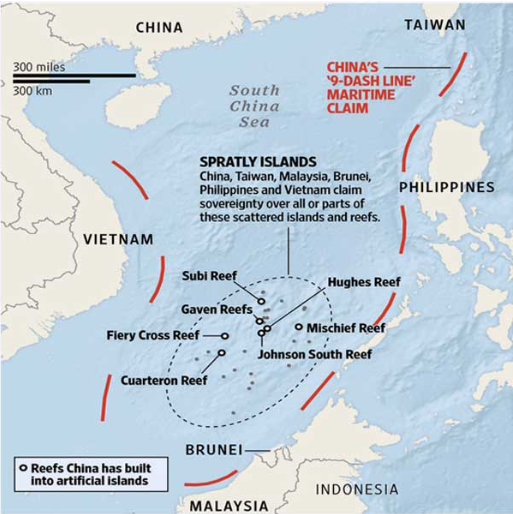
Recent satellite imagery indicates that China has completed the first phase of land reclamation and infrastructure development at Antelope Reef in the disputed Paracel Islands, strengthening its strategic and military presence in the South China Sea.
The reclaimed area reportedly spans nearly 6 km and includes a helicopter pad, a 680-metre wharf connected to a deep-water harbour, and a roughly 3-km straight coastline, which analysts view as a potential runway. China has not officially acknowledged the creation of a military base and describes such activities as being for weather forecasting and scientific research.
Strategic Significance – ‘Bastion’ Strategy
Antelope Reef could form part of a protected maritime “bastion” for China’s nuclear-armed ballistic-missile submarines (SSBNs). Such a bastion would provide greater protection from surveillance and naval operations by the US and Vietnam, while allowing Chinese submarines to operate without moving far into the more exposed Western Pacific.
Territorial Dispute
The Paracel Islands are claimed by Vietnam, while China has maintained de facto control since 1974, following the Battle of the Paracel Islands, when Chinese forces expelled the South Vietnamese navy.
The wider South China Sea has overlapping claims involving China, Vietnam, the Philippines, Malaysia, Brunei and Taiwan. China’s expansive Nine-Dash Line claims were rejected in the 2016 South China Sea Arbitration, which held that claims to historic rights beyond maritime entitlements permitted under UNCLOS have no legal basis.
Implications for India
The South China Sea is crucial for global Sea Lines of Communication (SLOCs) and Indo-Pacific trade. A major concern for India is the possibility of greater Chinese control over critical maritime routes and chokepoints such as the Malacca Strait, through which a substantial share of India’s maritime trade passes.
Chinese consolidation also supports its Maritime Silk Road ambitions and could facilitate greater naval power projection towards the Indian Ocean Region (IOR). This has implications for India’s strategic interests, maritime security and its role as a net security provider in the Indian Ocean.
Divyastra Mk3

- 26 Aug 2026
In News:
Kawa UAV Pvt. Ltd., a Lucknow-based defence start-up, has successfully conducted the maiden flight test of Divyastra Mk3. It is being described as the first indigenously designed, developed and manufactured jet-powered loitering munition with an indigenous powerplant to take flight in India.
About Divyastra Mk3
Divyastra Mk3 is an indigenous loitering munition, commonly referred to as a kamikaze or suicide drone. It is designed as a one-way attack system that can locate/approach a target and destroy high-value enemy assets, infrastructure or personnel using an onboard explosive warhead.
The system has been developed by Kawa UAV Pvt. Ltd. (HoverIt) and uses an indigenous jet-propulsion system developed by DG Propulsion, New Delhi.
While official specifications have not been released, indicative figures reported for the system include:
- Range: ~300–400 km
- Speed: ~250–300 kmph
- Warhead: up to ~15–20 kg
- Guidance: Autonomous flight control with AI-enabled target engagement
Why is Jet Propulsion Important?
Unlike many conventional UAVs that use electric motors or piston engines driving propellers, Divyastra Mk3 employs a compact jet engine. Jet propulsion can provide substantially higher speed, potentially reducing the time available to an adversary to detect, track and intercept the incoming munition.
Thus, while conventional propeller-driven loitering munitions generally emphasiseendurance, simplicity and low operating cost, a jet-powered system places greater emphasis on speed and rapid target engagement.
Pradhan Mantri Janjatiya Vikas Mission (PMJVM)
- 26 Aug 2026
In News:
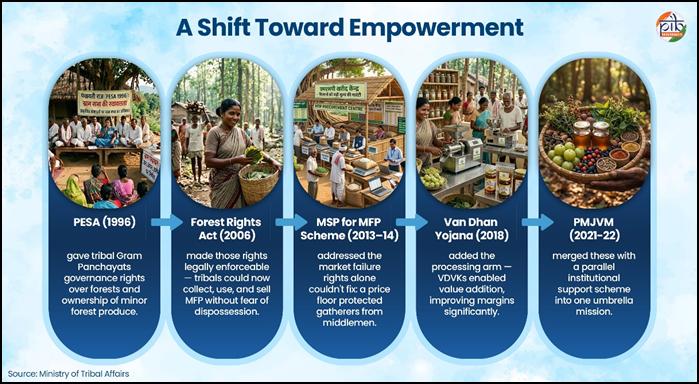
The government is seeking to strengthen the tribal forest-based economy through the Pradhan Mantri Janjatiya Vikas Mission (PMJVM), with emphasis on processing, value addition and marketing of Minor Forest Produce (MFP).
About PMJVM
- Launched in 2021–22, PMJVM seeks to create an organised ecosystem that enables tribal communities to move beyond the sale of raw forest produce and earn higher incomes through skill development, processing, value addition, infrastructure and market linkages.
- The Mission combines traditional tribal knowledge and locally available forest resources with modern technology and markets. Support is provided across the value chain—from collection and scientific harvesting to processing, storage, transportation and marketing.
Van Dhan Vikas Kendra (VDVK) Model
A key component is the VDVK model, which brings tribal forest gatherers together through Self-Help Groups (SHGs) for primary processing and value addition.
A typical VDVK is formed by clustering around 15 SHGs, covering approximately 300 tribal members, with at least 60% members belonging to Scheduled Tribe communities.
VDVKs may receive:
- Skill training: Scientific harvesting, processing and value addition.
- Infrastructure: Facilities at beneficiaries’ homes or in government/Gram Panchayat buildings.
- Processing equipment: Cutting and sieving machines, decorticators, dryers and packaging equipment, depending on local produce.
- Working capital: Financial linkages through banks, financial institutions and the National Scheduled Tribes Finance and Development Corporation (NSTFDC).
- Storage & transportation: Support on a rental basis.
The Van Dhan Yojana, launched in 2018, forms the foundation of the VDVK approach.
India’s Civil Nuclear Power Sector
- 26 Aug 2026
In News:
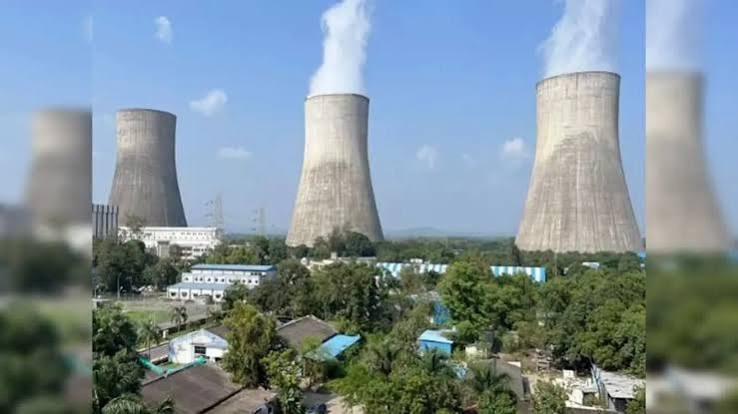
India is planning to bring five additional nuclear reactors online during this decade and aims to expand its nuclear power capacity to 100 GW by 2047, making nuclear energy a major component of its long-term clean-energy and energy-security strategy.
Present Status
- India currently has 25 operational nuclear reactors with an installed capacity of about 8.7 GWe. Nuclear power generated 56,681 million units in 2024–25 and contributes around 3% of India’s total electricity generation.
- The government expects nuclear capacity to rise to about 22.38 GW by 2031–32. Around 10 reactors (~8 GWe) are under construction, while another 10 units (~6.6 GWe) are at the pre-project stage. India has also signed Inter-Governmental Agreements (IGAs) on peaceful civil nuclear cooperation with 18 countries.
India’s Three-Stage Nuclear Programme
India’s nuclear strategy, conceptualised by Dr Homi J. Bhabha, seeks to utilise its limited uranium resources and abundant thorium reserves.
Stage I – PHWRs:Pressurised Heavy Water Reactors (PHWRs) use natural uranium as fuel and heavy water as moderator/coolant. A key objective is production of Plutonium-239, which becomes the fuel for the second stage.
Stage II – Fast Breeder Reactors (FBRs):FBRs use Pu-239 and U-238 and operate with fast neutrons. They are designed to produce more fissile material than they consume, including Pu-239 and U-233.
Stage III – Thorium-based reactors:The programme ultimately seeks to exploit India’s large Thorium-232 reserves. Thorium is converted into Uranium-233, a fissile material, for power generation. Advanced Heavy Water Reactors (AHWRs) are associated with this stage.
Key Challenges
India has limited domestic experience with Light Water Reactors (LWRs), despite LWRs accounting for over 85% of global civil nuclear reactor capacity. LWRs use ordinary water as both coolant and moderator.
Other challenges include limited domestic uranium resources and dependence on imports, high capital and construction costs, technological challenges in SMRs, public-safety concerns and local opposition, and the gap between India’s substantial thorium reserves and commercially mature thorium-based technology.
Government Initiatives
The Nuclear Energy Mission targets 100 GW of nuclear capacity by 2047, with emphasis on indigenous technologies and advanced reactors. Bharat Small Reactors are being developed to enable scalable nuclear deployment. The SHANTI Act, 2025 seeks to facilitate capacity expansion, advanced reactor technologies and wider participation in the nuclear sector. The Union Budget 2025–26 also provided substantial support for R&D in advanced nuclear technologies.
India–U.K. Strategic and Defence Cooperation
- 26 Aug 2026
In News:
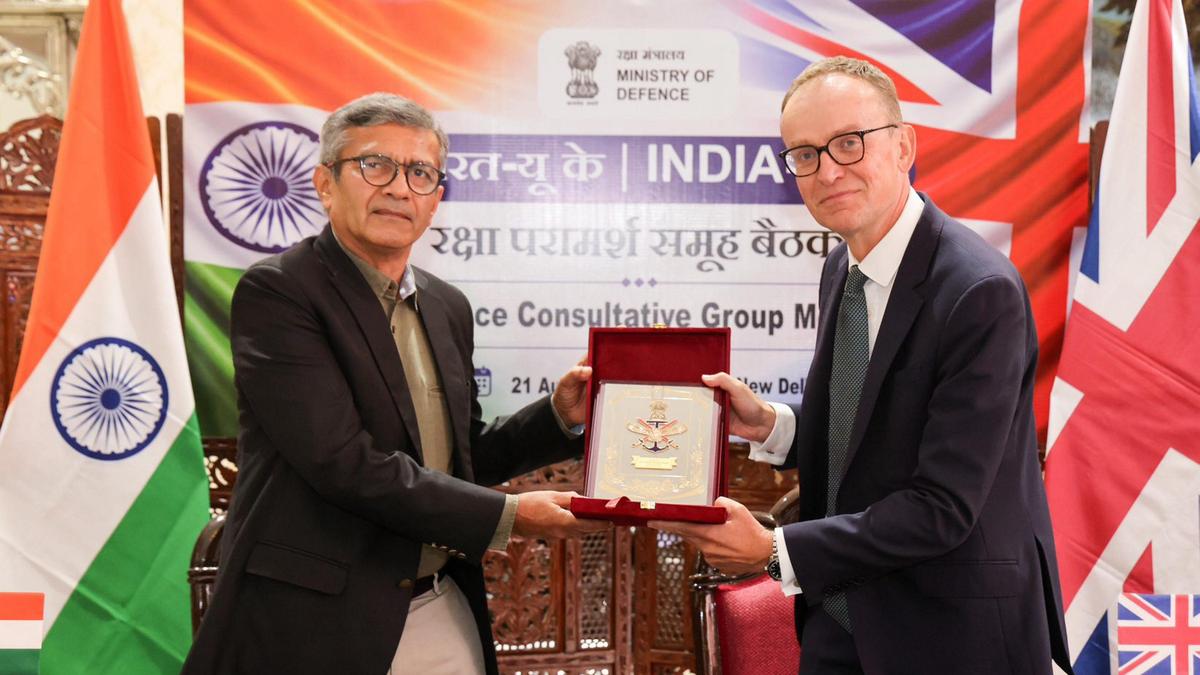
India and the United Kingdom held the 25th India–U.K. Defence Consultative Group (DCG) meeting in New Delhi, reviewing defence-industrial cooperation, military exchanges and maritime security. The two sides placed particular emphasis on R&D, co-development and defence-industrial collaboration under India–U.K. Vision 2035 and the 10-year Defence Industrial Roadmap.
Key Areas of Cooperation
1. Defence-industrial and R&D cooperation:The Vision 2035 framework seeks to move India–U.K. defence ties beyond a buyer–seller relationship towards technology development, innovation and co-development. Priority areas include advanced technologies, complex weapons, underwater systems and emerging defence capabilities.
2. Maritime Security:Both countries are cooperating to establish the Regional Maritime Security Centre of Excellence (RMSCE) under India’s Indo-Pacific Oceans Initiative (IPOI). It aims to build regional capacity and resilience against non-traditional maritime security threats.
3. Military cooperation:India and the U.K. agreed to expand joint exercises, training and capacity-building across the armed forces. Existing cooperation includes Exercise Ajeya Warrior (Army), Exercise Konkan (Navy) and Exercise Cobra Warrior (Air Force).
Broader India–U.K. Relationship
- The Comprehensive Strategic Partnership, established in 2021, is guided by the long-term roadmap and covers defence, trade, technology, health and other sectors. Defence cooperation also includes a Foreign and Defence 2 2 dialogue.
- The relationship is increasingly important for India's defence diversification and technological self-reliance, while the U.K. benefits from India's growing defence-industrial capabilities and strategic position in the Indo-Pacific. The two sides are also working on advanced projects such as electric propulsion and jet-engine technologies.
Challenges
Key concerns include pro-Khalistan extremist activities in the U.K., extradition delays involving fugitives, immigration/mobility-related political friction and differences over certain geopolitical issues.
Way Forward
India and the U.K. should prioritisejoint R&D, technology transfer, co-development and co-production, particularly in AI, autonomous systems, drones, cyber security, space, advanced propulsion and maritime technologies. Strengthening Maritime Domain Awareness, information-sharing and Indo-Pacific capacity-building can further deepen the partnership.