
INS Mangrol
- 29 Aug 2026
In News:
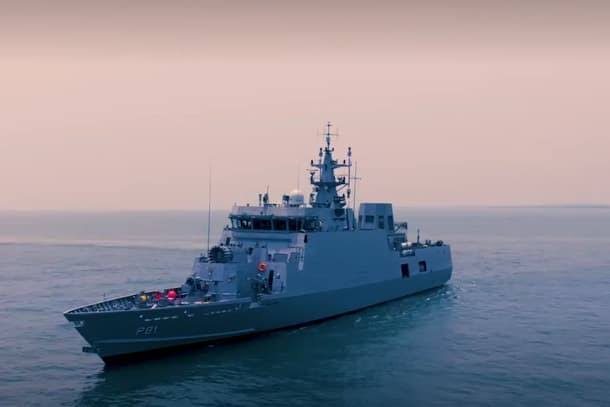
INS Mangrol, the third of eight Anti-Submarine Warfare Shallow Water Craft (ASW SWC), has been delivered to the Indian Navy by Cochin Shipyard Limited (CSL). The vessel strengthens India’s indigenous capability for detecting and countering submarines in shallow coastal waters.
About INS Mangrol
- INS Mangrol is an indigenously designed and constructed ASW SWC.
- It is primarily intended for anti-submarine warfare in shallow coastal waters, where underwater detection and tracking are particularly challenging.
- Besides anti-submarine operations, it can undertake underwater surveillance, Search and Rescue (SAR), Low Intensity Maritime Operations (LIMO) and mine-laying.
- The vessel is named after Mangrol, a historic coastal township in Gujarat.
Key Features
- Class: Anti-Submarine Warfare Shallow Water Craft
- Builder: Cochin Shipyard Limited (CSL)
- Total planned: 8 vessels
- Length: 78 metres
- Displacement: ~900 tonnes
- Maximum speed: 25 knots
- Propulsion:Diesel Engine–Waterjet Propulsion System
- Indigenous content:More than 80%
- Weapons/sensors: Lightweight torpedoes, indigenous ASW rockets and shallow-water sonars
- Designed and constructed according to Det Norske Veritas (DNV) classification rules.
Why ASW Shallow Water Craft?
Shallow coastal waters create complex underwater acoustic conditions, making conventional submarine detection difficult. ASW SWCs are therefore designed to operate in such environments and provide the Navy with specialised underwater surveillance and submarine-hunting capabilities.
The high indigenous content also supports Aatmanirbhar Bharat by reducing dependence on imported defence platforms and systems and strengthening India's domestic shipbuilding ecosystem.
Ervebo Vaccine
- 29 Aug 2026
In News:
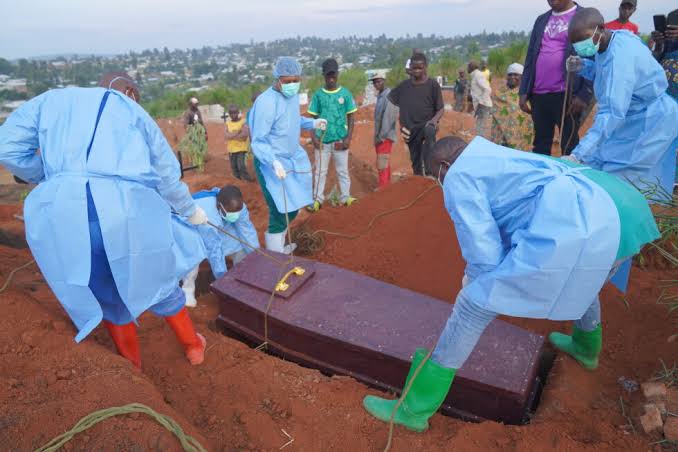
The WHO and its partners announced that the Democratic Republic of the Congo (DRC) will receive 70,000 doses of the Ervebo vaccine in response to an Ebola outbreak. The development highlights the role of vaccination in containing outbreaks of Ebola Virus Disease (EVD).
Ervebo Vaccine
- Ervebo is a licensed vaccine against Ebola Virus Disease caused by Zaire ebolavirus.
- It is a replication-competent, live, attenuated recombinant vesicular stomatitis virus (VSV) vaccine.
- The vaccine uses a modified VSV as a vector and contains a protein from the Zaire Ebola virus.
- It does not contain the complete Ebola virus and therefore cannot cause Ebola disease.
- Following vaccination, the Ebola viral protein stimulates the immune system to develop a protective immune response.
- Manufacturer: Merck
- Type: Live, attenuated recombinant VSV vaccine
- Administration: For active immunisation of individuals 1 year and older
- Protection:Specifically against Zaire ebolavirus
- It does not protect against other orthoebolavirus species or orthomarburgviruses.
Ebola Virus Disease (EVD)
Ebola is a severe and often fatal viral disease caused by viruses of the genus Orthoebolavirus. It affects humans and non-human primates and was first identified in 1976 in southern Sudan and the Democratic Republic of Congo.
Ebola is often associated with viral haemorrhagic fever, as severe disease can affect blood-vessel integrity and the body's clotting system, potentially causing internal bleeding.
Transmission:
- Initial spillover can occur from infected wild animals such as fruit bats, porcupines and non-human primates.
- Human-to-human transmission occurs through direct contact with blood, secretions, organs or other body fluids of infected persons and contaminated surfaces/materials.
- Ebola is not transmitted through the air.
Incubation period:2–21 days (typically around 5–15 days).
Major symptoms include fever, diarrhoea, vomiting and bleeding, with severe cases potentially resulting in death.
National Animal Disease Control Programme (NADCP)
- 29 Aug 2026
In News:
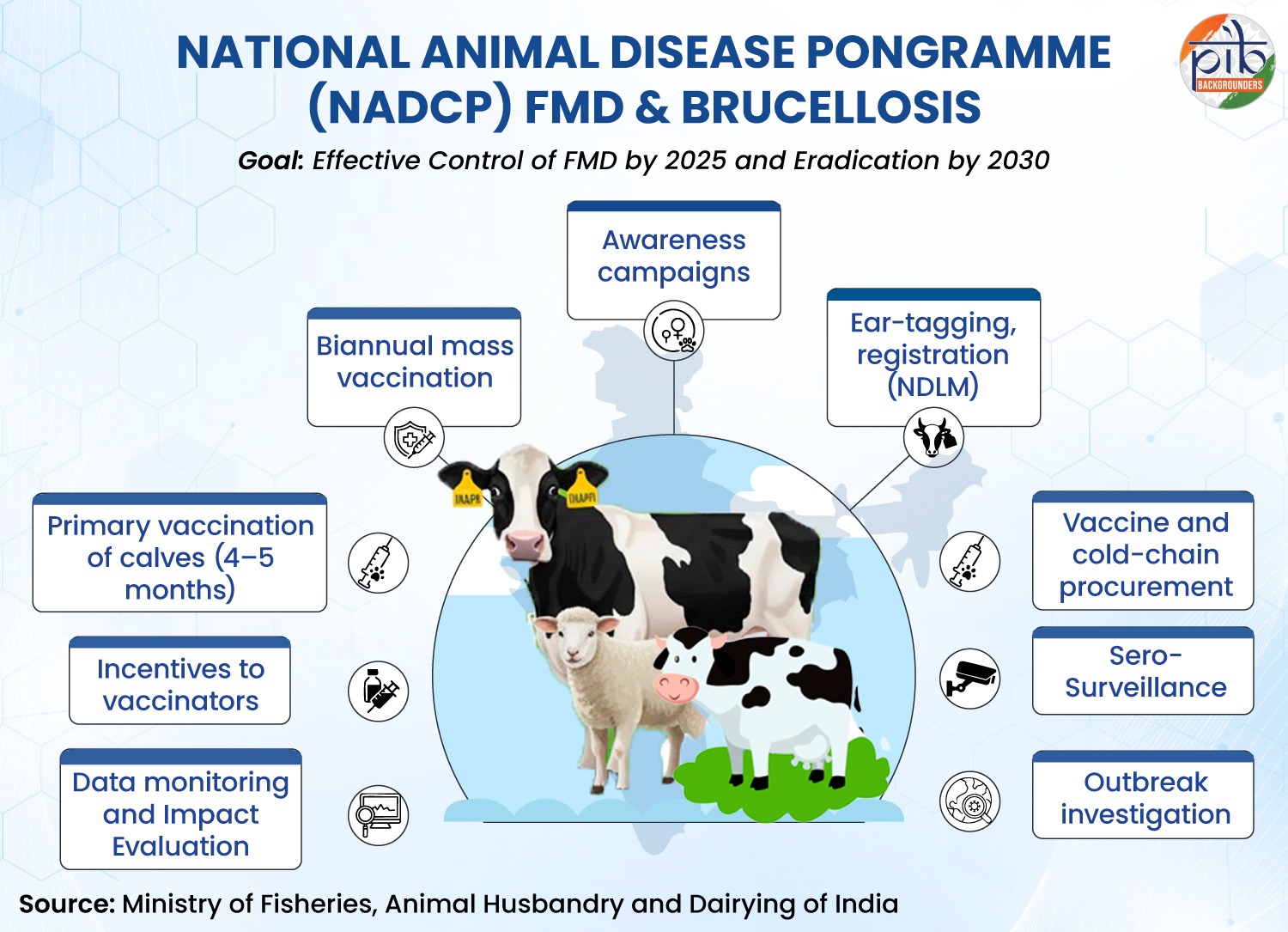
The National Animal Disease Control Programme (NADCP) has emerged as a major nationwide, data-driven livestock health intervention aimed at controlling economically important animal diseases through systematic vaccination and surveillance.
About NADCP
Launched in 2019, NADCP is one of India’s largest livestock health programmes. It is a Central Sector Scheme, with 100% funding by the Central Government to States/UTs.
The programme primarily targets Foot and Mouth Disease (FMD) and Brucellosis through nationwide vaccination and disease surveillance. Its targets are:
- FMD: 100% vaccination of eligible livestock twice every year.
- Brucellosis:once-in-a-lifetime vaccination of female bovine calves aged 4–8 months.
The nodal ministry is the Department of Animal Husbandry & Dairying (DAHD), Ministry of Fisheries, Animal Husbandry & Dairying.
Diseases Covered
- Foot and Mouth Disease (FMD) is a highly contagious viral disease affecting cloven-hoofed animals, including cattle, buffaloes, sheep, goats and pigs.
- It causes reduced milk yield, lower growth rate, infertility and reduced working capacity of bullocks, thereby affecting livestock productivity and farmers’ incomes.
- Brucellosis is a bacterial reproductive disease of cattle and buffaloes caused by Brucella abortus. It is associated with fever, abortion—particularly during the later stages of pregnancy—infertility, delayed heat and interrupted lactation, resulting in calf and milk/meat production losses. Control is supported through one-time vaccination of female bovine calves aged 4–8 months.
National Centre for Polar and Ocean Research (NCPOR)
- 29 Aug 2026
In News:
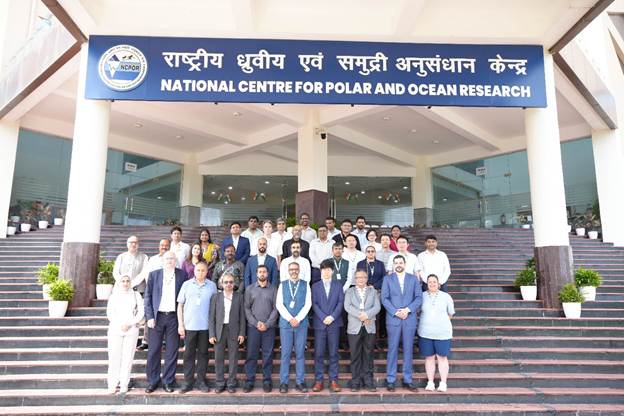
The Ministry of Earth Sciences organised the 8th Meeting of the BRICS Working Group on Ocean Polar Science and Technology (OPST) in Goa, hosted by the National Centre for Polar and Ocean Research (NCPOR). The meeting highlights India’s growing role in polar and ocean scientific research and international cooperation.
About NCPOR
The National Centre for Polar and Ocean Research (NCPOR) was established on 25 May 1998 as an autonomous R&D institution. It was earlier known as the National Centre for Antarctic and Ocean Research (NCAOR). It functions under the Ministry of Earth Sciences (MoES) and is located at Vasco da Gama, Goa.
NCPOR is the nodal organisation for coordinating and implementing India’s Antarctic Programme and undertakes scientific expeditions and research in the Antarctic, Arctic, Southern Ocean and Himalayan regions.
Its work extends beyond polar expeditions to strategically important ocean and marine programmes, including:
- Mapping of India’s Exclusive Economic Zone (EEZ)
- Continental Shelf surveys
- Deep Ocean Mission
- Polar climate, oceanographic and marine research
Indian Research Stations
NCPOR has played a key role in establishing and operating India’s research stations in the polar regions:
- Dakshin Gangotri – India’s first Antarctic research station; now decommissioned.
- Maitri – India’s operational Antarctic research station.
- Bharati – India’s operational Antarctic research station.
- Himadri – India’s Arctic research station, located at Ny-Ålesund, Svalbard, Norway.
- Himansh – India’s high-altitude Himalayan research station.
UN Convention to Combat Desertification (UNCCD) – COP17
- 29 Aug 2026
In News:
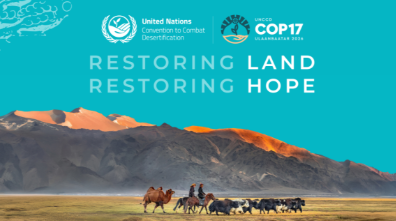
The 17th Conference of the Parties (COP17) to the United Nations Convention to Combat Desertification (UNCCD) opened in Ulaanbaatar, Mongolia, under the theme “Restoring Land, Restoring Hope.” The conference focuses on translating global commitments on land restoration and drought resilience into finance and concrete action.
The UNCCD is the only legally binding international agreement specifically linking environment and development with sustainable land management. It is one of the three Rio Conventions, along with the UNFCCC on climate change and the CBD on biodiversity.
UNCCD: Background & Objective
The Convention was recommended through Agenda 21 at the 1992 Rio Earth Summit (UNCED) and was adopted in Paris on 17 June 1994. It entered into force in December 1996 and has 197 Parties — 196 countries plus the European Union.
Its core objective is to combat desertification, land degradation and drought, particularly in arid, semi-arid and dry sub-humid areas (drylands), while promoting sustainable livelihoods and achieving Land Degradation Neutrality (LDN).
Key Functions
- Land Degradation Neutrality (LDN): Seeks to maintain or improve the quantity and quality of land resources required for ecosystem functioning, food security and livelihoods.
- Drought resilience: Promotes a shift from crisis response to proactive drought preparedness, early-warning systems and resilience-building, including initiatives such as the Riyadh Global Drought Resilience Partnership.
- Participatory governance: National Action Programmes (NAPs) emphasise participation of local communities, farmers, pastoralists, indigenous peoples and women.
- Land and climate finance: The Global Mechanism (GM) helps developing countries mobilise and channel domestic, bilateral, private and multilateral finance towards sustainable land management.
- Peace and ecosystem restoration: The Peace Forest Initiative (PFI) promotes transboundary restoration and cooperation, particularly in conflict-affected regions.