
India–Japan: Deepening Maritime Security and Strategic Cooperation
- 24 Aug 2026
In News:
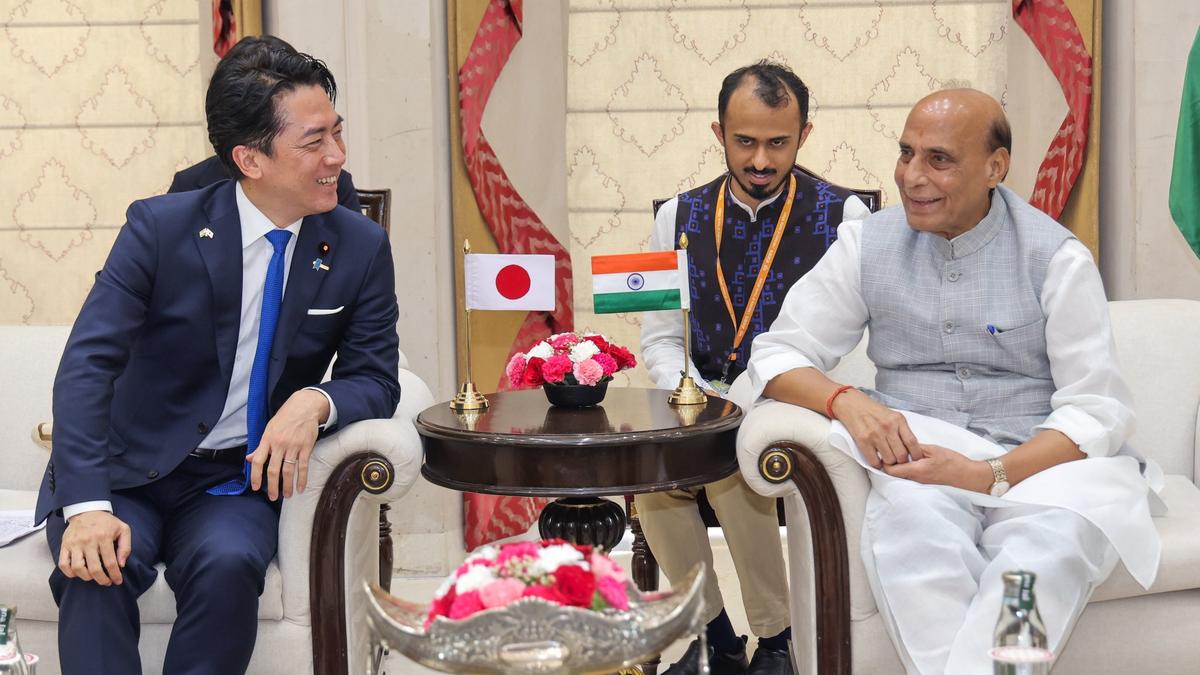
India and Japan signed a Memorandum of Arrangement (MoA) on Maritime Security Cooperation on 20 August 2026, during the India–Japan Defence Ministers’ Meeting in New Delhi. The agreement seeks to strengthen operational cooperation between the Indian Navy and Japan Maritime Self-Defense Force (JMSDF) through Maritime Domain Awareness (MDA), joint exercises, naval logistics, ship visits, repair facilities and information sharing.
Evolution of India–Japan Relations
- India–Japan ties have historical roots dating to the 6th century, particularly through the spread of Buddhism.
- After World War II, Prime Minister Jawaharlal Nehru gifted an elephant to Tokyo’s Ueno Zoo in 1949, symbolising friendship and optimism. Japan extended its first formal yen loans to India in 1958.
- Strategically, relations progressed from a Global Partnership (2000) to a Special Strategic and Global Partnership (2014), with annual summits since 2006. More than 70 dialogue mechanisms, including the 2 2 Foreign and Defence Ministers’ Dialogue, facilitate cooperation.
Maritime and Defence Cooperation
The new MoA provides a framework for:
- Maritime Domain Awareness (MDA) and information sharing.
- Search and Rescue (SAR) and Humanitarian Assistance and Disaster Relief (HADR).
- Protection of Sea Lines of Communication (SLOCs) through naval ship visits and joint exercises.
- Reciprocal access to ports, maintenance and repair facilities.
- Personnel and Subject Matter Expert exchanges.
- Greater complexity in exercises, including unmanned systems and multi-domain operations.
Both sides will also explore joint naval shipbuilding and design, combining Japan’s technological expertise with India’s production capabilities under Make in India. Cooperation between DRDO and Japan’s ATLA in advanced defence technologies is also being strengthened.
Existing defence mechanisms include the 2014 Defence Cooperation MoU, 2015 agreements on defence technology transfer and classified information, the 2018 Navy cooperation arrangement, and the 2020 Reciprocal Provision of Supplies and Services (RPSS) agreement. The two countries are also collaborating on UNICORN communication masts for Indian Navy ships.
Wider Strategic and Economic Partnership
- The relationship extends beyond defence. The India–Japan CEPA, operational since 2011, covers trade, services, investment, intellectual property and movement of persons. Bilateral trade reached about US$27.48 billion in FY2025–26, although the trade balance remains strongly tilted towards Japan.
- Japan is also supporting the 508.17-km Mumbai–Ahmedabad High-Speed Rail (MAHSR) project based on Shinkansen technology, promoting technology transfer and skill development.
- The Act East Forum, established in 2017, focuses on connectivity, infrastructure and economic development in Northeast India. In science and technology, ISRO–JAXA cooperation covers satellite navigation, space situational awareness and lunar exploration, including the Lunar Polar Exploration Mission (Chandrayaan-5).
Supreme Court Ruling on the Definition of ‘Industry’
- 24 Aug 2026
In News:
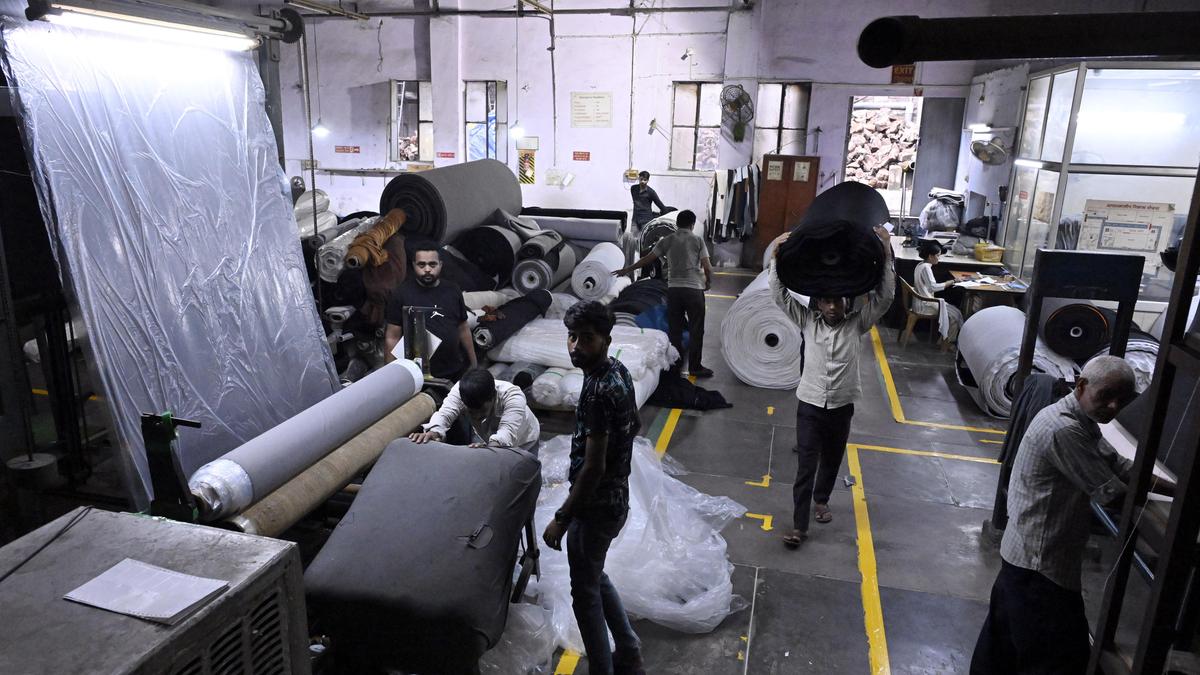
The Supreme Court has held that the meaning of “industry” under Section 2(p) of the Industrial Relations Code (IRC), 2020 must be interpreted independently from the landmark Bangalore Water Supply and Sewerage Board v. R. Rajappa (1978) judgment. The Court described the new Code as requiring interpretation on a “clean slate”.
1978 Bangalore Water Supply Judgment
In Bangalore Water Supply and Sewerage Board v. R. Rajappa (1978), a seven-judge Bench gave a broad interpretation to “industry” under Section 2(j) of the Industrial Disputes Act, 1947.
It evolved the Triple Test, under which an activity could qualify as an industry if it involved:
- Systematic and organised activity;
- Cooperation between employer and employees; and
- Production or distribution of goods or services intended to satisfy human wants and wishes.
This broad interpretation brought institutions such as hospitals, educational institutions and municipalities within labour-law coverage, while core sovereign functions such as defence, judiciary and law enforcement were generally excluded.
What has the Supreme Court ruled?
- The Court held that the definition under the IRC, 2020 has to be determined from the language, structure and context of the new Code itself. Therefore, the 1978 judgment continues to govern disputes arising under the Industrial Disputes Act, 1947, but cannot automatically serve as the binding basis for interpreting “industry” under the new Code.
- This distinction is significant because India’s labour market has changed considerably since 1978, with liberalisation, privatisation, expansion of the service sector, new employment arrangements and the emergence of gig/platform work.
Industrial Relations Code, 2020
- Under Section 2(p), “industry” covers systematic activity carried out through cooperation between employer and worker, irrespective of whether capital is invested or profit is intended. This can potentially bring non-profit and low-capital activities within the labour-law framework.
- The broader coverage can facilitate access to conciliation and industrial tribunals, collective bargaining, grievance mechanisms, notice requirements for changes in service conditions and retrenchment-related protections for workers in covered establishments.
India’s First Indigenous 5 kN Rotating Detonation Engine (RDE)
- 24 Aug 2026
In News:
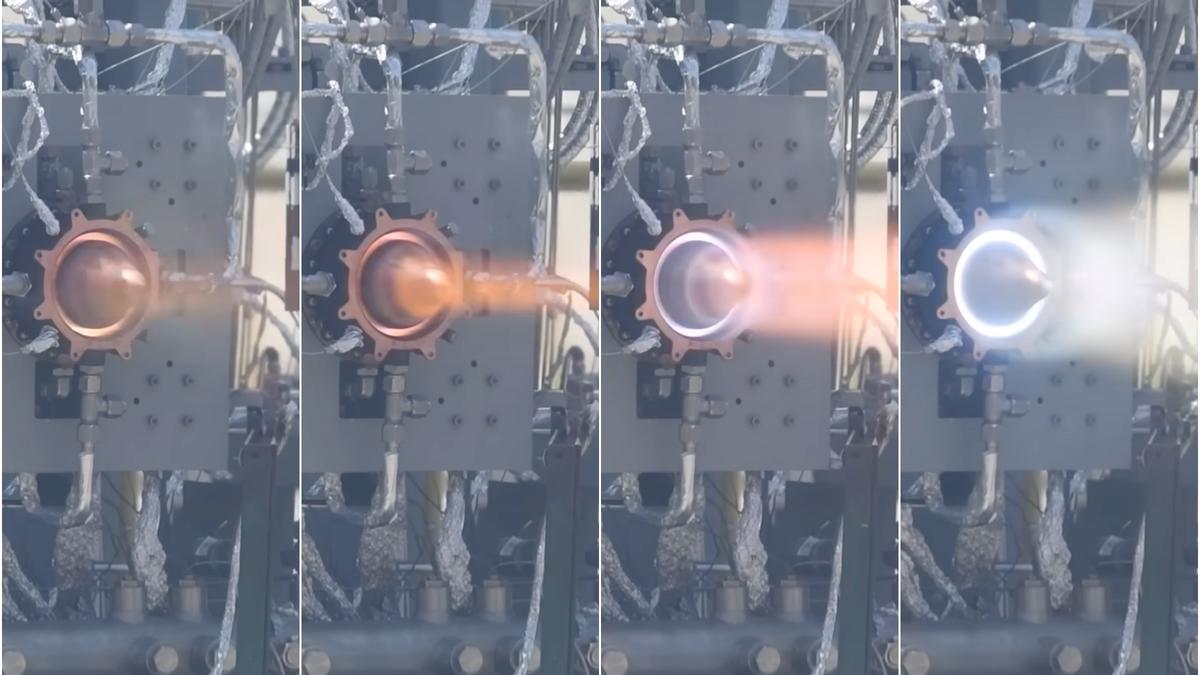
Indian defence start-up D-Propulse has successfully demonstrated India’s first indigenous 5 kN air-breathing Rotating Detonation Engine (RDE) at a DRDO facility in Hyderabad, achieving Technology Readiness Level-5 (TRL-5). The development marks a step towards strengthening India’s indigenous next-generation air-breathing propulsion capabilities.
What is an RDE?
- A Rotating Detonation Engine is an advanced propulsion technology that uses continuously travelling supersonic detonation waves. Unlike conventional combustors, which rely on subsonic deflagration at approximately constant pressure, detonation involves a supersonic shock wave that compresses the unburnt fuel-air mixture and releases energy more efficiently.
- An RDE uses an annular combustion chamber—a ring-shaped channel between two concentric cylinders. Fuel and oxidiser are continuously injected into this chamber, where a detonation wave travels around the annulus repeatedly, producing sustained thrust. In contrast, a Pulsed Detonation Engine (PDE) generates intermittent detonations along a straight tube.
Efficiency & Applications
- RDEs have the potential to provide 10–25% higher thermodynamic efficiency than conventional rocket engines. A 20% improvement could translate into roughly 17% lower fuel requirements, improving payload-to-fuel ratios and potentially reducing launch costs.
- Potential applications include hypersonic cruise missiles, high-speed aircraft, UAVs, ramjet-type propulsion systems, space launch vehicles and in-space propulsion.
- However, the technology remains at the R&D stage globally. RDEs face major engineering challenges, including temperatures above 2,000°C, pressures of 10–100 atmospheres, detonation velocities exceeding 1,500 m/s, precise microsecond-scale fuel injection and combustion stability. Advanced materials and high-speed computing are therefore essential.
RK-251 Drug
- 24 Aug 2026
In News:
The Ministry of Science and Technology recently highlighted RK-251, an indigenous “smart” cancer drug candidate designed to selectively activate inside cancer cells, potentially reducing the damage to healthy cells associated with conventional chemotherapy.
About RK-251:
- RK-251 has been developed in collaboration with Dr. Asis Bala of the Institute of Advanced Study in Science and Technology (IASST) and Dr. K.P. Bhabak of IIT Guwahati.
- Its key feature is cancer-cell-selective activation based on the higher levels of Reactive Oxygen Species (ROS) found in many cancer cells.
How does RK-251 work?
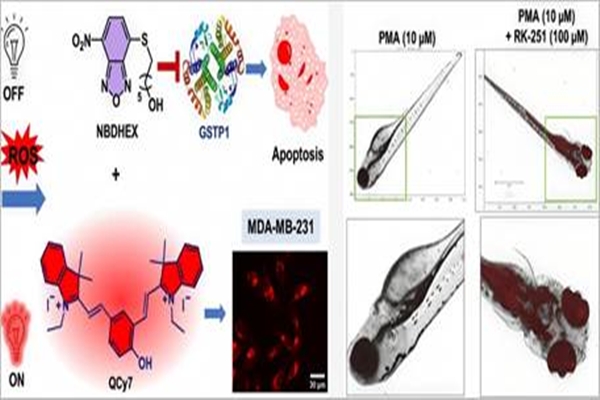
- When RK-251 enters a cancer cell with elevated ROS levels, ROS molecules trigger the drug and cause it to release the active anticancer compound NBDHEX.
- NBDHEX targets proteins that cancer cells depend upon for survival and resistance to treatment.
- Thus, the drug is designed to remain relatively inactive in normal tissues while becoming pharmacologically active within the ROS-rich environment of cancer cells.
- The drug has shown strong activity against aggressive triple-negative breast cancer cells, while having substantially less effect on healthy cells. RK-251 also exhibits fluorescence in the presence of ROS. This fluorescence can serve as an indicator that the drug is being activated in a ROS-rich cellular environment, thereby providing evidence supporting its targeted mechanism.
Why is it significant?
Conventional chemotherapy can affect both cancerous and rapidly dividing healthy cells, resulting in significant side effects. A stimulus-responsive drug such as RK-251 aims to improve selectivity by exploiting a biochemical difference between cancerous and normal cells.
Regional Rural Banks

- 24 Aug 2026
In News:
The Ministry of Finance recently reported strong growth in credit delivery by Regional Rural Banks (RRBs) during FY 2025–26, highlighting their role in expanding formal finance and supporting rural economic development.
About RRBs:
- RRBs are financial institutions established to provide banking and credit facilities in rural areas, particularly to small and marginal farmers, agricultural labourers, artisans and small entrepreneurs.
- They combine the local familiarity of cooperative institutions with the professionalism and resource mobilisation capacity of commercial banks.
- RRBs originated from the recommendations of the Narasimham Working Group (1975) and were subsequently established under the Regional Rural Banks Act, 1976.
- The first RRB, Prathama Grameen Bank, was established on 2 October 1975.
- At present, there are 82 RRBs in India. Their ownership is shared among the Central Government, concerned State Government and Sponsor Bank in the ratio of 50:15:35, respectively.
- The area of operation of an RRB is restricted to the area notified by the Government of India, generally covering one or more districts within a State.
Regulation, Supervision & Funding
- RRBs are regulated by the Reserve Bank of India (RBI) and supervised by NABARD.
- Their sources of funds include owned funds, deposits and borrowings from NABARD, sponsor banks, SIDBI and the National Housing Bank.
- For Priority Sector Lending (PSL), RRBs have a higher target of 75% of total outstanding advances, compared with 40% for Scheduled Commercial Banks.
- The Board of Directors manages an RRB and includes nominees of the Central Government, State Government and sponsor bank, along with the Chairman.