
Exercise Udara Shakti 2026
- 30 Aug 2026
In News:
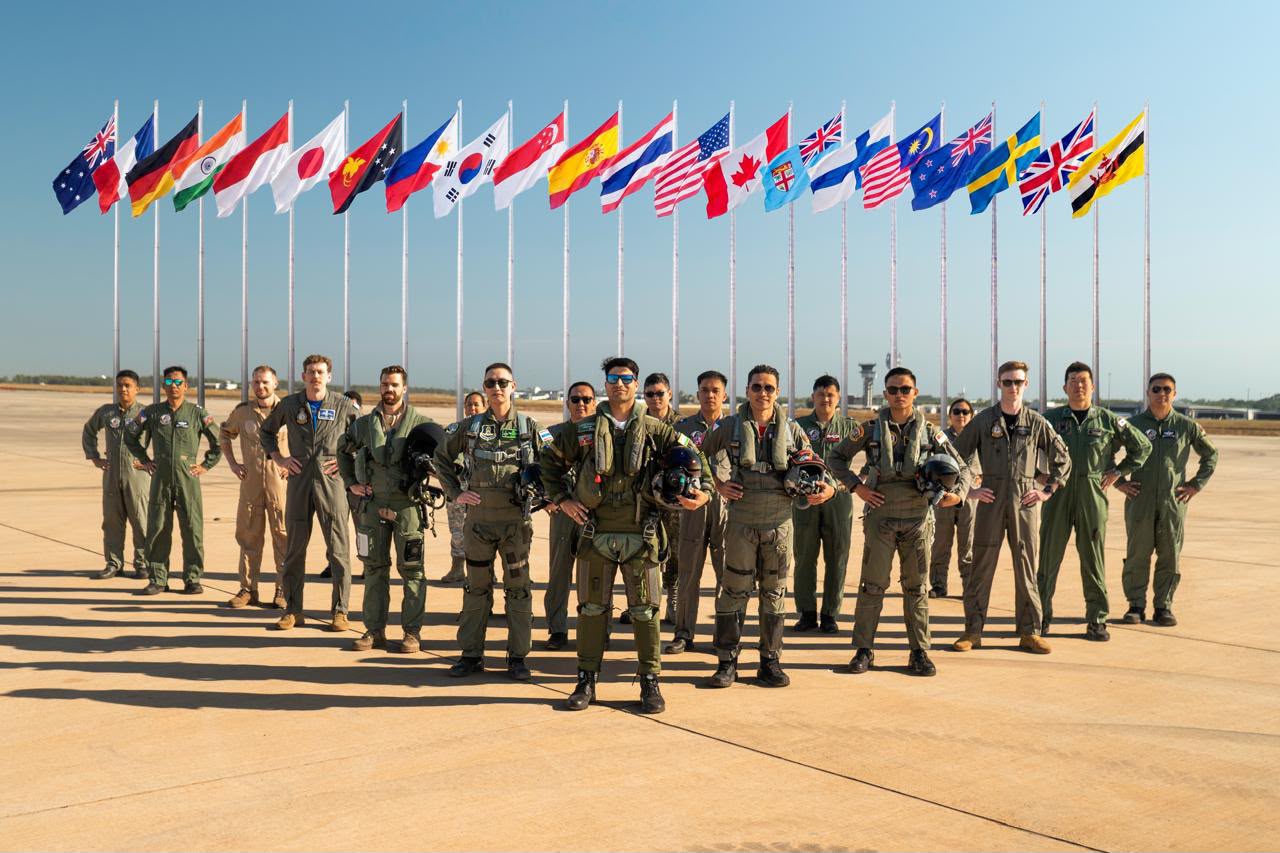
The Indian Air Force (IAF) participated in Exercise Udara Shakti 2026, a bilateral air exercise with the Royal Malaysian Air Force (RMAF) at Subang Airbase, Malaysia. The exercise strengthens India–Malaysia defence cooperation and supports India’s Act East Policy and Indo-Pacific strategy.
About the Exercise:
Udara Shakti is a bilateral air exercise between India and Malaysia aimed at enhancing air combat capability, operational interoperability, tactical coordination and mutual understanding between the two air forces.
The IAF participated with four Rafale fighter aircraft of 101 Squadron and two C-17 Globemaster III strategic airlift aircraft. The RMAF fielded Su-30MKM fighters, F/A-18D Hornets and an A400M transport aircraft.
The exercise focused on realistic and complex combat training, including:
- High-intensity combat sorties
- Dissimilar Air Combat Training (DACT)
- Dissimilar Basic Fighter Manoeuvres (DBFM)
- Air-to-air refuelling operations
It also featured Subject Matter Expert Exchanges (SMEE) covering training doctrines, integrated operations, mission planning and maintenance practices, enabling both sides to exchange operational experience and best practices.
Strategic Significance
Udara Shakti enhances the ability of the IAF and RMAF to operate together during complex air operations and strengthens India–Malaysia strategic and defence ties. It also contributes to wider Indo-Pacific security cooperation, particularly as India deepens defence engagement with Southeast Asian countries under the Act East Policy.
India and Malaysia also conduct other bilateral military exercises:
- Harimau Shakti – Indian Army–Malaysian Army
- Samudra Laksamana – Indian Navy–Royal Malaysian Navy
The “Perfect Victim” Myth and Sexual Assault Jurisprudence

- 30 Aug 2026
In News:
The Bombay High Court’s 2026 judgment in the Tarun Tejpal case has renewed debate over the “perfect victim” myth—the societal and institutional expectation that survivors of sexual assault must display a particular form of behaviour to be considered credible.
The idea is closely linked to criminologist Nils Christie’s “Ideal Victim” theory (1986). It explains how society tends to extend greater sympathy to victims who fit conventional stereotypes—such as being vulnerable, respectable and having no prior relationship with the offender. Consequently, victimhood can become a socially constructed and gendered status, with factors such as gender, caste, class, social position and sexual history influencing perceptions of credibility.
In the Tarun Tejpal case, the Bombay High Court overturned the 2021 trial court acquittal and sentenced Tejpal to 10 years’ rigorous imprisonment. The Court criticised excessive reliance on the complainant’s post-assault behaviour, including her appearance on CCTV, rather than evaluating the material evidence. The judgment therefore reinforces the principle that there is no single “correct” way for a survivor to respond to sexual violence.
Historical Examples of Victim Stereotyping
- Mathura custodial rape case (1979): Judicial reasoning relied on the absence of injuries/resistance and the survivor’s previous sexual experience while assessing consent. In 2025, former CJI B.R. Gavai described the episode as an institutional embarrassment for the judiciary.
- Bhanwari Devi case (1992): The trial court acquitted the accused based partly on caste-based assumptions that upper-caste men would not sexually assault a Dalit woman. The case became an important catalyst for the Vishakha Guidelines (1997) and subsequently the Sexual Harassment of Women at Workplace Act, 2013.
- Jindal Global Law School case (2017): Concerns were raised over judicial reliance on perceptions about the survivor’s sexual behaviour and character.
Gender-Sensitive Judicial Approach
The underlying concern is the “performance of trauma”—expecting survivors to demonstrate fear, resistance, immediate reporting or visible distress. However, trauma responses can vary significantly. The Supreme Court’s 2026 gender-sensitivity guidance for judicial writing cautions against drawing adverse conclusions merely from delayed FIRs, absence of physical injuries or variations in demeanour.
Online Bond Platform Provider (OBPP)

- 30 Aug 2026
In News:
SEBI has proposed an advertisement code for Online Bond Platform Providers (OBPPs) to expand investor outreach and improve awareness about bonds as an investment avenue.
What is an OBPP?
An OBPP is a SEBI-registered platform that provides a digital interface for investors to discover and transact in bonds. It connects bond issuers—such as companies and government entities—with non-institutional/retail investors, making the bond market more accessible.
Through these platforms, investors can compare bonds on parameters such as credit rating, yield/interest rate, maturity, issuer profile and offer documents, helping them assess risk-return characteristics before investing.
How does an OBPP work?
The investment process broadly integrates discovery → execution → settlement within the regulated securities-market framework:
- Investor opens a Demat account and completes KYC.
- Bonds can be searched and compared on the platform.
- The investor places an order for a listed debt security.
- The order is routed through the Request for Quote (RFQ) platform of a recognised stock exchange.
- Following execution, settlement occurs through a recognised clearing corporation.
- Securities are credited to the investor's Demat account.
Thus, OBPPs provide a transparent and technology-enabled route for accessing the bond market.
Key Features
- Lower entry barrier: Minimum investment can be as low as ?10,000, making bonds accessible beyond large institutional investors.
- Regulatory compliance: OBPPs are required to operate within the SEBI-regulated securities-market framework.
- Easy discovery: Investors can filter bonds according to yield, credit rating and maturity.
- Investor awareness: SEBI's proposed advertisement code seeks to improve communication and prevent misleading promotion of bond products.
SC Modifies 3-Year Practice Rule for Judicial Services
- 30 Aug 2026
In News:
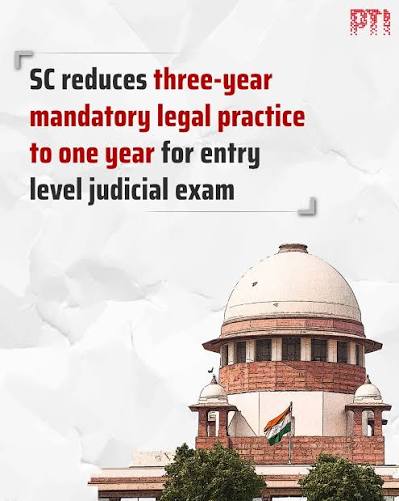
The Supreme Court, by a 2:1 majority on August 21, 2026, retained its 2025 decision requiring prior professional exposure for entry into the subordinate judiciary, but modified how the requirement will operate. The Court held that courtroom exposure need not come entirely through practice at the Bar and can also be acquired through judicial academy training and supervised clerkship.
Background
In May 2025, the Supreme Court restored the requirement of three years of practice for entry-level judicial service, reversing the position flowing from the 2002 All India Judges’ Association case, under which fresh law graduates could directly appear for judicial service examinations. The Court reasoned that Civil Judges deal with life, liberty, property and personal rights from the first day of service, making familiarity with courtroom procedure and Bench–Bar functioning important. However, the sudden restoration created difficulties for aspirants who had planned their careers under the earlier regime.
Transitional Framework
For recruitment notifications issued between 20 May 2025 and 31 March 2027, fresh law graduates can apply without prior practice. They will be deemed to have completed one year of practice without producing a certificate.
Selected candidates will initially be appointed as Trainee Judicial Officers and undergo:
- 1 year of intensive training at the State Judicial Academy → treated as equivalent to 1 year of Bar practice.
- 1 year of supervised judicial clerkship → another 1 year of practice equivalence. Six months will be under a District/Sessions-level judicial officer and six months under a sitting High Court Judge.
- During academy training, trainees will receive half the remuneration payable to a Judicial Magistrate First Class (JMFC).
- Regular judicial appointment, full pay and service benefits will follow only after satisfactory evaluation.
Rule from April 1, 2027
For recruitment notifications issued on or after April 1, 2027, candidates for Civil Judge (Junior Division) must demonstrate at least one year of actual practice, certified through effective participation in court proceedings. After selection, they will still undergo the two-year academy training supervised clerkshipprogramme. High Courts and State Governments must amend their subordinate judicial service rules within three months. The framework will remain in force for five years and then be reviewed on the basis of empirical evidence.
Constitutional Framework
- Article 233: Appointment, posting and promotion of District Judges by the Governor in consultation with the High Court; an outsider must have at least 7 years as an advocate/pleader and be recommended by the High Court.
- Article 234: Recruitment of persons other than District Judges by the Governor according to rules made after consultation with the State Public Service Commission and High Court.
- Article 235: Vests control over subordinate courts in the High Court, including administrative and disciplinary control.
Surge in India’s Merchandise Exports
- 30 Aug 2026
In News:
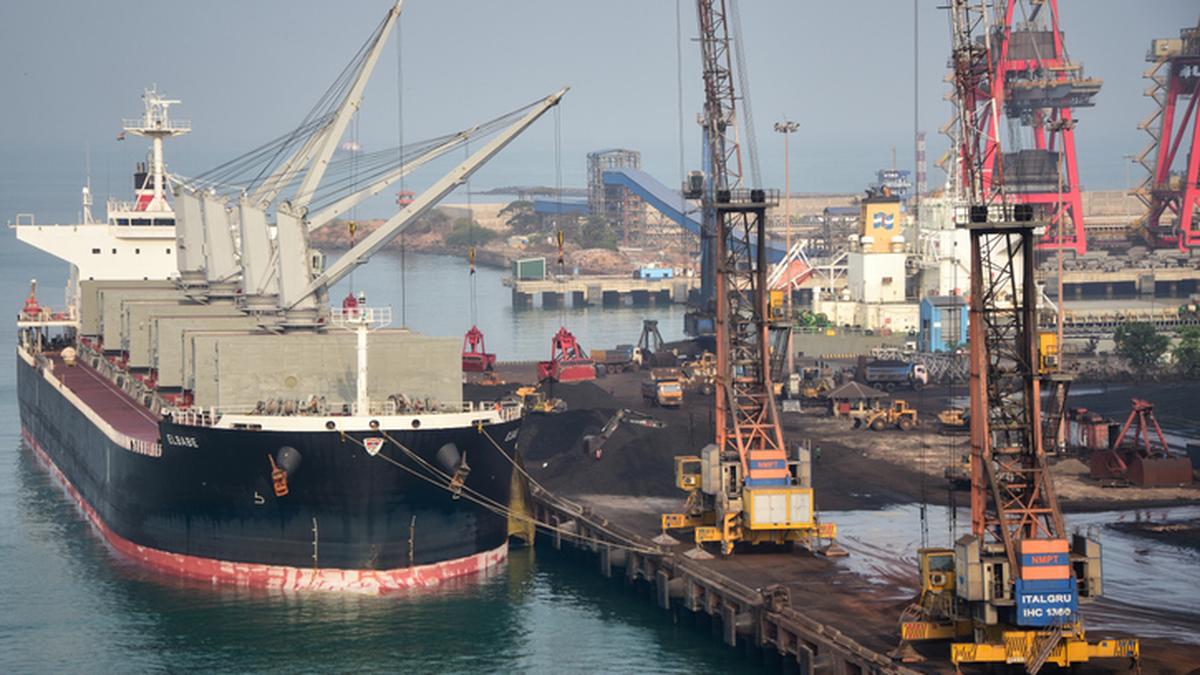
India’s merchandise exports rose 19.6% year-on-year to USD 44.2 billion in July 2026, despite geopolitical disruptions in West Asia. However, the widening trade deficit highlights persistent issues related to export competitiveness, logistics, technology and integration with global value chains.
Key Export Trends
India’s merchandise imports grew 17.5% to USD 76.2 billion. Meanwhile, services exports increased 6.4% to USD 35.9 billion, while services imports grew faster by 9.5% to USD 18.9 billion. Consequently, the combined trade deficit widened to USD 15 billion, compared with USD 11.4 billion in July 2025.
The export surge was driven significantly by petroleum products, which accounted for about 39% of the total export growth. Electronics exports recorded strong growth, while engineering goods expanded by 18.2%. Marine products, meat, dairy, poultry and traditional handicrafts also showed positive export performance.
Strategic Diversification of Trade
Geopolitical tensions and risks around the Strait of Hormuz encouraged exporters to reroute cargo through alternative ports such as Oman, Fujairah and Khor Fakkan.
India also expanded its export markets:
- China: exports increased by 65% in July 2026.
- Singapore: share in India's export basket rose from 2.7% to 4.7%.
- Tanzania: exports increased by 130%.
- Stronger exports were also recorded to Vietnam, Taiwan, Kenya and the SACU region.
- The US remained India's largest merchandise export market, accounting for roughly one-fifth of exports.
Major Challenges
India faces a “middle-technology trap”—difficulty competing with low-cost economies such as Bangladesh and Vietnam in labour-intensive manufacturing while also lagging behind China, South Korea and Taiwan in high-technology production. India's GERD is around 0.65% of GDP, limiting technological innovation and movement from assembly to high-value manufacturing.
Other constraints include non-tariff barriers and green standards such as CBAM, ESG compliance costs, dependence on refined petroleum exports, geopolitical and supply-chain disruptions, inverted duty structures, dependence on Chinese intermediates and low FTA utilisation.
Way Forward
India needs to shift from export promotion to export competitiveness by:
- Moving from assembly towards high-value manufacturing and deeper GVC integration.
- Strengthening R&D, semiconductors, electronics components, APIs and precision engineering.
- Improving FTA utilisation and simplifying Rules of Origin.
- Reducing logistics costs and correcting inverted duty structures.
- Supporting MSMEs through trade finance, insurance, certification, branding and market intelligence.
- Expanding initiatives such as ECMS, India Semiconductor Mission 2.0 and Export Promotion Mission.