
Sarhul Festival
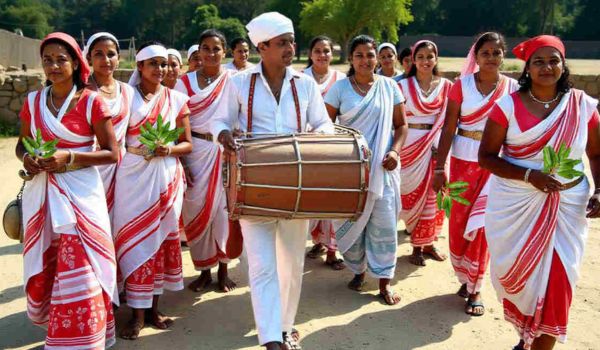
- 22 Mar 2026
In News:
Recently, the President of India Droupadi Murmu extended greetings on the occasion of the Sarhul festival, highlighting its cultural and ecological significance. The festival reflects the deep-rooted traditions of India’s tribal communities and their harmonious relationship with nature.
About Sarhul Festival
- Sarhul, meaning “worship of the Sal tree”, is one of the most important festivals of Adivasi communities in eastern India.
- It is primarily celebrated in Jharkhand and also in parts of Odisha, West Bengal, and Chhattisgarh.
- The festival is observed by several tribes, including the Oraon, Munda, Santal, Khadia, and Ho, each of whom may follow distinct customs while sharing a common spiritual essence.
Cultural and Spiritual Significance
- Sarhul is fundamentally a festival of nature worship, symbolising the union of the Sun and the Earth, which is essential for sustaining life. The Sal tree holds central importance and is revered as the abode of Sama Maa, the village deity believed to protect the community.
- The rituals emphasise ecological balance, fertility, and renewal of life. Through symbolic representation, the pahan (village priest) embodies the Sun, while his wife, the pahen, represents the Earth, highlighting the interdependence of natural forces.
Rituals and Celebrations
Sarhul is celebrated over three days, reflecting a structured blend of ritual purity, community participation, and cultural expression.
- The first day is marked by preparation, including cleaning of homes and sacred groves (Sarna Sthals), collection of Sal flowers, and observance of fasting by the priest.
- The second day forms the core of the festival, when rituals are performed in sacred groves. Offerings and prayers are made for prosperity, good harvest, and community well-being, accompanied by traditional music and dance.
- The final day concludes with communal feasting, including traditional foods and rice beer (Handia), reinforcing social cohesion and shared identity.