
Saturn becomes undisputed 'Moon King' of Solar System
- 05 Apr 2025
In News:
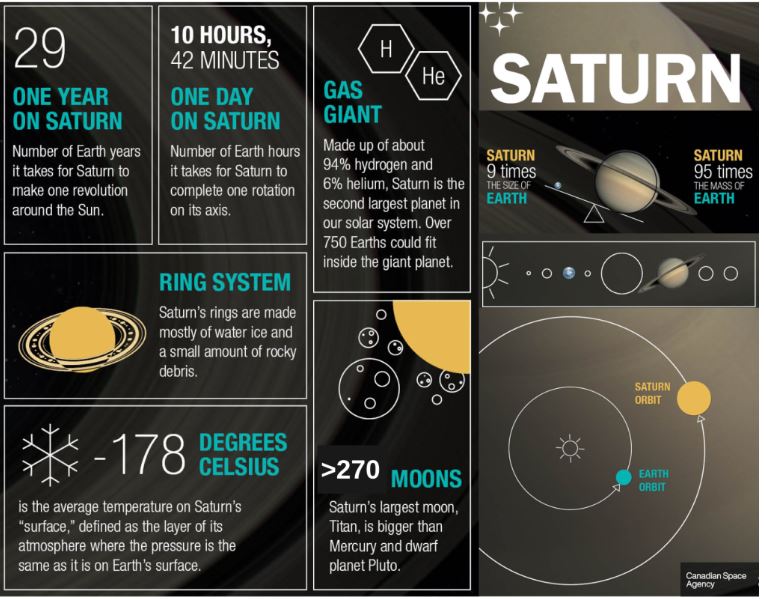
In a major astronomical breakthrough, scientists have discovered 128 new moons orbiting Saturn, raising its total confirmed moon count to 274—the highest for any planet in the solar system. This discovery has been officially recognized by the International Astronomical Union (IAU).
About the Discovery
- The moons were detected using the Canada-France-Hawaii Telescope with a method called “shift and stack”, which enhances the visibility of faint objects moving across the sky.
- Most of the newly identified moons are irregular, small, and non-spherical, indicating a likely origin as captured asteroids or remnants of larger celestial bodies.
- Their clustered orbits suggest a history of violent collisions or fragmentation, possibly linked to the chaotic early evolution of the solar system.
Significance
- Confirms Saturn’s status as the planet with the most known moons, overtaking Jupiter (95 moons as of 2024).
- Enhances understanding of planetary formation, orbital dynamics, and the evolution of ring and satellite systems.
- May contribute to refining the scientific definition of a moon and deepen knowledge of irregular satellite formation in gas giants.
Key Facts about Saturn
- Position: Sixth planet from the Sun.
- Size: Second-largest planet after Jupiter.
- Type: Gas giant composed mainly of hydrogen and helium, with traces of methane and ammonia.
- Density: Approximately 0.69 g/cm³, the only planet less dense than water.
- Shape: Oblate due to rapid rotation—flattened at poles, bulging at the equator.
- Rings: Made of ice, dust, and rocky debris.
- Orbit: About 9.59 AU (1,434 million km) from the Sun; orbital period ~29.45 Earth years.
- Weather: Hosts extreme storms like the Great White Spot, recurring roughly once every Saturnian year (~29 Earth years).
Important Moons of Saturn
Titan
- Largest moon of Saturn and second-largest in the solar system, larger than Mercury.
- Only moon with a dense atmosphere, rich in nitrogen and methane.
- Features liquid hydrocarbon lakes near the poles.
- Explored by Cassini-Huygens mission; lander touched down in 2005.
Enceladus
- An icy moon with a subsurface liquid ocean.
- Known for its highly reflective surface and water-ice geysers.
- Cassini (2005) observed plumes of water vapor ejecting at ~400 m/s.
- Discovery of silica nanograins suggests hydrothermal activity, making it a prime target in the search for extraterrestrial life.
NASA Captures Active Volcano Erupting on Jupiter's Moon Io
- 14 Dec 2024
In News:
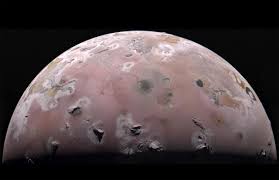
NASA has revealed new details about Io, Jupiter’s third-largest moon and the most volcanic world in our solar system.
Overview:
- NASA’s Juno mission has revealed new insights about Io, Jupiter's third-largest moon, known as the most volcanic world in the solar system.
- Io has over 400 active volcanoes, which send plumes and lava flows into space, creating its unique, fiery surface.
Recent Discoveries and Observations:
- Fiery Heart of Io:
- NASA's Juno mission has helped solve a 44-year-old mystery regarding Io’s volcanic activity, revealing that its volcanoes are likely powered by separate magma chambers rather than a single large magma ocean.
- This discovery was made during Juno’s close flybys in late 2023 and early 2024, using Doppler measurements and precise gravity data to understand the moon’s interior.
- Volcanic Activity:
- Io's volcanoes constantly erupt, spewing lava and plumes that shape its surface. The volcanic activity was first observed by NASA's Voyager 1 spacecraft in 1979.
- Tidal Flexing: Io experiences constant squeezing due to its elliptical orbit around Jupiter, which generates immense internal heat and causes frequent eruptions.
- Scientific Insights:
- The research suggests that tidal forces from Jupiter do not create a global magma ocean inside Io, as previously thought, but instead lead to localized magma chambers that fuel its volcanoes.
- Tidal flexing is the primary cause of the immense internal energy on Io, which melts portions of the moon's interior and drives volcanic activity.
- Broader Implications:
- Understanding Other Moons and Exoplanets: Juno's findings have broader implications for understanding the interiors of other moons like Enceladus and Europa, and even exoplanets and super-Earths.
- Future Missions:
- Juno will continue its mission, with the next close approach to Jupiter scheduled for December 27, 2024, bringing it 2,175 miles above Jupiter's cloud tops. Since entering Jupiter’s orbit in 2016, Juno has traveled over 645 million miles.
QUAD CANCER MOONSHOT

- 23 Sep 2024
In News:
The Quad Cancer Moonshot Initiative is a significant collaborative effort among the Quad countries—India, the United States, Australia, and Japan—aimed at combating cancer through innovative strategies. The initiative focuses on key areas such as preventing and detecting cancer, improving treatment, and alleviating the disease's impact on patients and families.
Key Highlights of the Quad Cancer Moonshot Initiative:
- Focus Areas:
- Cervical Cancer Screening: Enhancing access to screening programs.
- HPV Vaccination: Increasing vaccination rates against HPV, which is the leading cause of cervical cancer.
- Patient Treatment: Improving treatment protocols and accessibility for cancer patients.
- India’s Contributions:
- Financial Commitment: India has pledged $10 million to support the WHO’s Global Initiative on Digital Health, aimed at enhancing digital health technologies for cancer care in the Indo-Pacific region.
- Material Support: India will provide cervical cancer screening kits, detection tools, and HPV vaccines valued at $7.5 million to bolster healthcare initiatives in the region.
- AI-based Protocols: Development of AI-driven treatment protocols to improve care delivery for cancer patients.
- Capacity Building: India aims to enhance radiotherapy services and overall cancer prevention strategies in the Indo-Pacific.
This initiative represents a strong commitment to fostering international collaboration in healthcare, particularly in the prevention and treatment of cervical cancer. By empowering communities with accessible tools and resources, the Quad countries aim to significantly reduce the burden of cancer in the region.
EARTH TO EXPERIENCE A TEMPORARY 'MINI-MOON' IN SEPTEMBER

- 20 Sep 2024
In News:
In late September, Earth will temporarily capture a small asteroid known as 2024 PT5. This phenomenon, where an asteroid becomes a "mini-moon," will last for about two months before the asteroid escapes back into space. While Earth has gained mini-moons before, such occurrences are quite rare; most asteroids either miss the planet entirely or burn up upon entering the atmosphere.
What Is a 'Mini-Moon'?
Mini-moons are small asteroids that get temporarily captured by Earth's gravity, orbiting the planet for a limited time. These asteroids are typically small and difficult to detect—only four mini-moons have been identified in Earth's history, and none remain in orbit today. Some objects previously thought to be mini-moons were later determined to be space debris, including rocket stages and satellites.
Details About 2024 PT5
Discovered on August 7 through the NASA-funded Asteroid Terrestrial-impact Last Alert System (ATLAS), 2024 PT5 measures approximately 33 feet in length, making it invisible to the naked eye and standard amateur telescopes. However, it is detectable by professional astronomical equipment.
According to Carlos de la Fuente Marcos, a professor at the Complutense University of Madrid, 2024 PT5 originates from the Arjuna asteroid belt, which consists of space rocks that share similar orbits with Earth. There is also speculation that it could be a fragment resulting from an impact on the moon, as noted by Paul Chodas from NASA's Jet Propulsion Laboratory (JPL).
However, some experts argue that 2024 PT5 may not fully qualify as a mini-moon. For an asteroid to be classified as such, it must complete at least one full orbit around Earth. Instead, 2024 PT5 will follow a horseshoe-shaped path, leading Lance Benner, a principal investigator at JPL, to express skepticism about its classification as a mini-moon.
Significance of the Event
Studying 2024 PT5 will provide valuable insights into asteroids that pass near Earth and their potential for future collisions. Additionally, many asteroids are believed to contain precious minerals and water, which could be harvested for future space missions and resource utilization. Observing this mini-moon will enhance our understanding of these celestial bodies and their behavior in Earth's vicinity.
China’s Chang’e-6 Mission
- 06 May 2024
Why is it in the News?
Recently, China launched its second mission to the far side of the Moon. If successful, it will be the world’s first mission to bring back samples from the part of the Moon that the Earth never gets to see.
What is Chang’e-6 Mission?
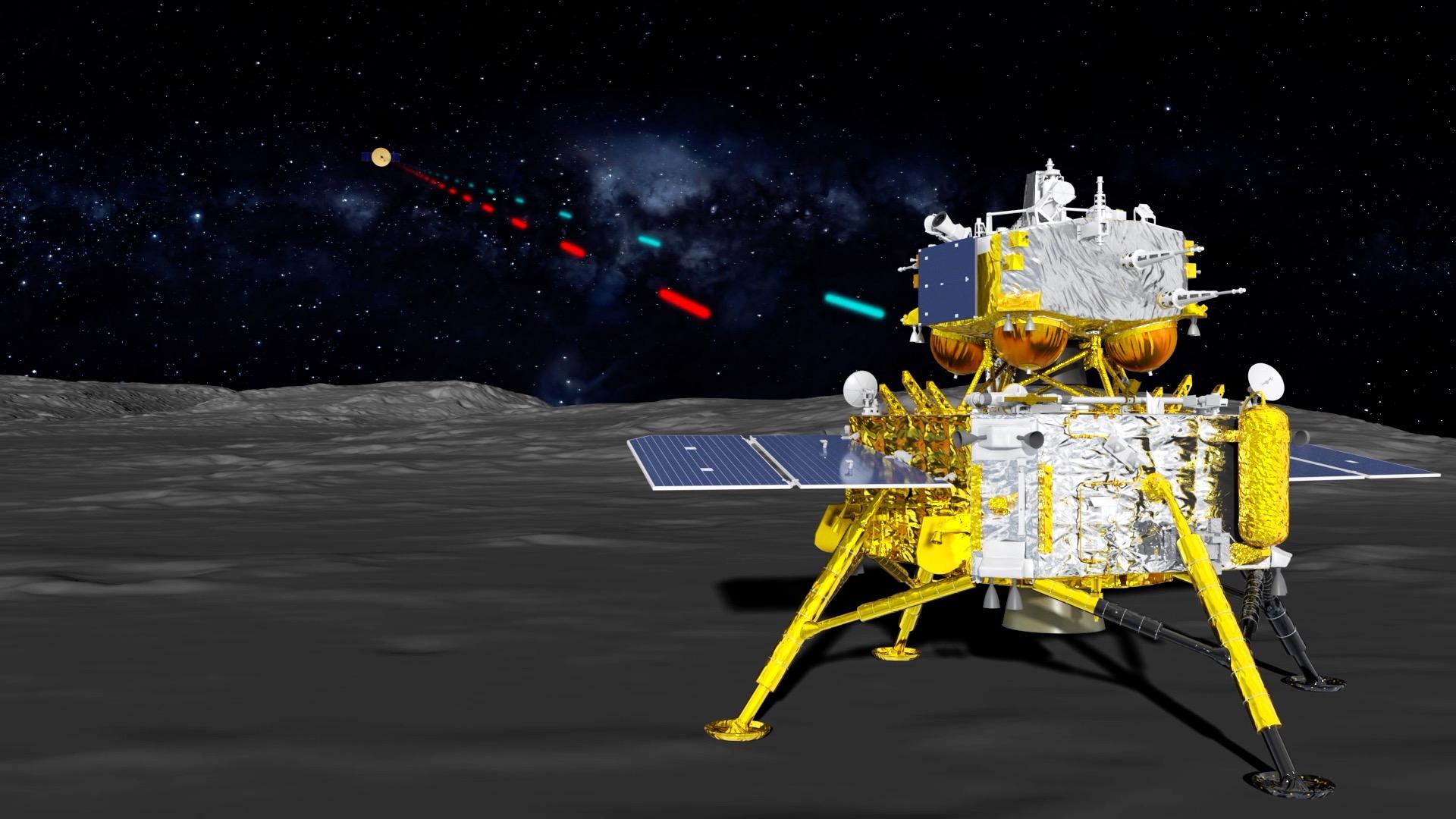
- China's Chang'e-6 spacecraft launched recently, on a mission to collect samples from the far side of the Moon.
- The mission aims to grab samples containing material ejected from the lunar mantle and thus provide insight into the history of the Moon, Earth, and Solar System.
- It is a 53-day-long mission. After reaching the Moon’s orbit, the mission’s orbiter will circle the natural satellite while its lander will descend into the 2,500-kilometre-wide South Pole-Aitken basin on the lunar surface.
- The impact that created the basin, among the largest in the history of the solar system, is thought to have dug up material from the lunar mantle.
- If that material can be retrieved, scientists can learn more about the history of the Moon’s insides.
- After collecting samples through scooping and drilling, the lander will launch an ascent vehicle, which will transfer the samples to the orbiter’s service module.
- This module will then return to the Earth.
- China is the only country to achieve a soft landing on the far side of the Moon.
- In 2019, its Chang’e-4 mission landed on the region and explored the Moon’s Von Karman crater with the help of a rover.
Why is the Far Side of the Moon Important?
- The Moon’s far side is often referred to as the dark side because it cannot be seen from the Earth, not because it does not catch the Sun’s rays.
- The Moon is tidally locked with the Earth and therefore, we see only one side of the Moon, also known as the near side.
- The far side has been under the spotlight in recent years as it is very different from the near side.
- It has a thicker crust, more craters and fewer maria, or plains where lava once flowed.
- Examining the samples from the far side can help scientists solve mysteries about the origin and evolution of the Moon — till now, scientists have only been able to analyse samples from the near side.
- The far-side samples can also give answers to the longstanding question: why is it different from the near side?
- Going to the far side, getting samples and doing different kinds of geophysical measurements is really important to figuring out this really long, long-standing mystery.
Antares
- 02 May 2024
Why is it in the News?
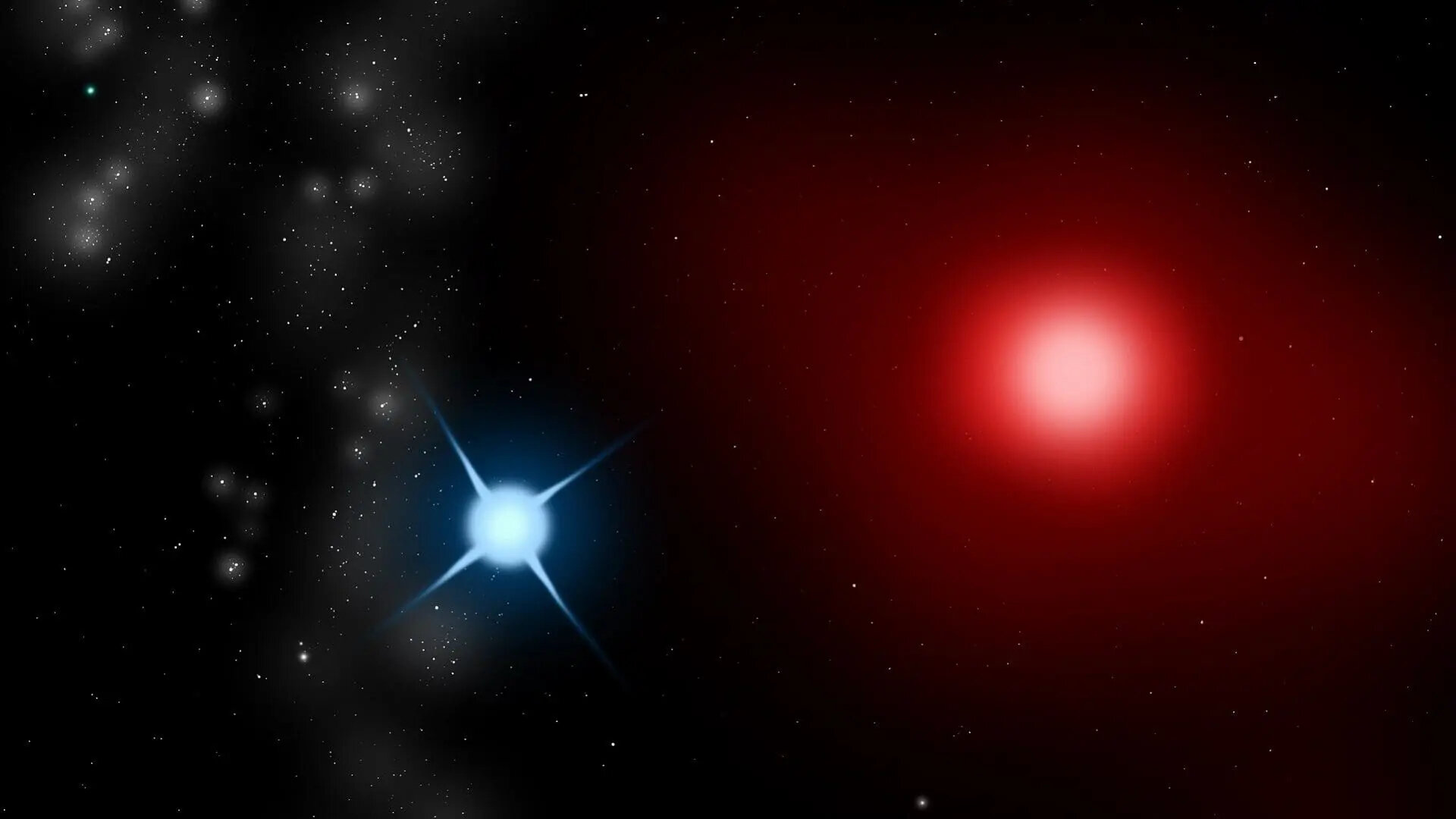
The Bengaluru-based Indian Institute of Astrophysics (IIA) has filmed the passing of the moon in front of Antares, a bright red star.
What is Antares?
- Antares, also known as Alpha Scorpii, is one of the brightest stars in our night sky.
- Located in the constellation Scorpius, Antares has captivated stargazers and astronomers for centuries with its fiery red hue and impressive size.
- The name Antares is derived from the Greek word meaning “rival to Mars” due to its reddish appearance, similar to the planet Mars.
- Ancient cultures associated Antares with various mythological figures, including the Greek god Ares and the Egyptian god Osiris.
- It is also one of the largest known stars, with a diameter estimated to be around 700 times that of our Sun.
- Antares is located approximately 550 light-years away from Earth, making it a relatively close neighbour in astronomical terms.
- It is classified as a red supergiant star, belonging to the spectral type M1.5 Iab-Ib.
- Its surface temperature is about 3,500 Kelvin.
- Antares is a variable star, which means its brightness fluctuates over time.
- Scientists estimate that Antares is approximately 12 million years old.
- As a red supergiant, it is in the later stages of its stellar evolution and is expected to explode as a supernova in the future.
- Antares has a mass estimated to be about 15 times that of our Sun.
- It is primarily composed of hydrogen and helium, with traces of heavier elements.
- Antares has a companion star in a binary system known as Antares B.
- The two stars orbit each other, with a separation of several astronomical units.
- The visual apparent magnitude of Antares is around 1.06, making it one of the 20 brightest stars in the night sky.
- Antares emits a significant amount of infrared radiation, making it a prominent object in infrared observations.
- Antares experiences intense stellar winds, which cause it to lose mass at a rate of approximately one Earth mass every hundred thousand years.
- Antares played a crucial role in ancient navigation, particularly in the Southern Hemisphere, serving as a marker for determining the position of celestial objects.
Coordinated Lunar Time (LTC)

- 10 Apr 2024
Why is it in the News?
Recently, the US White House has officially instructed NASA to create a lunar time standard for international and private sector coordination on the Moon.
What is Coordinated Lunar Time (LTC)?
- Coordinated Lunar Time (LTC) is a lunar-based time system being developed by NASA in collaboration with other government agencies to establish a standardized time zone for the Moon.
- LTC aims to provide a precise timekeeping benchmark for lunar spacecraft and satellites, synchronizing communication between astronauts, bases, and Earth.
Importance of LTC:
- As lunar exploration and commerce expand, a unified time standard becomes essential for managing operations, ensuring transaction reliability, and coordinating logistics.
- Furthermore, LTC addresses the discrepancy in timekeeping between Earth and the Moon due to differences in gravity, as time ticks faster on the Moon, causing Earth-based clocks to lose an average of 58.7 microseconds per day.
- Establishing LTC will prevent potential problems in spacecraft docking, data transfer, communication, and navigation.
How Will a Lunar Time Standard Be Established?
- Like on Earth, atomic clocks can be deployed on the lunar surface to set a time standard.
- These clocks have to be placed on the Moon at different locations since the Moon’s rotation and even local lumps of mass, called mascons, beneath the crust of the Moon affect the flow of time ever so slightly.
- Mascons or mass concentrations are so dense that they alter the Moon’s local gravity field.
- These effects are minor but the output from these clocks can be synthesized to give the Moon its own independent time, which can be tied back to UTC for seamless operations from Earth as well.
How Does Earth’s Time Standard Work?
- Most of the clocks and time zones of the world are based on Coordinated Universal Time (UTC), set by the International Bureau of Weights and Measures in Paris, France.
- UTC is essentially an internationally agreed-upon standard for world time.
- It is tracked by a weighted average of more than 400 atomic clocks placed in different parts of the globe.
- Atomic clocks measure time in terms of the resonant frequencies — the natural frequency of an object where it tends to vibrate at a higher amplitude — of atoms such as cesium-133.
- In atomic time, a second is defined as the period in which a cesium atom vibrates 9,192,631,770 times.
- As the vibration rates at which atoms absorb energy are highly stable and ultra-accurate, atomic clocks make for an excellent device for gauging the passage of time.
- To obtain their local time, countries must subtract or add a certain number of hours from UTC depending on how many time zones they are away from 0 degree longitude meridian, also known as the Greenwich meridian.
- If a country lies on the west of the Greenwich meridian, it has to subtract from the UTC, and if a country is located on the east of the meridian, it has to add.
Presence of Ozone on Jupiter's Moon Callisto
- 02 Apr 2024
Why is it in the News?
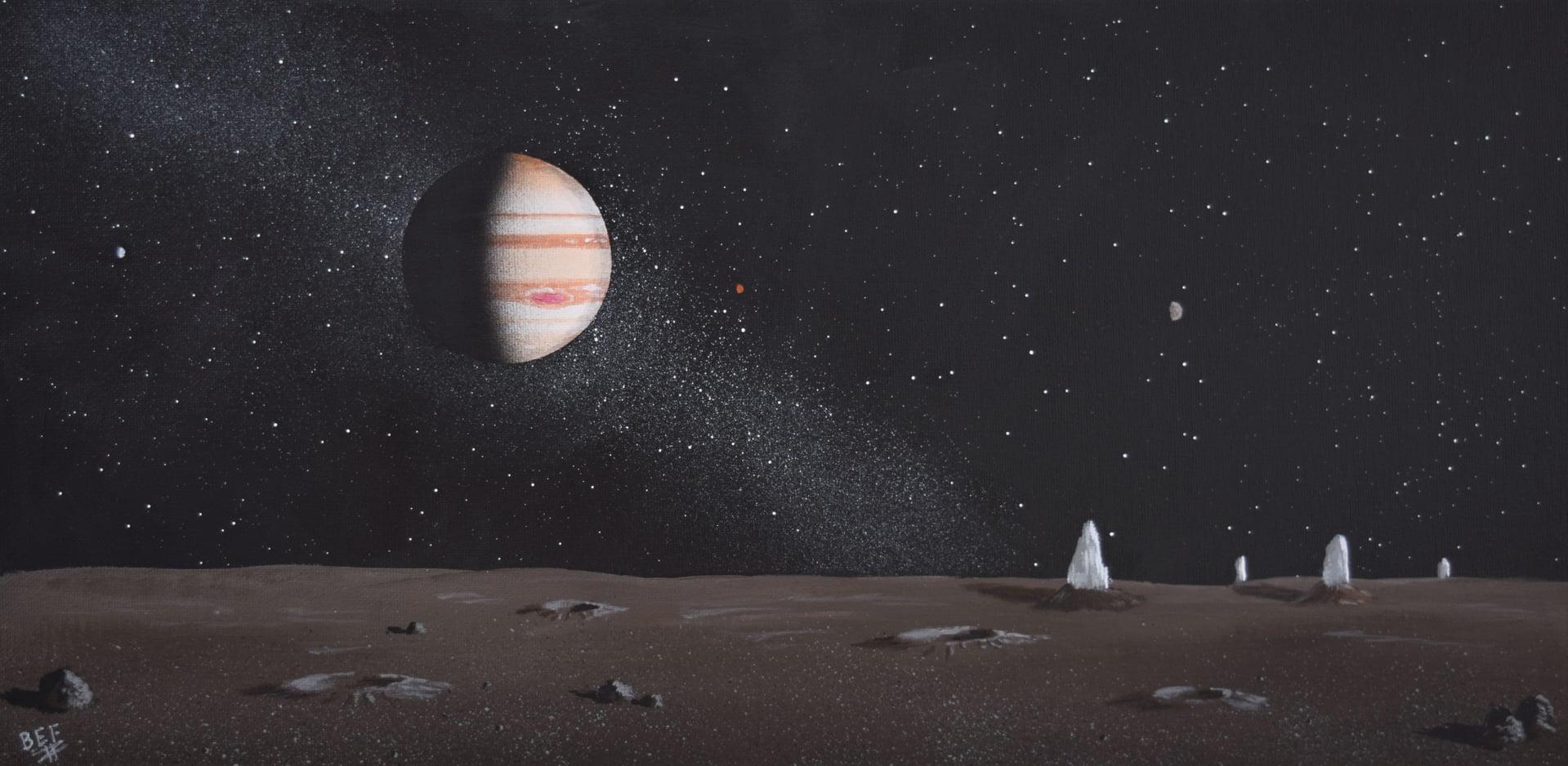
An international team of scientists, including from India, has discovered strong evidence indicating the presence of ozone on Jupiter’s moon Callisto, shedding light on the complex chemical processes taking place on icy celestial bodies in the Solar System.
Study on the Formation of Ozone in Callisto's Icy Environment:
- A recent study examined the chemical evolution of sulfur dioxide (SO2)-rich astrochemical ice found on Callisto's surface when exposed to ultraviolet (UV) radiation.
- The investigation revealed a unique signature indicating the formation of ozone, which could have implications for the potential habitability of the Jovian moon.
- Callisto is Jupiter's second-largest moon and the third-largest moon in our solar system.
- It has a relatively stable surface, which could play a vital role in preserving subsurface oceans or potential habitats beneath its icy crust.
- The study analyzed UV absorption spectra data from ice samples containing SO2, a primary component of Callisto's surface ice, and observed the generation of ozone under UV irradiation.
- Ozone formation on Callisto could have implications for the moon's astrobiological potential, as ozone can protect the surface from harmful radiation.
- Further research is needed to better understand the implications of this discovery on Callisto's habitability and the potential for future exploration missions.
Callisto's Distinctive Environment:
- Following Saturn, Jupiter boasts the second-highest number of moons in the Solar System, with Callisto ranking among its largest moons and holding the position of the third-largest moon overall, after Ganymede and Titan.
- Comprised predominantly of water ice, rocky elements, sulfur dioxide, and traces of organic compounds, Callisto presents a compelling potential for harboring life beyond Earth within the Solar System.
- The moon's extensively cratered surface bears witness to a lengthy history of impacts from asteroids and comets.
Importance of the Research:
- The identification of ozone on Callisto hints at the existence of oxygen, a crucial component essential for the development of intricate molecules vital for life, including amino acids, thus prompting inquiries into the moon's potential for sustaining life.
- This finding also has implications for other icy moons within our Solar System, offering insights that could broaden our comprehension of habitable environments beyond Earth.
Significance of Ozone:
- Consisting of three oxygen atoms bonded together, the ozone molecule plays a pivotal role in shielding life on Earth.
- Situated in the lower region of the Earth's stratosphere, approximately 15-35 kilometers above the surface, the ozone layer acts as a protective barrier.
- Without this layer, ultraviolet radiation would intensify, posing significant threats to various species and disrupting ecosystems.
- Ultraviolet-B and ultraviolet-C, with wavelengths ranging from 290 to 320 nanometers and 100 to 280 nanometers respectively, can cause DNA damage, and mutations, and elevate the risk of skin cancer and cataracts in humans.
- Furthermore, ultraviolet light can impede plant growth and adversely affect diverse organisms.
First moon-landing by private company
- 24 Feb 2024
Why is it in the News?
Fifty-two years after the last successful Apollo mission, a US-made spacecraft landed on the Moon recently which also marks the arrival of private space companies on the lunar surface.
What is Odysseus Lunar Exploration?
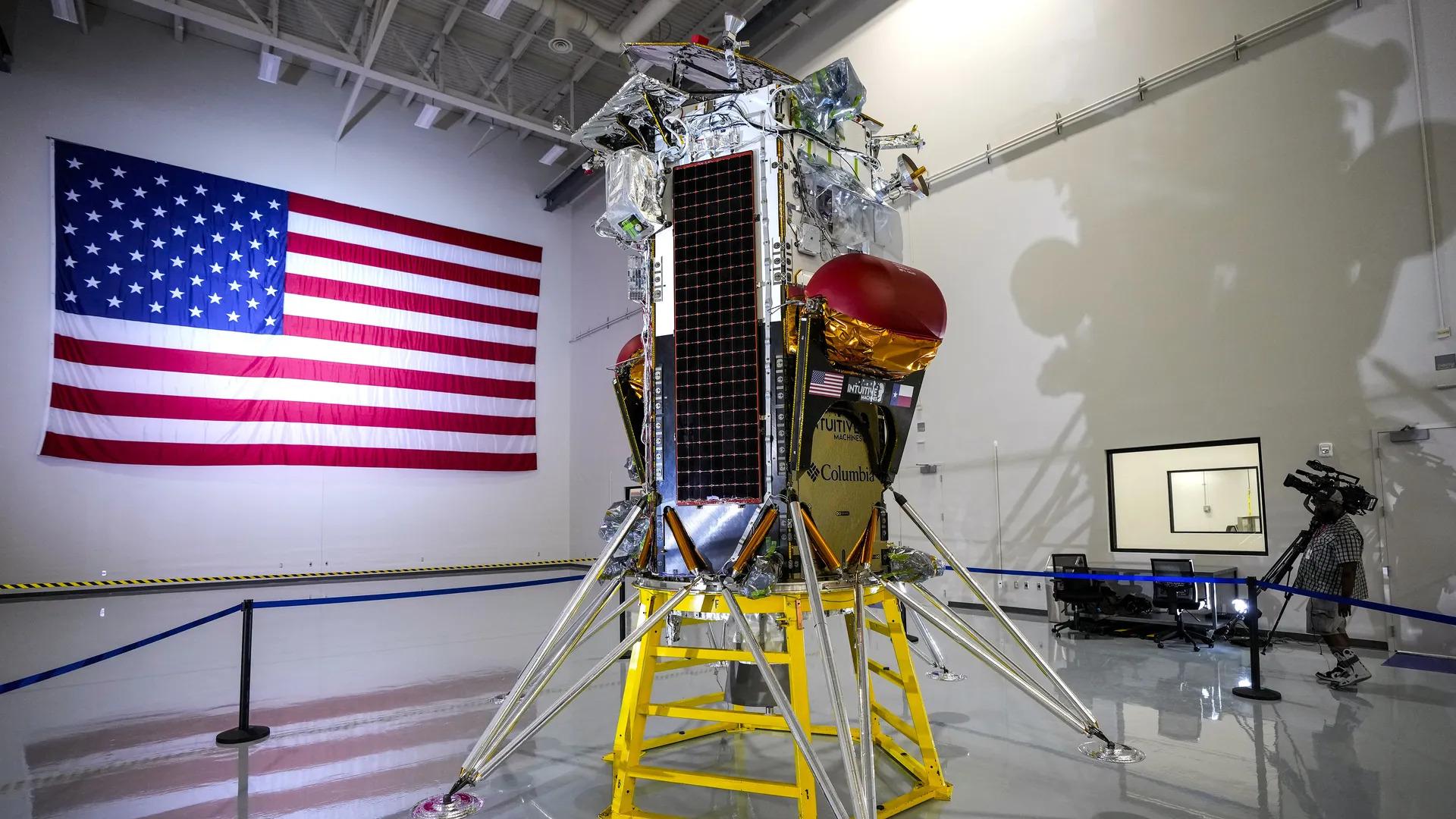
- Odysseus is a spacecraft built by Intuitive Machines, embarked on its journey from Earth aboard a Falcon 9 rocket by SpaceX recently.
- Intuitive Machines, headquartered in Houston, USA, boasts a decade-long legacy in space exploration endeavours.
- Loaded with six NASA payloads, Odysseus set its course for the Moon.
- Its lander module, Nova-C, achieved the milestone of landing in the Moon's south pole region, following Chandrayaan-3's similar feat last year.
- This marks the third successful moon-landing event in under a year, alongside Chandrayaan-3 and Japan's SLIM (Smart Lander for Investigating Moon).
Mission Objectives:
- The primary aim of the lunar lander is to assess the environmental conditions at the Moon's south pole.
- This assessment holds significant importance as NASA gears up for a crewed mission in September 2026 with Artemis III.
- Before sending astronauts to this area, NASA seeks to gather crucial data, including insights into water presence and accessibility, to inform mission planning.
Funding:
- Under the Commercial Lunar Payload Services (CLPS) program, NASA allocated $118 million to Intuitive Machines for this mission.
- CLPS has engaged at least 14 private companies to ferry NASA payloads to the Moon, fostering a collaborative environment aimed at nurturing the private space industry's capabilities in lunar exploration technology and science.
The Significance of Odysseus:
- Advancing Long-Term Lunar Presence: Odysseus' successful landing heralds a transformative phase in lunar exploration, aiming to establish infrastructure and a technological ecosystem capable of sustaining extended human presence.
- Diverging from Past Lunar Missions: In contrast to the moon landings of the 1960s and 1970s spearheaded by the US and the Soviet Union, Odysseus' mission focuses on leveraging lunar resources for sustained exploration.
- While historic moon landings were remarkable feats, technological limitations of the time hindered the immediate utilisation of lunar resources such as mining.
- Supporting US Commitment to Moon Exploration via Artemis Program: Odysseus' touchdown aligns with the US commitment to rekindle lunar exploration through the ambitious Artemis program.
- This endeavour transcends mere lunar landing missions, aiming to establish essential infrastructure and a thriving lunar economy conducive to comprehensive exploration.
- Unlocking Lunar Potential as a Gateway to Deep Space: By laying the groundwork for lunar infrastructure and economic activity, missions like Odysseus pave the way for leveraging the Moon as a springboard for deeper space exploration, offering nations unprecedented opportunities for cosmic discovery.
How Japan’s moon-landing attempt in January will affect Chandrayaan 4 (The Hindu)
- 28 Dec 2023
Why is it in the News?
Recently, the “Moon Sniper” lander developed by Japan’s space agency successfully entered lunar orbit.
About the Smart Lander for Investigating Moon (SLIM) Mission:
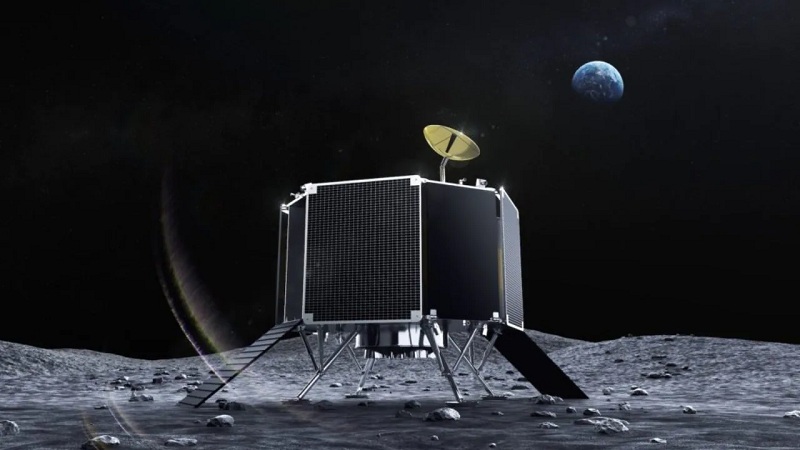
- The Smart Lander for Investigating Moon (SLIM) is a spacecraft crafted and launched by the Japan Aerospace Exploration Agency (JAXA) on September 7, 2023, from the Tanegashima spaceport.
- Remarkably lightweight at 590 kg, SLIM embarked on its mission alongside XRISM, a cutting-edge X-ray space telescope, on an H-2A rocket.
- Upon launch, SLIM assumed an elliptical orbit around the moon within a span of approximately three minutes.
- Notably, the apogee (farthest point) of this orbit extends to 4,000 km, while the perigee (closest point) hovers at 600 km above the lunar surface.
Objectives of SLIM on the Lunar Surface:
- Before its lunar descent, SLIM is programmed to release two compact rovers known as Lunar Excursion Vehicle (LEV) 1 and 2.
- Working in tandem with SLIM, LEV-1, and LEV-2 are tasked with conducting a comprehensive study of the lunar surface near the designated landing area.
- Their mission encompasses the collection of temperature and radiation readings, as well as endeavours to investigate the moon's mantle.
- This collaborative effort by SLIM and its rovers aims to enhance our understanding of lunar conditions and contribute valuable insights to lunar exploration.
What is the XRISM Mission:
- The X-Ray Imaging and Spectroscopy Mission (XRISM) is a collaborative effort between the Japan Aerospace Exploration Agency (JAXA) and the National Aeronautics and Space Administration (NASA), with valuable contributions from the European Space Agency (ESA).
- Mission Objective: XRISM is designed to observe X-rays emanating from deep space, aiming to precisely identify their wavelengths with an unprecedented level of accuracy.
- The mission employs cutting-edge spectroscopy techniques to measure changes in the brightness of celestial objects across various wavelengths.
- Technological Advancements: Leveraging state-of-the-art spectroscopy, XRISM can detect X-rays within a broad energy spectrum ranging from 400 to 12,000 electron volts.
- To provide a perspective, the energy of visible light typically falls within the 2 to 3 electron volts range.
- This expanded energy range enables astrophysicists to gain novel insights into some of the universe's most dynamic regions, vast structures, and entities characterized by formidable gravitational forces.
Lunar Codex (The Guardian)
- 03 Aug 2023
Why in the News?
The Lunar Codex program has the potential to bestow immortality upon an assorted collection of human-created art.
About Lunar Codex:
- The Lunar Codex is a remarkable collection of art curated by artists worldwide, intended to endure on the lunar surface as a timeless testament to human creativity, even amid tumultuous times like wars, pandemics, and economic crises.
- At the helm of this endeavor is Samuel Peralta, a semi-retired physicist and art enthusiast from Canada.
- Comprising diverse forms of digitized art, the Lunar Codex will be dispatched to the moon to serve as a permanent record of human ingenuity. Memory cards and NanoFiche, an updated 21st-century version of film-based microfiche, guarantee the safe arrival of these artistic expressions to the lunar surface.
- Carefully assembled from contributions by 30,000 artists, writers, filmmakers, and musicians representing 157 countries, the collection spans an array of art forms, including images, magazines, books, podcasts, movies, and music.
- The art is divided into four capsules:
- The first capsule, the Orion collection, has already encircled the moon after being launched aboard NASA's Artemis 1 mission via the Orion spacecraft last year.
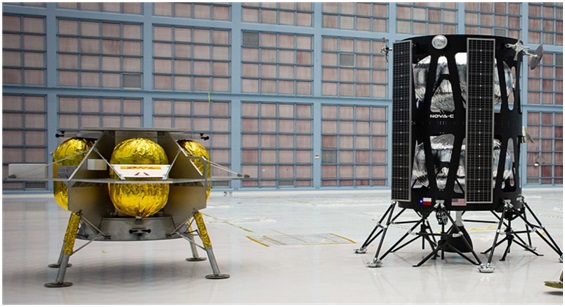
- In the months ahead, multiple lunar landers will transport the Lunar Codex capsules to distinct locations, including craters at the moon's South Pole and the lunar plain known as Sinus Viscositatis, ensuring the enduring legacy of human creativity on Earth's celestial neighbor.
CYCLONE HAMOON (Indian Express)
- 25 Oct 2023
What is the News ?
The severe cyclonic storm “Hamoon” weakened into a deep depression and is likely to weaken further into a depression in the next six hours, the India Meteorological Department (IMD) said Wednesday.
Facts About:
- Presently situated over the west-central Bay of Bengal, it is anticipated to intensify shortly and proceed north and northeastward towards the coastal regions of Bangladesh and West Bengal.
- Named by: Iran gave the cyclonic storm its name after it formed.
Inland desert lakes and marshlands are referred to as "hamoon" in Persian.
They developed as yearly natural reservoirs in regions that border the Helmand basin.
- Projected Landfall: After weakening into a deep depression, it is predicted to make landfall between Khepupara and Chittagong on the coast of Bangladesh.
- Potential Effects: Parts of India are predicted to receive rainfall from the Hamoon, despite its decreased intensity.
- The northeastern states of Nagaland, Manipur, Mizoram, Tripura, south Assam, and Meghalaya are expected to experience light to moderate rainfall, with isolated heavy rains (64.5 mm-115.5 mm) according to the India Meteorological Department (IMD).
- Because of the anticipated effects of the cyclone, the (IMD) has also issued a yellow alert for coastal districts in West Bengal and Odisha.
How are Cyclones Given Their Names?
- Cyclones receive their names through a process managed by regional specialized meteorological centers (RSMCs) and Tropical Cyclone Warning Centers (TCWCs).
- There are a total of six RSMCs and five regional Tropical Cyclone Warning Centers responsible for this naming process.
- The Indian Meteorological Department (IMD) serves as an RSMC and is responsible for naming cyclones that form over the north Indian Ocean, encompassing the Bay of Bengal and the Arabian Sea.
- Additionally, the IMD is tasked with issuing advisories to 12 other countries in the region regarding cyclone and storm development.