
India BioEconomy Report (IBER) 2026
- 22 Mar 2026
In News:
- India’s bioeconomy has witnessed remarkable expansion, growing from around USD 10 billion in 2014 to over USD 195 billion in 2025, with an annual growth rate of nearly 17–18%.
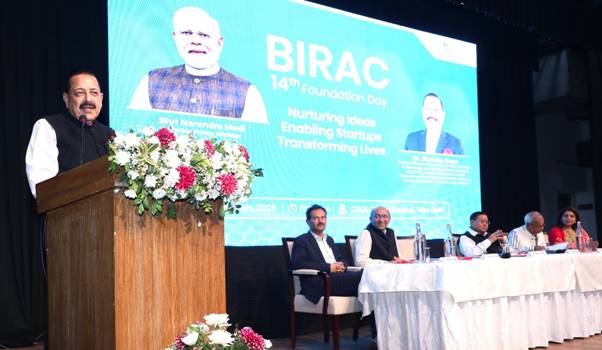
- The India Bioeconomy Report (IBER) 2026, released during the 14th Foundation Day of the Biotechnology Industry Research Assistance Council (BIRAC), highlights that the sector now contributes approximately 4.8–5% of India’s GDP.
Growth Trajectory and Current Status
- India’s bioeconomy has transitioned from a niche segment to a major pillar of economic growth and innovation. The sector recorded one of its highest growth rates in recent years, expanding significantly in scale and diversification.
- The bioeconomy comprises multiple segments, with BioIndustrial activities emerging as the largest contributor, followed by BioPharma, BioServices, and BioAgri.
- The BioPharma sector, in particular, is poised for further growth due to opportunities in biosimilars and peptide manufacturing, driven by the expiry of global drug patents.
- India has also developed a strong ecosystem of over 11,800 biotech startups, supported by research institutions, incubation platforms, and public policy initiatives. The country hosts a growing number of Global Capability Centres (GCCs) in healthcare and life sciences, contributing to employment and global integration.
Key Drivers of Growth
- The rapid expansion of India’s bioeconomy is underpinned by a combination of policy support, institutional mechanisms, and technological advancements.
- Institutions like BIRAC have played a crucial role in bridging the gap between research and industry, enabling the translation of scientific innovations into commercially viable products. Government initiatives such as the BioE3 Policy (Biotechnology for Economy, Environment and Employment) aim to promote sustainable biomanufacturing, including areas like precision biotherapeutics, smart proteins, and climate-resilient agriculture.
- Further, financial mechanisms like the Research, Development and Innovation (RDI) Fund with an outlay of ?1 lakh crore are designed to support scaling up of deep-tech innovations. The emphasis on bio-foundries, Bio-AI hubs, and advanced manufacturing platforms reflects India’s push towards next-generation biotechnology capabilities.
Economic and Strategic Significance
The bioeconomy is increasingly central to India’s development strategy, contributing to healthcare innovation, agricultural productivity, environmental sustainability, and industrial growth. It also enhances India’s position in global value chains by enabling high-value exports and advanced research capabilities.
With a target of reaching a USD 300 billion bioeconomy by 2030, the sector is expected to generate employment, promote entrepreneurship, and strengthen India’s status as a global biotechnology hub.