
Eurasian Otter
- 09 Feb 2026
In News:
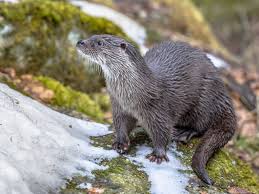
The Eurasian otter has been recently sighted in the Sindh River in Ganderbal district of Jammu and Kashmir. This observation is ecologically significant as the species was earlier believed to have disappeared from the region, highlighting improving riverine ecosystem conditions and possible cross-border wildlife movement.
About Eurasian Otter
- Scientific Name: Lutra lutra
- Also known as: European otter, Common otter, Old World otter
- Type: Semi-aquatic, carnivorous mammal
- Behaviour: Elusive and largely solitary in nature
Distribution
- Global: Middle East, Europe, Northern Africa, Russia, China, and other parts of Asia
- India: Northern, North-Eastern, and Southern India
- In the Indian subcontinent, it is commonly associated with cold hill regions and mountain streams
Habitat
- Occupies a wide range of freshwater and coastal ecosystems such as:
- Rivers and streams
- Highland and lowland lakes
- Marshes, swamp forests, and coastal areas
- Habitat selection is independent of size, origin, or latitude of the water body
Key Adaptations and Features
- Webbed feet for efficient swimming
- Ability to close ears and nostrils underwater
- Dense, short fur that traps air for insulation
- Highly developed sense of sight, smell, and hearing, aiding hunting and survival
Ecological Significance
- Considered an indicator species for healthy freshwater ecosystems
- Presence reflects low pollution levels and good prey availability
Threats
- Water pollution
- Habitat degradation
- Illegal hunting for fur
Conservation Status
- IUCN Red List: Near Threatened
- CITES: Appendix I
- Wildlife (Protection) Act, 1972: Schedule II
Rediscovery of the Eurasian Otter in Kashmir
- 12 Jun 2025
In News:
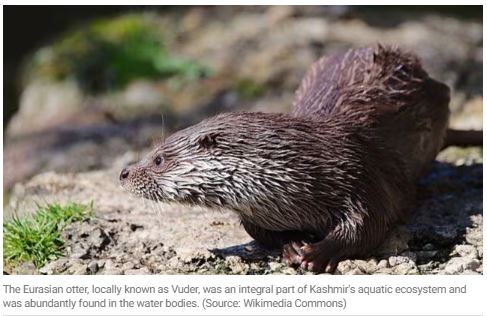
After being presumed extinct in the Kashmir Valley for nearly three decades, the Eurasian otter (Lutra lutra) has been spotted again in the Lidder River in Srigufwara, South Kashmir. This rare sighting rekindles hope for the revival of the Valley’s aquatic biodiversity.
About Eurasian Otter:
- Common Names: Eurasian otter, European otter, Common otter, Old-World otter
- Local Name in Kashmir: Vuder
- Type: Semi-aquatic carnivorous mammal
- Distribution:
- Widely spread across Europe, the Middle East, Northern Africa, and Asia (from Eastern Russia to China).
- In India, found in northern, northeastern, and southern regions.
- In Kashmir, historically abundant in Dal Lake, Dachigam streams, Rambiara stream, and the Lidder River.
Habitat & Features:
- Habitat:
- Occupies diverse freshwater and coastal ecosystems—lakes, rivers, marshes, swamp forests, and mountain streams.
- In the Indian subcontinent, prefers cold hill and mountain waters.
- Physical Traits & Adaptations:
- Sleek brown fur (lighter underneath), long streamlined body, short legs, and thick tail.
- Aquatic adaptations:
- Webbed feet
- Ability to close ears and nostrils underwater
- Dense fur trapping air for insulation
- Excellent vision, hearing, and olfactory senses.
- Behavior: Elusive, solitary, and primarily nocturnal.
Conservation Concerns:
- Primary Threats:
- Water pollution degrading habitats
- Hunting for fur, historically significant in Kashmir
- Conservation Status:
- IUCN Red List: Near Threatened
- Wildlife Protection Act, 1972 (India): Schedule II
- CITES: Appendix I