
African Union
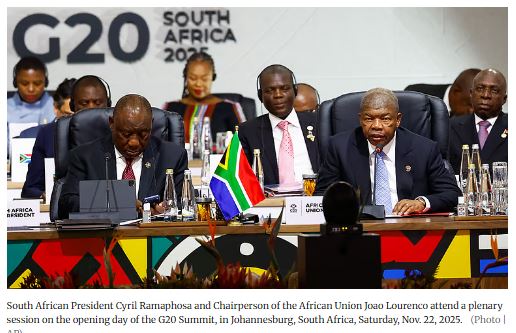
- 16 Feb 2026
In News:
The African Union (AU), launched in 2002 to replace the OAU, is a continental body of 55 African states headquartered in Addis Ababa, Ethiopia.
Recently, the African Union (AU) held its annual summit in Ethiopia amid growing discussions on governance reforms and youth representation within the bloc.
Origin and Evolution
The African Union was officially launched in 2002, replacing the Organization of African Unity (OAU), which had been established in 1963.
Why the Transition?
- The OAU primarily focused on decolonization and anti-apartheid struggles.
- The AU was created with a broader mandate including:
- Political and economic integration
- Conflict resolution
- Sustainable development
- Stronger global representation for Africa
Membership
- Comprises 55 member states (all internationally recognized African countries).
- It represents the entire African continent.
Headquarters
- Located in Addis Ababa, Ethiopia.
Objectives of the African Union
The AU aims to:
- Promote unity and solidarity among African countries.
- Foster peace, security, and stability.
- Advance economic integration and development.
- Protect sovereignty and territorial integrity.
- Enhance Africa’s voice in global governance.
Governance Structure
Assembly
- Highest decision-making body.
- Composed of Heads of State and Government.
- Determines policy direction.
Executive Council
- Consists of Foreign Affairs Ministers.
- Prepares decisions and policies for the Assembly.
AU Commission
- Administrative arm of the AU.
- Implements decisions of the Assembly and Executive Council.
- Headquartered in Addis Ababa.
Peace and Security Council (PSC)
- Responsible for:
- Conflict prevention
- Peacekeeping missions
- Crisis response mechanisms
The PSC functions somewhat similarly to the UN Security Council but at the continental level.
Participatory and Advisory Bodies
To promote democratic participation:
- Pan-African Parliament
- Ensures representation of African peoples.
- Economic, Social and Cultural Council (ECOSOCC)
- Civil society advisory body.
These institutions reflect the AU’s goal of citizen engagement and inclusive governance.
Contemporary Context
Recent summits have witnessed debates over:
- Youth representation in governance
- Leadership renewal within member states
- Democratic accountability
- Economic integration initiatives such as the African Continental Free Trade Area (AfCFTA)
With Africa having one of the world’s youngest populations, youth inclusion has become a prominent theme in AU deliberations.
African Union (AU)

- 09 May 2024
Why is it in the News?
The African Union condemned Wednesday the Israeli military's moves into southern Gaza's Rafah, calling for the international community to stop "this deadly escalation" of the war.
About the African Union (AU):
- The African Union (AU) is a continental organization comprising 55 member states, representing the countries of the African continent.
- Established in 2002, it succeeded the Organization of African Unity (OAU), which was founded in 1963.
- The primary objective of the AU is to promote unity, cooperation, and development among African nations while advancing the continent's global interests.
- Guided by a vision of "An Integrated, Prosperous, and Peaceful Africa, driven by its own citizens and representing a dynamic force in the global arena," the AU plays a critical role in fostering collaboration and progress across the continent.
- To realize its objectives and attain the Pan-African Vision of an integrated, prosperous, and peaceful Africa, the AU developed Agenda 2063, a strategic framework for Africa's long-term socio-economic and integrative transformation.
- This ambitious agenda emphasizes the importance of collaboration and support for African-led initiatives to ensure the aspirations of the African people are achieved.
- The African Union is headquartered in Addis Ababa, Ethiopia, where it functions as a central hub for decision-making and policy development.
The African Union (AU) operates through a structured framework aimed at efficient decision-making and implementation. Its key components include:
- Assembly: Comprising the heads of state and government of member countries, the Assembly serves as the highest decision-making body within the AU.
- Executive Council: Comprised of foreign affairs ministers, the Executive Council focuses on policy matters and offers recommendations to the Assembly.
- AU Commission: Headquartered in Addis Ababa, the AU Commission serves as the administrative arm responsible for executing the decisions of both the Assembly and the Executive Council.
- Peace and Security Council: This council is entrusted with the vital task of preserving peace and security across the continent, addressing conflicts and promoting stability.
- Additionally, the AU structure fosters the active involvement of African citizens and civil society through institutions such as the Pan-African Parliament and the Economic, Social & Cultural Council (ECOSOCC), ensuring broader participation and representation in the union's endeavours.
African leaders demand financial systems reform; launch ‘Africa Club’ at 37th African Union Summit
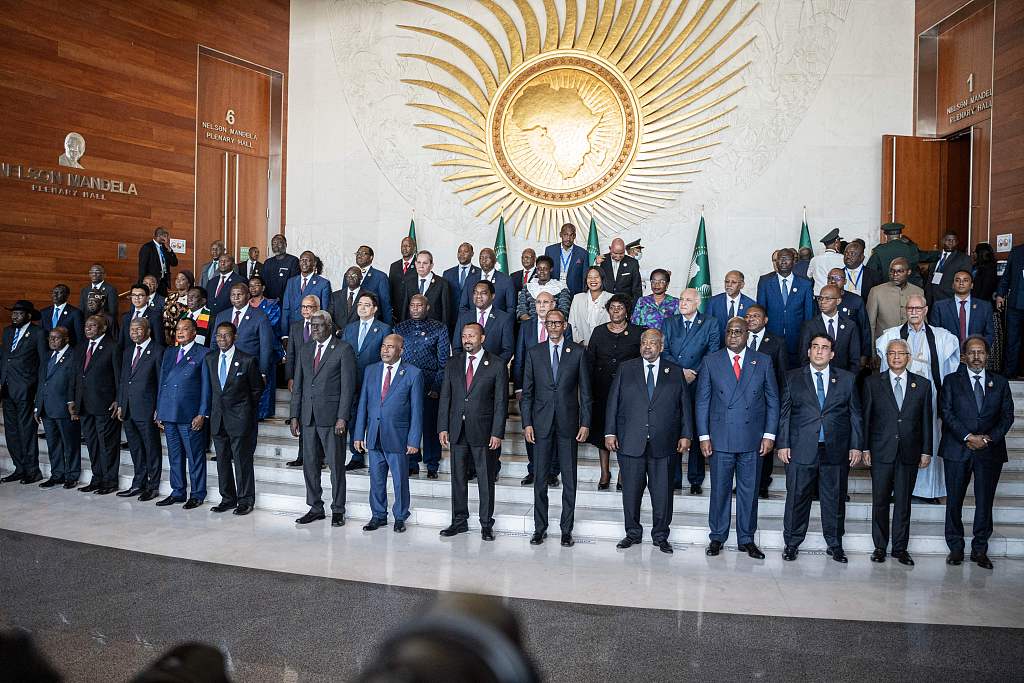
- 28 Feb 2024
Why is it in the News?
Recently, during the 37th African Union Summit, member countries initiated the formation of the Africa Club.
What is the Africa Club?
- The Africa Club is an alliance of African Multilateral Financial Institutions, established at the African Union summit, designed to enhance Africa's influence in the global financial system.
- The initiative aims to align its operations with the Sustainable Development Goals (SDGs) and the African Union's Agenda 2063, fostering innovative financial instruments, facilitating debt management discussions, and promoting collaborative efforts to address the specific needs of African nations.
- Its membership comprises key institutions such as the African Export-Import Bank, Trade and Development Bank, Africa Finance Corporation, African Reinsurance Corporation, African Trade and Investment Development Insurance, Shelter Afrique Development Bank, and ZEP – RE (PTA Reinsurance Co).
About the African Union:
- The African Union is a continental organization consisting of 55 member states across the African continent, established on May 26, 2001, in Addis Ababa, Ethiopia.
- The AU's objectives include promoting peace, security, and stability on the continent, accelerating political and socioeconomic integration, defending the sovereignty and territorial integrity of member states, and advancing sustainable development.
- It serves as a platform for African countries to coordinate their efforts in various fields, including governance, human rights, economic development, infrastructure, health, education, and culture.
- The AU's structures include the Assembly of Heads of State and Government, the Executive Council, the Pan-African Parliament, the African Court of Justice and Human Rights, and various specialized technical committees and organs.
- Through its initiatives and programs, the AU works towards realizing the vision of an integrated, prosperous, and peaceful Africa, driven by its citizens and representing a dynamic force in the global arena.