
Actinidia Indica
- 24 Mar 2026
In News:
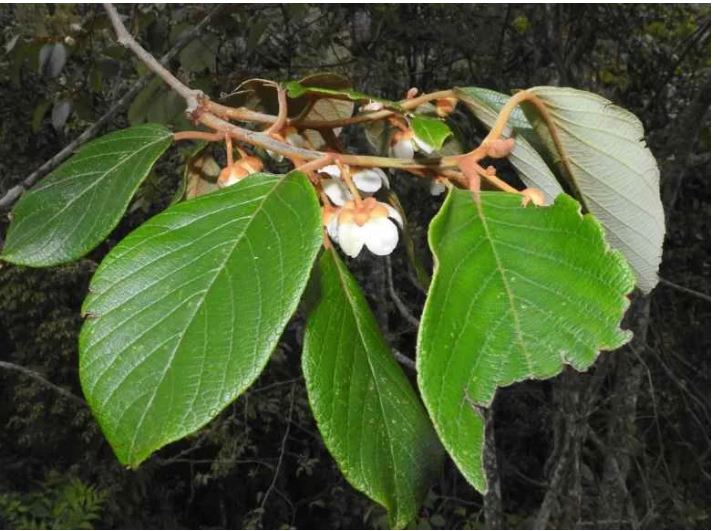
In a significant addition to India’s botanical diversity, scientists from the Botanical Survey of India (BSI) have discovered a new species of wild kiwi, named Actinidia indica. The discovery was made in the biodiversity-rich landscapes of Arunachal Pradesh, further cementing the state’s reputation as a "cradle of speciation" in the Eastern Himalayas.
Geographic Distribution and Habitat
- Location: The species has been recorded within a restricted, narrow stretch near the Ziro Valley in the Lower Subansiri district of Arunachal Pradesh.
- Elevation: It is found at an altitude of approximately 1,725 metres above sea level.
- Ecological Niche: Actinidia indica thrives in a unique transition zone between temperate and subtropical forests. This biologically sensitive habitat provides the specific micro-climatic conditions required for the species to survive.
Morphological Characteristics
The new species belongs to the family Actinidiaceae. It possesses several distinct physical traits that differentiate it from other known kiwi species:
- Growth Habit: It is a perennial climbing shrub, capable of reaching heights of 2 to 4 metres.
- Botanical Features: * Branches: Young branches are characterized by a dense covering of hairs.
- Folliage: It bears large, ovate (egg-shaped) leaves.
- Flowers: The plant produces white to creamy-colored flowers, typically measuring between 4 cm and 6 cm in diameter.
- Fruit Identity: The species produces olive-green, globose (spherical) fruits (2.5–4 cm). A defining taxonomic feature is its distinctive reticulate lenticel pattern (a net-like arrangement of pores on the fruit's skin), which helped researchers identify it as a new species.
Taxonomic and Global Significance
- Global Count: This discovery increases the global count of the Actinidia genus to 56 species.
- Indian Context: While the genus Actinidia is widely known for the commercial kiwi fruit (largely native to China), only a very small number of these species occur naturally in India. The identification of Actinidia indica highlights the high level of endemism in the Northeast.