
Exercise Sea Dragon
- 19 Mar 2026
In News:
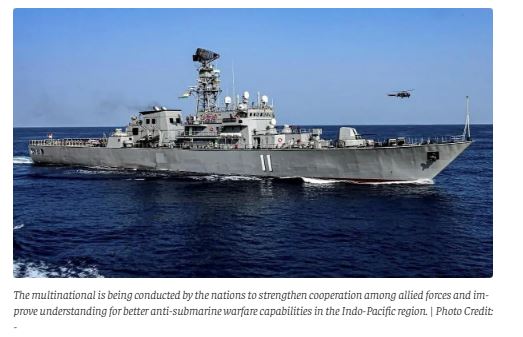
The Indian Navy, along with partner nations, is participating in Exercise Sea Dragon 2026.
About Exercise Sea Dragon
Exercise Sea Dragon is an annual multinational anti-submarine warfare (ASW) drill initiated and led by the United States Navy since 2019. It is held at Andersen Air Force Base, Guam, in the Western Pacific.
Key Features
- Focuses on anti-submarine warfare operations, a critical aspect of modern naval strategy.
- Participation involves long-range maritime patrol aircraft, notably the P-8 Poseidon.
- Provides a platform for operational coordination and interoperability among partner nations.
- Enhances real-time information sharing, communication protocols, and tactical alignment.
Participating Countries in 2026
Exercise Sea Dragon 2026 includes participation from:
- United States Navy
- Indian Navy
- Royal Australian Air Force
- Japan Maritime Self-Defence Force
- Royal New Zealand Air Force
This reflects a growing strategic convergence among Indo-Pacific democracies.
Operational Objectives
The exercise aims to:
1. Enhance ASW Capabilities
- Participants progress from simulated tracking to live submarine detection and tracking.
- Improves the ability to counter underwater threats in real-world scenarios.
2. Promote Interoperability
- Enables seamless coordination between forces operating similar platforms like P-8 aircraft.
- Standardises data-sharing systems, communication networks, and tactical procedures.
3. Build Aircrew Proficiency
- Crews are evaluated on speed, accuracy, and mission coordination.
- Structured scenarios test operational readiness under competitive conditions.
Competitive Element: Dragon Belt Award
- Each mission during the exercise is graded.
- The country achieving the highest cumulative score is awarded the prestigious “Dragon Belt”.
- Encourages excellence and operational efficiency among participants.
Strategic Significance
1. Indo-Pacific Security
- Reinforces collective efforts to maintain freedom of navigation and maritime stability.
- Addresses emerging threats, including submarine proliferation in the region.
2. India’s Maritime Role
- Demonstrates India’s growing role as a net security provider in the Indo-Pacific.
- Aligns with India’s SAGAR (Security and Growth for All in the Region) vision.
3. Strengthening Partnerships
- Deepens defence ties among Quad-like partners and other regional actors.
- Enhances multilateral defence cooperation beyond bilateral engagements.
Exercise Sea Dragon 2025
- 22 Mar 2025
In News:
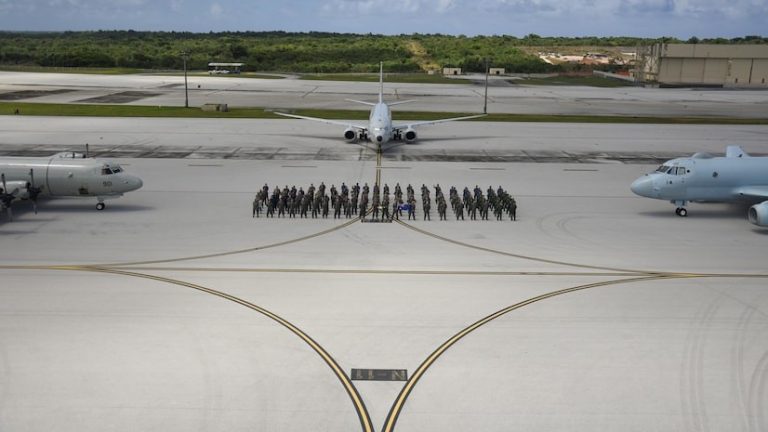
India successfully concluded its participation in Exercise Sea Dragon 2025, a two-week multinational anti-submarine warfare (ASW) drill conducted in the Indo-Pacific region, hosted by the United States Navy’s 7th Fleet.
About Exercise Sea Dragon 2025
- Type: Annual Multinational Anti-Submarine Warfare (ASW) Exercise
- Duration: Two weeks
- Location:Andersen Air Force Base, Guam, Western Pacific
- Host: U.S. Navy’s 7th Fleet
- Inception: Started as a bilateral US-Australia exercise in 2019; expanded to include more Indo-Pacific allies.
- India’s Participation: Since 2021; SD25 marks India’s 4th consecutive participation.
Objectives of Sea Dragon 2025
- Enhance Maritime Security and regional naval cooperation
- Strengthen anti-submarine warfare capabilities
- Improve interoperability and coordination among Indo-Pacific allies
- Promote a free, open, and rules-based Indo-Pacific
- Address undersea threats, particularly in light of China’s growing maritime presence
Key Features of Sea Dragon 2025
- Live ASWEX: Tracking of real U.S. Navy submarines
- Mobile Drills: Use of MK-30 ‘SLED’ (Submarine Launch Expendable Device) as training targets
- Competitive Phase: Crews evaluated and graded based on ASW tactics and effectiveness
- Theoretical + Practical Training: Included tactical discussions, submarine detection, and neutralization scenarios
- Deployment of Advanced MPRA (Maritime Patrol and Reconnaissance Aircraft): Equipped with sonobuoys and sensors for submarine tracking
Significance for India
- Improves ASW Readiness and operational capabilities of the Indian Navy
- Strengthens ties with Quad members (U.S., Australia, Japan) and other Indo-Pacific partners
- Supports India’s broader strategy of naval modernization
- Aligns with India’s efforts to safeguard its interests in the Indian Ocean Region (IOR) and maintain regional stability.
Outcome
- RAAF (Australia) emerged as the top-performing team in the competitive phase.
- India successfully demonstrated its capabilities and reaffirmed commitment to Indo-Pacific security cooperation.