
Megamalai Wildlife Sanctuary
- 17 Mar 2026
In News:
The Zoological Survey of India (ZSI) has documented nine new species, including jumping spiders, damselflies, and mayflies, in the Megamalai Wildlife Sanctuary in Tamil Nadu, highlighting the rich biodiversity of the Western Ghats.
About Megamalai Wildlife Sanctuary
- Also known as the “High Wavy Mountains”
- Located in Tamil Nadu, forming part of the Western Ghats biodiversity hotspot
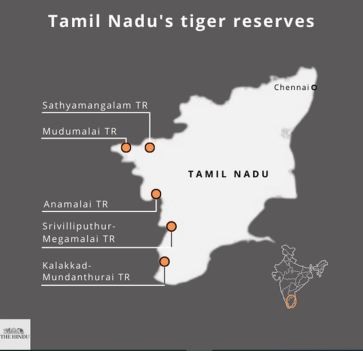
- Since 2021, it is a core component of the Srivilliputhur–Megamalai Tiger Reserve (SMTR), India’s 51st Tiger Reserve
- Eco-Sensitive Zone (ESZ) notified earlier in 2018
Habitat Diversity
The sanctuary features a mosaic of ecosystems, including:
- Montane Shola forests and grasslands
- Tropical wet evergreen forests
- Plantation landscapes (tea and cardamom) interspersed with natural vegetation
Hydrological Importance
- Acts as a critical watershed for southern Tamil Nadu
- Major rivers:
- Vaigai River (lifeline of the region)
- Suruliyaru and Shanmuganathi (tributaries)
- Several ephemeral streams (Arjuna Nadhi, Mudangiar, Gundar) support local agriculture and water supply
Key Ecological Features
1. Wildlife Corridor
- Forms a continuous ecological corridor connecting:
- Periyar Tiger Reserve (Kerala)
- Grizzled Giant Squirrel Sanctuary (Tamil Nadu)
- Supports movement of elephants and tigers
2. Bio-indicators
- Presence of mayflies and amphibians indicates:
- High water quality
- Stable ecosystems
3. Eco-Sensitive Zone: Buffer zone ranging from 0 to 1.7 km to reduce human-wildlife conflict
New Species Discovered
The ZSI survey recorded 977 species, including nine species new to science:
Key Discoveries
- Jumping Spider: Stenaelurillus megamalai
- Mayfly: Edmundsula meghamalaiensis
- Damselflies:
- Thraulus vellimalaiensis
- Protosticta sholai (endemic)
- Bark Lice & Cockroaches:
- Allacta vellimalai
- Lachesilla vellimalai
Other Notable Fauna
- Megamalai rock gecko (Hemidactylus vanam)
- Historical presence of the Critically Endangered Malabar Civet