
CoalSETU Policy
- 16 Dec 2025
In News:
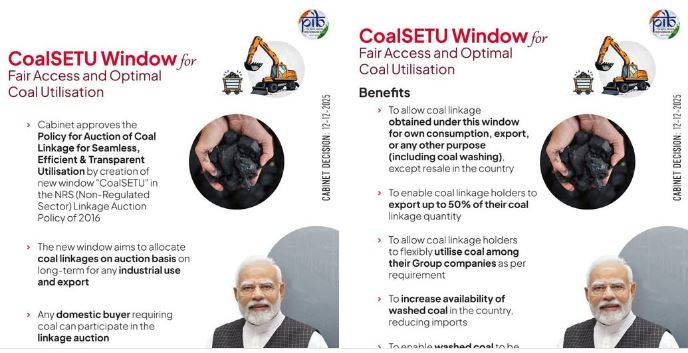
The Cabinet Committee on Economic Affairs has approved the creation of a new CoalSETU window under the Non-Regulated Sector (NRS) Linkage Policy to enable auction-based allocation of coal linkages for a wider range of industrial uses and exports.
What is CoalSETU?
- CoalSETU (Policy for Auction of Coal Linkage for Seamless, Efficient & Transparent Utilisation) is a reform measure introduced by the Ministry of Coal.
- It creates an additional auction window within the existing NRS Linkage Auction Policy, 2016, allowing industries to access domestic coal in a more flexible and market-driven manner.
- The policy aligns with recent coal sector reforms aimed at liberalising coal allocation and improving efficiency in resource utilisation.
Background: NRS Linkage Policy
Earlier, coal linkages in the Non-Regulated Sector were auctioned only for specified end-use industries such as cement, sponge iron, aluminium, and captive power plants. Each linkage was tied to a defined industrial purpose, limiting flexibility.
With changing market conditions and rising demand, the government reviewed the policy to allow broader participation and reduce dependency on imported coal.
Key Features of the CoalSETU Window
1. Wider Industrial Participation: The CoalSETU window allows any domestic industrial consumer to bid for coal linkages through auctions. Existing eligible sectors under NRS can continue bidding in their respective categories and may also participate in this new window.
2. No End-Use Restrictions
Unlike earlier provisions, coal obtained through CoalSETU can be used for:
- Own industrial consumption
- Coal washing
- Export (subject to limits)
However, resale of coal within India is not permitted, and traders are barred from participating to prevent speculative hoarding.
3. Export Flexibility: Linkage holders can export up to 50% of the allocated coal quantity. Washed coal produced from these linkages can also be exported, opening new trade opportunities.
4. Support for Coal Washeries
The policy encourages coal linkages to washery operators. This is expected to:
- Increase availability of cleaner, washed coal domestically
- Reduce reliance on imported washed coal
- Improve export prospects for value-added coal products
5. Exclusion of Coking Coal: Coking coal is not offered under this window, as it is critical for steel production and has separate allocation mechanisms.
6. Flexibility for Corporate Groups: Companies can distribute the coal secured under CoalSETU among their group companies, allowing better operational planning and efficiency.
Objectives of the Policy
The CoalSETU initiative aims to ensure seamless and transparent utilisation of domestic coal resources. It promotes ease of doing business by providing industries with long-term supply visibility. Another major objective is to reduce India’s dependence on coal imports by increasing domestic availability, especially of washed coal.
Significance of CoalSETU
- Boost to Transparency and Competition: Auction-based allocation ensures a fair and competitive process, moving away from discretionary allotments.
- Reduction in Import Dependence: Improved access to domestic coal and increased supply of washed coal can lower the need for costly imports.
- Support for Industrial Growth: By removing rigid end-use conditions, the policy benefits emerging industries and smaller players that previously struggled to secure coal linkages.
- Alignment with Broader Coal Reforms: CoalSETU complements earlier reforms such as commercial coal mining without end-use restrictions, strengthening India’s move towards a market-driven coal sector.