
Mission Rangeen Machhli 2031
- 01 Sep 2026
In News:
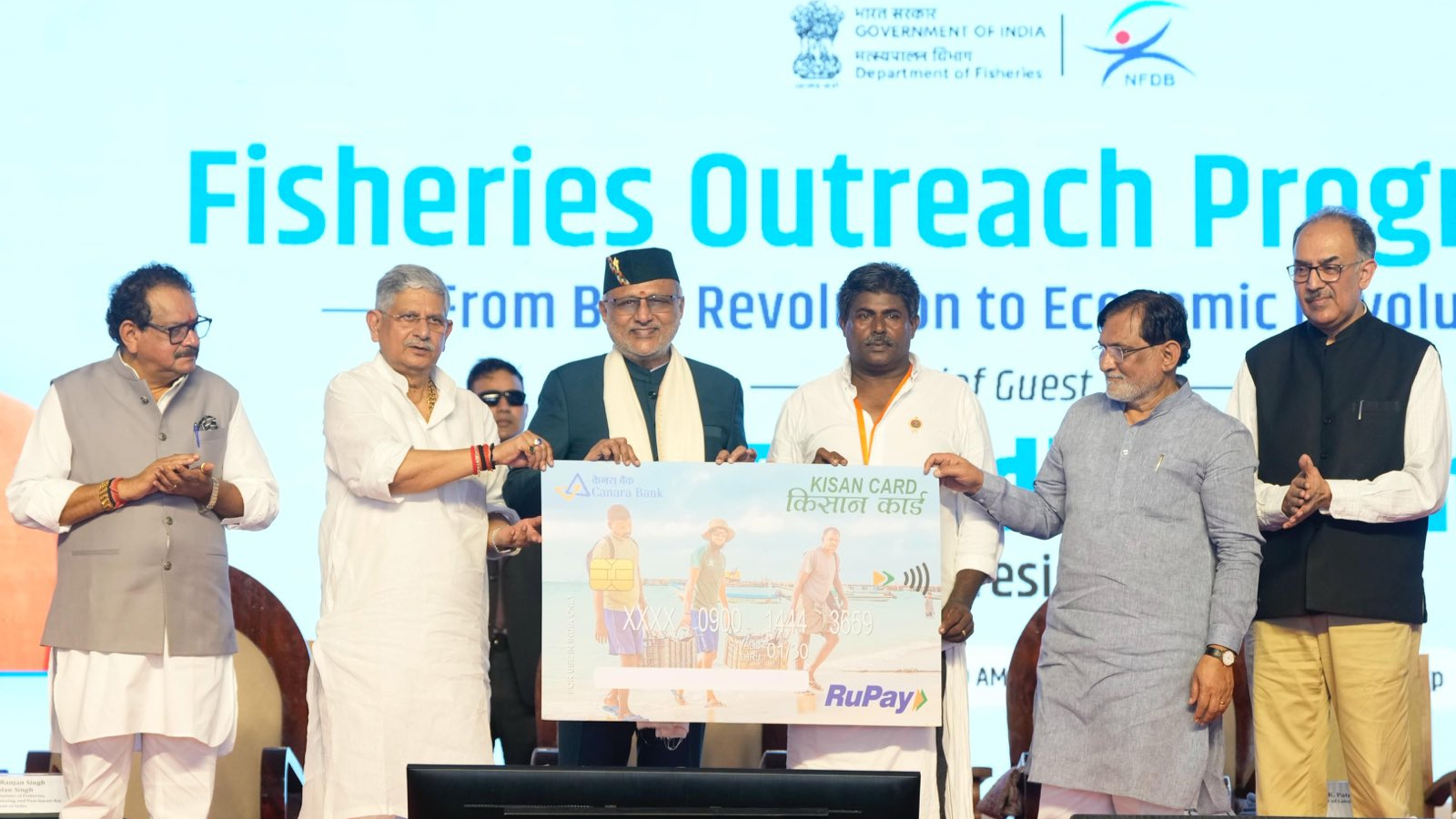
Vice President C. P. Radhakrishnan released Mission Rangeen Machhli 2031, the Strategic Action Plan for Ornamental Fisheries Development, at a Fisheries Outreach Programme in Agatti, Lakshadweep. The initiative aims to develop India’s ornamental fisheries sector in a more organised, scientific and sustainable manner and strengthen the fisheries-led Blue Economy.
Mission Rangeen Machhli 2031
- The plan, under the Department of Fisheries, Ministry of Fisheries, Animal Husbandry & Dairying, covers the entire ornamental-fish value chain—from breeding and hatchery operations to production, quarantine, transport, sale and export.
- It seeks to establish uniform standards for breeding, disease management, biosecurity, quality assurance, certification and traceability. It also aims to build the skills of farmers and traders and improve the sector’s access to international markets.
Why Lakshadweep?
- Lakshadweep has significant marine-resource potential, with an EEZ of nearly 4 lakh sq km and a lagoon area of about 4,200 sq km. The islands account for nearly 17% of India’s EEZ, despite their small land area.
- Its estimated fisheries potential is over 1 lakh tonnes, of which around 94,000 tonnes comprise tuna and tuna-like species. However, current annual harvest is only around 15,000 tonnes, highlighting the scope for sustainable fisheries development.
- Lakshadweep is also home to more than 300 ornamental fish species. An ornamental fish hatchery has been established at Agatti, while three rearing units have been approved under PMMSY.
Fisheries and Blue Economy
- The programme emphasises responsible fishing, conservation of marine resources and action against Illegal, Unreported and Unregulated (IUU) fishing.
- It also seeks to promote deep-sea fishing, value addition, fisheries-based tourism and entrepreneurship among youth and women.
- Under the Pradhan Mantri Matsya Sampada Yojana (PMMSY), fisheries development projects worth more than ?62 crore have been approved for Lakshadweep. Support includes deep-sea fishing vessels, replacement of boats and nets, safety equipment, Kisan Credit Cards and communication/tracking devices.
- Lakshadweep has also been identified as a Seaweed Cluster, with 575 seaweed cultivation units being promoted. The government is simultaneously focusing on sustainable utilisation of tuna resources and improving export competitiveness.
India’s Fisheries Sector
India’s fish production increased from 95.7 lakh tonnes in 2013–14 to 197.75 lakh tonnes in 2024–25. Seafood exports reached ?73,890 crore in 2025–26, with Indian seafood being exported to more than 120 countries.
India has a coastline of approximately 11,099 km and an EEZ of around 24 lakh sq km, providing considerable potential for marine fisheries, aquaculture, seaweed cultivation and other ocean-based economic activities.
Ramon Magsaysay Awards 2026

- 01 Sep 2026
In News:
The Ramon Magsaysay Award Foundation (RMAF) announced the 2026 Ramon Magsaysay Award winners, honouring three Asian personalities for their contributions to diplomacy, community development and human rights: Tommy Koh of Singapore, Runa Khan of Bangladesh and Bo Kyi of Myanmar.
About the Ramon Magsaysay Award
- Established in 1958, the Ramon Magsaysay Award is one of Asia’s most prestigious honours and is often described as “Asia’s Nobel Prize.”
- It recognises individuals and organisations demonstrating selfless service, transformative leadership and commitment to human development in Asia, irrespective of race, gender or religion.
- The award is administered by the Ramon Magsaysay Award Foundation (RMAF) and carries a medallion, certificate and cash prize.
- From 1958 to 2008, the award was presented under specific categories such as Government Service, Public Service, Community Leadership, Journalism, Literature & Creative Communication Arts, Peace & International Understanding and Emergent Leadership. Since 2009, the award has no fixed categories, allowing the Foundation to recognise contemporary forms of social leadership. Emergent Leadership continues as a category with support from the Ford Foundation.
2026 Awardees
- Tommy Koh – Singapore:
- A distinguished diplomat and lawyer, Koh was recognised for his contribution to international dialogue and the rule of law.
- He chaired the 1982 UN Conference on the Law of the Sea, which played a major role in the adoption of the United Nations Convention on the Law of the Sea (UNCLOS), often described as the “Constitution for the Oceans.”
- Runa Khan – Bangladesh:
- A social entrepreneur, Khan was recognised for her work with disadvantaged and vulnerable communities.
- She founded Friendship Bangladesh in 2002, an organisation working particularly with communities affected by geographical isolation and climate vulnerability. Its work includes climate resilience, education, women’s empowerment, livelihood generation and social justice.
- Bo Kyi – Myanmar:
- A human rights activist, Bo Kyi was honoured for his longstanding resistance to military repression and human rights violations in Myanmar.
- He co-founded the Assistance Association for Political Prisoners (AAPP) in 2000, which documents political imprisonment and supports political prisoners and their families.
Nancy Grace Roman Space Telescope

- 01 Sep 2026
In News:
NASA’s Nancy Grace Roman Space Telescope (Roman) is its next-generation flagship space observatory, designed to study dark energy, dark matter, cosmic expansion and exoplanets.
About the Telescope
Named after Nancy Grace Roman, NASA’s first Chief Astronomer and often called the “Mother of the Hubble Space Telescope,” Roman will complement the Hubble Space Telescope (1990) and James Webb Space Telescope (2021).
Roman is designed for wide-field astronomical surveys, enabling scientists to study the evolution of galaxies and the large-scale structure of the universe. Its main survey is expected to examine billions of galaxies and help determine how the universe has expanded over time.
Key Features
- Location: Sun–Earth Lagrange Point 2 (L2), about 1.6 million km from Earth, where the James Webb Space Telescope also operates.
- Primary instrument: Wide Field Instrument (WFI) for large-scale infrared observations.
- Coronagraph: Helps block the bright light of stars to enable observation of exoplanets and planet-forming disks.
Scientific Significance
Roman will particularly investigate dark energy, which is associated with the accelerating expansion of the universe, and dark matter, which cannot be directly observed but influences the motion and distribution of visible matter.
Its wide field of view will allow it to survey much larger portions of the sky than Hubble, making it complementary to Webb rather than simply replacing it.
Distinguished Jurist Provision

- 01 Sep 2026
In News:
A Supreme Court judge recently highlighted the “unused mandate” of the Constitution concerning the appointment of a “distinguished jurist” as a Supreme Court judge. Although this provision has existed for over 76 years, no judge has been appointed through this route.
Constitutional Provision
Article 124(3) lays down the qualifications for appointment as a Supreme Court judge. A person must be a citizen of India and satisfy any one of three conditions: having served as a High Court judge for at least 5 years, having practised as a High Court advocate for at least 10 years, or being, in the opinion of the President, a “distinguished jurist.”
The first two routes have traditionally been used, while the third remains unused.
Who is a Distinguished Jurist?
The Constitution does not define “distinguished jurist.” It is generally understood to refer to a person with exceptional expertise in legal scholarship, jurisprudence, constitutional law, teaching or research, even without extensive courtroom experience.
The idea was introduced during the Constituent Assembly debates in May 1949. H.V. Kamath argued that the Supreme Court should have access to outstanding legal scholars and not be restricted only to judges and practising advocates. B.R. Ambedkar supported the idea, while discussing whether the term “eminent” might be more appropriate than “distinguished.”
Why is the Provision Important?
The inclusion of distinguished jurists could bring legal-academic and theoretical perspectives to the Supreme Court, particularly in constitutional and public-law cases. It could also diversify a Bench traditionally composed mainly of judges elevated from High Courts and senior advocates.
Why Has the Route Remained Unused?
One major reason is the absence of an established institutional mechanism to identify and assess suitable jurists. The present collegium system also traditionally draws candidates from the judiciary and senior Bar.
Another difficulty is that full-time law teachers face restrictions under Bar Council of India rules on practising law, creating a separation between legal academia and courtroom practice.
There is also an important constitutional distinction: while Article 124(3) permits a distinguished jurist to directly qualify for the Supreme Court, the Constitution currently provides no equivalent route for appointment to the High Courts.
Constitutional Amendment Link
During the Emergency, the 42nd Constitutional Amendment Act, 1976 introduced a provision allowing a distinguished jurist to be appointed as a High Court judge under Article 217. This provision was later removed by the 44th Constitutional Amendment Act, 1978.
Global Coral Reefs Under Stress
- 01 Sep 2026
In News:
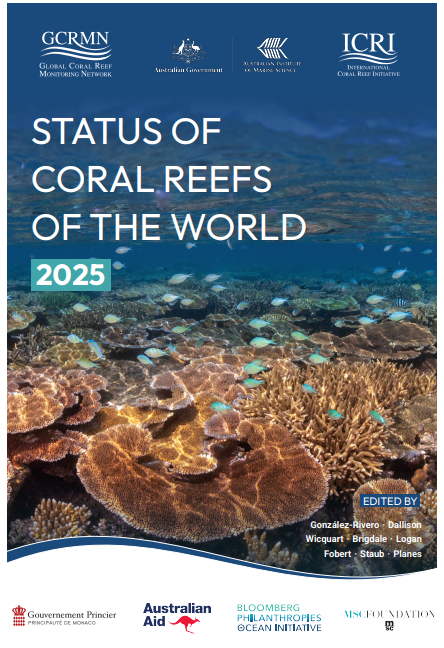
The Global Coral Reef Monitoring Network (GCRMN) released the 7th Status of Coral Reefs of the World Report, highlighting increasing coral bleaching and declining coral recovery.
Key Findings
- Global hard coral cover declined by ~9.5% compared with the 1980–2009 baseline.
- Hard coral cover fell by 8.9% between 2023 and 2024, the largest annual decline recorded.
- Sea-surface temperatures over coral reefs increased by 0.81°C between 1985 and 2025.
- In 2024, 87% of monitored reefs experienced unprecedented heat stress.
- 42.6% experienced heat stress associated with widespread bleaching and mortality.
- More than 25% of global reef areas experienced ≥4°C-weeks of heat stress on four or more occasions during 2019–2025.
- Recovery periods have shortened from roughly 10 years to 4–6 years in many regions.
|
Zooxanthellae:
|
Coral Bleaching
Coral bleaching occurs when environmental stress causes corals to expel their symbiotic zooxanthellae, resulting in loss of colour.
Important: Bleached corals are not necessarily dead; prolonged or repeated bleaching can cause mortality.
Major Causes
- Rising sea-surface temperature/marine heatwaves – principal global driver
- Ocean acidification
- Pollution and coastal runoff
- Excess solar radiation
- Extremely low tides
- Local pressures such as dredging and destructive fishing
Degree Heating Weeks (DHW)
- ≥4°C-weeks: significant coral bleaching.
- ≥8°C-weeks: widespread bleaching and increased mortality.
Major Global Bleaching Events
1998–99 | 2010–11 | 2016–17 | 2023–25
The 2023–25 event was the fourth global mass bleaching event and among the most widespread and severe recorded.
Regional Impacts
- Caribbean: severe decline; average hard coral cover reached very low levels.
- Mesoamerican Barrier Reef: >90% mortality of wild and restored Acropora corals in Belize.
- ROPME Sea Area (Persian Gulf–Gulf of Oman region): about half of hard coral cover was lost between 2020–24.
- Great Barrier Reef & Indo-Pacific: repeated bleaching events have caused significant stress.
Why are Coral Reefs Important?
- Support marine biodiversity and fisheries.
- Provide livelihoods to coastal communities.
- Protect coastlines from waves, storms and erosion.
- Support marine food webs and coastal ecosystems.
Key Threat
Climate change → marine heatwaves → repeated bleaching → shorter recovery periods → coral mortality → ecosystem degradation
Ocean acidification further reduces the ability of corals to form their calcium carbonate (CaCO?) skeletons.
Way Forward
- Reduce greenhouse-gas emissions.
- Strengthen Marine Protected Areas (MPAs).
- Implement the 30×30 biodiversity target.
- Control coastal pollution and sediment runoff.
- Restore degraded reefs through coral nurseries, larval propagation and resilient coral breeding.