
New Development Bank (NDB)
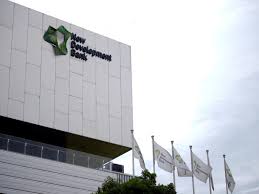
- 22 Jun 2026
In News:
Uzbekistan has officially joined the New Development Bank (NDB) as its 10th member, becoming the first Central Asian country to join the BRICS-led multilateral development bank.
What is the New Development Bank (NDB)?
The New Development Bank (NDB) is a multilateral development bank established by the BRICS countries—Brazil, Russia, India, China, and South Africa—to mobilize resources for infrastructure and sustainable development projects in BRICS nations and other Emerging Market and Developing Economies (EMDEs).
The decision to establish the bank was taken during the 6th BRICS Summit held in Fortaleza, Brazil (2014), and the bank became operational in 2015. Its headquarters are located in Shanghai, China.
Capital Structure
The NDB has an authorized capital of USD 100 billion, with an initial subscribed capital of USD 50 billion, contributed equally by the five founding BRICS members. The equal contribution reflects the bank's commitment to balanced ownership and governance.
Governance Structure
Unlike traditional multilateral financial institutions such as the World Bank, the NDB follows a more equitable governance model.
- Every member country has one vote, ensuring equal representation.
- No member enjoys veto power, promoting collective decision-making.
- Voting rights are not directly linked to capital contribution.
- However, the combined voting share of the five founding BRICS members must remain above 55%, preserving the institution's original character.
Membership
Membership of the NDB is open to all member states of the United Nations, subject to the provisions of its Articles of Agreement.
Current Members
- Founding Members: Brazil, Russia, India, China, South Africa
- Bangladesh (2021)
- United Arab Emirates (2021)
- Egypt (2023)
- Algeria (2025)
- Uzbekistan (2026)
Additionally, Uruguay, Colombia, and Ethiopia have been approved for membership and will become full members after completing the accession process.
NaBFIDsigns strategic MoU with New Development Bank (NDB)

- 12 Apr 2025
In News:
The National Bank for Financing Infrastructure and Development (NaBFID) has entered into a strategic Memorandum of Understanding (MoU) with the New Development Bank (NDB) to strengthen cooperation in long-term infrastructure financing and promote clean energy development in India.
About NaBFID (National Bank for Financing Infrastructure and Development)
- Type: Development Finance Institution (DFI)
- Established Under:NaBFID Act, 2021
- Regulated By: Reserve Bank of India (RBI) as an All-India Financial Institution (AIFI)
Objectives:
- Bridge the gap in long-term, non-recourse infrastructure finance
- Support the development of India’s bond and derivatives markets
- Foster sustainable economic growth
- Enable project financing in clean energy, transport, and water infrastructure
Key Features:
- Capital base to be scaled up to ?1 trillion
- Focuses on medium to long-term financing (1–5+ years)
- Promotes Public-Private Partnerships (PPPs) and financial viability of projects
- Engages in joint research, capacity building, and knowledge-sharing with global institutions like NDB
About the New Development Bank (NDB)
- Type: Multilateral Development Bank formed by BRICS nations (Brazil, Russia, India, China, South Africa)
- Proposed: BRICS Summit, New Delhi (2012)
- Established By:Fortaleza Declaration, 15 July 2014
- Became Operational: 21 July 2015
Mandate:
- Mobilize funds for infrastructure and sustainable development
- Finance projects in emerging and developing economies (EMDCs)
- Promote green, inclusive, and resilient growth, particularly in clean energy, transport, and water sectors
Key Features:
- Authorized Capital: $100 billion
- India’s Contribution: $2 billion (paid in 7 tranches, 2015–2022)
- Engagement in India: As of December 2024, NDB has financed 20 projects worth $4.867 billion