
Mission Rangeen Machhli 2031
- 01 Sep 2026
In News:
Vice President C. P. Radhakrishnan released Mission Rangeen Machhli 2031, the Strategic Action Plan for Ornamental Fisheries Development, at a Fisheries Outreach Programme in Agatti, Lakshadweep. The initiative aims to develop India’s ornamental fisheries sector in a more organised, scientific and sustainable manner and strengthen the fisheries-led Blue Economy.
Mission Rangeen Machhli 2031
- The plan, under the Department of Fisheries, Ministry of Fisheries, Animal Husbandry & Dairying, covers the entire ornamental-fish value chain—from breeding and hatchery operations to production, quarantine, transport, sale and export.
- It seeks to establish uniform standards for breeding, disease management, biosecurity, quality assurance, certification and traceability. It also aims to build the skills of farmers and traders and improve the sector’s access to international markets.
Why Lakshadweep?
- Lakshadweep has significant marine-resource potential, with an EEZ of nearly 4 lakh sq km and a lagoon area of about 4,200 sq km. The islands account for nearly 17% of India’s EEZ, despite their small land area.
- Its estimated fisheries potential is over 1 lakh tonnes, of which around 94,000 tonnes comprise tuna and tuna-like species. However, current annual harvest is only around 15,000 tonnes, highlighting the scope for sustainable fisheries development.
- Lakshadweep is also home to more than 300 ornamental fish species. An ornamental fish hatchery has been established at Agatti, while three rearing units have been approved under PMMSY.
Fisheries and Blue Economy
- The programme emphasises responsible fishing, conservation of marine resources and action against Illegal, Unreported and Unregulated (IUU) fishing.
- It also seeks to promote deep-sea fishing, value addition, fisheries-based tourism and entrepreneurship among youth and women.
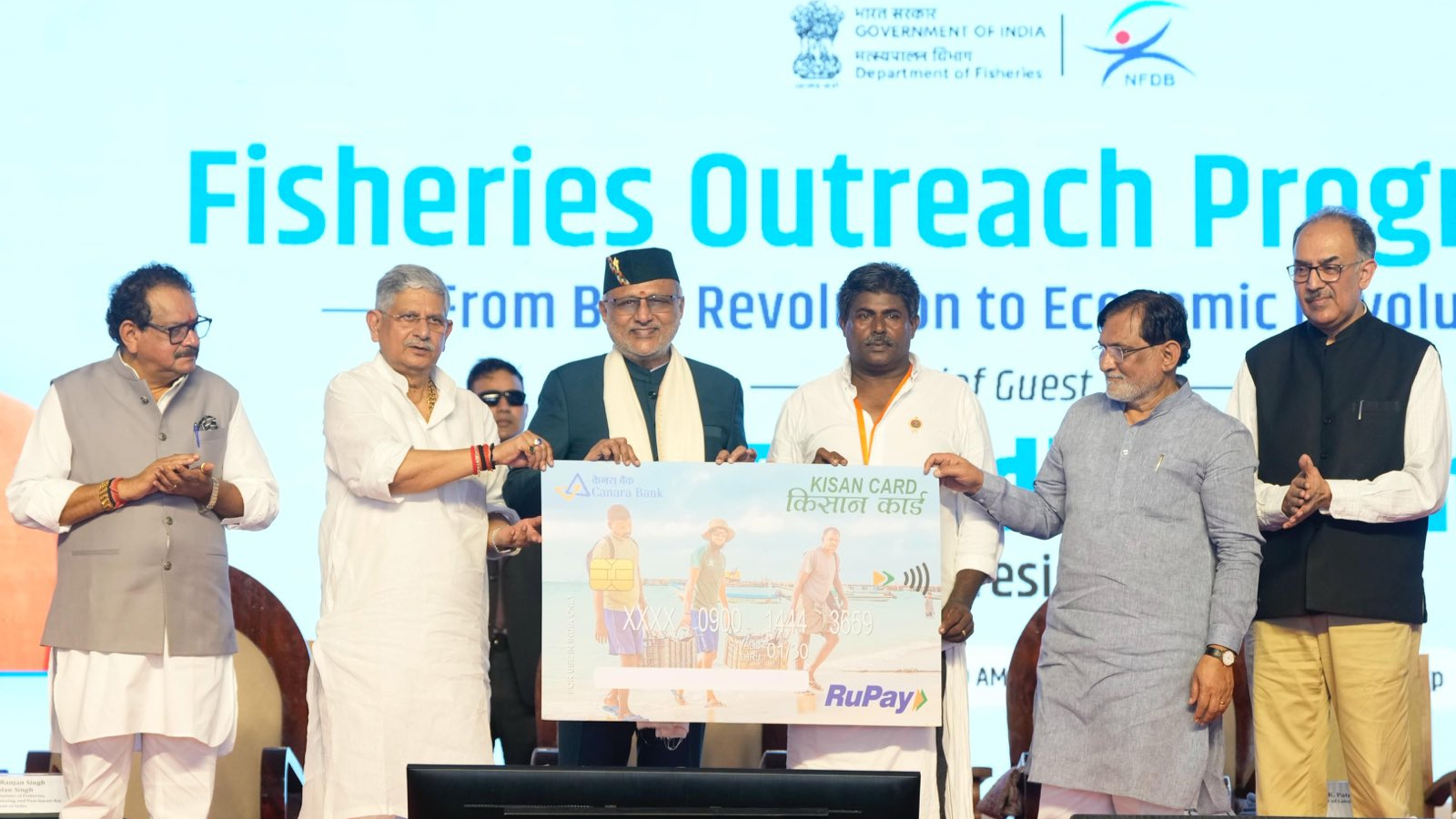
- Under the Pradhan Mantri Matsya Sampada Yojana (PMMSY), fisheries development projects worth more than ?62 crore have been approved for Lakshadweep. Support includes deep-sea fishing vessels, replacement of boats and nets, safety equipment, Kisan Credit Cards and communication/tracking devices.
- Lakshadweep has also been identified as a Seaweed Cluster, with 575 seaweed cultivation units being promoted. The government is simultaneously focusing on sustainable utilisation of tuna resources and improving export competitiveness.
India’s Fisheries Sector
India’s fish production increased from 95.7 lakh tonnes in 2013–14 to 197.75 lakh tonnes in 2024–25. Seafood exports reached ?73,890 crore in 2025–26, with Indian seafood being exported to more than 120 countries.
India has a coastline of approximately 11,099 km and an EEZ of around 24 lakh sq km, providing considerable potential for marine fisheries, aquaculture, seaweed cultivation and other ocean-based economic activities.