
Maulana Barkatullah Bhopali
- 12 Jun 2026
In News:
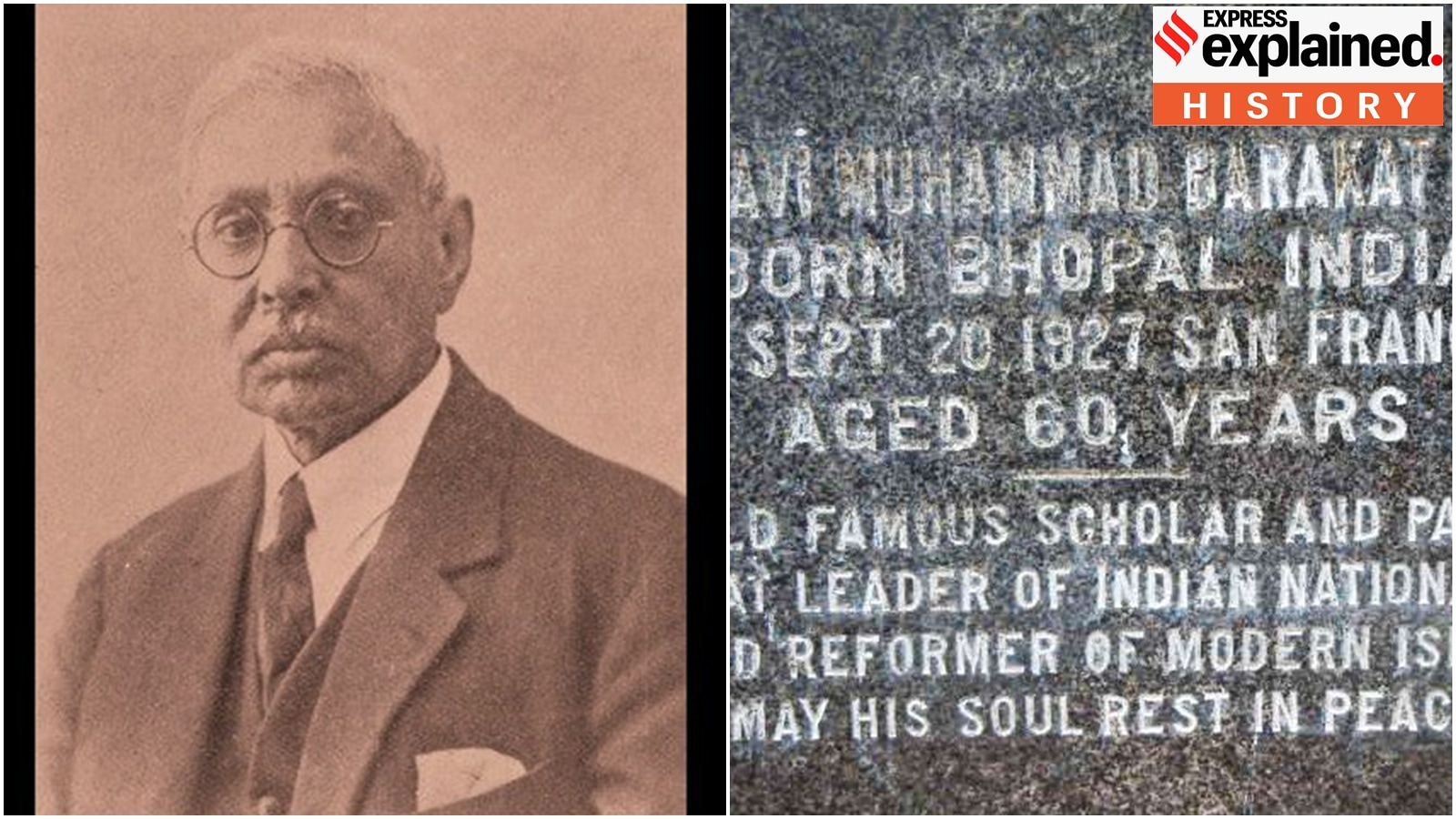
Recently, the Executive Council of Barkatullah University approved a proposal to rename the institution, bringing renewed attention to the legacy of Maulana Barkatullah Bhopali, one of the most significant yet lesser-known figures of India's freedom struggle.
Early Life and Ideological Foundations
- Born on 7 July 1854 in Bhopal, Maulana Barkatullah was a scholar, journalist and revolutionary who dedicated his life to securing India's independence from British rule.
- Educated in Bhopal, Bombay and later England, he became deeply involved in anti-colonial activism while teaching Arabic and Persian in Liverpool.
- A firm believer in Hindu-Muslim unity, Barkatullah argued that British colonial exploitation affected all Indians irrespective of religion and that national liberation required a united struggle against colonial rule.
Globalizing India’s Freedom Struggle
Unlike many nationalist leaders who operated within India, Barkatullah spent most of his life abroad building international support for Indian independence. His activities extended across Asia, Europe and North America, making him one of the earliest architects of a global anti-colonial network.
His revolutionary work sought to transform India's freedom movement from a domestic political struggle into an international campaign against British imperialism.
Provisional Government of India in Kabul (1915)
A landmark contribution came on 1 December 1915, when Barkatullah helped establish the Provisional Government of India in Kabul, often regarded as India's first Government-in-Exile.
Its leadership included:
- Raja Mahendra Pratap – President
- Maulana Barkatullah Bhopali – Prime Minister
- Maulana Ubaidullah Sindhi – Home Minister
The government aimed to secure international support for India's liberation and challenge British authority during the First World War.
Association with the Ghadar Movement
- Barkatullah was a prominent leader of the Ghadar Party, established in 1913. The party advocated armed revolution against British rule and sought to inspire uprisings within the British Indian Army.
- During the First World War, he collaborated with Germany and attempted to mobilize Indian prisoners of war and expatriates to support the anti-colonial struggle.
International Outreach
- In 1919, Barkatullah met Vladimir Lenin in Moscow to seek international support for India's independence movement. His diplomatic efforts reflected the global dimension of India's anti-colonial struggle long before independence became a mass movement.
Legacy and Significance
Maulana Barkatullah's contributions were significant in three respects:
- He served as the Prime Minister of India's first Government-in-Exile.
- He internationalized the Indian freedom movement through global advocacy and diplomacy.
- His revolutionary efforts influenced later movements, including those associated with Subhas Chandra Bose and the Indian National Army.
Despite constant surveillance and exile, he remained committed to India's freedom until his death in San Francisco in 1927, where he was attending a Ghadar Party gathering.