
India’s Civil Nuclear Power Sector
- 26 Aug 2026
In News:
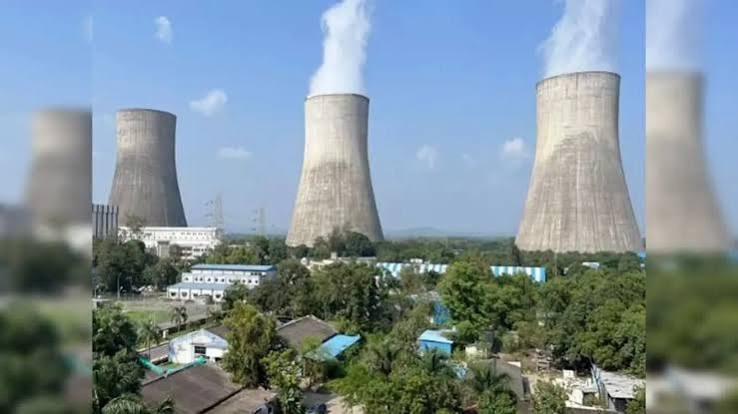
India is planning to bring five additional nuclear reactors online during this decade and aims to expand its nuclear power capacity to 100 GW by 2047, making nuclear energy a major component of its long-term clean-energy and energy-security strategy.
Present Status
- India currently has 25 operational nuclear reactors with an installed capacity of about 8.7 GWe. Nuclear power generated 56,681 million units in 2024–25 and contributes around 3% of India’s total electricity generation.
- The government expects nuclear capacity to rise to about 22.38 GW by 2031–32. Around 10 reactors (~8 GWe) are under construction, while another 10 units (~6.6 GWe) are at the pre-project stage. India has also signed Inter-Governmental Agreements (IGAs) on peaceful civil nuclear cooperation with 18 countries.
India’s Three-Stage Nuclear Programme
India’s nuclear strategy, conceptualised by Dr Homi J. Bhabha, seeks to utilise its limited uranium resources and abundant thorium reserves.
Stage I – PHWRs:Pressurised Heavy Water Reactors (PHWRs) use natural uranium as fuel and heavy water as moderator/coolant. A key objective is production of Plutonium-239, which becomes the fuel for the second stage.
Stage II – Fast Breeder Reactors (FBRs):FBRs use Pu-239 and U-238 and operate with fast neutrons. They are designed to produce more fissile material than they consume, including Pu-239 and U-233.
Stage III – Thorium-based reactors:The programme ultimately seeks to exploit India’s large Thorium-232 reserves. Thorium is converted into Uranium-233, a fissile material, for power generation. Advanced Heavy Water Reactors (AHWRs) are associated with this stage.
Key Challenges
India has limited domestic experience with Light Water Reactors (LWRs), despite LWRs accounting for over 85% of global civil nuclear reactor capacity. LWRs use ordinary water as both coolant and moderator.
Other challenges include limited domestic uranium resources and dependence on imports, high capital and construction costs, technological challenges in SMRs, public-safety concerns and local opposition, and the gap between India’s substantial thorium reserves and commercially mature thorium-based technology.
Government Initiatives
The Nuclear Energy Mission targets 100 GW of nuclear capacity by 2047, with emphasis on indigenous technologies and advanced reactors. Bharat Small Reactors are being developed to enable scalable nuclear deployment. The SHANTI Act, 2025 seeks to facilitate capacity expansion, advanced reactor technologies and wider participation in the nuclear sector. The Union Budget 2025–26 also provided substantial support for R&D in advanced nuclear technologies.