
Artemis III Mission
- 18 Jun 2026
In News:
NASA has announced the four-member crew and revised mission profile for Artemis III, which is now scheduled for 2027 as a Low Earth Orbit (LEO) mission to validate critical technologies required for future human lunar landings. The first crewed lunar landing under the Artemis programme is now planned under Artemis IV (2028).
What is Artemis III?
Artemis III is part of NASA's Artemis Programme, which aims to establish a sustained human presence on the Moon and serve as a stepping stone for future human missions to Mars.
Originally conceived as the mission to return astronauts to the lunar surface, Artemis III has been redesigned into a two-week Low Earth Orbit technology demonstration mission. The mission will test key systems such as rendezvous, docking, life-support systems, software, and spacecraft interoperability, thereby reducing risks before undertaking crewed lunar landings.
Mission Profile
The mission will be launched aboard NASA's Space Launch System (SLS) rocket carrying the Orion spacecraft.
During the mission, Orion will dock with two commercial Human Landing Systems (HLS):
- Blue Moon lander developed by Blue Origin.
- Starship Human Landing System developed by SpaceX.
The mission will validate docking procedures and operational compatibility between these spacecraft before they are deployed for lunar missions.
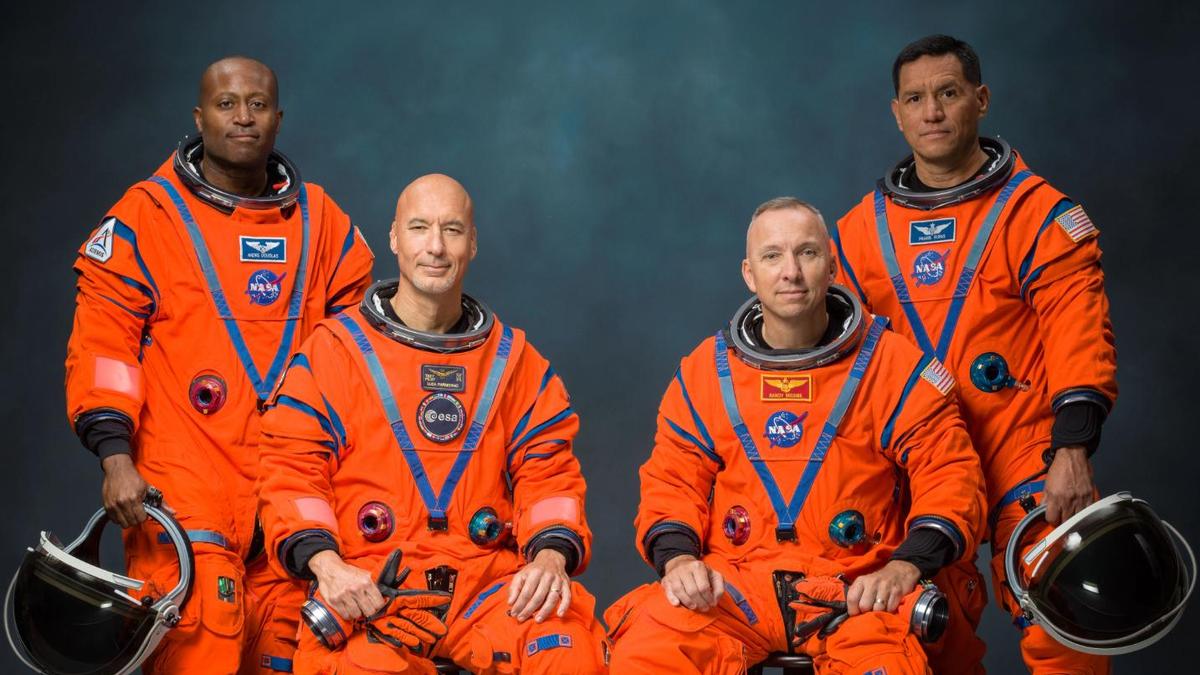
Crew of Artemis III
The mission will comprise an international crew of four astronauts:
- Commander: Randy Bresnik (NASA)
- Pilot: Luca Parmitano (European Space Agency) – first ESA astronaut assigned to an Artemis mission
- Mission Specialists: Frank Rubio (NASA) and Andre Douglas (NASA)
What is Low Earth Orbit (LEO)?
Low Earth Orbit (LEO) refers to orbits located approximately 500–2,000 km above Earth's surface. Satellites in LEO have shorter orbital periods, lower communication latency, and are widely used for Earth observation, scientific research, navigation, and human spaceflight, including the International Space Station (ISS).
Significance of Artemis III
The revised mission prioritizes the validation of technologies essential for deep-space exploration before attempting a lunar landing. Successful demonstration of spacecraft docking, life-support systems, and commercial lunar landers will enhance mission safety and reduce operational risks.
Strategically, the Artemis Programme reinforces international collaboration through participation by agencies such as the European Space Agency (ESA) while strengthening the role of commercial space companies. It also supports the broader objective of maintaining leadership in human space exploration amid increasing global competition and advancing preparations for future missions to the Moon and eventually Mars.
Artemis II
- 31 Mar 2026
In News:
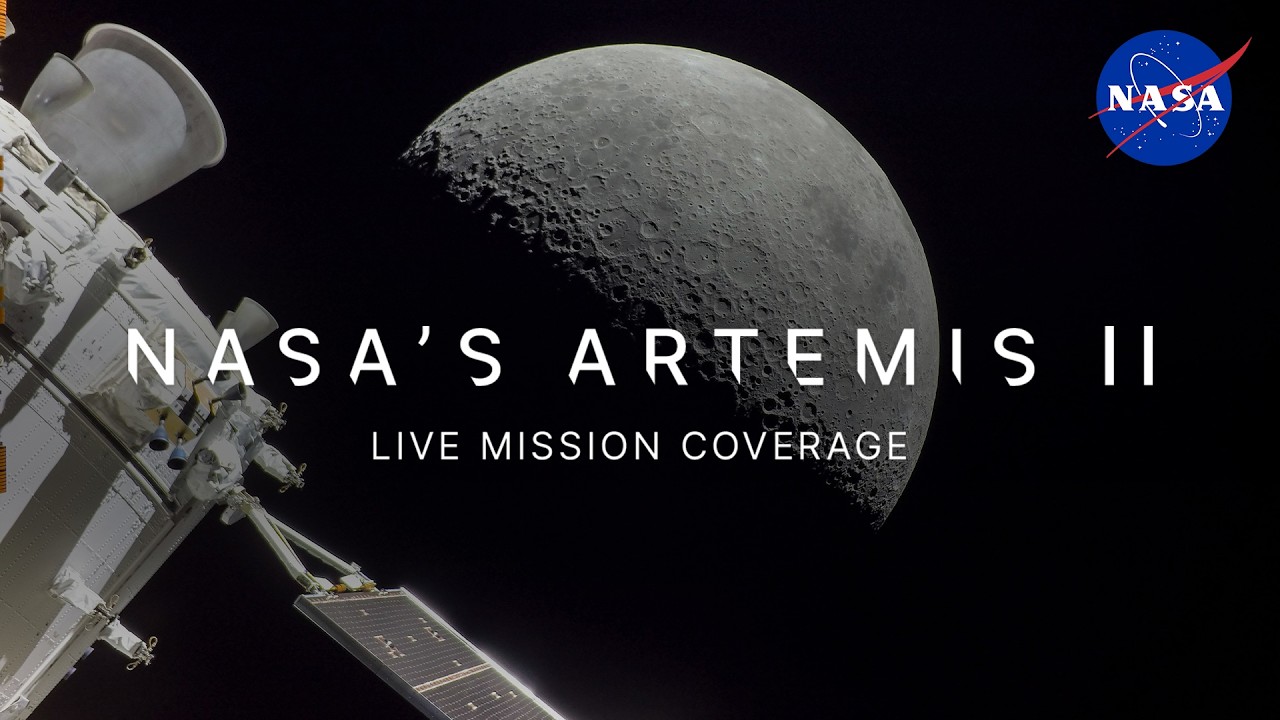
NASA is going to launch the Artemis II mission.
Mission Overview: Artemis II
Artemis II is a 10-day lunar flyby mission designed to test the integrated capabilities of NASA’s deep-space exploration systems. Unlike the later landing missions, Artemis II will follow a "free-return trajectory."
- Spacecraft: Orion Spacecraft.
- Launch Vehicle:Space Launch System (SLS), the most powerful rocket ever built, producing 8.8 million pounds of thrust (15% more than the Apollo-era Saturn V).
- Trajectory: The crew will travel approximately 7,400 km beyond the far side of the Moon. They will utilize a "gravity assist" (slingshot) maneuver, using lunar gravity to return to Earth without requiring a main engine burn to reverse course.
A Crew of "Firsts"
The four-person crew represents a significant departure from previous lunar missions, emphasizing diversity and international cooperation:
- Reid Wiseman (Commander): NASA veteran.
- Victor Glover (Pilot): First person of color to travel beyond Low-Earth Orbit (LEO).
- Christina Koch (Mission Specialist): First woman to reach the Moon’s vicinity.
- Jeremy Hansen (Mission Specialist): Representing the Canadian Space Agency (CSA), he is the first non-American to leave Earth's orbit.
Technological and Scientific Frontiers
Artemis II serves as a high-stakes laboratory for several cutting-edge technologies:
- Laser Communications (O2O): Testing infrared lasers to transmit data at 260 Mbps, enabling 4K video streaming from deep space.
- AVATAR Experiment: Using "organ-on-a-chip" technology to study the real-time effects of radiation and microgravity on human cells.
- Global CubeSats: Deployment of small satellites from Germany, Argentina, South Korea, and Saudi Arabia to study space weather and lunar shielding.
Evolution of Lunar Missions: Apollo vs. Artemis
While the Apollo missions were a Cold War-era demonstration of technological supremacy, the Artemis program is built for endurance and deep-space logistics.
|
Feature |
Apollo Programme (1969–1972) |
Artemis Programme (2024–Present) |
|
Primary Goal |
Short-duration visits; "Boots on the Moon." |
Long-term human presence; "Moon to Mars." |
|
Crew Capacity |
2 astronauts on the surface at a time. |
4 astronauts; emphasis on diversity/internationalism. |
|
Sustainability |
Disposable architecture; short stays. |
Reusable infrastructure; Gateway station; Base camp. |
|
Target Area |
Lunar Equator. |
Lunar South Pole (due to water-ice potential). |
The Global Lunar Landscape: Past to Future
The Moon has become a focal point for global geopolitics and "New Space" commercial ventures.
A. Historical Context (The Cold War Era)
- Luna 9 (USSR, 1966): First soft landing.
- Apollo 11 (USA, 1969): First humans on the Moon.
- Luna 24 (USSR, 1976): Last mission of the 20th century to return soil samples.
B. The Modern Era (The "New Race")
- Chang’e 4 (China, 2019): First landing on the Far Side of the Moon.
- Chandrayaan-3 (India, 2023): First nation to land near the Lunar South Pole, confirming the presence of sulfur.
- SLIM (Japan, 2024): Demonstrated "pinpoint" landing technology (within 100 meters).
- IM-1 Odysseus (USA/Private, 2024): First successful commercial landing.
C. Future Roadmap (2026–2028)
The focus is shifting toward In-Situ Resource Utilization (ISRU)—mining lunar ice for fuel and oxygen.
- Griffin-1/VIPER (2026): US mission to scout for water ice at the South Pole.
- Chang’e 7 (2026): China’s search for water in shadowed craters using a "flying" detector.
- Artemis IV (2028): Expected first crewed landing of the Artemis program to establish a permanent base.