
PM-SETU Scheme
- 14 Mar 2026
In News:
- The Government of India has constituted a National Steering Committee (NSC) to guide the implementation of the Pradhan Mantri Skilling and Employability through Upgraded ITIs (PM?SETU) scheme.
- The committee will function as the apex body to oversee reforms aimed at modernising Industrial Training Institutes (ITIs) and improving employability outcomes across the country.
- Approved by the Union Cabinet in 2025 with an estimated outlay of ?60,000 crore, PM-SETU represents a major initiative to align India’s vocational training ecosystem with emerging industry demands and technological changes.
Objectives of PM-SETU
The scheme seeks to transform the country’s skill development framework by:
- Upgrading Industrial Training Institutes (ITIs) with modern infrastructure and technology.
- Improving employability of youth through industry-relevant training.
- Promoting industry participation in vocational education.
- Aligning skill development programmes with future sectors such as advanced manufacturing, electronics, mobility, and logistics.
A key objective is to shift the model of skill training from government-led programmes to an industry-driven ecosystem, where companies actively participate in curriculum design, training delivery, and infrastructure development.
Hub-and-Spoke Model for ITI Upgradation
A major structural reform under PM-SETU is the introduction of the hub-and-spoke model.
- Around 200 ITIs will be upgraded as “Hub” institutions with advanced infrastructure and modern training facilities.
- Each hub will mentor approximately four nearby “Spoke” ITIs, sharing resources such as specialised equipment, digital learning platforms, and technical expertise.
This model aims to create regional clusters of high-quality skill training centres, ensuring wider access to modern vocational education.
Strengthening National Skill Training Institutes
The scheme also focuses on upgrading National Skill Training Institutes (NSTIs) into global Centres of Excellence. Key NSTIs targeted under the initiative are located in:
- Bhubaneswar
- Chennai
- Hyderabad
- Kanpur
- Ludhiana
These institutions will provide advanced training, support instructor development, and promote innovation in skill training methodologies.
Governance through Special Purpose Vehicles (SPVs)
Each upgraded ITI will be managed through a Special Purpose Vehicle (SPV) formed under an industry-government partnership model.
Key features include:
- Industry partners hold 51% ownership, while the government holds 49%.
- Industry participants can receive up to 83% government funding for infrastructure and training upgrades.
- The SPV structure ensures professional management, accountability, and industry alignment.
This governance model is designed to bring corporate expertise and efficiency into vocational education management.
Industry Participation
To enhance collaboration with the private sector, the **Ministry of Skill Development and Entrepreneurship has invited Anchor Industry Partners (AIPs) through an Expression of Interest (EOI) process.
These industry partners will play a key role in:
- Designing industry-relevant curricula
- Upgrading training infrastructure
- Providing hands-on exposure and apprenticeships
- Improving placement opportunities for trainees
Modern Training Ecosystem
The Directorate General of Training has introduced 31 new-age courses under the Craftsmen Training Scheme (CTS) to address emerging industry requirements.
Training programmes will focus on high-growth sectors such as:
- Advanced manufacturing
- Electronics and semiconductor-related technologies
- Mobility and electric vehicles
- Logistics and supply chain management
These reforms aim to build a future-ready workforce equipped with modern technical skills.
State of Social Justice 2025
- 10 Oct 2025
In News:
The International Labour Organization (ILO) released its landmark report, “The State of Social Justice: A Work in Progress (2025)”, ahead of the Second World Summit for Social Development. The report marks three decades since the historic 1995 Copenhagen Summit and evaluates global efforts towards achieving justice, equality, and inclusion in a rapidly transforming world.
I. Purpose and Framework
The report assesses progress over 30 years in advancing social justice—defined as fair and equitable access to opportunities, rights, and resources—through four foundational pillars:
- Fundamental Human Rights and Capabilities – promoting freedom, equality, and universal social protection.
- Equal Access to Opportunities – removing barriers to education, employment, and fair wages.
- Fair Distribution – ensuring equitable sharing of the gains from economic growth.
- Fair Transitions – managing environmental, digital, and demographic shifts inclusively.
II. Global Progress: Achievements and Trends
1. Poverty and Labour Improvements
- Extreme Poverty fell sharply from 39% (1995) to 10% (2023).
- Working Poverty declined from 27.9% (2000) to 6.9% (2024).
- Labour Productivity per worker increased by 78% globally and by 215% in upper-middle-income countries, indicating narrowing productivity gaps between nations.
- Child Labour dropped from 20.6% (1995) to 7.8% (2024), driven by education access and monitoring systems.
2. Education and Skills
- Secondary school completion rates rose by 22 percentage points since 2000, underscoring significant human capital development.
3. Social Protection Expansion
- Over half of the global population is now covered by at least one form of social protection—pensions, healthcare, or income support—up from a marginal share in 1995.
III. Persistent Challenges
Despite these gains, the report warns that social justice remains “a work in progress,” with stark inequalities continuing to undermine inclusive growth.
1. Inequality and Wealth Concentration
- The top 1% of the global population controls 20% of income and 38% of total wealth.
- 800 million people still survive on less than US$3 per day, and one in four lacks access to safely managed drinking water.
2. Gender and Birth Inequalities
- Women earn 78% of men’s wages, and gender parity in labour participation has improved by only three percentage points since 1995.
- Nearly 71% of income outcomes globally are influenced by birth circumstances, reflecting entrenched structural inequities.
3. Informality and Job Quality
- 58% of workers remain in the informal economy, with limited access to labour rights and social protection.
- Collective bargaining rights have weakened globally, as reflected in declining compliance scores across income groups.
4. Declining Trust in Institutions
Confidence in governments, corporations, and unions has steadily eroded since the 1980s due to perceptions of unfair reward systems, corruption, and widening wealth gaps—posing risks to democratic stability.
IV. India in the Global Context
India mirrors many global patterns highlighted by the ILO but also shows unique progress in certain areas:
1. Poverty and Human Development
- Multidimensional poverty reduced from 29% (2013–14) to 11% (2022–23).
- Education: Secondary school completion rate reached 79% (2024), and female literacy stands at 77%.
- Digital Empowerment: The JAM trinity (Jan Dhan–Aadhaar–Mobile) enhanced direct benefit delivery and reduced leakages.
2. Social Protection and Welfare
Schemes such as PM-KISAN, Ayushman Bharat, and e-Shram have significantly extended coverage to over 55 crore unorganised workers. The Social Security Code (2020) further streamlined pension and maternity benefits.
3. Labour Market and Gender Gaps
- Informality remains high—over 80% of India’s workforce operates outside formal contracts.
- Female labour force participation has improved to 37% (PLFS 2024–25) but remains below the global average.
V. Managing Emerging Transitions
The ILO identifies three ongoing societal transitions that must be managed fairly to sustain progress:
- Climate Transition – Ensuring green jobs and protecting workers displaced by decarbonisation.
- Technological Transition – Bridging the digital divide through skills, reskilling, and inclusive access.
- Demographic Transition – Addressing challenges of ageing populations while leveraging youth dividends in developing countries.
To navigate these, the ILO recommends:
- Applying existing labour institutions to emerging contexts.
- Adapting them to specific transition challenges.
- Amplifying them by integrating labour concerns into climate, digital, and fiscal policies.
VI. ILO’s Key Recommendations
- Embed Social Justice Across Policies – Integrate equity into finance, trade, climate, and healthcare governance.
- Rebuild Trust in Institutions – Enhance transparency, accountability, and participatory policymaking.
- Invest in People – Expand education, skills, and lifelong learning to bridge gender and digital gaps.
- Strengthen Social Protection Systems – Aim for universal and portable coverage, backed by fair minimum wages.
- Promote Fair Transitions – Ensure environmental and technological shifts generate decent work.
- Enhance Global Cooperation – Reinforce multilateralism to manage migration, inequality, and global shocks.
Chenchu Tribe and Indiramma Housing Scheme
- 17 May 2025
In News:
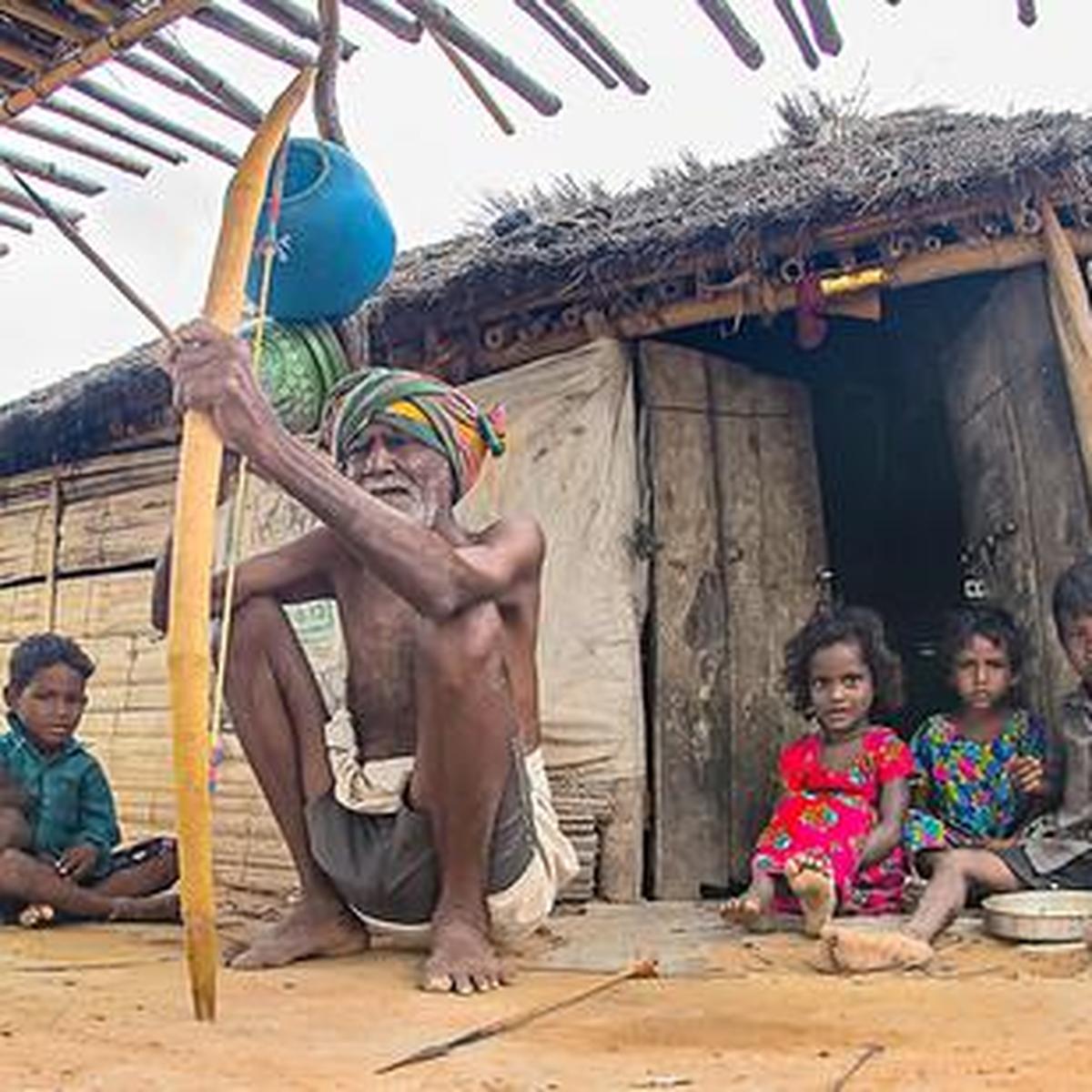
In May 2025, the Telangana government announced the sanctioning of 10,000 Indiramma houses to Chenchu tribal families under a saturation approach in four Integrated Tribal Development Agencies (ITDA)—Utnur, Bhadrachalam, Munnanur, and EturuNagaram. An additional 700 units per ST assembly constituency have also been approved within these ITDA areas.This move aligns with the state’s commitment to improving housing infrastructure in tribal areas.
About Chenchu Tribe
Classification:
- Particularly Vulnerable Tribal Group (PVTG) in Andhra Pradesh
- Also found in Telangana, Karnataka, and Odisha
Habitat:
- Primarily inhabit the Nallamalai forests (Eastern Ghats)
- Chenchu settlements are called “Penta”, consisting of kin-based scattered huts
Language:
- Native Chenchu language (Dravidian family)
- Many also speak Telugu
Social Structure:
- Small conjugal families with gender equality
- Village elder, known as “Peddamanishi”, serves as the community authority
Livelihood:
- Forest-based subsistence lifestyle
- Depend on collection of non-timber forest produce (NTFPs) such as:
- Roots, tubers, fruits, beedi leaves, honey, gum, mohua flowers, tamarind
- Some serve as forest laborers, but mostly rely on traditional hunting and gathering
Religion & Culture:
- Worship local deities; blend of indigenous and Hindu practices
- Hold deep spiritual ties with the Srisailam Temple (dedicated to Lord Shiva and Devi Brahmaramba), which lies at the heart of their region
- Chenchus enjoy customary privileges at the Srisailam shrine
Atal Vayo Abhyuday Yojana (AVYAY)
- 23 Feb 2024
Why is it in the News?
The Department of Social Justice and Empowerment, being the Nodal Department for the welfare of senior citizens, develops and implements programmes and policies for these groups in close collaboration with State Governments, Non-Governmental Organisations and civil society.
About the Atal Vayo Abhyuday Yojana (AVYAY):
- It is a Central Sector Scheme to improve the quality of life of the Senior Citizens.
- The project is implemented by the Department of Social Justice and Empowerment.
Aims and Objectives:
- The main objective of the Scheme is to improve the quality of life of Senior Citizens by providing basic amenities like shelter, food, medical care and entertainment opportunities and by encouraging productive and active ageing through providing support for capacity building of State/ UT Governments/Non-Governmental Organisations (NGOs)/Panchayati Raj Institutions (PRIs) / local bodies and the community at large.
The components of the AVYAY Scheme are as under:-
-
- Integrated Programme for Senior Citizens (IPSrC)
- State Action Plan for Senior Citizens (SAPSrC)
- Rashtriya Vayoshri Yojana (RVY)
- Elderline – National Helpline for Senior Citizens
- Senior-care Ageing Growth Engine (SAGE)
- Geriatric Caregivers Training
Components of the AVYAY Scheme:
- Integrated Programme for Senior Citizens (IPSrC): Grant aid is provided to Non-Governmental/ Voluntary Organizations for running and maintenance of Senior Citizens' Homes (old age homes), continuous care homes, etc.
- Facilities like shelter, nutrition, medicare and entertainment are provided free of cost to indigent senior citizens.
- State Action Plan for Senior Citizens (SAPSrC): Grant in aid is released to States/ UTs for the creation of a pool of trained Geriatric Caregivers for senior citizens, for carrying a special drive for Cataract Surgeries for Senior Citizens and State Specific Activities for the welfare of senior citizens, especially who are indigent in the States/UTs.
- Rashtriya Vayoshri Yojana (RVY): To provide for senior citizens, suffering from any age-related disability/infirmity such as low vision, hearing impairment, loss of teeth and loco-motor disabilities.
- The eligible senior citizens under this component are those who are in the BPL Category or have monthly income up to Rs.15000/.
- Generic and non-generic devices are distributed to the senior citizens through the camps.
- Elderline: National Helpline for Senior Citizens (14567): The Ministry has set up the National Helpline for Senior Citizens to provide free information, Guidance, Emotional Support and field intervention in cases of abuse and rescues.
- Senior-care Ageing Growth Engine (SAGE): To promote out-of-the-box and innovative solutions for commonly faced problems, innovative start-ups are identified and encouraged to develop products, processes and services for the welfare of the elderly under this initiative.
- The initiative is implemented through IFCI Venture Capital Funds Ltd. (Investment Manager).
- Geriatric Caregivers Training: To bridge the gap in supply and increasing demand in the field of geriatric caregivers and also to create a cadre of professional caregivers in the field of geriatrics.
- The component is implemented through the National Institute of Social Defence and at present 3,180 geriatric caregivers have been trained.