
Osbeckia zubeengargiana
- 16 Mar 2026
In News:
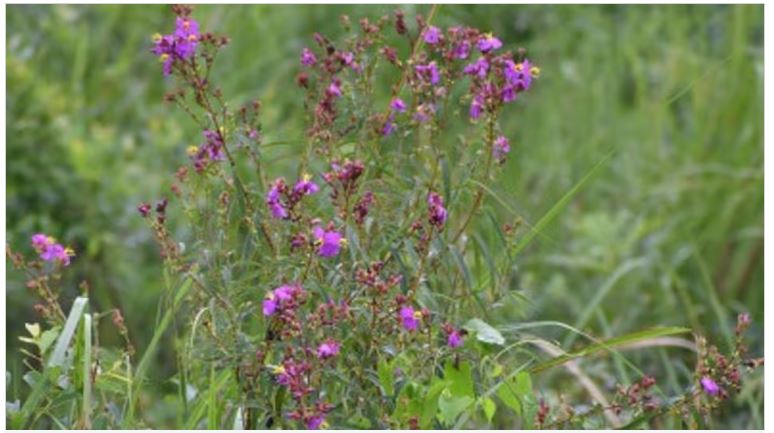
Researchers from Gauhati University have discovered a new flowering plant species named Osbeckia zubeengargiana in the grasslands of Manas National Park in Assam. The species has been named in honour of celebrated Assamese singer Zubeen Garg, recognising his contribution to regional culture and advocacy for nature conservation.
About Osbeckia zubeengargiana
Osbeckia zubeengargiana is a newly identified plant species belonging to the Melastomataceae family, a diverse group of flowering shrubs widely distributed in tropical and subtropical regions.
Key Characteristics
- Plant Type: Perennial erect shrub
- Height: Can grow up to 3.5 metres tall
- Flowers: Characterised by pink to purple tetramerous (four-petalled) flowers
- Habitat: Thrives in moist grassland ecosystems
- Flowering and Fruiting Period: Mid-September to January
The plant was discovered in the grasslands of Manas National Park in Baksa district, Assam, where researchers observed a substantial population of the species.
Discovery and Scientific Identification
The species was identified during floristic explorations conducted between 2021 and 2025 as part of doctoral research on the Melastomataceae family in Assam. The research was carried out by scientists Barnali Das, Prashob Pulpra, and Namita Nath of Gauhati University.
Botanical analysis revealed that the plant is closely related to Osbeckia rostrata but differs in several morphological features such as:
- leaf structure,
- arrangement of flowers,
- shape of the hypanthium (floral structure), and
- seed size.
These distinguishing characteristics confirmed it as a new species within the genus Osbeckia.
Ecological Significance
The species grows in association with several grassland plants such as:
- Chrysopogon zizanioides,
- Maesa indica,
- Bombax ceiba, and
- Dillenia pentagyna.
Its presence contributes to the floral diversity of the grassland ecosystems of Manas National Park, which is already recognised as a biodiversity hotspot in the Eastern Himalayan region.