
Hornbill Festival
- 08 Dec 2025
In News:
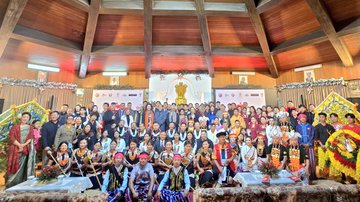
The 26th edition of the Hornbill Festival (2025) is being celebrated in Nagaland, with vibrant cultural performances held at the Naga Heritage Village, Kisama, near Kohima. The festival, often called the “Festival of Festivals”, brings together diverse Naga tribes to showcase their heritage, traditions, and artistic expressions.
About the Hornbill Festival
- What: A premier cultural festival of Nagaland celebrating the collective identity of Naga tribes
- When: Held annually from 1–10 December
- Where:Kisama Heritage Village, around 12 km from Kohima
- Started in:2000, by the Government of Nagaland
- Named after: The Hornbill bird, revered in Naga folklore as a symbol of valour, beauty, and cultural pride
Cultural Significance
Nagaland is home to 17 major tribes and several sub-tribes, each with unique customs, attire, music, and oral traditions. Over 86% of the state’s population belongs to tribal communities (Census 2011). The Hornbill Festival provides a platform for:
- Preserving and promoting indigenous traditions
- Strengthening inter-tribal unity
- Encouraging interaction between elders and youth
- Showcasing Naga identity at national and international levels
Key Features of the Festival
1. Cultural Performances: Daily events include:
- Traditional dances and folk songs
- War cries and storytelling traditions
- Indigenous sports and martial displays
Examples of performances include youth dances symbolising joy and festivity, women’s folk dances celebrating hospitality, and traditional combat sports practised in village morungs (youth dormitories).
2. Traditional Arts & Crafts: Exhibitions display:
- Wood carving
- Handwoven textiles
- Tribal ornaments and handicrafts
- Paintings and sculptures
3. Food & Lifestyle Exhibitions
- Indigenous Naga cuisine
- Herbal medicine stalls
- Flower shows
- Traditional archery and wrestling competitions
4. Major Events
- Hornbill International Rock Festival
- Morung (traditional youth dormitory) exhibitions
- Fashion shows featuring tribal attire
- Craft bazaars promoting local entrepreneurship
Participation and Outreach
The festival attracts both domestic and international participation. In recent editions, several partner countries and neighbouring Indian states have participated, strengthening cultural diplomacy and tourism links. Such engagement enhances Nagaland’s visibility as a cultural tourism destination.
Economic and Tourism Impact
The Hornbill Festival significantly boosts:
- Tourism revenue
- Local handicraft and handloom markets
- Food and hospitality sectors
- Employment opportunities for local communities
It serves as an important platform for sustainable cultural tourism in Northeast India.
Hornbill Festival
- 06 Dec 2024
In News:
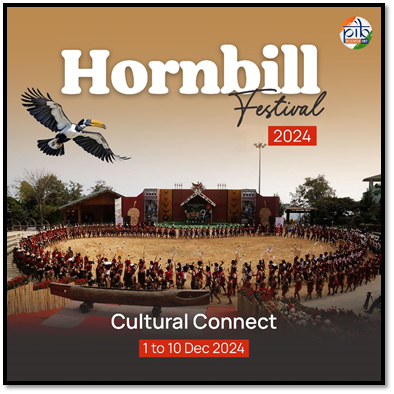
The Hornbill Festival, a vibrant celebration of Nagaland's culture and tourism, is an annual event that takes place from December 1 to 10.
About the Hornbill Festival:
- Origin: First held in the year 2000.
- Purpose: The festival aims to foster inter-tribal communication, preserve the cultural heritage of Nagaland, and showcase the harmonious blending of traditional and modern elements.
- Significance: Referred to as the “festival of festivals,” it has become an essential part of the state’s cultural calendar.
- Organizers: It is organized by the Tourism and Art & Culture Departments of the Government of Nagaland.
- Location: The festival takes place annually at the Naga Heritage Village in Kisama, located about 12 kilometers from Kohima.
- Cultural Showcase: Over the years, it has evolved into a significant celebration that highlights the vibrant and diverse cultural traditions of the various tribes in Nagaland.
- Name Origin: The festival is named after the Hornbill bird, which holds cultural importance among the Naga tribes.
- Theme of the 2024 Hornbill Festival:The 2024 edition is themed “Cultural Connect,” celebrating the rich heritage and cultural diversity of Nagaland. The festival continues to merge modernity and tradition through a variety of activities, including Naga wrestling, traditional archery, food stalls, fashion shows, beauty contests, and musical performances. Additionally, the Archives Branch is presenting a special exhibition titled “Naga-Land & People in Archival Mirror” in partnership with the National Archives of India, offering a deeper look at the region's history and cultural practices.
- Recent Milestone:This year marks the 25th anniversary of the Hornbill Festival.
Festival Highlights:
- Annual Event: Held each year since its inception in 2000, it serves as a major cultural event for Nagaland.
- Symbolism: Named after the Hornbill bird, which represents boldness and grandeur in Naga folklore.
- Location: The festival is hosted at Kisama Heritage Village, a cultural center that preserves Naga traditions with 17 indigenous houses (Morungs) that represent each of the tribes.
- Cultural Diversity: Nagaland, known as the “Land of Festivals,” is home to 17 major tribes, each with its distinct festivals and cultural practices. The Hornbill Festival promotes inter-tribal interaction and celebrates the state’s rich heritage.
- National Significance: Reflecting India’s unity in diversity, the festival serves as a platform for different cultural practices to coexist, strengthening the nation’s collective identity.
Pakke Paga Hornbill Festival begins in Arunachal; effective conservation of iconic birds urged (DTE)
- 19 Jan 2024
Why is it in the News?
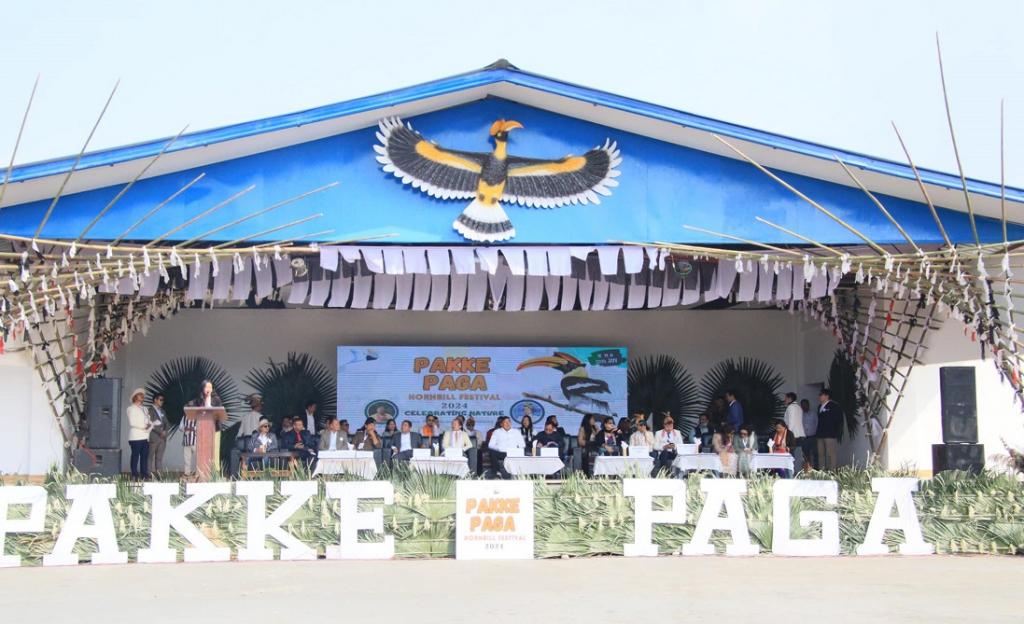
The 9th edition of the Pakke Paga Hornbill Festival (PPHF) commenced in the town of Seijosa in Arunachal Pradesh’s Pakke Kessang district on January 18, 2024, with a call to protect and conserve hornbills.
About Pakke Paga Hornbill Festival:
- The first Pakke Paga Hornbill Festival (PPHF) took place in 2015 with the primary goal of acknowledging the Nyishi tribal group's significant role in hornbill conservation within the Pakke Tiger Reserve (PTR).
- Additionally, the festival aimed to generate alternative sources of income for the region and raise awareness across India about the marvels of PTR and its surroundings.
- The current year's festival is themed "Domutoh Domutoh, Paga hum Domutoh," meaning 'Let Our Hornbills Remain' in the Nyishi language.
- The focus of this year's festival is to emphasize the crucial importance of preserving these iconic birds.
About the Great Indian Hornbill:
- The Great Indian Hornbill is a bird family found in tropical and subtropical Africa, Asia, and Melanesia.
- It is the state bird of Kerala and Arunachal Pradesh in India.
- The Great Indian Hornbill is now considered “Vulnerable” due to high hunting pressure, habitat loss, and deforestation.
Key Facts About Pakke Tiger Reserve:
- Pakke Tiger Reserve is located in the East Kameng district of Arunachal Pradesh.
- It is bordered by the Tenga Reserve Forest to the North, the Doimara Reserve Forest to the West, and Nameri National Park and Tiger Reserve (Assam) to the South.
- The region exhibits high species diversity and endemicity, acting as a transitional zone between the Indian and Malayan ecoregions.
- Located North of the Brahmaputra River, Pakke Tiger Reserve is positioned in the transition zone between the Assam plains and the hilly forests of Arunachal Pradesh.
- Vegetation primarily comprises tropical evergreen and semi-evergreen forests.
- Flora: Notable flora includes Polyalthia simiarum, Pterospermum acerifolium, Sterculia alata, Stereospermum chelonioides, Ailanthus grandis, and Duabanga grandiflor. Additionally, about eight species of bamboo are found in the area.
- Fauna: The fauna of the reserve includes iconic species like the Tiger and elephant, as well as predators such as the Leopard and the Clouded leopard, contributing to the rich biodiversity of the region.