
Chaolung Sukapha
- 05 Dec 2025
In News:
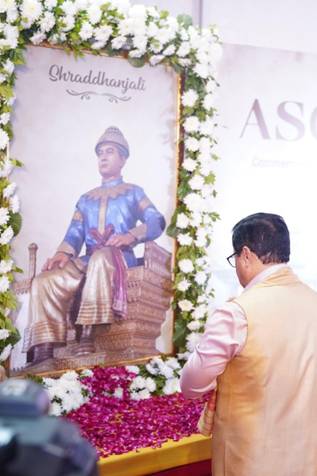
Assam Day (02nd December) celebrations recently paid tribute to Chaolung Sukapha, the founder of the Ahom kingdom and a key figure in Assam’s historical and cultural identity.
Who was Chaolung Sukapha?
- Chaolung Sukapha was a 13th-century ruler who established the Ahom kingdom in Assam, which went on to rule the region for nearly six centuries. He is widely regarded as the architect of “Bor Asom” (Greater Assam) due to his role in unifying diverse communities.
- Sukapha crossed the Patkai hills and established his first principality at Charaideo, which later became an important political and cultural centre of the Ahom rulers.
Administrative System
- Sukapha developed an organised administrative structure that later evolved into the famous Paik system of the Ahoms.
- The kingdom was divided into territorial units called khels (or phoids). Each unit was supervised by an officer responsible for mobilising paiks, able-bodied adult males who provided labour and military service.
- Every adult male between the ages of 16 and 50 was registered as a paik. They served the state in activities such as agriculture, construction, and warfare for a fixed period each year. In return, they were granted land for cultivation.
- Sukapha also emphasised guerrilla warfare tactics suited to Assam’s geography of rivers, forests, and hills, a strategy that later helped the Ahoms resist external invasions.
Policy of Integration and Assimilation
- One of Sukapha’s most significant contributions was his policy of conciliation and assimilation. Instead of conquering local tribes through force, he built alliances and integrated communities into his kingdom.
- He maintained friendly relations with indigenous groups such as the Sutias, Morans, and Kacharis, laying the foundation for a composite Assamese society. His approach fostered social harmony and cultural blending, which became a defining feature of Assam’s identity.
Why Sukapha is Important Today
- Sukapha’s legacy lies in his vision of unity through diversity. His governance model promoted peace, cooperation, and shared prosperity among different ethnic and cultural groups.
- This inclusive approach is often seen as an early example of nation-building through social integration, making his legacy relevant in discussions on cultural harmony and regional identity.
Charaideo and Historical Legacy
- Charaideo, where Sukapha established his initial base, later became the site of the Charaideo Maidams, the burial mounds of Ahom royalty. These maidams have gained global recognition for their historical and cultural importance.