
Discovery of New Lichen Moth Species in the Eastern Himalayas
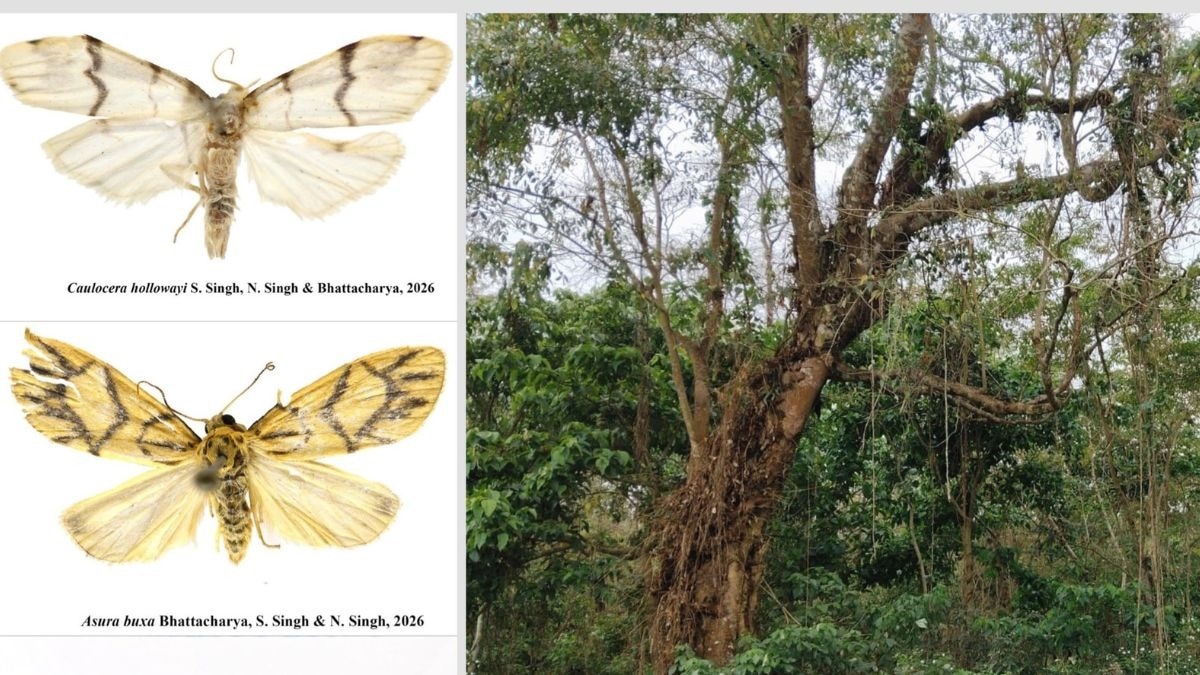
- 15 Mar 2026
In News:
Scientists from the Zoological Survey of India (ZSI) have discovered two new species of lichen moths—Caulocera hollowayi and Asura buxa—in the Eastern Himalayan biodiversity hotspot. The discovery highlights the region’s rich but still underexplored biodiversity and the importance of taxonomic research in conservation.
About the Discovery
Researchers from ZSI identified two previously unknown moth species belonging to the order Lepidoptera, which includes butterflies and moths.
The species were identified through detailed morphological examination, including:
- Wing pattern and coloration analysis
- Chaetotaxy (arrangement of body scales and bristles)
- Microscopic study of reproductive structures, a crucial feature in insect taxonomy
Such techniques help scientists differentiate closely related species and confirm whether a specimen represents a new species.
Newly Discovered Species
1. Caulocera hollowayi
- Genus: Caulocera (lichen moth group)
- Location of discovery: Golitar region, Sikkim
- Key Characteristics:
- Distinctive wing colour patterns and band structures
- Unique reproductive structures visible under microscopic analysis
- Identified using detailed morphological traits and chaetotaxy
2. Asura buxa
- Genus: Asura (lichen moth group)
- Location of discovery: Panijhora region, West Bengal in the Eastern Himalayas
- Key Characteristics:
- Unique wing markings and coloration
- Distinct genital morphology, an important taxonomic feature in Lepidoptera
- Specific body scale arrangements confirming its status as a new species
About Lichen Moths
Lichen moths belong to a group of moths known for their association with lichens and mosses found in forest ecosystems.
Ecological Role:
- Act as bioindicators of ecosystem health
- Participate in nutrient cycling in forest habitats
- Help scientists understand species interactions in fragile mountain ecosystems
Importance of the Discovery
- Biodiversity documentation: Expands the scientific record of India’s insect diversity.
- Himalayan ecosystem research: Provides new insights into species adaptation in mountain environments.
- Conservation significance: Highlights the ecological importance of the Eastern Himalayas, one of the world’s major biodiversity hotspots.
- Taxonomic advancement: Reinforces the role of systematic biological surveys in identifying and classifying previously unknown species.
About Zoological Survey of India (ZSI)
- Established: 1916
- Headquarters: Kolkata
- Ministry: Ministry of Environment, Forest and Climate Change (MoEFCC)
- Mandate:
- Survey and documentation of India’s faunal diversity
- Taxonomic research and species identification
- Support biodiversity conservation and policy formulation