
Biological Weapons Convention (BWC)
- 04 Dec 2025
In News:
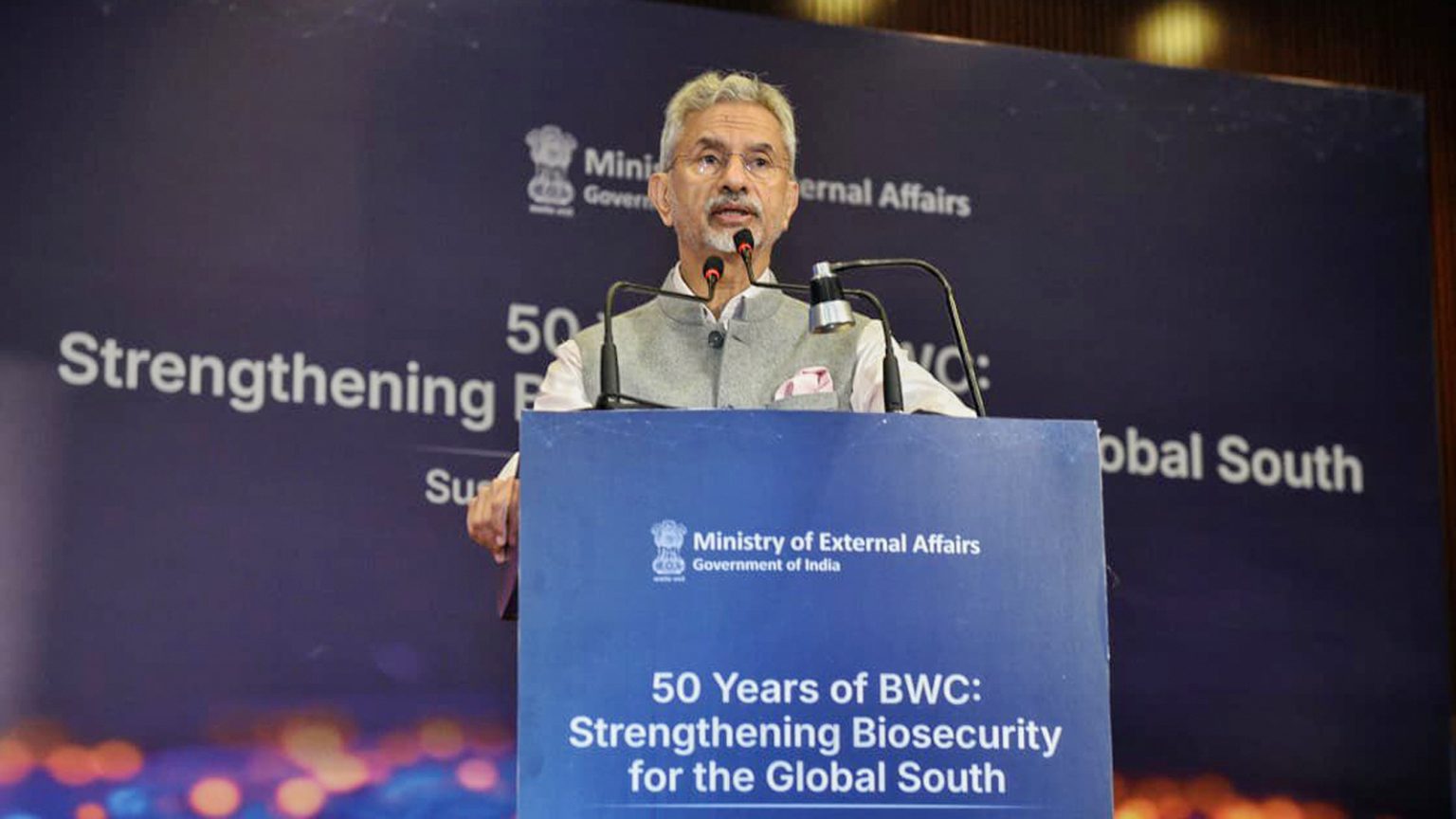
India hosted the international conference titled “50 Years of BWC: Strengthening Biosecurity for the Global South” in New Delhi, marking the Convention’s half-century since entry into force. The event focused on reinforcing biosecurity governance, especially for developing countries facing acute vulnerabilities.
Key Highlights:
India Highlighted:
- Rising risk of bioterrorism and deliberate misuse of biological agents.
- The urgent need to modernise the BWC to keep pace with scientific advances, including genome editing, synthetic biology, and AI-driven biological design.
- The lack of compliance systems and permanent structures as significant challenges.
- Weak infrastructure in many Global South nations, including healthcare surveillance, emergency response, and laboratory networks, which magnify biological risks.
- The importance of shaping the next phase of the BWC with strong input from the Global South to ensure equitable biosecurity.
India’s Contributions and Proposals
EAM Jaishankar outlined India’s growing capabilities in biotechnology and public health:
- India produces an estimated 60% of global vaccines and supplies over 20% of global generic medicines, including 60% of African generics.
- Expansion of the biotech sector from about 50 startups in 2014 to nearly 11,000 today.
- Strengthened laboratory infrastructure, including BSL-3 and BSL-4 facilities under Indian Council of Medical Research (ICMR) and Department of Biotechnology (DBT).
- Vaccine Maitri Initiative during COVID-19, supplying nearly 300 million vaccine doses and medical aid to over 100 nations.
India reiterated longstanding support for:
- A robust compliance and verification system under the BWC.
- Structured review mechanisms for scientific and technological oversight.
- A National Implementation Framework, focusing on:
- Identifying high-risk biological agents.
- Oversight of dual-use research.
- Incident management and response.
- Continuous capacity building and training.
India is also active in other non-proliferation regimes such as the Wassenaar Arrangement, Missile Technology Control Regime, and the Australia Group, with the latter being particularly relevant to biological security.
About Biological Weapons Convention (BWC)
The BWC is the first multilateral treaty to comprehensively ban an entire class of weapons of mass destruction. It prohibits the development, production, stockpiling, acquisition, transfer, and use of biological and toxin weapons. Against the backdrop of rapid advances in biotechnology, artificial intelligence, and synthetic biology, global leaders have underscored the need to modernise and reinforce the BWC to address emerging biological threats.
Historical Background
- Opened for Signature: 10 April 1972 (London, Moscow, Washington).
- Entered into Force: 26 March 1975.
- India’s Participation: India signed and ratified the BWC in 1974 and is a founding State Party.
The Convention marked a significant milestone in international disarmament by establishing a legally binding commitment to eliminate an entire category of weapons.
Core Obligations
Under the BWC, States Parties must:
- Not develop, produce, or stockpile biological and toxin weapons.
- Destroy existing stockpiles, agents, and production facilities within nine months of the treaty’s entry into force.
- Refrain from assisting any other state in prohibited activities.
- Cooperate bilaterally or multilaterally on compliance issues.
The treaty also prohibits any equipment or delivery systems designed to disseminate biological agents for hostile purposes.
Current Membership
- States Parties: 187, including Palestine.
- Signatories: Four (Egypt, Haiti, Somalia, Syria).
- Non-signatories: Ten (e.g., Israel, Eritrea, South Sudan).
- India is part of the global majority committed to full compliance and biosecurity cooperation.
Limitations and Challenges
Lack of Verification Mechanism
A critical gap in the BWC is the absence of a formal, binding verification regime to monitor compliance, which has historically allowed violations. Notable past breaches include alleged programmes in the Soviet Union and Iraq.
No Permanent Institutional Structure
Unlike other arms control regimes, the BWC lacks:
- A permanent technical body.
- A compliance monitoring framework.
- Mechanisms to systematically assess scientific and technological developments.
This institutional deficit weakens confidence and enforcement in the evolving biological landscape.