
Boeing Starliner
- 06 May 2024
Why is it in the News?
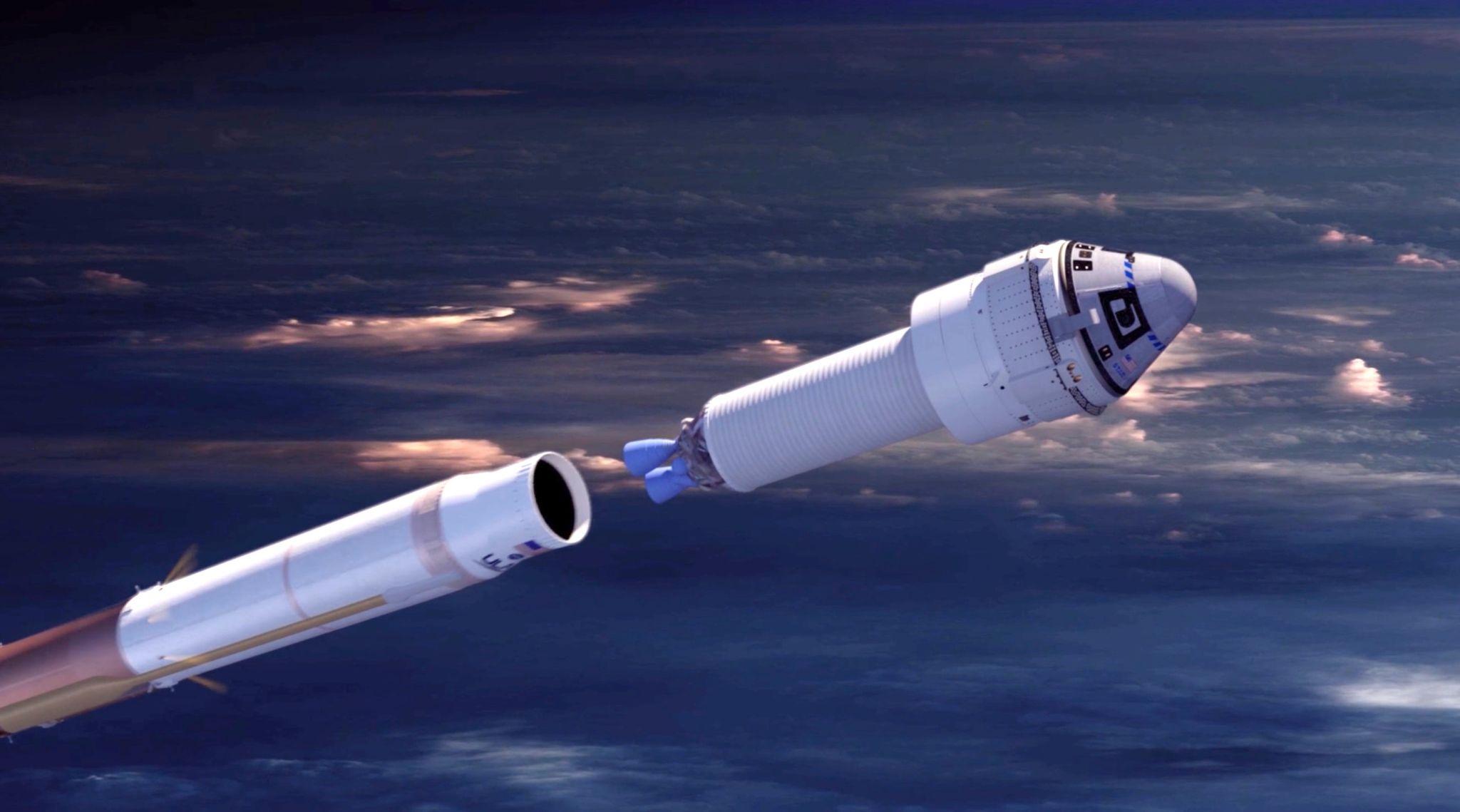
Boeing’s Starliner spacecraft, carrying two NASA astronauts, will be launched by an Atlas V rocket from the Kennedy Space Center in Cape Canaveral, Florida, to the International Space Station (ISS).
What is Boeing’s Starliner?
- Starliner, a reusable spacecraft, has a pusher abort system.
- This allows the crew to safely escape throughout the launch and the ascent phases of the mission.
- In addition to being software-driven, the Starliner has wireless internet that will help with “crew communication, entertainment and docking with the International Space Station”
- The spacecraft can fly and course-correct on its own.
- It operates like advanced self-driving cars, with features similar to sophisticated cruise control and hands-free driving, allowing astronauts to simply enjoy the ride without intervention.
- It also allows astronauts to choose their level of control.
- Consisting of a crew capsule and a service module, the Starliner aims to revolutionize space travel with its advanced features and capabilities.
Crew Capsule:
- The crew capsule is the heart of the spacecraft, providing housing for astronauts during their journey.
- Designed to withstand the rigours of reentry, the capsule ensures a safe return to Earth for its occupants.
Service Module:
- The service module is equipped with essential systems for astronaut survival, such as air and temperature control, water supply, and sanitation facilities.
- Additionally, it contains the necessary engines and fuel required for manoeuvring the spacecraft in space.
- This module is not reusable and is designed for single use.
Starliner Specifications:
- With a width of over 4 meters, the Starliner can accommodate up to seven astronauts at once.
- The spacecraft boasts a unique weldless structure, making it both durable and reusable, with a potential for up to 10 missions and a six-month turnaround time between launches.
- Furthermore, the Starliner incorporates modern technologies like wireless internet and tablet interfaces for enhanced crew interaction.
Launch Vehicle:
- The Starliner is compatible with the Atlas V rocket, operated by United Launch Alliance (ULA), a joint venture between Boeing and Lockheed Martin.
- This collaboration ensures the seamless integration of the spacecraft and launch vehicle, optimizing mission success.
Why is the mission significant?
- In 2014, NASA selected Boeing and SpaceX to develop spacecraft for transporting astronauts to the International Space Station (ISS).
- While SpaceX has already conducted multiple successful missions with its Dragon crew capsule, the Starliner's success would mark the first time the United States has two domestically produced spacecraft capable of carrying astronauts to space.
- Once operational, Boeing and SpaceX will alternate missions to the ISS, with each crew's expedition lasting up to six months.
- This partnership will continue until the ISS is decommissioned in the next decade.
Autonomous systems becoming the preferred choice in Order of Battle for nations across the globe: Navy Chief (The Hindu)
- 10 Jan 2024
Why is it in the News?
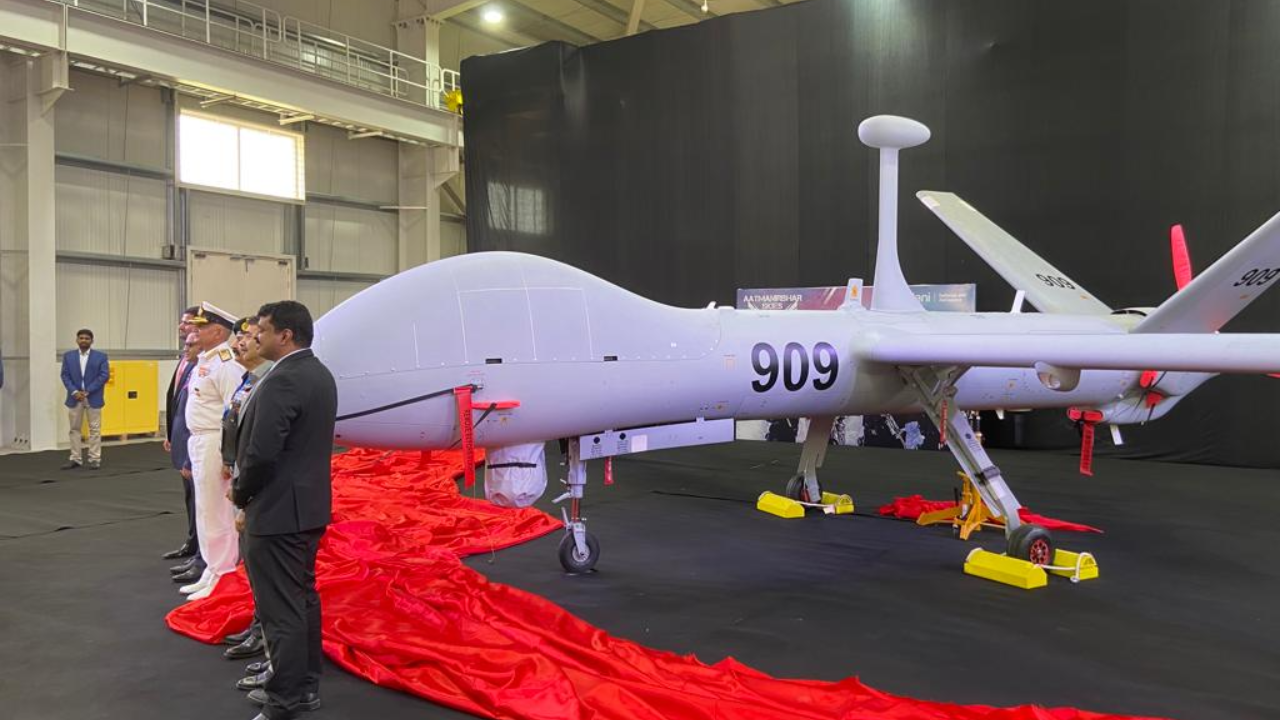
Chief of Naval Staff Admiral R Hari Kumar officially initiated the maiden indigenously produced Drishti 10 'Starliner' Unmanned Aerial Vehicle (UAV) for the Indian Navy.
What is Drishti 10 Starliner UAV?
- Drishti 10 Starliner Unmanned Aerial Vehicle is an advanced intelligence, surveillance, and reconnaissance (ISR) platform, developed by Adani Defence and Aerospace, and represents a significant leap forward in India’s defence technology.
- The Drishti 10 Starliner boasts an impressive 36 hours of endurance and a substantial 450 kg payload capacity.
- It stands out as the only all-weather military platform certified with NATO’s STANAG 4671 (standardized agreement 4671) for airworthiness, allowing it to operate in both segregated and unsegregated airspace.
- The UAV is equipped with state-of-the-art sensors, an extended endurance of 36 hours, and advanced communication capabilities.
- Its incorporation of new-age technologies such as Automatic Take Off and Landing (ATOL) positions it as a formidable asset.
- Notably, this UAV is a home-assembled version of the Hermes-900 MALE UAV, featuring an impressive 70% indigenous content.
- A notable feature of the Drishti 10 'Starliner' is its low maintenance demands, contributing to cost-effectiveness and operational efficiency.
- This quality enhances operational readiness, minimizing downtime and optimizing deployment opportunities.
- The Drishti 10 is outfitted with cutting-edge communication systems, encompassing satellite communication and Line-of-Sight (LOS) data links, guaranteeing dependable and secure data transmission.
What is Unmanned Aerial Vehicle (UAV)?
- A drone, also referred to as an unmanned aerial vehicle (UAV), is an aircraft that operates without a human pilot, crew, or passengers on board.
- UAVs are integral components of unmanned aircraft systems, comprising a ground-based controller and a communication system linked with the UAV.
Drones are categorized based on their weight, adhering to existing regulations:
- Nano: Equal to or less than 250 grams
- Micro: Between 250 grams and 2 kilograms
- Small: From 2 kilograms to 25 kilograms
- Medium: Between 25 kilograms and 150 kilograms
- Large: Exceeding 150 kilograms