
Sickle Cell Disease (SCD) & National Sickle Cell Anaemia Elimination Mission (NSCEM)
- 24 Jun 2026
In News:
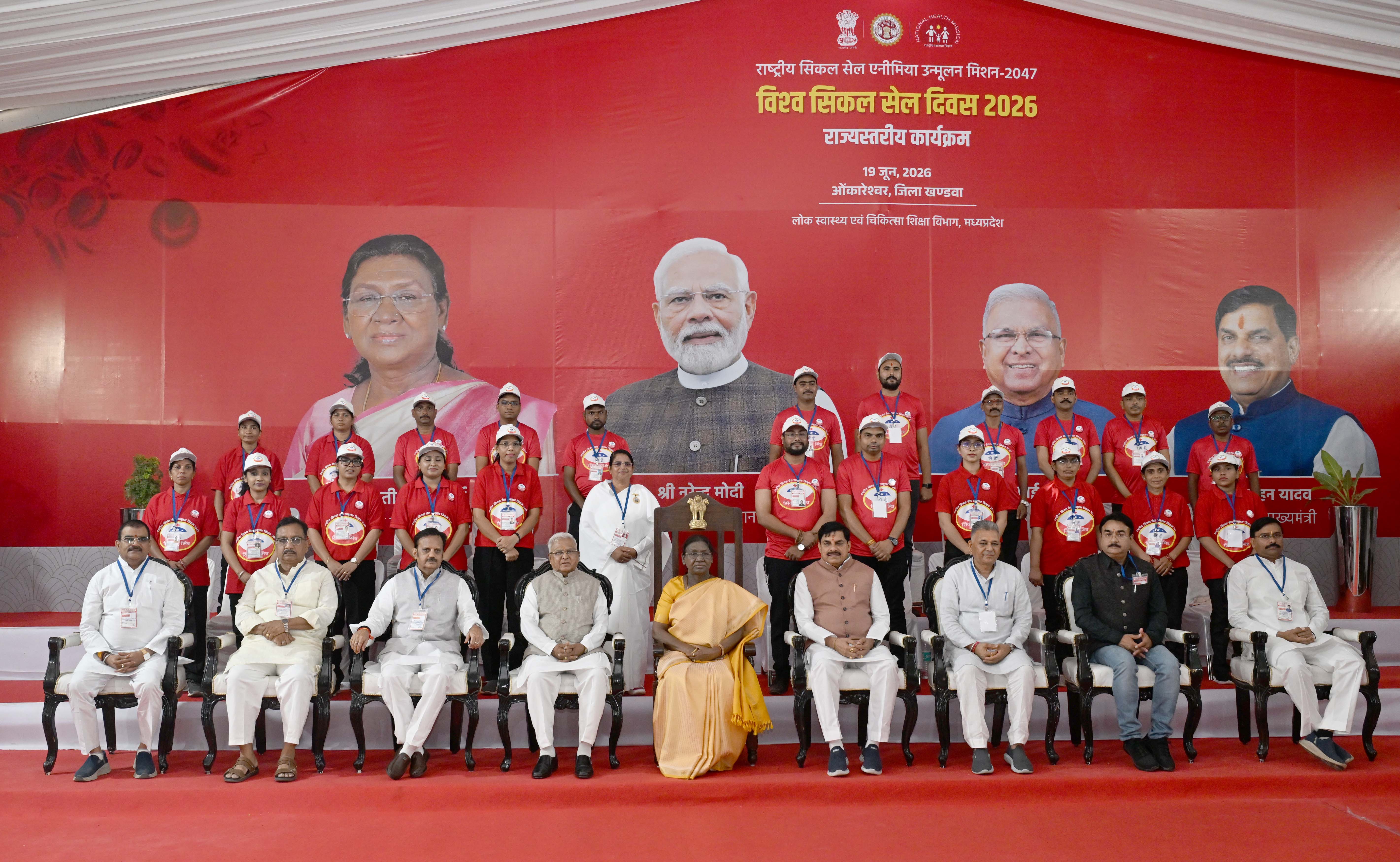
On International Sickle Cell Day (19 June) 2026, the President of India reaffirmed the country's commitment to eliminate Sickle Cell Disease (SCD) by 2047 under the National Sickle Cell Anaemia Elimination Mission (NSCEM).
International Sickle Cell Day
- International Sickle Cell Day is observed annually on 19 June to raise awareness about Sickle Cell Disease (SCD) and promote early diagnosis, treatment, prevention, and equitable healthcare access.
- The United Nations General Assembly (UNGA) designated 19 June as International Sickle Cell Day through a resolution adopted on 22 December 2008, recognizing SCD as a major global public health challenge and one of the world's most significant inherited genetic disorders.
- Theme (2026):"Closing the Survival Gap: Equity in Sickle Cell Disease."
What is Sickle Cell Disease (SCD)?
Sickle Cell Disease (SCD) is a hereditary genetic blood disorder caused by a mutation in the HBB (beta-globin) gene, resulting in the production of abnormal haemoglobin (Haemoglobin S). Instead of their normal biconcave shape, red blood cells become rigid, sticky, and sickle (crescent)-shaped, impairing blood flow and oxygen delivery.
The disease follows an autosomal recessive inheritance pattern, meaning an individual develops SCD only after inheriting two defective genes (one from each parent). Individuals carrying only one mutated gene possess the Sickle Cell Trait and are generally asymptomatic but can transmit the gene to their offspring.
Health Impact
Abnormally shaped red blood cells obstruct small blood vessels, leading to vaso-occlusive crises, severe pain episodes, chronic anaemia, organ damage, recurrent infections due to splenic dysfunction, and reduced life expectancy. Symptoms generally begin at 5–6 months of age as fetal haemoglobin declines.
Treatment
Management focuses on reducing complications through:
- Hydroxyurea therapy (increases fetal haemoglobin production).
- Pain management and adequate hydration.
- Blood transfusions for severe complications.
- Vaccination and antibiotics to prevent infections.
National Sickle Cell Anaemia Elimination Mission (NSCEM)
Launched in 2023, the National Sickle Cell Anaemia Elimination Mission aims to eliminate Sickle Cell Disease as a public health problem in India by 2047, with a special focus on tribal populations, where disease prevalence is highest.
The Mission is implemented jointly by the Ministry of Health & Family Welfare and the Ministry of Tribal Affairs under the National Health Mission (NHM) across 17 high-focus States.
Key Features
- Mission period: 2023–2026 (screening phase).
- Screening target: Approximately 7 crore individuals aged 0–40 years.
- Focus areas include:
- Universal screening and early diagnosis.
- Genetic counselling.
- Timely treatment and follow-up.
- Public awareness and prevention.
- Strengthening healthcare infrastructure.
IMAT-05: Fifth Integrated Main Parachute Airdrop Test for Gaganyaan Mission

- 12 Jul 2026
In News:
The Indian Space Research Organisation (ISRO) successfully conducted the fifth Integrated Main Parachute Airdrop Test (IMAT-05) for the Gaganyaan Mission at the Aerial Delivery Research and Development Establishment (ADRDE) drop zone in Sheopur, Madhya Pradesh. The test marks another significant milestone in validating the crew module's safe recovery system ahead of the upcoming uncrewed G1 mission.
What is IMAT-05?
The Integrated Main Parachute Airdrop Test (IMAT-05) is a high-altitude structural qualification test designed to validate the main parachute system of the Gaganyaan Crew Module under the most demanding re-entry conditions. It simulates the extreme aerodynamic forces experienced by the crew capsule during atmospheric re-entry before its splashdown in the sea.
The test was jointly planned and executed by the Indian Space Research Organisation (ISRO) and the Aerial Delivery Research and Development Establishment (ADRDE), a laboratory under the Defence Research and Development Organisation (DRDO).
Objective
The primary objective of IMAT-05 was to verify the structural integrity, deployment sequence, aerodynamic performance and safety margins of the main parachute system under maximum design loads expected during the Gaganyaan G1 uncrewed demonstration mission.
Key Features of the Test
The test involved dropping a dummy payload, equivalent in mass to the actual crew module, from an altitude of 2.5 km using an Indian Air Force IL-76 heavy transport aircraft.
The Gaganyaan Crew Module uses an integrated 10-parachute deceleration system, designed to gradually reduce the capsule's velocity before ocean landing.
The system comprises:
- 2 Apex Cover Separation Parachutes to jettison the protective cover over the parachute compartment.
- 2 Drogue Parachutes to stabilize the descending capsule and reduce its initial speed.
- 3 Pilot Parachutes to extract the main parachutes from the capsule.
- 3 Main Parachutes that sequentially deploy to reduce the crew module to a safe splashdown velocity.
A major highlight of IMAT-05 was the successful validation of the disreefing sequence, a controlled deployment mechanism in which the main parachutes inflate in stages rather than opening instantaneously. This significantly reduces structural stress on the parachute canopy and suspension lines under extreme aerodynamic loads.
Mission Drishti: India's First OptoSAR Earth Observation Satellite
- 09 Jul 2026
In News:
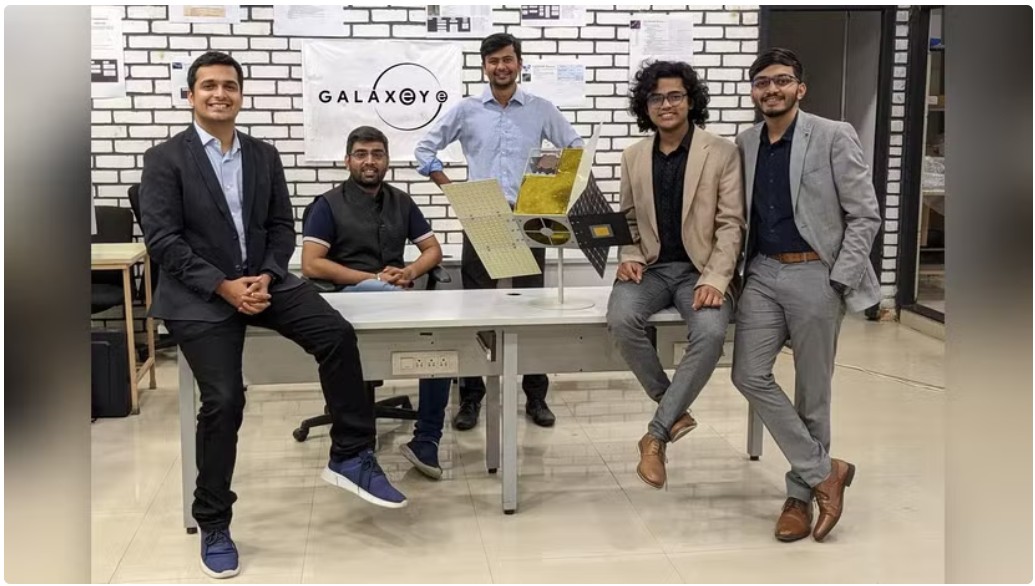
Bengaluru-based space start-up GalaxEye recently announced that communication has been lost with Mission Drishti, the world's first OptoSAR satellite and India's largest privately built Earth observation satellite. The mission marked a significant milestone in India's private space sector by integrating optical and radar imaging technologies into a single satellite.
What is Mission Drishti?
Mission Drishti is a 190-kg Earth observation satellite developed by GalaxEye, a Bengaluru-based deep-tech space start-up. It is the world's first operational OptoSAR satellite, integrating Electro-Optical (EO) and Synthetic Aperture Radar (SAR) sensors on a single compact platform.
The satellite was launched on 3 May 2026 aboard a SpaceX Falcon 9 rocket from Vandenberg Space Force Base, California (USA).
The mission aims to establish a sovereign, all-weather Earth observation capability for India by enabling uninterrupted monitoring of strategic land and maritime regions irrespective of cloud cover or darkness.
Key Features
The defining innovation of Mission Drishti is its OptoSAR technology, which combines the strengths of optical and radar imaging in a single payload.
Optical cameras provide high-resolution visual imagery but are ineffective during cloud cover or at night. In contrast, Synthetic Aperture Radar (SAR) actively transmits microwave signals, allowing it to capture images through clouds, fog, rain and darkness. By integrating both sensors, OptoSAR enables simultaneous collection of complementary datasets from the same location and time, improving accuracy and eliminating alignment errors that occur when images are obtained from separate satellites.
The satellite's hybrid imagery will be commercially distributed through NewSpace India Limited (NSIL) for domestic and international users.
Commissioning of INS Dunagiri, INS Sanshodhak& INS Agray

- 20 Jun 2026
In News:
The Indian Navy is set to commission three indigenously built frontline platforms—INS Dunagiri, INS Sanshodhak, and INS Agray—at Kolkata, reinforcing India's indigenous defence manufacturing capabilities and strengthening maritime security under the vision of Aatmanirbhar Bharat.
Overview
The commissioning of these three warships marks another milestone in India's indigenous shipbuilding programme. Each platform has been designed for a specialised role, ranging from multi-role combat operations and anti-submarine warfare to hydrographic surveys, thereby enhancing the Navy's operational readiness across the Indian Ocean Region (IOR).
INS Dunagiri
INS Dunagiri is the fifth Project 17A stealth frigate, designed by the Warship Design Bureau (WDB) of the Indian Navy and built by Garden Reach Shipbuilders & Engineers Ltd. (GRSE), Kolkata.
As an advanced multi-role stealth warship, it is equipped with BrahMos supersonic surface-to-surface missiles, the Medium Range Surface-to-Air Missile (MRSAM) system, and modern sensors capable of undertaking anti-air, anti-surface, and anti-submarine warfare. The frigate significantly enhances the Navy's blue-water combat capability and fleet defence.
INS Sanshodhak
INS Sanshodhak is the fourth Survey Vessel (Large) inducted into the Indian Navy. It is designed to conduct coastal and deep-sea hydrographic surveys, besides collecting oceanographic and geophysical data for both defence and civilian purposes.
The vessel is equipped with advanced survey technologies, including Autonomous Underwater Vehicles (AUVs) and Remotely Operated Vehicles (ROVs), enabling accurate seabed mapping, navigation support, and maritime infrastructure planning.
INS Agray
INS Agray is the fourth Arnala-class Anti-Submarine Warfare Shallow Water Craft (ASW-SWC), specifically designed for operations in shallow coastal and littoral waters.
The vessel is equipped with lightweight torpedoes, indigenous anti-submarine rocket launchers, and shallow-water sonar systems to detect and neutralize underwater threats. It will play an important role in coastal defence, maritime surveillance, and anti-submarine operations.
Artemis III Mission

- 18 Jun 2026
In News:
NASA has announced the four-member crew and revised mission profile for Artemis III, which is now scheduled for 2027 as a Low Earth Orbit (LEO) mission to validate critical technologies required for future human lunar landings. The first crewed lunar landing under the Artemis programme is now planned under Artemis IV (2028).
What is Artemis III?
Artemis III is part of NASA's Artemis Programme, which aims to establish a sustained human presence on the Moon and serve as a stepping stone for future human missions to Mars.
Originally conceived as the mission to return astronauts to the lunar surface, Artemis III has been redesigned into a two-week Low Earth Orbit technology demonstration mission. The mission will test key systems such as rendezvous, docking, life-support systems, software, and spacecraft interoperability, thereby reducing risks before undertaking crewed lunar landings.
Mission Profile
The mission will be launched aboard NASA's Space Launch System (SLS) rocket carrying the Orion spacecraft.
During the mission, Orion will dock with two commercial Human Landing Systems (HLS):
- Blue Moon lander developed by Blue Origin.
- Starship Human Landing System developed by SpaceX.
The mission will validate docking procedures and operational compatibility between these spacecraft before they are deployed for lunar missions.
Crew of Artemis III
The mission will comprise an international crew of four astronauts:
- Commander: Randy Bresnik (NASA)
- Pilot: Luca Parmitano (European Space Agency) – first ESA astronaut assigned to an Artemis mission
- Mission Specialists: Frank Rubio (NASA) and Andre Douglas (NASA)
What is Low Earth Orbit (LEO)?
Low Earth Orbit (LEO) refers to orbits located approximately 500–2,000 km above Earth's surface. Satellites in LEO have shorter orbital periods, lower communication latency, and are widely used for Earth observation, scientific research, navigation, and human spaceflight, including the International Space Station (ISS).
Significance of Artemis III
The revised mission prioritizes the validation of technologies essential for deep-space exploration before attempting a lunar landing. Successful demonstration of spacecraft docking, life-support systems, and commercial lunar landers will enhance mission safety and reduce operational risks.
Strategically, the Artemis Programme reinforces international collaboration through participation by agencies such as the European Space Agency (ESA) while strengthening the role of commercial space companies. It also supports the broader objective of maintaining leadership in human space exploration amid increasing global competition and advancing preparations for future missions to the Moon and eventually Mars.
Mission Queen Pineapple
- 29 May 2026
In News:
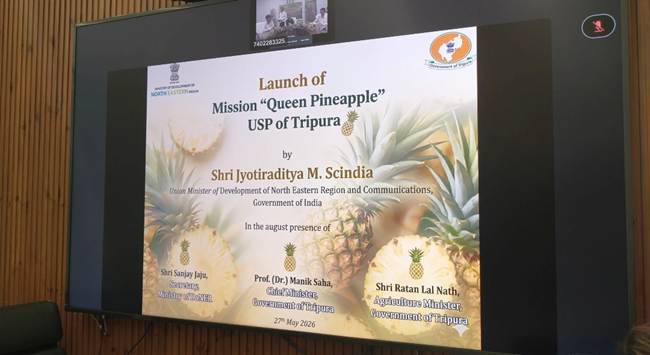
Recently, the Ministry of Development of North Eastern Region (MDoNER) has launched Mission Queen Pineapple.
The mission aims to transform Tripura’s Geographical Indication (GI)-tagged Queen Pineapple into a globally competitive horticultural brand by developing an integrated value chain encompassing production, processing, value addition, marketing, and waste utilisation.
About Mission Queen Pineapple
Mission Queen Pineapple is a flagship initiative of the Ministry for Development of North Eastern Region (MDoNER) designed to promote Tripura’s Unique Selling Proposition (USP)—the renowned Queen Pineapple.
The mission has been conceived as a three-year implementation roadmap covering the period from Q2 FY 2026 to Q4 FY 2028. Its primary objective is to establish a comprehensive and integrated pineapple value-chain ecosystem that connects farmers with processing industries, logistics networks, domestic markets, and export opportunities.
A distinguishing feature of the mission is its emphasis on circular economy principles, where agricultural waste, particularly discarded pineapple leaves, will be converted into commercially valuable products such as natural fibres, handicrafts, textiles, biodegradable products, and other value-added materials. This approach seeks to minimise waste while creating additional income opportunities for farmers and rural entrepreneurs.
Objectives of the Mission
The mission seeks to address structural bottlenecks that have limited the commercial potential of Tripura’s pineapple industry. Its major objectives include:
- Developing an integrated farm-to-market value chain.
- Improving post-harvest handling, storage, and transportation.
- Promoting food processing and value addition.
- Enhancing domestic and international market access.
- Encouraging entrepreneurship and agro-based industries.
- Generating additional livelihoods through utilisation of pineapple biomass.
- Increasing farmers' income through better price realisation.
By integrating production with processing and marketing, the mission aims to transform pineapple cultivation into a sustainable engine of rural economic growth.
Queen Pineapple: Tripura’s Signature Fruit
The Queen Pineapple is one of India's finest pineapple varieties and is widely recognised for its superior quality. It is a spiny, golden-yellow variety distinguished by its:
- Sweet taste.
- Pleasant aroma.
- Juicy flesh.
- Low fibre content.
- Rich nutritional value.
It contains essential Vitamins A, B, and C, along with minerals such as calcium, magnesium, potassium, and iron, making it nutritionally rich.
The fruit possesses Total Soluble Solids (TSS) ranging between 13 and 17.2° Brix, indicating high sweetness, while its acidity ranges between 0.6–0.8%, providing a balanced sweet-tart flavour that makes it highly suitable for fresh consumption as well as processing.
Recognising its unique geographical characteristics and reputation, the Queen Pineapple received the Geographical Indication (GI) Tag in 2015. It is also the State Fruit of Tripura, symbolising the state's horticultural identity.
NASA’s MAVEN Mission Ends
- 10 Jun 2026
In News:
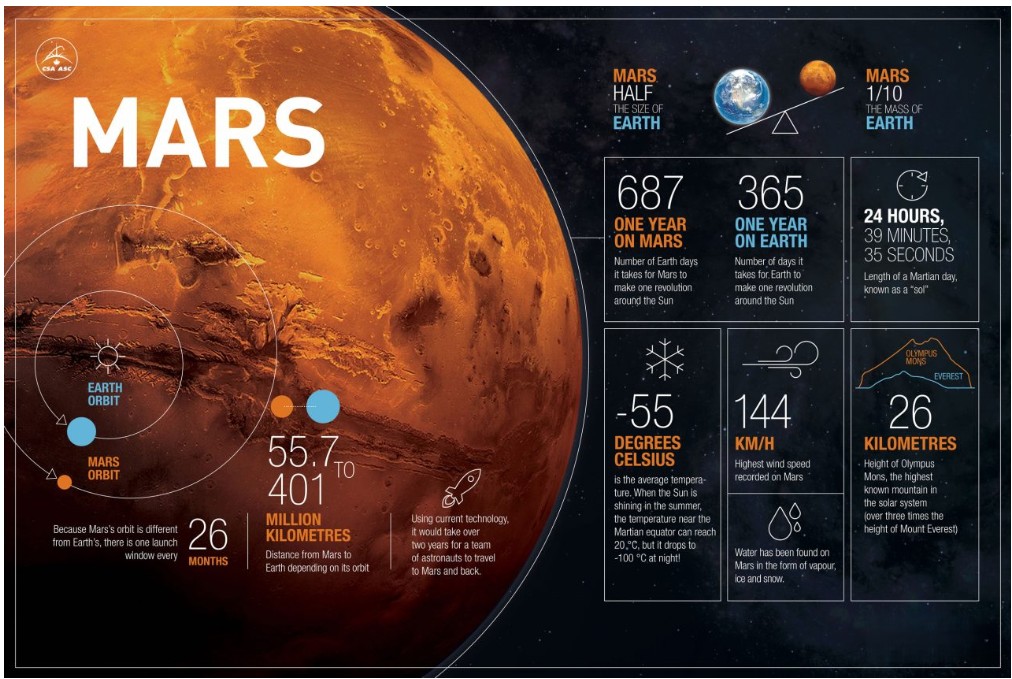
NASA’s Mars Atmosphere and Volatile Evolution (MAVEN) mission, the first spacecraft dedicated exclusively to studying the Martian atmosphere, has officially concluded after more than 11 years in orbit around Mars. Launched in 2013 and entering Martian orbit in 2014, MAVEN far exceeded its planned one-year mission life and became one of the most successful Mars exploration missions.
Why was MAVEN important?
MAVEN was designed to investigate how Mars lost much of its atmosphere and water over billions of years, helping scientists understand how the planet transformed from a potentially habitable world into the cold, dry planet.
Key Contributions
Understanding Atmospheric Loss
- Demonstrated that solar wind and solar storms continuously strip atmospheric particles from Mars.
- Established a direct link between solar activity and atmospheric escape.
- Provided crucial evidence explaining the long-term thinning of the Martian atmosphere.
Discovery of New Auroras
- Detected previously unknown types of Martian auroras, including proton auroras.
- Improved understanding of interactions between the Sun and planetary atmospheres.
Evidence of Atmospheric Sputtering
- Measured the escape of atmospheric gases such as argon.
- Confirmed atmospheric sputtering as a major mechanism responsible for atmospheric erosion.
Dust Storm and Water Loss Studies
During the global dust storm of 2018, MAVEN observed that dust-driven heating lifted water vapour to higher altitudes, where it was broken down by solar radiation and lost to space. This explained periodic spikes in water loss from Mars.
Additional Scientific Contributions
- Studied Mars’ ionosphere and magnetosphere.
- Observed the interstellar comet 3I/ATLAS using ultraviolet and multi-wavelength instruments.
- Served as an important communication relay for Mars rover missions.
End of the Mission
NASA lost contact with MAVEN in December 2025 after the spacecraft experienced an anomaly and entered an unrecoverable state. The mission was officially declared concluded in 2026.
Mission "Senehjori"
- 07 Jun 2026
In News:
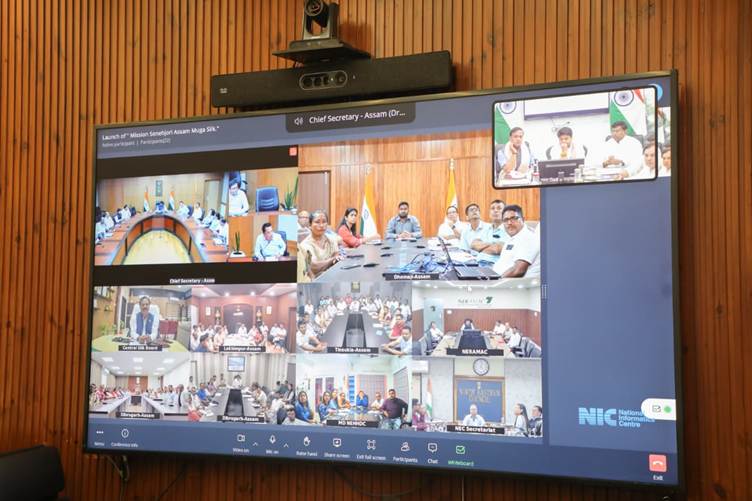
Recently, Union Minister for Development of North Eastern Region (MDoNER), along with the Chief Minister of Assam, launched Mission "Senehjori" — Assam Muga Silk USP — a comprehensive cluster-based initiative aimed at transforming Assam's unique Muga silk sector into a globally competitive, high-value luxury textile ecosystem.
About Muga Silk
Muga silk is the world's only naturally golden silk and India's first Geographical Indication (GI)-tagged silk. Assam accounts for 90% of the world's Muga silk production, and the sector supports nearly 2.6 lakh rearer and weaver families across the state. Despite its rarity, global recognition, and exceptional durability, the sector remains significantly under-monetised — producers currently earn only ?18,000–21,000 per year from Muga silk. Mission Senehjori is designed to bridge this value gap.
About Mission Senehjori
Anchored by MDoNER in convergence with the Government of Assam, Central Silk Board, Ministry of Textiles, and other Central Ministries, the Mission adopts a "whole-of-government" approach. It has an estimated investment of ?396–411 crore over three years, including ?136–151 crore from MDoNER.
The Mission seeks to strengthen the entire Muga silk value chain — from host-plant cultivation and silkworm seed production to reeling, weaving, branding, export promotion, digital traceability, and tourism — under the unified brand identity "Senehjori."
Cluster-Based Approach
The Mission covers major Muga silk producing districts: Jorhat, Sivasagar, Lakhimpur, Dhemaji, Dibrugarh, Tinsukia, Majuli, and Sualkuchi. It envisages strengthening host plant ecology, establishing modern reeling infrastructure, promoting Farmer Producer Organisations (FPOs) and Common Facility Centres (CFCs), enforcing GI authentication, and building global market access.
Key Targets by 2028
The Mission aims to establish five modernised Muga reeling units and a Muga Spun Mill; create 30 FPOs and over 1,180 Farmer Interest Groups; regenerate 5,000 hectares of Som and Soalu host plants; authenticate over 80% of traded Muga silk through GI-linked systems; create digital traceability mechanisms for more than 8,000 households; and expand Muga silk exports to over 2,000 kg annually.
Cultural Economy
Mission Senehjori also promotes Assam's cultural economy through development of a Muga Silk Trail, establishment of a Silk Tourism Park, and organisation of annual Muga Utsav festivals — positioning Assam as a premier destination for silk heritage tourism.
MAHA Water Mission
- 06 Jun 2026
In News:
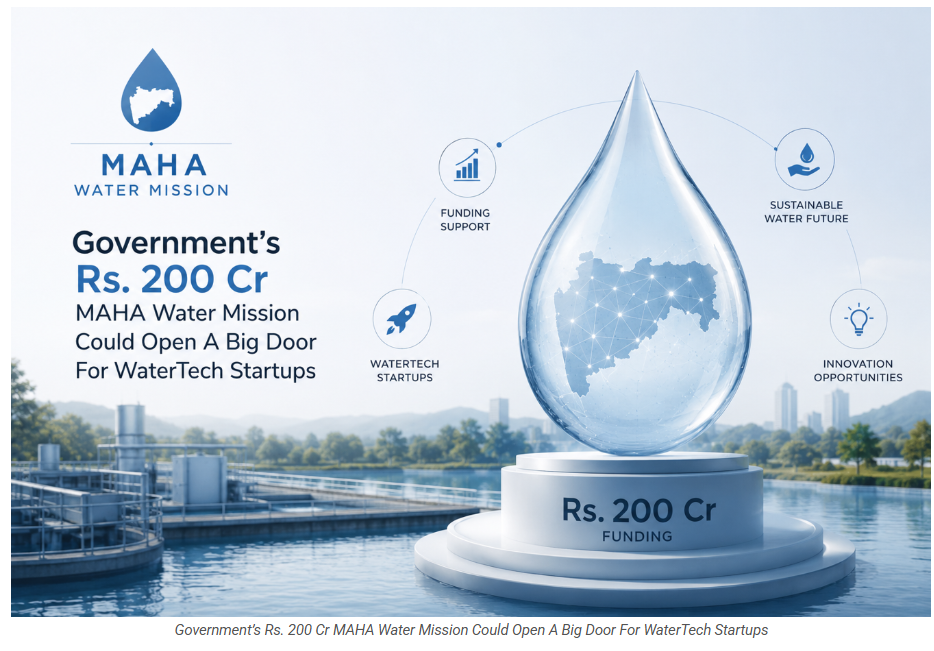
The Union Minister of Science & Technology recently launched the MAHA Water Mission, a national platform designed to bridge the gap between scientific research and on-ground water solutions across India.
About MAHA Water Mission
- The Mission has been conceived as a national innovation platform to accelerate technology development in the water sector by connecting science, entrepreneurship, industry, academia, and grassroots action.
- Its core objective is to support innovations from laboratory research through to field deployment, generating both scalable and localised solutions to strengthen India's long-term water security.
- The mission will support technology development, field validation, and deployment to address India's most critical water challenges across five priority themes: water resource assessment and sustainable management; drinking water access and quality; water quality and ecological health; water use efficiency and circular economy; and climate resilience and adaptation.
Institutional and Financial Structure
- The mission carries a projected outlay of ?200 crore over five years, jointly contributed by the Anusandhan National Research Foundation (ANRF) and the Ministry of Jal Shakti.
- This joint funding structure is significant as it brings together India's apex research funding body with the nodal ministry for water governance, ensuring both scientific rigour and policy relevance.
- The programme will support multidisciplinary consortia comprising universities, national laboratories, research organisations, startups, MSMEs, and industry partners.
- Selected consortia will be eligible for up to ?20 crore in support to undertake end-to-end activities — from technology development and field assessment to validation and deployment of high-impact water solutions.
Why This Matters
- India faces an acute and compounding water crisis. It is home to 18% of the world's population but holds only 4% of its freshwater resources.
- Groundwater depletion, erratic monsoons due to climate change, industrial and agricultural pollution, and inadequate urban water infrastructure collectively threaten both drinking water access and food security.
- Despite significant policy attention — through schemes like Jal Jeevan Mission and Atal Bhujal Yojana — a dedicated innovation pipeline translating research into field-ready solutions has been largely absent. The MAHA Water Mission addresses this critical gap.
- By bringing together startups and MSMEs alongside established research institutions, the mission also aims to build a domestic water-technology industry, reducing dependence on imported solutions and creating employment in a high-priority sector.
- The circular economy focus within its priority themes signals a shift toward water recycling and reuse — essential for a water-scarce country with a growing urban population.
Alignment with Broader Policy Framework
The mission complements existing government programmes: Jal Jeevan Mission (rural drinking water), AMRUT (urban water infrastructure), Atal Bhujal Yojana (groundwater management), and the National Water Policy. The involvement of ANRF — established under the ANRF Act, 2023 — reflects the government's intent to use its new apex research funding architecture to address strategic national challenges.
Ayushman Bharat Digital Mission (ABDM)
- 25 May 2026
In News:
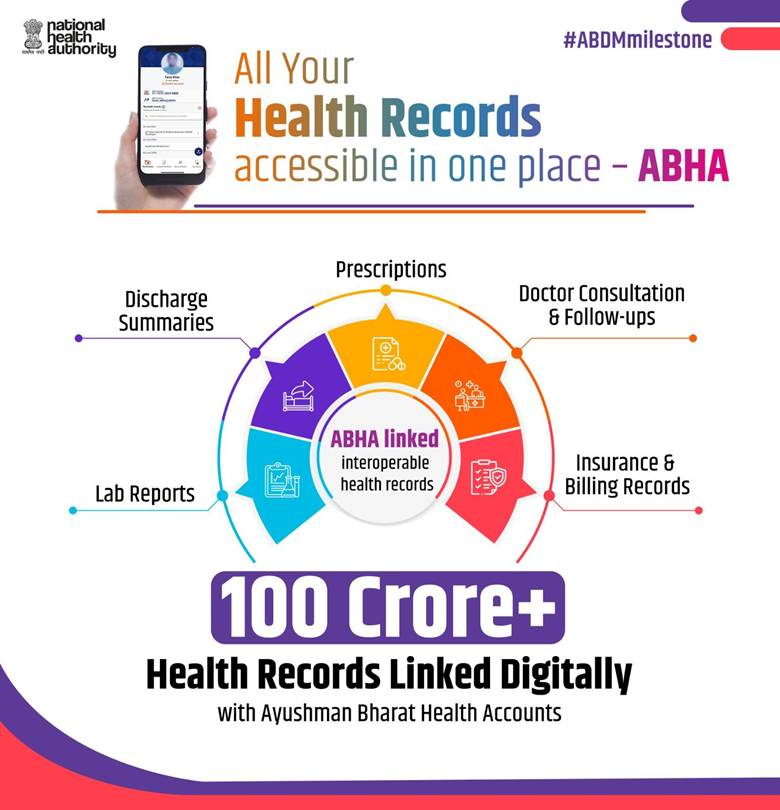
The Ayushman Bharat Digital Mission (ABDM), implemented by the National Health Authority (NHA) under the Ministry of Health and Family Welfare, has achieved a landmark milestone with over 100 crore health records successfully linked with Ayushman Bharat Health Accounts (ABHA). The achievement positions ABDM as one of the world's largest digital health ecosystems — a defining moment for India's Digital Public Infrastructure (DPI) in healthcare.
Scale and Speed of Achievement
ABDM doubled the number of linked health records from 50 crore in February 2025 to over 100 crore in just 15 months, with nearly 10 crore health records now being added every two to three months. From fewer than 1,000 linked records during its initial phase, the mission has evolved into a continental-scale digital health infrastructure.
More than 450 public and private health technology solutions have successfully integrated with the ABDM ecosystem, accelerating digitisation and seamless exchange of health records across healthcare facilities nationwide.
State-Wise Performance
Uttar Pradesh has emerged as the leading contributor with over 15.03 crore ABHA-linked health records, followed by Andhra Pradesh with over 11.95 crore. Bihar, Rajasthan, and Gujarat have linked over 7.37 crore, 6.32 crore, and 4.77 crore records respectively.
Key Government Platforms Contributing to the Milestone
Major contributing programmes and platforms include the NCD Programme and CoWIN (MoHFW), PM-JAY, UP's eKavach platform, AP's health programmes, the Reproductive and Child Health (RCH)programme, eHospital (NIC), eSushrut (C-DAC), Gujarat's TeCHO platform, and Rajasthan's iHMS platform.
Key Components of ABDM
The mission operates through six digital building blocks:
- ABHA (Ayushman Bharat Health Account): A 14-digit unique health ID enabling citizens to securely link and access health records across hospitals, clinics, labs, and pharmacies.
- Healthcare Professionals Registry (HPR): Comprehensive repository of all healthcare professionals across modern and traditional medicine systems.
- Health Facility Registry (HFR): Registry of all public and private health facilities — hospitals, clinics, diagnostic labs, pharmacies.
- HIE-CM (Health Information Exchange and Consent Manager): Enables consent-based, secure sharing of health records — placing data sovereignty with the citizen.
- Unified Health Interface (UHI): Open protocol enabling interoperability across digital health service applications.
- National Health Claims Exchange (NHCX):Standardises health claim information exchange between payers, providers, and beneficiaries — streamlining insurance claim processing.
Significance
ABDM represents a pivotal application of India's DPI model — the same stack of interoperable, consent-based, open-protocol infrastructure that powers UPI in payments and Aadhaar in identity — now applied to healthcare data. The milestone has several transformative implications:
- Continuity of Care: Longitudinal digital health records empower citizens with secure, consent-based access to their health information — enabling seamless record sharing across providers and eliminating dependence on physical documents.
- Insurance Efficiency: NHCX integration reduces claim processing delays and fraud — a critical reform for PM-JAY's effective implementation at scale.
- Public Health Surveillance: Aggregated, anonymised ABHA-linked data can power population-level disease surveillance, NCD monitoring, and health planning — aligning with India's One Health Mission and post-pandemic preparedness frameworks.
- Global DPI Leadership: India's ABDM model — open, interoperable, consent-driven, and rapidly scalable — is increasingly cited by the WHO and G20 as a replicable template for low- and middle-income countries building digital health infrastructure.
Arunachal Kiwi Mission

- 23 May 2026
In News:
Union Minister for Development of North Eastern Region (DoNER), Shri Jyotiraditya Scindia, launched the "Arunachal Kiwi: The USP of Arunachal Pradesh" — a Cluster-based Kiwi Cultivation and Value Chain Development Mission — in New Delhi. With a financial outlay of approximately ?167 crore, the mission is designed through a whole-of-government and convergence-led approach, marking a significant step in building globally competitive agricultural value chains rooted in the Northeast's natural strengths.
Why Kiwi for Arunachal Pradesh?
- Arunachal Pradesh is India's largest kiwi-producing state and the first state in the country to receive organic kiwi certification under the Mission Organic Value Chain Development for North East Region (MOVCD-NER) in 2020.
- The state's high-altitude, organic agro-climatic conditions are ideal for producing premium-grade Hayward and Allison cultivars of kiwi — varieties with high domestic and export market value.
- Kiwi (Actinidia deliciosa, also called Chinese Gooseberry) thrives between 900–1,600 metres above mean sea level in warm, humid climates with well-distributed annual rainfall of around 150 cm and 700–800 chilling hours during winter — conditions naturally present across Arunachal's hill terrain.
- The fruit is a rich source of Vitamins B and C and minerals including phosphorus, potassium, and calcium, placing it in growing demand in health-conscious domestic and global markets.
Four Strategic Pillars of the Mission
The Arunachal Kiwi Mission is anchored on four pillars:
- Convergence: Integration of schemes across multiple ministries and departments to eliminate fragmented implementation and maximise fund utilisation.
- Value Addition: Moving beyond raw fruit production toward processed kiwi products — juices, jams, dried kiwi, nutraceuticals — to enhance farmer income and reduce post-harvest losses.
- Branding: Developing a distinct, recognisable identity for Arunachal kiwi in domestic and global markets — leveraging its organic certification as a premium differentiator.
- Market Integration: Creating structured supply chain linkages connecting farmers to retail, e-commerce, institutional buyers, and export channels.
Northeast's Unique Product Strategy: One State, One USP
The Arunachal Kiwi Mission is part of a broader DoNER strategy to identify one flagship agricultural or cultural product per Northeastern state with a distinct Unique Selling Proposition (USP):
- Mizoram — Ginger
- Nagaland — Coffee
- Sikkim — Organic Farming
- Manipur — Polo Heritage
- Assam — Muga Silk
- Meghalaya — Lakadong Turmeric
- Arunachal Pradesh — Kiwi
This state-specific, product-anchored approach reflects a shift from generic rural development to competitive, brand-led agricultural specialisation — a model aligned with global agri-value chain thinking.
Policy Context
The mission converges with several existing schemes:
- MOVCD-NER — organic value chain development specific to the Northeast.
- PM-KISAN and Pradhan Mantri Kisan SAMPADA Yojana — for farmer income support and food processing infrastructure.
- One District One Product (ODOP) — for cluster-level product specialisation.
- Agricultural Export Policy 2018 — for integrating Indian agricultural produce into global value chains.
SMILE Mission
- 20 May 2026
In News:
Recently, the SMILE spacecraft lifted off on a Vega-C rocket from Europe's Spaceport in French Guiana, marking the successful launch of one of the most ambitious international space science collaborations in recent years — and a landmark moment in China-Europe scientific cooperation.
What is SMILE?
SMILE stands for Solar wind Magnetosphere Ionosphere Link Explorer. It is the first mission-level, all-round, in-depth collaborative space science exploration project between the Chinese Academy of Sciences (CAS) and the European Space Agency (ESA), selected from a pool of 13 candidate missions proposed under a joint ESA-CAS call in 2015 and adopted into ESA's Science Programme in 2019.
SMILE's core objective is to study how Earth's magnetosphere — the planet's invisible magnetic shield — responds to the continuous bombardment of charged particles and radiation from the Sun, collectively called the solar wind. It will make the world's first X-ray observations of Earth's magnetic shield and use an ultraviolet camera to watch the northern lights non-stop for 45 hours at a time.
Orbit and Technical Specifications
SMILE will be placed in a highly inclined 73-degree, highly elliptical orbit, reaching approximately 121,000 km above the North Pole at apogee — about a third of the distance to the Moon. This vantage point allows continuous, uninterrupted observation of the magnetosphere's entirety during each orbit. Following launch, SMILE will spend around one month travelling to its operational orbit, with scientific data collection expected to officially begin in September 2026. The spacecraft weighs approximately 2,300 kg and has a nominal mission lifetime of three years.
Four Scientific Instruments
The mission carries four complementary instruments operating across X-ray and ultraviolet wavelengths, combining both remote sensing and in situ measurements:
- Soft X-ray Imager (SXI) — developed by ESA (University of Leicester/UKSA): It detects X-rays produced when heavy ions in the solar wind collide with neutral particles in Earth's exosphere through a process called solar wind charge exchange (SWCX), yielding the first global X-ray images of Earth's magnetosphere.
- Ultraviolet Aurora Imager (UVI) — jointly contributed by ESA and CAS: captures continuous ultraviolet imagery of auroral activity across polar regions.
- Light Ion Analyser (LIA) — developed by CAS: measures properties and behaviour of solar wind ions in situ near Earth.
- Magnetometer — developed by CAS: records magnetic field variations along SMILE's orbit.
Why It Matters: Space Weather and Civilisational Risk
Earth's magnetosphere is not merely a scientific curiosity — it is the essential shield that makes life possible. Without it, solar radiation would strip away the atmosphere and irradiate the surface. Understanding its dynamics has urgent practical implications: geomagnetic storms triggered by intense solar activity can disrupt power grids, satellite communications, GPS navigation, and aviation systems — risks that grow as human civilisation becomes more technologically dependent.
National One Health Mission
- 20 May 2026
In News:
The Fifth Meeting of the Scientific Steering Committee (SSC) on the National One Health Mission (NOHM) was held at Kartavya Bhavan, New Delhi, under the chairmanship of Prof. Ajay K. Sood, Principal Scientific Adviser (PSA) to the Government of India.
About the National One Health Mission
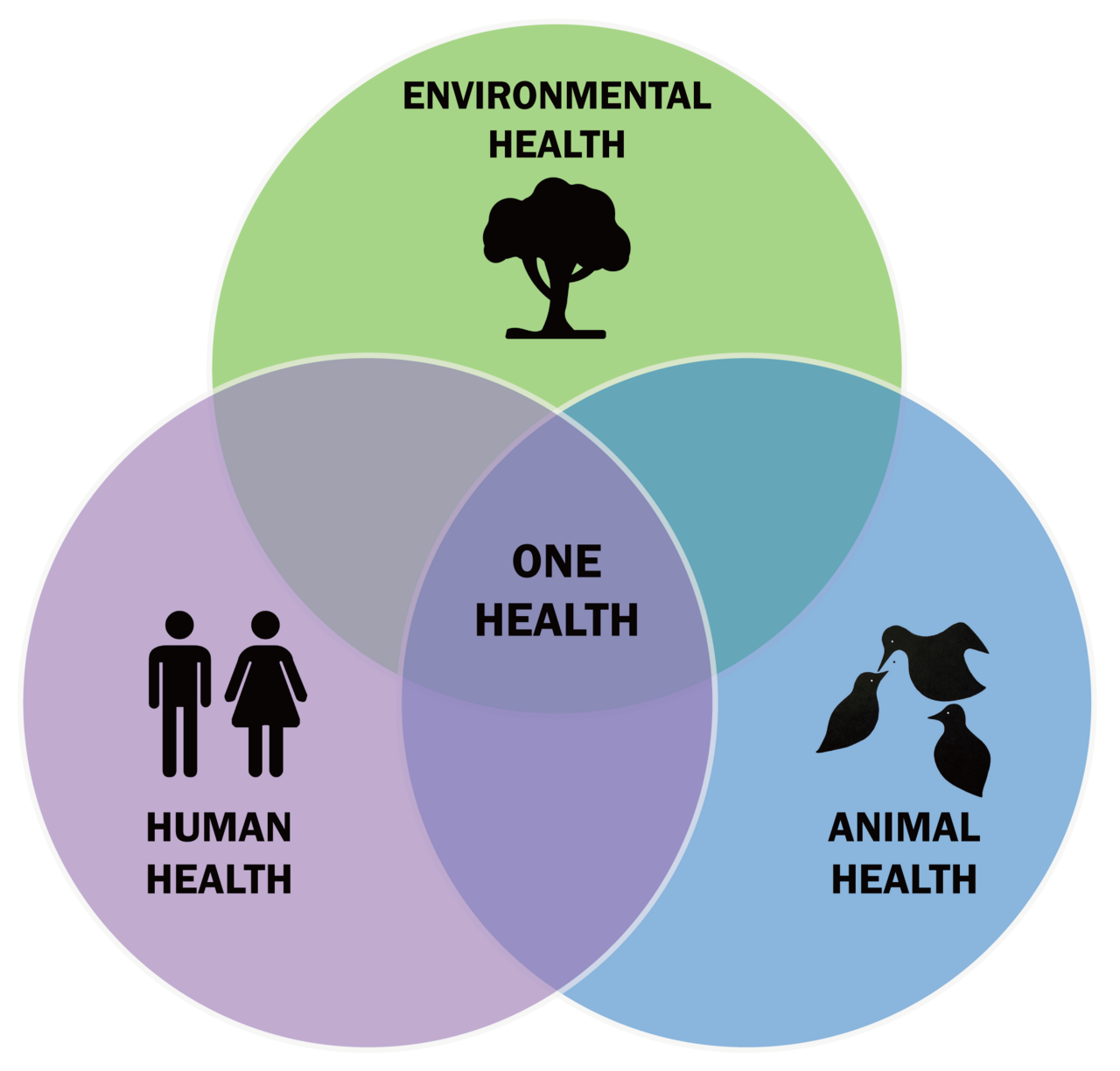
- Established with Cabinet approval in February 2024, following the recommendation of the 21st PM-STIAC (Prime Minister's Science, Technology and Innovation Advisory Council), the NOHM represents India's most ambitious attempt at building an integrated disease control and pandemic preparedness architecture. The mission adopts a collaborative, multidisciplinary approach — uniting human, animal, and environmental health systems under one coordinated framework.
- The nodal implementing agency is the Indian Council of Medical Research (ICMR) under the Department of Health Research (DHR), while strategic oversight rests with the Office of the Principal Scientific Adviser (OPSA). The mission currently engages more than 16 Central Ministries and Departments, including the Ministries of Health, Environment, Earth Sciences, Agriculture, and Ayush.
Governance Structure
The mission operates through a two-tiered governance model:
- The Executive Committee, chaired by the Minister of Health and Family Welfare with the PSA as Vice-Chair, provides overall policy guidance. Member (Health), NITI Aayog serves as a permanent invitee, while secretaries of stakeholder departments and two states (on a rolling basis) are members.
- The Scientific Steering Committee, chaired by the PSA, provides scientific direction and oversight. It includes Secretaries and Directors General of all stakeholder departments alongside two rotating state representatives.
Key Outcomes of the Fifth SSC Meeting
- The Committee released proceedings of two major events: the National One Health Assembly (November 2025) and the Workshop on Operational Frameworks for One Health held at Nagpur, which brought together States and Union Territories to align governance structures with NOHM objectives.
- Discussions covered short-, medium-, and long-term One Health priorities, with emphasis on integrated surveillance, laboratory strengthening, AI-enabled pathogen detection, cross-sectoral data sharing, and development of medical countermeasures.
- Updates were also presented by key advisory work streams, including those on BSL-3/4 Laboratories, Technology-Enhanced Surveillance, Data Integration, and Medical Countermeasures. Notably, India is developing a national network of high-security laboratories — currently 22 BSL-3/4 facilities — with a new BSL-4 facility foundation-laid in Gujarat in January 2026.
Significance and Global Linkages
The mission aligns with the One Health Joint Plan of Action (OH JPA) 2022–2026 of the Quadripartite alliance — FAO, UNEP, WHO, and WOAH — reflecting India's commitment to global health security norms. It also complements the existing National One Health Programme for Prevention and Control of Zoonoses (NOHP-PCZ) under the NCDC umbrella scheme.
India's first State/UT engagement workshop (June 2025, New Delhi) saw participation from 27 States and UTs — underscoring the federal dimension of health governance.
Mizoram Ginger Mission
- 16 May 2026
In News:
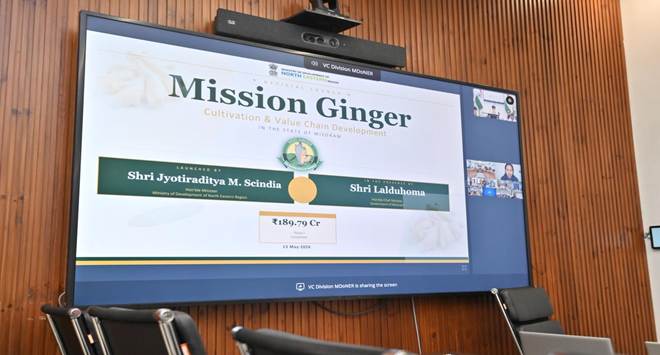
The Ministry of Development of North Eastern Region (MDoNER), along with the Government of Mizoram, has launched the ?189.79 crore Mizoram Ginger Mission (also designated as the Mizoram Ginger Unique Selling Proposition (USP) – Sustainable Cultivation & Value Chain Development Project).
The initiative utilizes a multi-ministerial convergence model to move away from fragmented departmental schemes. It pools the administrative resources of the Ministries of Agriculture & Farmers Welfare, Rural Development, and Food Processing Industries, alongside critical institutional stakeholders like NABARD (rural credit and cooperative development), ICAR (scientific inputs), and APEDA (export protocols and international logistics).
Core Economic Rationale: Quality vs. Value Disparity
The Superior Quality Profile
Mizoram holds a distinct natural edge in ginger cultivation, leading NITI Aayog to designate it as the “Ginger Capital of India.”
- Genetic Advantage: The state grows indigenous, premium varieties—most notably Thingpui and Thinglaidum—both of which secured Geographical Indication (GI) certification.
- Chemical Distinctiveness: Mizo ginger is premium, pharma-grade ginger due to its exceptionally high oleoresin content of 6% to 8% (the concentrated compound responsible for flavor, aroma, and medicinal properties). This is more than double the global baseline average of approximately 3%.
The Price Disparity Paradox
Despite producing world-class agricultural raw materials, local cultivators face severe market exploitation:
- The Valuation Gap: Farmers traditionally receive just ?8 to ?15 per kg at the farm gate. In contrast, the processed commodity commands upwards of ?500 per kg on international retail shelves.
- The Cause: This gap stems from high post-harvest handling losses, a complete lack of regional processing units, and a dependence on long networks of informal middlemen.
Structural Interventions: The Four Strategic Pillars
To build a sustainable agrobusiness ecosystem, the project operates as a structural "movement" built on four functional pillars:
- Convergence: Aligning existing central public funds (such as a dedicated ?30.13 crore allocation via the North Eastern Council’s Focused Development Component) to build infrastructure efficiently.
- Value Addition: Transitioning the local economy from selling raw, perishable ginger to manufacturing high-margin derivatives like dried ginger flakes, fine powders, and distilled pharmaceutical oleoresins.
- Branding: Marketing the product globally based on its certified origin, low fiber content, high chemical potency, and chemical residue-free composition.
- Market Integration: Directly connecting local farmers with institutional pharmaceutical houses, nutraceutical enterprises, and international buyers.
Hub-and-Spoke Infrastructure Layout
To manage logistical challenges in the hilly terrain, the mission deploys a coordinated Hub-and-Spoke model to support nearly 20,000 farming households:
- The Core Processing Hub: Established at Mualkawi in the Champhai District, this central facility handles advanced high-tech processing, mechanized peeling, industrial dehydration, and extraction.
- The Spoke Centers: Three dedicated satellite units are positioned at Tualcheng, Vaphai, and Zotlang to handle initial sorting, cleaning, grading, and slicing. This primary processing reduces transport weight and minimizes post-harvest rot.
- Ancillary Focus Areas: The project integrates more than 30 targeted interventions covering field mechanization, the introduction of solarized storage units, strict food safety controls, and blockchain-backed farm-to-fork traceability.
Macro Policy Implications: "Brand North East"
The mission is an operational component of MDoNER's broader "Brand North East" regional development strategy. This macro policy assigns specific agro-climatic Unique Selling Propositions (USPs) to individual states to foster specialized production:
- Sikkim: India's premier 100% Organic State.
- Meghalaya: Global hub for high-curcumin Lakadong Turmeric.
- Tripura: Mass export center for Queen Pineapple.
- Arunachal Pradesh: Large-scale commercialization of Kiwi fruit.
- Nagaland: High-altitude, specialty Coffee plantations.
- Mizoram: Globally integrated source for premium Pharma-Grade Ginger.
Through this structured value-chain integration, the mission aims to "disintermediate the intermediary" via robust Farmer Producer Organizations (FPOs), targeting a six-fold increase in net income realization for local farmers while exporting directly into quality-sensitive markets across South-East Asia, the Middle East, and Europe.
National Mission for Sustainable Agriculture
- 13 May 2026
In News:
Under the updated framework of the National Mission for Sustainable Agriculture (NMSA), a transformative target has been set: bringing 100 lakh hectares under micro-irrigation over the five-year period from 2025-26 to 2029. This initiative underscores the critical shift from traditional irrigation to precision water management as a cornerstone of national food security.
Evolution and Institutional Framework
- Launched in 2014-15 as one of the eight missions under the National Action Plan on Climate Change (NAPCC), NMSA was designed to mitigate the adverse impacts of weather variability on Indian farming. Since the fiscal year 2022-23, the mission has been integrated into the umbrella scheme of Pradhan Mantri Rashtriya Krishi Vikas Yojana (PMRKVY).
- Operated by the Ministry of Agriculture and Farmers Welfare, the mission acts as a strategic intervention to ensure that agricultural productivity does not come at the cost of environmental degradation.
Strategic Interventions: The Four Pillars of NMSA
The mission employs a multi-pronged strategy to enhance water-use efficiency, improve soil health, and build climate-resilient farming systems:
1. Per Drop More Crop (PDMC): Precision in Water Management
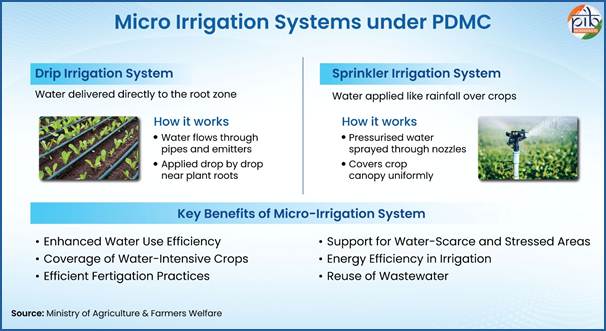
The PDMC initiative is the primary vehicle for achieving the newly set 100 lakh hectare target. By promoting micro-irrigation technologies—specifically drip and sprinkler systems—it aims to maximize crop productivity per unit of water used. This is vital for India, where agriculture consumes nearly 80% of the country’s freshwater resources.
2. Rainfed Area Development (RAD): Diversifying Risks
Recognizing that nearly 60% of India’s cultivated area is rainfed, RAD encourages Integrated Farming Systems (IFS). This approach integrates crops with livestock, fisheries, and horticulture, providing farmers with multiple income streams and a buffer against localized crop failures caused by erratic rainfall.
3. Soil Health Management (SHM): Sustaining the Foundation
Supported by the SHC Scheme, SHM focuses on the scientific testing of soil to promote balanced nutrient application. By discouraging the overuse of chemical fertilizers, it protects long-term soil fertility and reduces the input costs for small and marginal farmers.
4. Climate Change Monitoring and Networking (CCSAMMN)
The CCSAMMN component serves as the mission’s intellectual backbone. It facilitates a bidirectional flow of information: translating high-level scientific research into actionable data for farmers, while feeding grassroots field observations back to research establishments.
SEHAT Mission

- 12 May 2026
In News:
In a landmark shift toward preventive healthcare, the Union Ministers of India recently launched the ‘SEHAT Mission’ (Science Excellence for Health through Agricultural Transformation) in New Delhi. This initiative represents the first formal convergence of India’s agricultural and medical sectors, aiming to address the twin challenges of persistent malnutrition and the escalating burden of Non-Communicable Diseases (NCDs).
The Philosophy: From Reactive Treatment to Proactive Nutrition
For decades, India’s healthcare strategy has been largely reactive—focusing on the treatment of diseases. The SEHAT Mission seeks to overhaul this paradigm by adopting a "whole-of-government" approach. By shifting the focus to "preventive nutrition," the mission bridges the gap between what is grown on the farm and what is required for public health.
The mission is driven by a joint national partnership between two of India’s premier scientific bodies:
- Indian Council of Agricultural Research (ICAR): Providing the technical expertise in crop science and farming systems.
- Indian Council of Medical Research (ICMR): Offering clinical insights into nutritional requirements and disease prevention.
Core Pillars and Scientific Framework
The mission is built upon the vision of “Healthy Food, Healthy Farms, and a Healthy India.” To achieve this, it employs several scientific and strategic interventions:
- Bio-fortification of Crops: Rather than relying solely on external supplements, the mission promotes the development of crop varieties naturally enriched with essential micronutrients such as iron, zinc, and Vitamin A. This ensures that nutritional security is embedded within the primary food source.
- Revival of Traditional and Nutri-Cereals: There is a renewed emphasis on climate-resilient millets (Sri Anna), including Kodo, Kutki, Ragi, Jowar, and Bajra. These grains are not only sustainable to grow but are also nutrient-dense compared to traditional staples like polished rice and wheat.
- Integrated Farming Systems (IFS): The mission encourages rural households to move beyond monoculture. By integrating crop cultivation with animal husbandry, fisheries, and beekeeping, the initiative ensures that farming families have access to a diverse and balanced diet.
- Food as Medicine for NCDs: With lifestyle diseases like diabetes, hypertension, and certain cancers on the rise, the SEHAT Mission focuses on research-backed dietary solutions. It explores how specific agricultural products can function as preventive "medicine" to manage and mitigate these chronic conditions.
- The ‘One Health’ Approach: Recognizing that human health is inextricably linked to animal and environmental health, the mission facilitates joint planning between medical and agricultural scientists to monitor zoonotic threats and environmental contaminants.
Safeguarding the Producers: Farmer Health and Safety
A unique aspect of the SEHAT Mission is its focus on the health of the farmers themselves. Scientific interventions are being designed to reduce the risks associated with pesticide exposure and the handling of hazardous agricultural chemicals. By improving the health and safety of the primary producer, the mission ensures the sustainability of the entire food value chain.
Technological Integration and Policy Support
To ensure the mission's objectives are met with precision, the government is leveraging data-driven governance. This includes:
- Real-time Dashboards: For monitoring nutritional outcomes across different regions.
- Science-Based Policy Support: Aligning agricultural production targets with the specific nutritional requirements of the Indian population.
Orbital Data Centres and the Pathfinder Mission
- 11 May 2026
In News:
In a landmark collaboration that signals a paradigm shift in space-based technology, Bengaluru-based satellite startup Pixxel and Indian AI firm Sarvam AI have partnered to develop Pathfinder. Scheduled for launch by the final quarter of 2026, Pathfinder is set to be India’s first “orbital data centre” satellite. This mission represents a move toward decentralized, space-based computing, aimed at overcoming the physical and economic constraints of terrestrial AI infrastructure.
What is an Orbital Data Centre?
Traditionally, satellites function as data collectors; they capture high-resolution imagery or signals and transmit these massive raw files to ground stations for processing. This creates a significant "bandwidth bottleneck."
An Orbital Data Centre utilizes edge computing, placing high-performance hardware—specifically data-centre-grade Graphics Processing Units (GPUs)—directly into Low Earth Orbit (LEO). Instead of sending raw data back to Earth, the satellite processes the information in space, transmitting only "actionable insights" or finished analysis to the ground.
The Strategic Significance of Space-Based Computing
The shift from Earth to orbit is driven by several critical factors:
- Overcoming Terrestrial Constraints: Ground-based data centres are increasingly burdened by high land costs and the massive water requirements for cooling. Furthermore, the energy consumption of generative AI is hitting the limits of local power grids.
- Continuous Energy Supply: In specific orbits, solar power is effectively continuous. This provides a source of "free" electricity, making space an economically attractive location for high-intensity computation.
- Solving Data Bottlenecks: Hyperspectral imaging generates enormous datasets. Processing this data in-situ (at the source) eliminates the expensive and slow downlink of high-resolution files.
- Scalability and Commercial Viability: Emerging launch capabilities, such as high-payload rockets and the potential for large constellations (100–500 satellites), suggest that space-based computing could eventually rival terrestrial cloud infrastructure.
The Pathfinder Mission: India’s Technology Demonstrator
Pathfinder is a 200-kg class satellite designed to validate the technical feasibility of in-orbit data processing.
Key Components & Objectives:
- Datacentre-grade GPUs: It will carry high-performance GPUs similar to those used in Earth-based AI clusters.
- Hyperspectral Payloads: The satellite will feature Pixxel’s flagship hyperspectral camera, providing high-fidelity Earth observation data.
- Sovereign AI Backbone: Sarvam AI will integrate full-stack language models and an AI inference platform. This allows for AI training and inference to occur entirely within the satellite’s systems.
- Manufacturing: The craft is being built at Gigapixxel, Pixxel’s advanced facility designed for large-scale satellite production.
Note: While this is an Indian mission, the name "Pathfinder" also references NASA’s 1997 Mars Pathfinder mission, which deployed the Sojourner rover.
Formidable Challenges: The Harsh Reality of Space
Despite the benefits, computing in a vacuum presents unique engineering hurdles:
- Thermal Management: On Earth, fans and water systems use convection to cool hardware. In the vacuum of space, heat must be dissipated through radiative cooling using complex heat-transfer loops and radiating panels.
- Radiation Exposure: Cosmic radiation can cause “bit flips” (random changes in computer code) and degrade semiconductors. Hardware must be shielded or made "radiation-hardened," which adds weight and cost.
- Redundancy and Repair: Unlike a server room on Earth, a satellite cannot be easily repaired. High levels of redundancy are required to manage "eclipse periods" (when the satellite is in Earth's shadow) and potential hardware failures.
- Miniaturization: Scaling down power-hungry GPUs into a compact 200-kg payload requires extraordinary breakthroughs in power management and engineering.
India Semiconductor Mission

- 10 May 2026
In News:
India’s ambition to become a global electronics powerhouse has reached a pivotal juncture. With the recent approval of two major projects in Gujarat—including the nation’s first commercial Gallium Nitride (GaN)-based Mini/Micro-LED display facility and a semiconductor packaging unit—the total number of approved plants under the India Semiconductor Mission (ISM) 1.0 has risen to twelve. These facilities, spread across Gujarat, Assam, Andhra Pradesh, Uttar Pradesh, and Odisha, signal the beginning of a domestic chip revolution.
ISM 1.0: Building the Foundation (2021–2025)
Launched in 2021 under the Ministry of Electronics and Information Technology (MeitY), ISM 1.0 was initiated with a financial outlay of ?76,000 crore. The primary objective was to break India’s near-total dependence on imported chips by incentivizing:
- Semiconductor Fabrication (Fabs): Setting up the complex plants required to print circuits on silicon wafers.
- Display Manufacturing: Reducing reliance on foreign displays for consumer electronics.
- Compound Semiconductors and Packaging: Focusing on Outsourced Semiconductor Assembly and Test (OSAT) and Assembly, Testing, Marking, and Packaging (ATMP) units.
The current trajectory suggests that by 2029, India will possess the capability to design and manufacture chips for 70–75% of domestic applications, with a long-term goal of becoming a top-tier semiconductor nation by 2035.
ISM 2.0: The Shift Toward Indigenous IP and Localisation
Building on the success of the first phase, the Union Budget 2026–27 introduced ISM 2.0. This phase represents a strategic shift from merely attracting global manufacturers to building a "full-stack" indigenous ecosystem.
Key Features of ISM 2.0:
- Strategy and Funding: A broader $11 billion strategy aimed at deepening ecosystem localization.
- Indigenous IP Design: Moving beyond assembly to creating Indian-owned Intellectual Property (IP) and chip designs.
- Supply Chain Fortification: Supporting ancillary industries, including specialty chemicals, gases, and capital goods (manufacturing equipment), which are critical for chip production.
- Materials and Equipment: Reducing the "import intensity" of the manufacturing process itself by encouraging the domestic production of raw materials.
Technological and Strategic Significance
The development of specialized facilities, such as the GaN-based Micro-LED plant, is particularly significant. Gallium Nitride is a "wide-bandgap" semiconductor that is more efficient than traditional silicon, especially for power electronics and advanced displays.
The integration of these twelve plants into the national landscape serves several strategic purposes:
- Supply Chain Resilience: By diversifying manufacturing across five states, India mitigates the risk of localized disruptions and strengthens its position in the global value chain.
- Cross-Sectoral Impact: The chips produced will cater to high-growth sectors, including Automotive (EVs), Telecom (5G/6G), Aerospace, Industrial Automation, and Power.
- Reduced External Dependence: Domestic packaging and testing facilities ensure that even if some wafers are imported, the value addition and final security checks happen on Indian soil.
- Economic Multiplier: The mission fosters a "hub-and-spoke" model where large fabrication units (hubs) attract hundreds of smaller component and material suppliers (spokes).
Mission for Cotton Productivity (2026–31)

- 07 May 2026
In News:
In a major push toward agricultural self-reliance and global textile dominance, the Union Cabinet has approved the “Mission for Cotton Productivity” with a dedicated outlay of ?5,659 crore for the period 2026–27 to 2030–31. The mission seeks to transform India’s cotton sector by transitioning from a focus on acreage to a focus on high-density productivity and quality.
Objectives and Framework
The mission is an integrated initiative announced in the Union Budget 2025–26, designed to strengthen the entire textile value chain. It operates under the government’s 5F Vision: Farm to Fibre to Factory to Fashion to Foreign.
- Implementation: It is a collaborative effort between the Ministry of Agriculture and Farmers Welfare and the Ministry of Textiles, supported by research from 10 institutes under the Indian Council of Agricultural Research (ICAR) and the Council of Scientific and Industrial Research (CSIR).
- Geographical Reach: In its initial phase, the mission targets 140 districts across 14 major cotton-growing states, grouped into three agro-ecological zones:
- Northern Zone: Punjab, Haryana, and Rajasthan.
- Central Zone: Gujarat, Maharashtra, and Madhya Pradesh.
- Southern Zone: Telangana, Andhra Pradesh, and Karnataka (including Odisha and Tamil Nadu).
- Target Outcomes by 2031:
- Yield Enhancement: To boost lint productivity from the current stagnant 440 kg/ha to 755 kg/ha (nearing the global average of 770 kg/ha).
- Production Volume: To increase total production to 498 lakh bales.
- Impact: Directly benefiting approximately 32 lakh cotton farmers.
Strategic Necessity: Why India Needs This Mission
India holds the distinction of having the largest cotton acreage globally (~11.4 million hectares), accounting for nearly 25% of global output. However, several systemic bottlenecks have hampered its potential:
- The Productivity Gap: Despite being the second-largest producer, India's yield remains among the lowest globally due to rainfed cultivation (65% of area) and fragmented landholdings.
- Pest Resistance: The initial success of Bt Cotton has wane as the Pink Bollworm and Whitefly have developed significant resistance, leading to crop failure and high input costs.
- Import Dependency for Premium Fibre: India relies heavily on imports from Egypt and the USA for Extra Long Staple (ELS) cotton (fibre length >30 mm), which is essential for high-end garment manufacturing.
- Climate Vulnerability: Predominantly grown in semi-arid regions like Vidarbha and Telangana, the crop is highly sensitive to erratic monsoons and waterlogging.
Key Technological Interventions
The mission pivots on modernizing agronomic practices to bridge the yield gap:
- High-Density Planting System (HDPS): Shifting from traditional wide spacing to closer spacing to increase the number of plants per hectare, thereby maximizing yield.
- Climate-Smart Breeding: Developing varieties of Gossypium barbadense (ELS cotton) that are drought-tolerant and pest-resistant using advanced biotechnology.
- Quality Branding (Kasturi Cotton Bharat): Targeting a trash content of below 2% to improve the global realization value of Indian cotton.
Critical Challenges and Implementation Gaps
Achieving the mission’s targets requires overcoming several "ground-level" hurdles:
- Irrigation Constraints: HDPS and High-Yielding Varieties (HYV) require assured moisture. Without integration with micro-irrigation, these crops remain at high risk during dry spells.
- Soil Fatigue: Decades of monocropping and chemical overuse have depleted soil organic carbon, reducing the efficacy of new seeds.
- Mechanization Hurdles: Modern cotton picking is labor-intensive. While mechanized harvesters are needed for HDPS, they are capital-intensive for small farmers owning less than 2 hectares.
- The Health Cost: Excessive pesticide use in cotton belts has triggered a silent health crisis, causing eye diseases and respiratory issues among farmers due to a lack of protective gear.
Way Forward: Strengthening the Ecosystem
To ensure the mission’s success, the following measures are essential:
- Integrated Pest Management (IPM): Moving beyond just Bt technology to include pheromone traps, biopesticides, and mandatory "refuge crops" to slow down pest adaptation.
- Custom Hiring Centres (CHCs): Establishing cooperative models for mechanized harvesting to make expensive technology accessible to marginal farmers.
- Digital Agriculture (Agri-Stack): Using AI and satellite data to provide real-time, hyper-local advisories on weather and pest attacks.
- Policy Synergy: Linking the mission with PM-Krishi Sinchayee Yojana (Per Drop More Crop) to ensure the necessary irrigation infrastructure in rainfed cotton belts.
Mission Drishti by GalaxEye
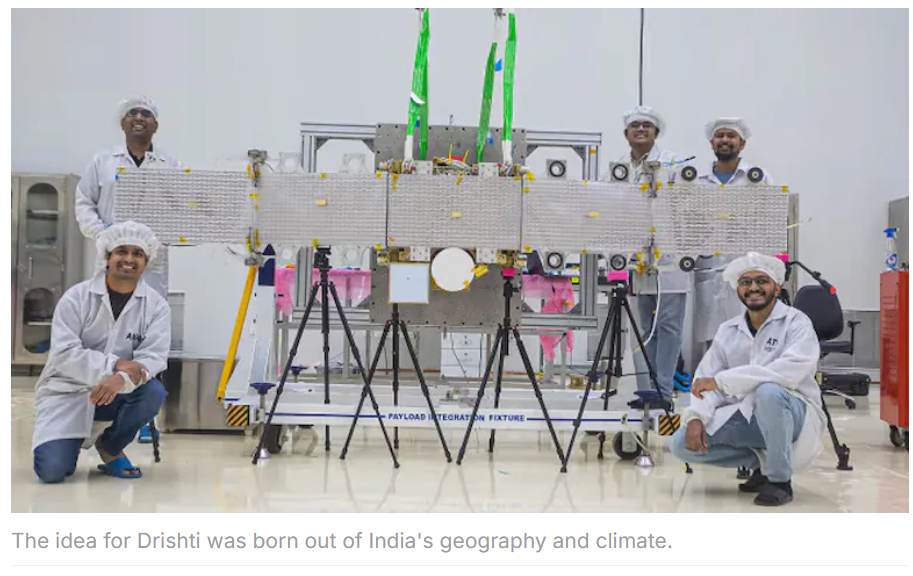
- 05 May 2026
In News:
In a milestone for the Indian private space sector, Bengaluru-based startup GalaxEye has successfully launched ‘Mission Drishti’, the world’s first OptoSAR satellite. Launched aboard a SpaceX Falcon 9 rocket from Vandenberg, California, this mission represents a paradigm shift in Earth observation (EO), moving beyond the limitations of traditional imaging to provide high-clarity, all-weather data.
The Innovation: OptoSAR Technology
The core of Mission Drishti lies in its unique OptoSAR platform—the first of its kind globally. Traditional satellites typically use either optical sensors (which rely on sunlight) or radar (which can be difficult to interpret). Mission Drishti integrates both on a single platform:
- Synthetic Aperture Radar (SAR): An active sensor that can "see" through thick cloud cover, smoke, and total darkness.
- Electro-Optical (EO) Sensors: Provide high-resolution, intuitive visual details in various spectral bands.
By fusing these two datasets, the satellite provides "analysis-ready" imagery. This fusion eliminates the need for complex, time-consuming post-processing, allowing decision-makers to access fused data that is inherently aligned.
Technical Specifications and Launch Details
Mission Drishti is a testament to India's growing indigenous space-tech capabilities, supported and facilitated by IN-SPACe (Indian National Space Promotion and Authorization Center).
- Mass and Scale: At 190 kg, it holds the distinction of being India’s largest privately developed Earth observation satellite.
- Orbit: It operates in a Sun-synchronous Low Earth Orbit (LEO) at an altitude of approximately 500 km.
- Resolution and Spectrum: The satellite offers a spatial resolution of 1.2 to 3.6 meters. It operates across multiple spectral bands, including X-Band (SAR), PAN (Panchromatic), RGB, NIR (Near-Infrared), Coastal Blue, and Red Edge.
- Revisit Frequency: The satellite is designed for high-frequency monitoring, capable of revisiting the same geographic location every 4 days.
Strategic Significance for India and Global Stakeholders
The deployment of Mission Drishti addresses critical gaps in current orbital monitoring, particularly for tropical regions:
1. All-Weather Capability:Standard optical satellites are often rendered ineffective by cloud cover. For a country like India, which experiences heavy monsoons and frequent cloud cover, OptoSAR ensures uninterrupted surveillance and data collection throughout the year.
2. Dual-Use Applications:As a dual-use satellite, its data serves both civilian and strategic sectors:
- National Security & Defense: Monitoring borders and maritime boundaries regardless of lighting or weather conditions.
- Disaster Management: Real-time assessment of floods or cyclones where clouds typically obstruct conventional satellites.
- Environmental & Infrastructure: High-resolution monitoring for urban planning, agriculture, and red-edge sensing for vegetation health.
Mission SAKSHAM
- 02 May 2026
In News:
Recently, the Governor of the Reserve Bank of India (RBI) launched Mission SAKSHAM (Sahakari Bank Kshamta Nirman), a landmark initiative designed to revolutionize the Urban Co-operative Banking (UCB) sector. This mission-mode, all-India project represents a significant shift toward professionalizing and modernizing the cooperative banking landscape, ensuring it remains resilient in an increasingly complex financial environment.
Understanding Mission SAKSHAM
Mission SAKSHAM is a comprehensive capacity-building and certification framework. Its primary mandate is to address the historical gaps in managerial and operational capabilities within UCBs. By transitioning the sector toward a sustainable ecosystem for continuous learning, the RBI aims to strengthen the financial health and institutional resilience of these community-focused institutions.
Key Pillars and Targeted Reach
The mission is distinguished by its scale and inclusivity, aiming to reach 1.40 lakh participants across the nationwide UCB sector. Unlike generic training programs, it adopts a "top-to-bottom" cultural shift by targeting specific, critical roles within the banking hierarchy:
- Governance & Leadership: Board Members and Senior Management.
- Risk & Control: Heads of Risk Management, Compliance, and Audit functions.
- Technical Operations: Employees specializing in IT functions and other critical operational areas.
Operational Model and Features
To ensure effective penetration, especially among smaller and regional cooperatives, Mission SAKSHAM utilizes a blended learning model that combines in-person (offline) sessions with digital (e-learning) modules.
- Linguistic Accessibility: Recognizing India’s diversity, the training content is delivered in regional languages to ensure the "intent of the law" is accessible to local board members and staff.
- Institutional Collaboration: The mission was not designed in isolation; it was developed in close consultation with the Umbrella Organisation for UCBs (such as the NUCFDC) and various National and State Cooperative Federations.
- Certification Framework: A standardized certification process is integrated into the mission to ensure that skills and competencies are uniform across the sector.
Mission MITRA
- 07 Apr 2026
In News:
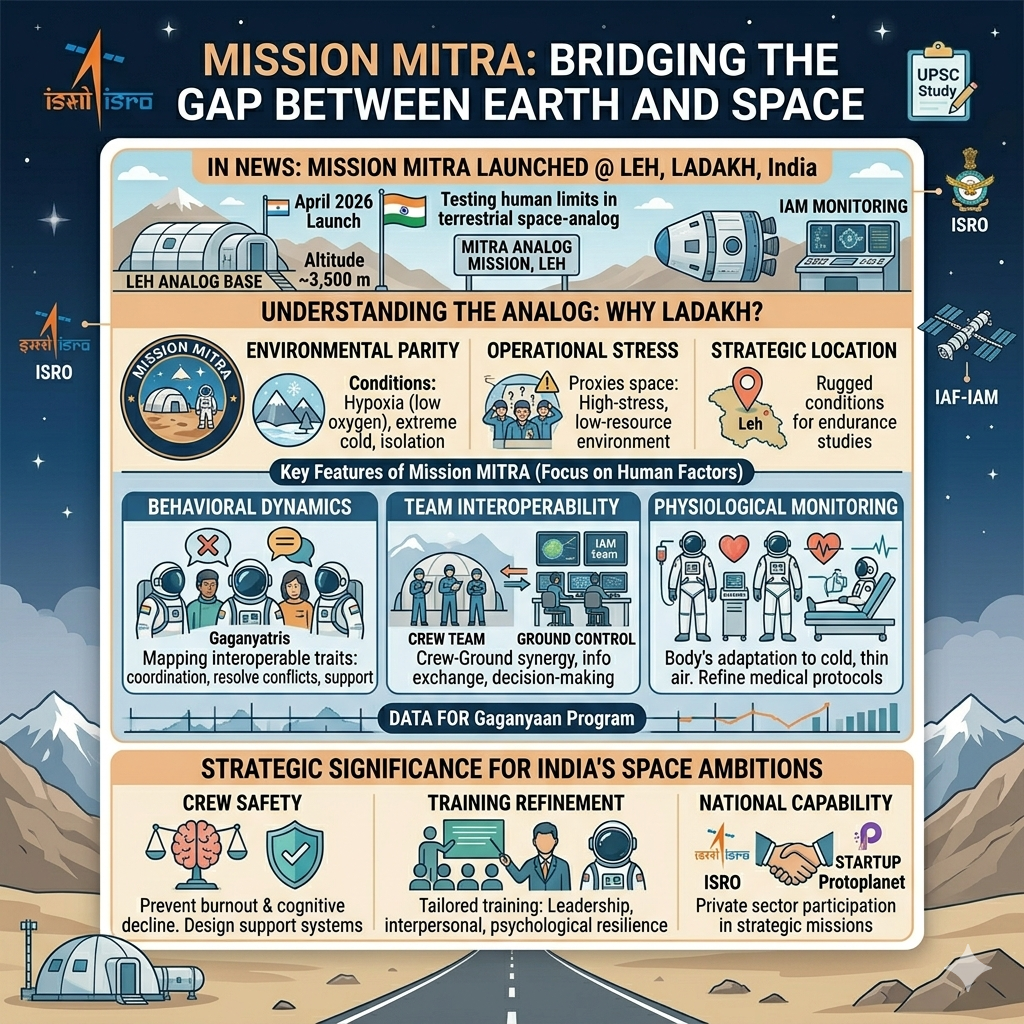
Recently, the Indian Space Research Organisation (ISRO) launched Mission MITRA (Mapping of Interoperable Traits and Response Assessment) in Leh, Ladakh. This pioneering study, conducted in collaboration with the IAF-Institute of Aerospace Medicine (IAM), marks a critical step in India’s Gaganyaan program by testing the behavioral and physiological limits of astronauts in a terrestrial space-analog environment.
The Terrestrial Analog: Why Ladakh?
Space exploration is as much a psychological challenge as it is a technological one. To prepare for the vacuum of space, scientists utilize terrestrial analogues—locations on Earth that mimic space-like stressors.
- Environmental Parity: Situated at an altitude of approximately 3,500 meters, Leh offers conditions of hypoxia (low oxygen), extreme cold, and geographical isolation.
- Operational Stress: These rugged conditions serve as a natural proxy for the high-stress, low-resource environment of a spacecraft, allowing researchers to study human endurance without leaving Earth's atmosphere.
Core Objectives and Design
Mission MITRA is a first-of-its-kind multidisciplinary study focused on the "Human Factor" of spaceflight. It involves India's four designated Gaganyatris (astronauts) and a supporting team of scientists, engineers, medical doctors, and psychologists.
- Behavioral Dynamics: The mission maps interoperable traits—the ability of crew members to coordinate, resolve conflicts, and support one another under pressure.
- Team Interoperability: A key focus is the synergy between the Crew and Ground Control Teams, assessing how information is exchanged and how decision-making holds up under operational stress.
- Physiological Monitoring: Scientists track how the body adapts to freezing temperatures and thin air, providing data that will refine medical protocols for actual spaceflight.
Strategic Significance for India’s Space Ambitions
As India prepares for its first human spaceflight and eyes future long-duration missions to a space station or the Moon, the data from Mission MITRA is invaluable.
- Crew Safety: Understanding psychological resilience helps in designing better support systems to prevent "burnout" or cognitive decline during isolation.
- Training Refinement: Insights from this study will help the Human Space Flight Centre (HSFC) tailor training modules that move beyond physical fitness to include specialized interpersonal and leadership training.
- National Capability: Collaborative efforts with Indian startups like Protoplanet Pvt. Ltd. for facility management signify the growing participation of the private sector in India’s strategic space missions.
Jal Jeevan Mission Extended to 2028
- 13 Mar 2026
In News:
The Union Cabinet has approved the extension of the Jal Jeevan Mission (JJM) until December 2028, marking a transition from merely building water infrastructure to ensuring sustained and reliable service delivery in rural areas. The decision aims to consolidate earlier achievements and strengthen long-term drinking water supply systems across villages in India.
About Jal Jeevan Mission
The Jal Jeevan Mission is a flagship programme of the Government of India that seeks to provide safe and adequate drinking water to all rural households through Functional Household Tap Connections (FHTC).
- Launch Date: 15 August 2019
- Nodal Ministry: Ministry of Jal Shakti
- Core Objective: Achieve “Har Ghar Jal” by ensuring 55 litres of potable water per person per day to every rural household through tap connections.
The mission addresses long-standing challenges related to water scarcity, unsafe drinking water, and the burden of water collection, particularly faced by women and children in rural India.
Shift in Focus: Jal Jeevan Mission 2.0
With the extension until 2028, the mission is entering a new phase often described as JJM 2.0, where the emphasis moves beyond infrastructure creation to sustainable water service delivery.
Key aspects include:
- Utility-Based Service Delivery: The programme will focus on continuous and reliable water supply systems, supported by structural reforms and Memoranda of Understanding (MoUs) with State governments to improve management and accountability.
- Digital Monitoring – Sujalam Bharat Framework: Under the Sujalam Bharat Digital Framework, each village will receive a unique “Sujal Gaon ID”. This system digitally maps the entire water supply chain—from source to household tap— enabling improved monitoring, transparency, and data-driven decision-making.
- Water Quality Monitoring: The mission prioritises regular water quality testing through:
- Field Test Kits at the village level
- Accredited water testing laboratories
This helps detect contaminants and ensures that drinking water meets safety standards.
- Greywater Management: To ensure sustainability, the programme incorporates greywater management, involving:
- Construction of soak pits
- Use of wastewater in kitchen gardens and local irrigation
This reduces water wastage and promotes sustainable water use.
Convergence with Other Schemes
The mission promotes integration with several government initiatives, including:
- Mahatma Gandhi National Rural Employment Guarantee Scheme (MGNREGS)
- Swachh Bharat Mission (Gramin)
- Grants recommended by the 15th Finance Commission
Such convergence helps strengthen water conservation, recharge structures, and source sustainability.
Proba-3 Mission
- 12 Mar 2026
In News:
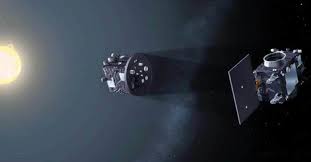
The European Space Agency (ESA) recently lost communication with the Coronagraph spacecraft, one of the two satellites of the Proba?3 Mission, following an anomaly that triggered a power failure and pushed the spacecraft into a protective “survival mode.” The incident occurred after the spacecraft experienced an unexpected drop in solar power, temporarily halting operations and causing the loss of telemetry signals. Engineers are attempting to re-establish contact and recover the satellite.
About the Proba-3 Mission
- Proba-3 is an advanced solar-observation mission launched in December 2024 by ESA aboard PSLV?C59 developed by the Indian Space Research Organisation.
- It is considered the world’s first precision formation-flying mission, designed to study the Sun’s outer atmosphere, known as the corona, with unprecedented clarity.
Objective
The primary objective of the mission is to create an artificial solar eclipse in space. By blocking the Sun’s bright disk, scientists can directly observe the faint corona for extended durations—something that is otherwise possible only for a few minutes during natural total solar eclipses.
Key Features of the Mission
1. Twin-Spacecraft Configuration: The mission consists of two independent satellites working in coordination:
- Occulter spacecraft – carries a disk that blocks sunlight.
- Coronagraph spacecraft – carries the telescope and camera to observe the corona.
2. Precision Formation Flying: The two satellites maintain a distance of about 150 metres with millimetre-level accuracy, effectively functioning as a single large virtual instrument in space.
3. Artificial Eclipse Mechanism: The Occulter blocks the Sun’s bright disk and casts a precise shadow onto the Coronagraph’s optical instrument, replicating the conditions of a total solar eclipse in space.
4. Autonomous Coordination: The satellites rely on laser sensors, cameras, and cold-gas thrusters to autonomously adjust their relative positions without continuous ground control intervention.
5. Continuous Solar Observations: Before the anomaly occurred, the mission had successfully completed over 60 orbital cycles, producing hours of uninterrupted solar observations—far longer than ground-based eclipse observations.
Denmark’s Elimination of Mother-to-Child Transmission of HIV and Syphilis

- 10 Mar 2026
In News:
Recently, Denmark was certified by the World Health Organization as the first country in the European Union to eliminate mother-to-child transmission (MTCT) of both HIV and Syphilis. This achievement represents a major public health success and demonstrates the effectiveness of strong maternal healthcare systems, universal testing, and timely treatment interventions.
What is Mother-to-Child Transmission (MTCT)?
Mother-to-Child Transmission (MTCT), also known as vertical transmission, refers to the spread of certain infections from a pregnant woman to her baby during pregnancy, childbirth and breastfeeding.
Without timely intervention, infections such as HIV and syphilis can lead to serious consequences including:
- Infant HIV infection
- Congenital syphilis
- Stillbirths and neonatal deaths
- Severe lifelong health complications
Therefore, preventing MTCT is a major priority in global maternal and child health programmes.
WHO Criteria for Elimination of MTCT
The WHO defines elimination of mother-to-child transmission through strict epidemiological and health system indicators. A country must achieve:
- Transmission rates below 50 cases per 100,000 live births, and
- More than 95% coverage of testing and treatment among pregnant women
These benchmarks ensure that both detection and treatment systems are robust enough to prevent transmission to newborns.
Global Context of EMTCT
Denmark joins a growing group of countries validated by the WHO for eliminating MTCT or making significant progress toward this goal. More than 20 countries and territories worldwide have achieved or are nearing this milestone.
Examples include:
- Caribbean nations such as Anguilla and Antigua and Barbuda
- South American countries such as Brazil
- African countries such as Botswana
- Asian nations including Malaysia and Maldives
These achievements demonstrate that elimination is possible across different health systems when strong policies and universal maternal healthcare are implemented.
WHO’s Triple Elimination Strategy
To address maternal transmission of infectious diseases, WHO promotes a Triple Elimination Strategy targeting: HIV, Syphilis, and Hepatitis B
The strategy is built on four key pillars:
- Universal access to antenatal care
- Integrated testing for maternal infections
- Effective treatment and prevention protocols
- Strong health systems supported by community engagement and human-rights protections
This integrated approach helps ensure that maternal health services detect infections early and prevent transmission to infants.
Understanding the Diseases
HIV (Human Immunodeficiency Virus)
- HIV attacks the body’s immune system, particularly CD4 cells, weakening the body’s ability to fight infections.
- If untreated, HIV can progress to Acquired Immunodeficiency Syndrome (AIDS), making individuals vulnerable to life-threatening infections and cancers.
Syphilis
- Syphilis is a sexually transmitted bacterial infection caused by Treponema pallidum. The disease progresses through stages that may include painless sores, skin rashes, and severe complications affecting the heart, brain, and nervous system if left untreated. Congenital syphilis can cause severe health problems in newborns.
Significance of Denmark’s Achievement
Denmark’s certification highlights several important aspects of effective public health policy:
- Strong maternal healthcare and antenatal screening systems
- Universal testing and treatment for pregnant women
- Integration of infectious disease control with maternal health services
- Sustained public health surveillance and policy commitment
This milestone also reinforces the feasibility of eliminating vertical transmission of infectious diseases through coordinated healthcare strategies.
23rd Foundation Day of National Commission for Scheduled Tribes
- 22 Feb 2026
In News:
The 23rd Foundation Day of the National Commission for Scheduled Tribes (NCST) was celebrated in New Delhi by the Ministry of Tribal Affairs.
- Union Tribal Affairs Minister Jual Oram released the NCST Handbook detailing the Commission’s mandate and functioning.
- The event highlighted:
- NCST’s constitutional responsibilities
- Policy recommendations
- Grievance redressal initiatives
- Field visits to Scheduled Areas
- The Commission reiterated focus areas such as education, forest rights, land issues, infrastructure, and livelihood generation for tribal communities.
About National Commission for Scheduled Tribes (NCST)
Constitutional Status
- Established under Article 338-A of the Constitution.
- Created by the 89th Constitutional Amendment Act, 2003, which bifurcated the earlier National Commission for SCs and STs.
- Aims to provide focused attention to the distinct problems of Scheduled Tribes (STs).
Composition
- Chairperson
- Vice-Chairperson
- Three other Members (at least one woman)
- Appointed by the President by warrant under his hand and seal.
Tenure & Status
- Tenure: 3 years.
- Not eligible for more than two terms.
- Chairperson: Rank of Union Cabinet Minister.
- Vice-Chairperson: Rank of Minister of State.
- Members: Rank of Secretary to Government of India.
Core Functions
- Investigate and monitor safeguards for STs under the Constitution and laws.
- Inquire into complaints regarding deprivation of tribal rights.
- Participate in socio-economic development planning.
- Evaluate development progress of STs.
- Submit annual/periodic reports to the President.
- Recommend measures to Union and State Governments.
Additional Functions (Specified in 2005)
- Ownership rights over Minor Forest Produce (MFP).
- Safeguarding rights over mineral and water resources.
- Preventing land alienation of tribals.
- Monitoring implementation of the Panchayats (Extension to Scheduled Areas) Act (PESA), 1996.
- Relief and rehabilitation of displaced tribals.
- Addressing shifting cultivation issues.
Powers of NCST
- Powers of a civil court during investigations:
- Summon persons
- Require production of documents
- Receive affidavits
- Requisition public records
- Can regulate its own procedure.
- Mandatory consultation: Central and State Governments must consult NCST on major policy matters affecting STs.
Reporting Mechanism
- Submits reports to the President.
- Reports laid before Parliament with Action Taken Memorandum.
- State-specific reports forwarded to Governor for placement before State Legislature.
Constitutional Provisions Related to Scheduled Tribes (STs)
Identification of STs
- Article 366(25): defines Scheduled Tribes (STs) as tribes or tribal communities, or parts thereof, that are deemed under Article 342 to be STs for the purposes of the Constitution.
- Article 342(1) empowers the President to specify tribes as STs in consultation with the Governor for states.
Administrative Provisions
- Fifth Schedule: Applies to Scheduled Areas in states other than Sixth Schedule states.
- Sixth Schedule: Provides Autonomous District Councils in: Assam, Meghalaya, Tripura, and Mizoram
Key Legislations for ST Protection
- Protection of Civil Rights Act, 1955
- SC/ST (Prevention of Atrocities) Act, 1989
- PESA Act, 1996
- Forest Rights Act, 2006
Viksit Bharat–Guarantee for Rozgar and Ajeevika Mission (Gramin) Bill, 2025 (VB-G RaM G)
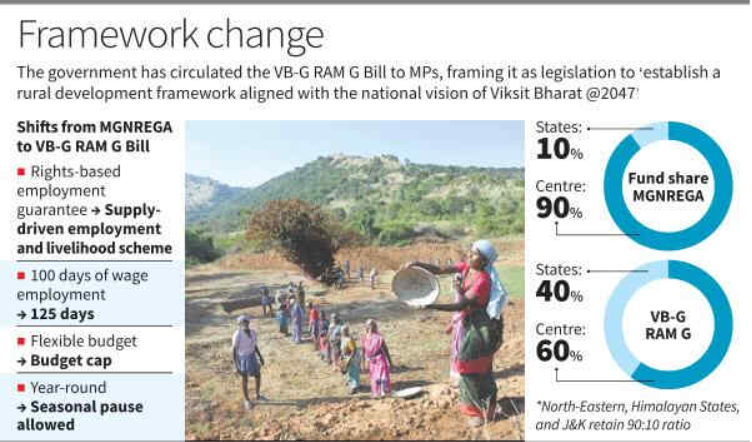
- 18 Dec 2025
In News:
The Union Government has introduced the Viksit Bharat–Guarantee for Rozgar and Ajeevika Mission (Gramin) Bill, 2025 (VB-G RaM G) in the Lok Sabha to replace the Mahatma Gandhi National Rural Employment Guarantee Act (MGNREGA), 2005.
It marks a structural shift in India’s rural wage employment framework in line with the Viksit Bharat @2047 vision.
What is VB-G RaM G?
It is a proposed statutory rural wage employment guarantee law that:
- Assures 125 days of wage employment per rural household per financial year (earlier 100 days under MGNREGA)
- Focuses on durable, productivity-enhancing rural assets
- Integrates employment generation with infrastructure creation, livelihoods, and climate resilience
Core Objectives
- Move from distress-relief employment to development-linked employment
- Ensure convergence of rural schemes
- Create durable and climate-resilient assets
- Improve transparency, digital monitoring, and accountability
Key Features of the Bill
1. Enhanced Employment Guarantee
- Increased from 100 to 125 days
- About 25% higher income potential for rural households
2. Four Priority Work Categories
Works are restricted to:
- Water security (water harvesting, irrigation, conservation)
- Core rural infrastructure (roads, connectivity)
- Livelihood infrastructure (storage, markets, productive assets)
- Climate-resilience works (flood control, drought mitigation, soil conservation)
All works will be mapped into a proposed Viksit Bharat National Rural Infrastructure Stack.
3. Shift to Normative Funding
- Moves from demand-driven (MGNREGA model) to budget-based normative allocation
- Funds distributed to States using objective parameters
- Unemployment allowance still payable if work is not provided
4. Funding Pattern (Centrally Sponsored Scheme)
- 60:40 – Centre : States (most States)
- 90:10 – North-Eastern & Himalayan States
- 100% Central funding – UTs without legislature
5. Digital Governance & Transparency
Mandatory provisions include:
- Biometric attendance
- Aadhaar-linked wage payments
- Geo-tagging of assets
- AI-based fraud detection
- Real-time MIS dashboards
- Weekly public disclosure meetings at Gram Panchayat level
- Strengthened social audits
6. Agricultural Season Safeguard
- States can declare up to 60 days (aggregate) when works will pause during peak sowing/harvesting
- Aims to:
- Ensure farm labour availability
- Prevent wage inflation in agriculture
7. Decentralised Planning
- Works planned through Viksit Gram Panchayat Plans (VGPPs)
- Spatial planning integration with PM Gati Shakti
- Plans aggregated from Gram Panchayat → Block → District → State
8. Institutional Mechanism
- Central & State Gramin Rozgar Guarantee Councils
- States must notify their operational scheme within 6 months of enactment
Why Replace MGNREGA? (Government’s Rationale)
- Rural poverty decline: From 25.7% (2011-12) to ~5% (2023-24)
- Need to shift from relief works to productive infrastructure
- Asset quality issues under MGNREGA
- Reported misappropriation (~?193 crore in 2024-25)
- Only a small % of households completed 100 days post-pandemic
- Rising need for climate-resilient rural infrastructure
Major Differences from MGNREGA
|
Feature |
MGNREGA |
VB-G RaM G (Proposed) |
|
Nature |
Demand-driven legal right |
Normative, budget-linked guarantee |
|
Workdays |
100 |
125 |
|
Work scope |
Broad categories |
4 focused priority sectors |
|
Funding |
Mostly Centre-funded wages |
60:40 cost sharing (most states) |
|
Technology |
Supportive |
Mandatory & codified |
|
Planning |
Gram Sabha-based |
VGPP + national infrastructure stack |
16th Finance Commission
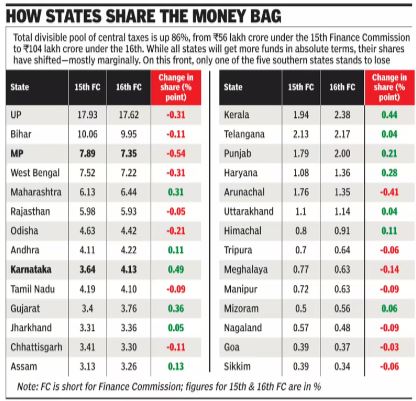
- 03 Feb 2026
In News:
The 16th Finance Commission (FC), constituted in 2023 under the chairmanship of Arvind Panagariya, has had its recommendations accepted by the Union Government for implementation during the award period 2026–27 to 2030–31. Its report focuses on balancing fiscal federalism, macroeconomic stability, and performance-driven governance amid rising expenditure pressures and climate-related risks.
What is the Finance Commission?
The Finance Commission is a constitutional body under Article 280 of the Indian Constitution.
Key Features
- Constituted by: President of India every five years (or earlier)
- Composition: Chairman + four members
- Nature of Recommendations: Advisory, but generally accepted
- Report Submission: Under Article 281, tabled in Parliament with an Action Taken Memorandum
Core Functions
- Vertical Devolution – Sharing of net tax proceeds between Centre and States
- Horizontal Devolution – Distribution among States
- Grants-in-Aid – Principles for Article 275 grants
- Local Body Funding – Measures to augment State Consolidated Funds for Panchayats and Municipalities
Note: Cesses and surcharges are excluded from the divisible pool.
Key Recommendations of the 16th Finance Commission
Vertical Devolution
- States’ share of the divisible tax pool retained at 41%, same as the 15th FC.
- However, the Commission flagged a shrinking effective pool due to rising cesses and surcharges, which are not shared.
- It proposed a future “grand bargain” to rationalise these levies and widen the divisible pool.
Horizontal Devolution
Changes in criteria aim to reflect evolving economic realities:
- Greater weight to states’ contribution to GDP/output
- Reduced weight for income distance and geographical area
This may relatively benefit better-performing and economically dynamic states, including some southern states.
Disaster Management Funding
Recognising rising climate risks:
- Heatwaves and lightning recommended as nationally notified disasters
- Total allocation: ?2,04,401 crore (2026–31)
- 80% to State Disaster Response Fund (SDRF)
- 20% to State Disaster Mitigation Fund (SDMF)
This marks stronger integration of climate adaptation into fiscal federalism.
Grants to Local Bodies
- Total allocation: ?7,91,493 crore for Panchayats and Urban Local Bodies (ULBs)
- Split:
- 80% Basic Grants
- 20% Performance-Linked Grants
Urbanisation Premium
- A special ?10,000 crore incentive fund to encourage the merger of peri-urban areas into larger ULBs for better planning and service delivery.
Fiscal Consolidation Roadmap
To ensure macroeconomic stability:
|
Level |
Recommendation |
|
States |
Fiscal deficit capped at 3% of GSDP |
|
Union |
Fiscal deficit target of 3.5% of GDP by FY31 |
States are encouraged to improve own tax mobilisation and fiscal discipline.
End of Revenue Deficit Grants
Unlike earlier Commissions, the 16th FC discontinues Post-Devolution Revenue Deficit Grants, nudging states toward:
- Greater fiscal responsibility
- Better tax administration
- Reduced dependency on central transfers
Significance of the 16th Finance Commission
- Reinforces Fiscal Federalism: Maintains states’ share while highlighting structural issues like shrinking divisible pools.
- Promotes Performance-Based Federalism: Greater weight to output and performance incentivises economic efficiency.
- Mainstreams Climate Risks: Inclusion of heatwaves and lightning signals evolving understanding of disaster vulnerability.
- Strengthens Local Governance: Substantial grants and performance criteria enhance decentralisation.
- Focus on Fiscal Discipline: Clear deficit targets align with long-term macroeconomic stability.
Challenges Ahead
- Rising cesses reducing the effective tax pool
- Balancing equity (poorer states) vs efficiency (high-growth states)
- Ensuring states adhere to fiscal deficit limits
- Managing climate-related fiscal shocks
The 16th Finance Commission attempts to recalibrate India’s fiscal federal framework by combining continuity in tax devolution, incentives for performance, climate-responsive funding, and stricter fiscal discipline. Its recommendations reflect a shift toward output-linked and responsibility-driven federalism, crucial for sustaining India’s growth trajectory while preserving macroeconomic stability.
National Mission on Edible Oils (NMEO)
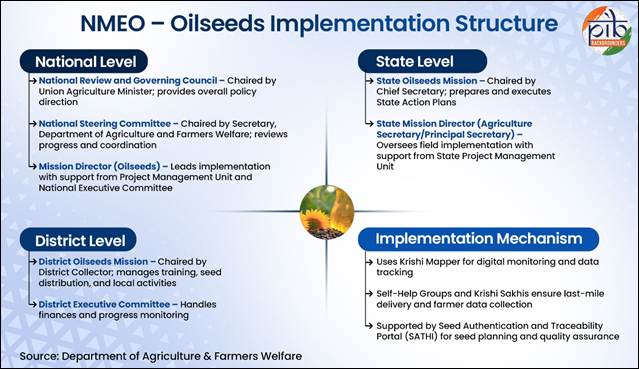
- 13 Dec 2025
In News:
The Government of India is implementing the National Mission on Edible Oils (NMEO) through two components -NMEO–Oil Palm (NMEO-OP) and NMEO–Oilseeds (NMEO-OS), to reduce India’s heavy dependence on edible oil imports. In 2023–24, imports met about 56% of domestic edible oil demand.
NMEO – Oil Palm (NMEO-OP)
- About:Launched in 2021 as a Centrally Sponsored Scheme, NMEO-OP aims to expand oil palm cultivation and increase domestic Crude Palm Oil (CPO) production.
- Financial Outlay: ?11,040 crore
- Key Features
- Viability Price (VP): Price assurance mechanism to protect farmers from fluctuations in global CPO prices
- Higher Subsidies: Assistance for planting material increased significantly (up to ?29,000/ha) along with maintenance support
- Rejuvenation Aid: ?250 per plant for replacing old palms
- Regional Focus: Special emphasis on North-East India and traditional states like Andhra Pradesh and Telangana
- Targets
- Area Expansion: 6.5 lakh hectares under oil palm by 2025–26
- Production:
- 11.2 lakh tonnes CPO by 2025–26
- 28 lakh tonnes CPO by 2029–30
- Consumption Benchmark: Maintain edible oil consumption at 19 kg/person/year till 2025–26
- Progress
- 2.5 lakh hectares added under NMEO-OP (as of Nov 2025)
- Total oil palm area reached 6.2 lakh hectares
- CPO production rose from 1.91 lakh tonnes (2014–15) to 3.8 lakh tonnes (2024–25)
NMEO – Oilseeds (NMEO-OS)
- About:Approved in 2024 for the period 2024–25 to 2030–31, NMEO-OS focuses on achieving self-sufficiency in edible oils by boosting production of major oilseed crops.
- Coverage: Targets 9 major oilseed crops including:Mustard, Groundnut, Soybean, Sunflower, Sesame, Safflower, Niger, Castor, and Linseed
- Also promotes oils from secondary sources such as cottonseed, rice bran, coconut, and tree-borne oilseeds (neem, jatropha, karanja, mahua, simarouba).
Key Objectives
- Bridge yield gaps via improved seeds and technologies
- Expand area using fallow lands and intercropping
- Strengthen seed systems and market access
- Promote value addition and higher farmer returns
Targets
- Increase oilseed area from 29 million ha (2022–23) to 33 million ha (2030–31)
- Raise oilseed production from 39 million tonnes to 69.7 million tonnes
- Add 40 lakh hectares through crop diversification and fallow land use
Combined Impact of NMEO
Together, NMEO-OP and NMEO-OS aim to produce 25.45 million tonnes of edible oil by 2030–31, meeting about 72% of India’s domestic demand.
Implementation Support
- Self-Help Groups and Krishi Sakhis act as Community Agriculture Service Providers (CASPs)
- Use of Krishi Mapper digital platform for real-time monitoring
Oilseeds in India — Key Facts
- Oilseeds are India’s second most important crop group after food grains
- Cover 14.3% of gross cropped area
- Provide 12–13% of dietary energy
- Major producing states: Rajasthan (mustard), Madhya Pradesh (soybean), Gujarat, Maharashtra
- Oil palm concentrated in Andhra Pradesh & Telangana, expanding in North-East states
Economic Importance
- Key source of dietary fats and vitamins (A, D, E, K)
- Important cash crops for farmer income
- Contribute ~8% of agricultural exports
- Domestic edible oil production: 12.18 million tonnes (2023–24) vs high demand
Reasons for Import Dependence
- Decline in self-sufficiency after import duty reductions post-WTO reforms
- 76% oilseed area is rainfed, making production climate-vulnerable
- Rising consumption: Rural intake up 83.68%, urban up 48.74% (2004–05 to 2022–23)
Export Promotion Mission
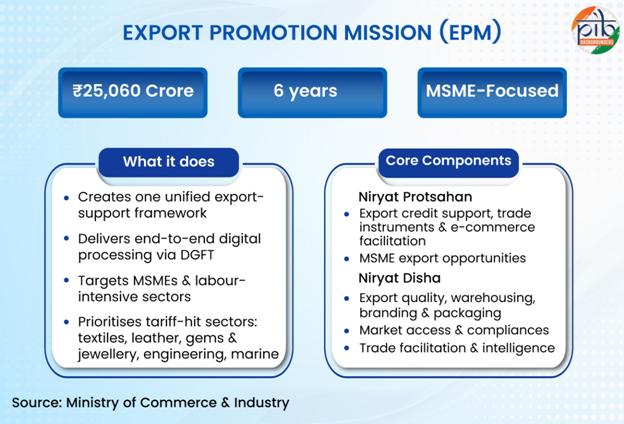
- 13 Dec 2025
In News:
The Government of India has approved the Export Promotion Mission (EPM) to strengthen India’s export ecosystem, with special emphasis on MSMEs, labour-intensive sectors, and low-export-intensity regions.
What is the Export Promotion Mission (EPM)?
The Export Promotion Mission is a unified, digitally driven framework announced in Union Budget 2025–26. It consolidates multiple export-support schemes into one coordinated system to improve efficiency and outcomes.
- Total Outlay: ?25,060 crore
- Duration: FY 2025–26 to FY 2030–31
- Implementing Agency:Directorate General of Foreign Trade (DGFT)
- Anchored through coordination among the Department of Commerce, MSME Ministry, Finance Ministry, Export Promotion Councils, Commodity Boards, financial institutions, industry bodies, and State governments
Two Integrated Sub-Schemes
1. NiryatProtsahan (Financial Support)
Focuses on improving access to affordable trade finance:
- Interest subvention on export credit
- Export factoring and deep-tier financing
- Exporter credit cards for e-commerce
- Collateral support and credit enhancement for MSMEs
2. Niryat Disha (Non-Financial Support)
Enhances export readiness and competitiveness:
- Quality testing, certification, compliance assistance
- Branding, packaging, trade fairs, buyer–seller meets
- Warehousing and logistics support
- Inland transport reimbursement for exporters from remote districts
- District-level export capacity building
Digital Governance
- DGFT operates a paperless digital platform for application, approval, and fund disbursal
- Linked with customs and trade systems for faster processing
- Outcome-based monitoring ensures adaptability to global trade shifts
Sectoral & Regional Focus
EPM prioritizes sectors facing global tariff pressures:
- Textiles
- Leather
- Gems &Jewellery
- Engineering goods
- Marine products
It also targets:
- MSMEs and first-time exporters
- Labour-intensive value chains
- Interior and low-export districts to widen India’s export base
Complementary Financial Support
Credit Guarantee Scheme for Exporters (CGSE)
- Provides 100% government-backed credit guarantee
- Enables additional working capital for exporters, especially MSMEs
- Implemented via National Credit Guarantee Trustee Company
RBI Trade Relief Measures (2025)
The Reserve Bank of India (RBI) introduced steps to ease liquidity stress:
- Moratorium on certain loan repayments
- Extension of export credit tenure up to 450 days
- Relaxation in working-capital norms
- Regulatory forbearance in asset classification
- FEMA relaxation extending export realisation period to 15 months
Expected Outcomes
- Improved access to affordable export finance
- Better quality compliance and global certification
- Stronger international branding of Indian goods
- Growth in exports from non-traditional districts
- Employment generation in manufacturing and logistics
These outcomes support export-led growth, align with Atmanirbhar Bharat, and contribute to the Viksit Bharat @ 2047 vision.
Status of India’s Exports
- Total exports reached USD 778.21 billion in 2023–24
- Growth of 67% since 2013–14
- Services exports contribute ~44% of total exports
- Major markets include: USA, UAE, Netherlands, China, Singapore, UK, Saudi Arabia, Bangladesh, Germany, Italy
- Export basket shifting from low-value goods to electronics, engineering goods, and advanced manufacturing
Other Major Export Promotion Initiatives
India has also launched multiple initiatives to improve export competitiveness:
- PM Gati Shakti for integrated logistics planning
- National Logistics Policy to reduce logistics cost
- RoDTEP&RoSCTL for tax and duty remission
- PLI Schemes to scale up manufacturing
- TIES Scheme for export infrastructure
- Free Trade Agreements for market access
- Districts as Export Hubs (DEH) initiative
- MSME Lean & ZED schemes for quality improvement
Higher Education Commission of India (HECI) Bill 2025
- 26 Nov 2025
In News:
The Union Government is set to table the Higher Education Commission of India (HECI) Bill, 2025 in Parliament, nearly five years after the National Education Policy (NEP 2020) recommended a single, integrated regulator for higher education.
What is the HECI Bill, 2025?
- Nature: A draft legislation to establish a single regulatory authority for higher education in India.
- Coverage: All higher education except medical and legal education.
- Core Change: Replaces the existing multi-regulator system led by University Grants Commission (UGC), All India Council for Technical Education (AICTE) and National Council for Teacher Education (NCTE).
Objectives of the Bill
- Streamline and simplify higher education regulation.
- Remove fragmentation, overlap, and conflicts of interest.
- Implement NEP 2020’s vision of a transparent, outcome-based, and less intrusive regulatory architecture.
- Promote institutional autonomy and academic freedom.
Key Features of the HECI Framework
1. Single Regulator Model
- HECI will subsume the regulatory roles of UGC, AICTE, and NCTE.
- Medical and legal education will continue to be regulated separately.
2. Four-Vertical Structure (as envisaged in NEP 2020)
- National Higher Education Regulatory Council (NHERC): Regulation and compliance for institutions (excluding medical & legal).
- National Accreditation Council (NAC): Accreditation and quality benchmarking.
- General Education Council (GEC): Academic standards, learning outcomes, and curricular frameworks.
- Higher Education Grants Council (HEGC): Funding-related functions (with major financial control likely retained by the Ministry).
3. Functional Separation
- Clear separation of:
- Regulation
- Accreditation
- Funding
- Academic standard-setting
- Intended to avoid concentration of power and conflicts of interest.
4. Independent, Expert-Driven Governance
- Each vertical to function as an autonomous professional body.
- HECI to act as a light, coordinating commission rather than a heavy regulator.
5. Reduced Regulatory Burden
- Addresses criticism of the current regime being bureaucratic and compliance-heavy.
- Aims to cut duplication, delays, and inconsistent rules across regulators.
6. Institutional Autonomy
- Encourages higher education institutions to become self-governing and academically independent.
- Accreditation outcomes linked with graded autonomy.
Significance of the HECI Bill, 2025
- Major Governance Reform: Ends decades of fragmented higher education regulation.
- Quality Enhancement: Focus on outcomes, accreditation, and professional standards.
- Ease of Doing Academia: Reduces regulatory overlap and administrative friction.
- NEP 2020 Implementation: Converts policy vision into a statutory framework.
ESCAPEDE Mission

- 16 Nov 2025
In News:
Blue Origin successfully launched NASA’s ESCAPADE (Escape and Plasma Acceleration and Dynamics Explorers) mission to Mars aboard the New Glenn heavy-lift rocket from Cape Canaveral.
The launch marks a major milestone for both interplanetary science and commercial reusable rocket technology.
About ESCAPADE Mission
ESCAPADE is NASA’s first coordinated dual-spacecraft orbital science mission to Mars.
Key Components
- Twin spacecraft named Blue and Gold.
- Designed for simultaneous observations from different regions of Martian space.
- Developed under NASA’s SIMPLEx (Small Innovative Missions for Planetary Exploration) program.
- Utilises a “launch and loiter” flight strategy:
- Spacecraft first travel toward the Sun–Earth Lagrange Point 2 (L2).
- They remain at L2 until the optimal Mars-transfer window opens.
- Cruise toward Mars in late 2026, with arrival expected by 2027.
Mission Objectives
- Study the interaction between the solar wind and the Martian magnetosphere.
- Investigate how space weather affects Mars’ atmospheric dynamics.
- Understand the process of atmospheric escape, a key factor behind:
- Mars losing its thick ancient atmosphere
- Decline in surface habitability
- Generate real-time data on:
- Magnetic field variations
- Plasma environment
- Solar wind–atmosphere coupling
These insights support future human exploration and long-term Mars climate modelling.
Scientific Rationale
- The solar wind continually erodes Mars’ upper atmosphere.
- By observing from dual vantage points, ESCAPADE will map:
- Plasma flow patterns
- Energy transfer from solar particles
- Changes in the induced magnetosphere over time
- Understanding these processes helps reconstruct the planet’s evolution and potential for past habitability.
Launch Details and Timeline
- Launched using Blue Origin’s New Glenn rocket.
- Mission timeline:
- Up to one year in Earth orbit (loiter phase)
- Mars transit: 2026–2027
- Science operations: 2027–2029
Significance of Blue Origin’s Role
- Advancement in Heavy-Lift Commercial Launches
- This was the second flight of the 321-foot New Glenn rocket.
- Demonstrates Blue Origin’s readiness for planetary missions.
- Breakthrough in Reusability
- Rocket’s first stage successfully landed on the recovery ship “Jacklyn” in the Atlantic.
- Places Blue Origin alongside SpaceX in recovering large boosters.
- Enhances competitiveness in:
- NASA contracts
- Deep-space mission launches
- Commercial satellite markets
- Expansion of Infrastructure
- Over $1 billion invested in Florida launch facilities.
- Signals Blue Origin’s long-term commitment to reusable, cost-efficient spaceflight.
Export Promotion Mission
- 14 Nov 2025
In News:
The Export Promotion Mission (EPM) is a flagship export-boosting initiative approved by the Union Cabinet and announced in the Union Budget 2025–26. It aims to strengthen India’s export ecosystem by improving competitiveness, especially for MSMEs, first-time exporters, and labour-intensive sectors, amid evolving global trade challenges.
What is the Export Promotion Mission (EPM)?
- EPM is a comprehensive, outcome-oriented and digitally driven framework for export promotion.
- It represents a strategic shift from multiple fragmented schemes to a single, adaptive mission-mode approach.
- Time period & outlay: ?25,060 crore from FY 2025-26 to FY 2030-31.
Objectives
- Enhance export competitiveness of Indian products.
- Improve access to affordable trade finance for MSMEs.
- Reduce compliance and logistics bottlenecks.
- Expand market access and branding for Indian exporters.
- Boost exports from non-traditional districts and regions.
- Support employment generation in manufacturing, logistics, and allied sectors.
Institutional Framework
- Anchored in a collaborative mechanism involving:
- Department of Commerce
- Ministry of MSME
- Ministry of Finance
- Financial institutions, Export Promotion Councils, Commodity Boards, industry bodies, and State governments
- Implementing agency:Directorate General of Foreign Trade (DGFT).
- All processesfrom application to fund disbursalwill be managed through a dedicated digital platform integrated with existing trade systems.
Key Features
- Consolidation of schemes: Integrates existing export support measures such as:
- Interest Equalisation Scheme (IES)
- Market Access Initiative (MAI)
- Outcome-based design: Focus on measurable export performance and responsiveness to global trade disruptions.
- Priority sector support: Special emphasis on sectors affected by recent global tariff escalations, including:Textiles, Leather, Gems &Jewellery, Engineering goods, and Marine products.
Sub-schemes under EPM
1. NIRYAT PROTSAHAN (Financial Support)
- Aims to improve access to affordable trade finance, especially for MSMEs.
- Key instruments include:
- Interest subvention
- Export factoring
- Collateral and credit guarantees
- Credit cards for e-commerce exporters
- Credit enhancement for market diversification
2. NIRYAT DISHA (Non-financial Enablers)
- Focuses on improving market readiness and competitiveness.
- Support areas include:
- Export quality and compliance assistance
- International branding and packaging
- Participation in trade fairs
- Export warehousing and logistics support
- Inland transport reimbursements
- Trade intelligence and capacity-building initiatives
Significance
- Addresses structural constraints such as costly finance, high compliance costs, fragmented market access, and logistical disadvantages.
- Encourages inclusive export growth, particularly from MSMEs and interior regions.
- Aligns with India’s long-term vision of Viksit Bharat @2047 by making exports more technology-enabled, resilient, and globally competitive.
Emissions Gap Report 2025
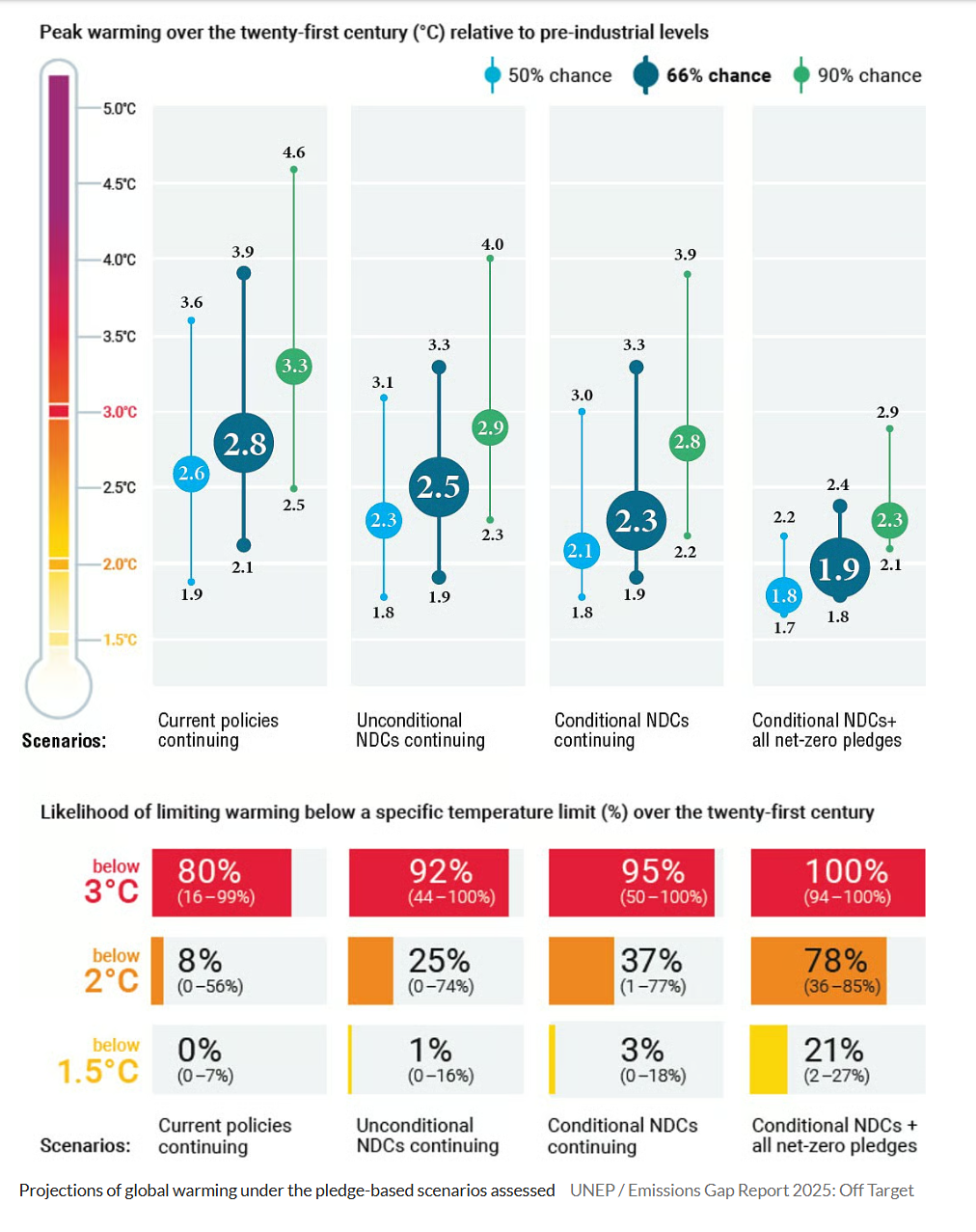
- 07 Nov 2025
In News:
The United Nations Environment Programme (UNEP), in its Emissions Gap Report (EGR) 2025 – “Off Target”, has warned that despite updated climate pledges by countries, the world remains dangerously off course to meet the Paris Agreement temperature goals. Current trajectories indicate that global warming will reach 2.3–2.5°C this century, far exceeding the ambition of limiting warming to well below 2°C, preferably 1.5°C.
About the Emissions Gap Report
The Emissions Gap Report is an annual flagship publication of UNEP, co-produced with the UNEP Copenhagen Climate Centre (UNEP-CCC). It assesses the gap between where global greenhouse gas (GHG) emissions are heading under current pledges and where they should be to meet Paris Agreement targets. The report is released every year ahead of the UN Climate Change Conference of Parties (COP).
Key Findings of Emissions Gap Report 2025
- Marginal Progress in Climate Pledges
- Even if all countries fully implement their latest Nationally Determined Contributions (NDCs), global temperature rise is projected at 2.3–2.5°C.
- This is only a modest improvement from last year’s estimate of 2.6–2.8°C, and UNEP notes that much of this improvement is due to accounting and methodological changes, not real emission reductions.
- Rising Global Emissions
- Global GHG emissions rose by 2.3% in 2024, reaching a record 57.7 gigatonnes of CO? equivalent.
- This growth rate is over four times the annual average of the 2010s, signalling a reversal of earlier decarbonisation trends.
- Low Participation and Weak Ambition
- As of September 30, 2025, only 60 Parties, representing 63% of global emissions, had submitted or announced new 2035 NDCs.
- Even full implementation of existing NDCs would reduce global emissions by only 15% by 2035 (from 2019 levels), whereas a 55% reduction is required to stay on the 1.5°C pathway.
- Implementation Gap
- Most countries are not on track to meet even their 2030 targets, revealing a “huge implementation gap” between commitments and action.
- Overshoot of 1.5°C is Now Likely
- UNEP warns that global temperatures are very likely to exceed 1.5°C within the next decade.
- The policy focus has shifted from prevention to ensuring that this overshoot is temporary and limited, as every fraction of warming avoided reduces climate damages, health risks, and dependence on uncertain carbon dioxide removal (CDR) technologies.
Role of the G20
The G20, responsible for about 77% of global emissions (excluding the African Union), holds the key to closing the emissions gap. Despite some members submitting new NDCs, the group as a whole remains off track for its 2030 goals, undermining global mitigation efforts.
Geopolitical and Structural Challenges
UNEP highlights that geopolitical uncertainties, including the proposed withdrawal of the United States from the Paris Agreement in 2026, could offset climate gains. According to the report, this alone could negate around 0.1°C of the projected improvement.
Opportunities and Way Forward
Despite the bleak outlook, UNEP notes that the world is technically well-positioned to accelerate climate action due to:
- Rapidly declining costs of renewable energy technologies such as solar and wind.
- Proven solutions that can deliver economic growth, jobs, energy security, and health benefits alongside emission reductions.
UNEP’s Key Recommendations
To close the emissions gap, UNEP calls for:
- Removal of policy, governance, institutional, and technical barriers.
- A massive scale-up of climate finance and technology transfer to developing countries.
- Redesign of the international financial architecture to unlock affordable and predictable climate finance.
Mission for Aatmanirbharta in Pulses (2025–31)
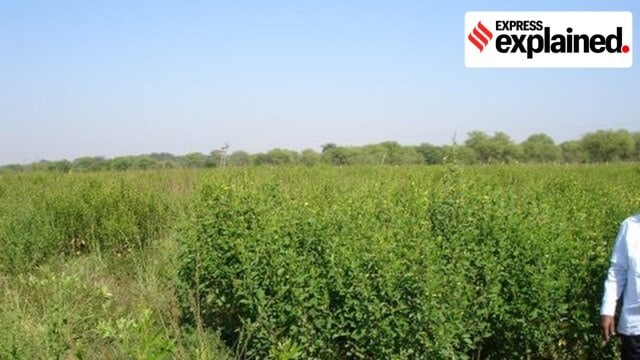
- 31 Oct 2025
In News:
- India, the world’s largest producer and consumer of pulses, continues to face a structural gap between domestic production and rising demand. Lower productivity levels, yield gaps, and increasing import dependence have highlighted the need for a targeted national strategy.
- To address these concerns, the Government of India has launched the Mission for Aatmanirbharta in Pulses (2025–31)—a six-year initiative aimed at transforming India into a self-reliant pulses-producing nation through scientific, institutional, and market reforms.
Overview of the Mission
Formally launched by the Prime Minister on 11 October 2025, the Mission for Aatmanirbharta in Pulses was first announced in the Union Budget 2024–25. The programme is implemented by the Ministry of Agriculture and Farmers’ Welfare, with collaborative support from NAFED, NCCF, and state governments.
Mission Duration and Financial Outlay
- Implementation period: 2025–26 to 2030–31
- Total outlay: ?11,440 crore
- Targets:
- Raise production by 45%—from 242 lakh MT (2023–24) to 350 lakh MT (2030–31)
- Expand cultivated area by 13%—from 275 lakh ha to 310 lakh ha
- Improve average yield by 28%—from 881 kg/ha to 1,130 kg/ha
Rationale: Current Status and Challenges
India cultivates a wide variety of pulses across agro-climatic zones. Major pulse-growing states include:
- Area (2023–24): Rajasthan (54.67 lakh ha), Madhya Pradesh (51 lakh ha), Maharashtra (44 lakh ha), Uttar Pradesh (30 lakh ha)
- Production (2023–24): Madhya Pradesh (59.74 lakh MT), Maharashtra (40 lakh MT), Rajasthan (33 lakh MT), Uttar Pradesh (31 lakh MT)
Gram dominates both area and output, followed by moong, tur (arhar), urad, and masoor. Over 60% of pulses production occurs during the rabi season.
Despite being the largest pulses producer, India remains dependent on imports from Myanmar, Tanzania, Mozambique, Canada, Australia, among others. Demand is projected to reach 268 lakh MT by 2030 and 293 lakh MT by 2047 (NITI Aayog), far exceeding current production levels. Productivity remains significantly lower than global benchmarks—Canada (2200 kg/ha) and China (1815 kg/ha).
Why Focus on Tur, Urad, and Masoor?
These three pulses account for 34% of total pulses area and contribute significantly to national output. They also exhibit high yield gaps and are crucial for nutritional security. The Mission plans:
- 9 lakh ha expansion in tur—across Karnataka, Maharashtra, Uttar Pradesh, Gujarat, Jharkhand and non-traditional areas like the Northeast.
- Utilisation of rice fallows for expanding urad in Uttar Pradesh, Andhra Pradesh, and Maharashtra.
- Promotion of masoor in rice fallow areas of West Bengal, Bihar, Chhattisgarh.
Key Components and Features of the Mission
1. Development of Climate-Resilient Seeds: Focus on high-yielding, drought-tolerant, pest-resistant, and protein-enriched varieties.
2. Higher Productivity through Technological Adoption
- Enhanced support of ?10,000/ha for Front Line Demonstrations (FLDs) of improved technologies (higher than ?9,000 under NFSM).
- Strengthening post-harvest storage, grading, and processing infrastructure.
3. 100% Assured Procurement
A major innovation in the mission framework:
- NAFED and NCCF will undertake 100% procurement of tur, urad and masoor for four years under PM-AASHA’s Price Support Scheme (PSS).
- Aadhaar-enabled biometric/facial authentication will ensure transparency and eliminate leakages.
4. Cluster-Based Approach
Each cluster will include minimum 10 ha (2 ha in hilly/Northeast region). Cluster selection based on:
- Four-fold district classification: HA-HY, HA-LY, LA-HY, LA-LY
- Rice fallow, rainfed, and watershed areas
- Aspirational districts, border/LWE districts
- Regions under PM Dhan-Dhaanya Krishi Yojana, Adarsh Gram Yojana, and Northeast/Himalayan areas
5. Value-Chain Strengthening: Interventions span input supply, extension, mechanisation, processing, market linkages and digital traceability.
Comparative Advantage over Previous Schemes
The Mission subsumes the pulses component of National Food Security and Nutrition Mission (NFSNM) but provides:
- Higher financial support
- Wider geographical coverage
- Expanded interventions (seed hubs, storage, procurement)
- Stronger digital governance
- Guaranteed procurement for three major pulses
National Significance
- Food and Nutritional Security: Pulses are key protein sources in Indian diets.
- Import Substitution: Reduces dependency on global markets and price volatility.
- Farmer Income Stability: Guaranteed procurement and improved yields boost profitability.
- Climate Resilience: Promotes drought-friendly crops, diversifies cropping patterns, and utilises rice fallows.
- Balanced Regional Development: Targets backward, rainfed, aspirational and border districts.
PM- Ayushman Bharat Health Infrastructure Mission (PM-ABHIM)
- 29 Oct 2025
In News:
The Pradhan Mantri–Ayushman Bharat Health Infrastructure Mission (PM-ABHIM), launched in October 2021, represents one of India’s most ambitious national health-system strengthening initiatives. Conceived in the aftermath of COVID-19, the Mission aims to build a resilient, modern, and self-reliant public health infrastructure capable of responding effectively to future pandemics and health emergencies.
Mission Structure and Financial Outlay
- PM-ABHIM is implemented as a Centrally Sponsored Scheme (CSS) with select Central Sector components, with a total allocation of ?64,180 crore for the period 2021-22 to 2025-26.
- This multi-layered programme focuses on fortifying health infrastructure from the village level to the district level, while simultaneously creating a national network for disease surveillance and laboratory capacity.
Key Components of PM-ABHIM
1. Primary and Secondary Healthcare Strengthening
The Mission envisions comprehensive infrastructure development through:
- Ayushman Arogya Mandirs (AAMs) replacing and upgrading Sub-Centres and Primary Health Centres.
- Urban Health and Wellness Centres established in slum and underserved urban areas.
- Block Public Health Units (BPHUs) to enhance diagnostic, surveillance, and public health management capacity at the block level.
These interventions aim to fill service delivery gaps and ensure equitable access to quality healthcare, especially in rural and vulnerable regions.
2. District-Level Critical Health Infrastructure
- Establishment of Critical Care Hospital Blocks (CCHBs) in every district to provide advanced and emergency care.
- Creation and upgradation of Integrated District Public Health Labs (IDPHLs) for comprehensive testing and epidemiological support.
These facilities are intended to strengthen district-level readiness for public health emergencies and mass-casualty situations.
3. Strengthened Disease Surveillance and Pandemic Preparedness
A significant feature of PM-ABHIM is the creation of an IT-enabled, real-time disease surveillance system. This network links:
- Block-level labs
- District surveillance units
- Regional surveillance centres
- National institutions
The government has highlighted that PM-ABHIM has substantially enhanced India’s health surveillance capabilities, enabling faster detection, notification, and response during outbreaks. The integration of digital tools allows seamless data sharing and analytics—essential for early warning and rapid containment strategies.
4. Research, Innovation, and One Health Approach
The Mission supports:
- Advanced research on COVID-19, emerging infectious diseases, and health emergencies.
- Laboratories and platforms promoting scientific innovation.
- Adoption of the One Health approach, recognising the linkages between human, animal, and environmental health to prevent zoonotic diseases.
Policy Significance
PM-ABHIM marks a paradigm shift from reactive health crisis management to proactive preparedness. Its multi-tiered infrastructure plan, focus on training, surveillance networks, and integration of modern technologies positions India to handle:
- Emerging infectious diseases
- Climate-linked health threats
- Biosecurity risks
- Mass public health emergencies
The Mission also contributes to the broader goals of Ayushman Bharat, Universal Health Coverage (UHC), and Sustainable Development Goals (SDGs), by bridging regional disparities and strengthening healthcare accessibility.
MAHA MedTech Mission
- 27 Oct 2025
In News:
The Anusandhan National Research Foundation (ANRF), in collaboration with the Indian Council of Medical Research (ICMR) and the Bill & Melinda Gates Foundation, has launched the Mission for Advancement in High-Impact Areas (MAHA)–Medical Technology (MedTech).This landmark initiative seeks to accelerate innovation in India’s medical technology ecosystem, reduce dependence on costly imports, and ensure affordable, high-quality healthcare technologies for all.
About the MAHA MedTech Mission
- Launched by: ANRF, in partnership with ICMR and Gates Foundation
- Mission Duration: 5 years
- Deadline for Concept Note Submission: 7 November 2025
- Implemented through: ANRF online portal – www.anrfonline.in
The mission represents a strategic push under the government’s Aatmanirbhar Bharat vision to strengthen India’s domestic MedTech sector, which is currently import-heavy and fragmented.
Objectives of the MAHA MedTech Mission
- Public Health Impact:
- Promote technologies addressing priority disease areas such as tuberculosis, cancer, neonatal and maternal care, and primary healthcare.
- Expand access to safe, high-quality medical care across India.
- Affordability and Accessibility:
- Support innovative solutions that reduce healthcare costs while maintaining quality standards.
- Promote equitable access to advanced medical devices, especially in rural and underserved regions.
- Self-Reliance and Competitiveness:
- Catalyze indigenous research, manufacturing, and commercialization in MedTech.
- Foster industry–academia collaboration and boost India’s global competitiveness in medical innovation.
Scope of the Mission
The MAHA MedTech Mission will support a wide range of medical technologies and innovations, including:
- Medical devices and equipment
- In-vitro diagnostics (IVDs) and subcomponents
- Implants and surgical instruments
- Assistive and wearable devices
- Consumables and disposables
- AI/ML-driven software-based medical platforms
- Robotics, imaging, and minimally invasive technologies
- Point-of-care and molecular diagnostics
These innovations will target priority national health areas, promoting early disease detection, efficient treatment delivery, and improved healthcare infrastructure.
Funding Mechanism
- Milestone-linked funding:
- ?5–25 crore per project
- Up to ?50 crore for exceptional projects with transformative potential.
- Eligible Applicants:
- Academic and R&D institutions
- Hospitals and clinical research centers
- Startups and MSMEs
- Established MedTech industries
- Interdisciplinary collaborations between public and private entities
The funding structure encourages translational research, product prototyping, clinical validation, and commercialization of indigenous medical technologies.
Enabling Support Framework
The Mission also provides institutional and regulatory facilitation through several national support programs:
- Patent Mitra:Facilitates intellectual property protection, patent filing, and technology transfer.
- MedTech Mitra:Provides regulatory guidance, helps in obtaining clinical and market approvals, and supports compliance with national and international standards.
- Clinical Trial Network:Offers access to a national network of hospitals and research centers for clinical validation and evidence generation.
- Mentorship and Industry Linkages:Access to industry mentors, market experts, and commercialization partners to support end-to-end product development.
Laser Interferometer Space Antenna (LISA) Mission
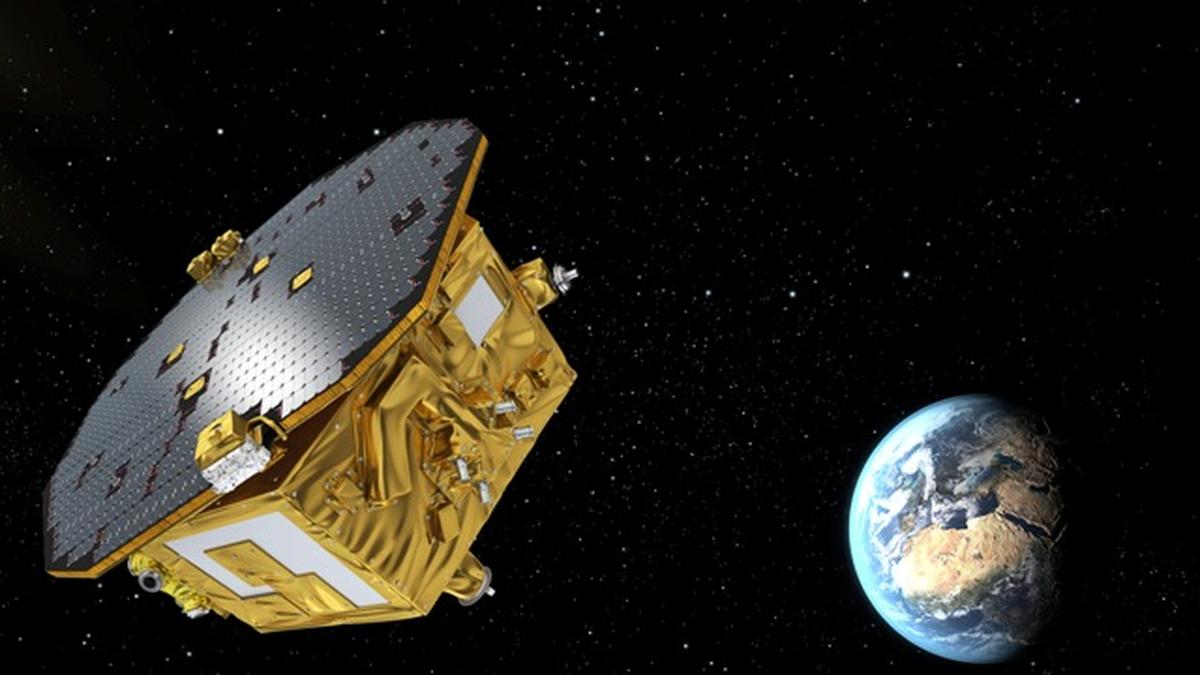
- 26 Oct 2025
In News:
The Laser Interferometer Space Antenna (LISA) is a joint mission of the European Space Agency (ESA) and NASA, scheduled for launch in the mid-2030s. It represents the first-ever space-based observatory designed to detect gravitational waves, offering an unprecedented opportunity to study some of the most energetic and mysterious phenomena in the universe.
Mission Objective
LISA aims to:
- Directly detect and study gravitational waves—minute ripples in spacetime caused by massive cosmic events such as black hole mergers, neutron star collisions, and possibly phenomena from the early universe.
- Explore the fundamental nature of gravity and black holes, providing insights into Einstein’s General Theory of Relativity.
- Investigate cosmic evolution by probing how galaxies and black holes have grown and interacted over time.
- Contribute to understanding the universe’s expansion rate, complementing other cosmological observations.
Design and Configuration
- The LISA system will consist of three identical spacecraft, positioned in an equilateral triangular formation.
- Each side of this triangle will span approximately 2.5 million kilometres, and the formation will trail Earth in its orbit around the Sun at a distance of about 50 million kilometres.
- This configuration will enable ultra-precise measurements of tiny variations in distance between the spacecraft caused by passing gravitational waves.
Scientific Principle
- Each spacecraft will contain two free-floating test masses (gold-platinum cubes) that serve as nearly perfect reference points in space.
- Laser beams exchanged between the spacecraft will measure the relative distance between these cubes with extraordinary accuracy using laser interferometry.
- As gravitational waves pass through, they will slightly alter the distances between the spacecraft—by as little as a fraction of the width of an atom—allowing LISA to record and analyse these distortions.
Technological Significance
- LISA extends the capabilities of ground-based detectors like LIGO and VIRGO, which can only detect higher-frequency gravitational waves.
- By operating in space, LISA can sense low-frequency gravitational waves generated by supermassive black hole binaries and other massive cosmic systems, which are beyond the reach of terrestrial observatories.
- The mission will also test cutting-edge technologies in laser stability, drag-free navigation, and precision metrology.
Scientific Impact
- Enhance understanding of black hole dynamics, galaxy formation, and cosmic structure evolution.
- Provide new data on extreme astrophysical events and test the limits of General Relativity.
- Contribute to multi-messenger astronomy, linking gravitational wave observations with electromagnetic and particle signals from the same sources.
- Offer valuable inputs for cosmology, including studies of dark matter, dark energy, and the early universe.
Deendayal Antyodaya Yojana – National Rural Livelihoods Mission (DAY-NRLM)
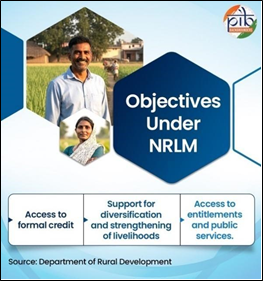
- 26 Oct 2025
In News:
The Deendayal Antyodaya Yojana – National Rural Livelihoods Mission (DAY-NRLM), implemented by the Ministry of Rural Development (MoRD), stands as one of the world’s largest poverty alleviation and women-centric livelihood programmes. It has successfully mobilized millions of rural households into community institutions and significantly advanced the agenda of women’s empowerment, financial inclusion, and sustainable rural livelihoods.
Genesis and Evolution
- Launch: Initially introduced in 2010 as the National Rural Livelihoods Mission (NRLM) by restructuring the Swarnajayanti Gram Swarozgar Yojana (SGSY).
- Renaming: In 2016, it was renamed Deendayal Antyodaya Yojana – National Rural Livelihoods Mission (DAY-NRLM) to honour the philosophy of Antyodaya—uplifting the poorest of the poor.
- Funding Pattern: It is a Centrally Sponsored Scheme, jointly funded by the Central and State Governments.
- Objective: To reduce rural poverty by enabling poor households to access self-employment and skilled wage employment opportunities, ensuring diversified and sustainable livelihoods.
Core Objectives
The mission seeks to empower rural communities by investing in four key pillars:
- Social Mobilisation& Institution Building: Organizing rural poor, especially women, into Self-Help Groups (SHGs) and federations for mutual support and long-term empowerment.
- Financial Inclusion: Ensuring access to formal credit and financial services through community-based intermediaries like Bank Sakhis and Banking Correspondent Sakhis.
- Sustainable Livelihoods: Promoting both farm and non-farm livelihoods including agriculture, livestock, handicrafts, and microenterprises.
- Social Development & Convergence: Addressing gender, nutrition, health, sanitation, and social justice through convergence with other government programmes.
Women-Centric Model
Women are at the heart of DAY-NRLM. The mission focuses on collectivizing women into SHGs, enhancing their entrepreneurial capacity, and connecting them to markets, technology, and credit networks.
- Scale: As of June 2025, the mission has mobilized 10.05 crore rural households into 90.9 lakh SHGs across 28 States and 6 UTs.
- Financial Empowerment: Over ?11 lakh crore has been disbursed to SHGs through formal banking systems, backed by collateral-free loans and interest subvention, with a 98% repayment rate — a testament to the model’s sustainability.
- Community Cadres: SHG women are trained as Community Resource Persons (CRPs) such as
- Krishi Sakhis – agricultural extension support,
- PashuSakhis – animal health and livestock management,
- Bank Sakhis – financial inclusion facilitators,
- BimaSakhis – insurance and welfare access agents.
- Over 3.5 lakh Krishi and PashuSakhis and 47,952 Bank Sakhis have been deployed to deliver last-mile services.
Entrepreneurship and Microenterprise Development
To promote local entrepreneurship, the Mission runs the Start-up Village Entrepreneurship Programme (SVEP), supporting 3.74 lakh rural enterprises across 282 blocks.
These enterprises cover diverse sectors like handicrafts, food processing, agro-based units, and rural services — encouraging self-reliance and community-led growth.
A remarkable example is of Heinidamanki Kanai from Meghalaya, who turned her SHG training into a successful handmade soap business with bank support under NRLM — a model of grassroots entrepreneurship.
Skill Development and Employment Initiatives
DAY-NRLM implements two major Centrally Sponsored Schemes to boost rural employability and entrepreneurship:
- DeenDayal Upadhyaya Grameen Kaushalya Yojana (DDU-GKY)
- Provides placement-linked skill training for rural youth aged 15–35 years.
- 17.50 lakh trained and 11.48 lakh placed as of June 2025.
- Top-performing states: Uttar Pradesh, Odisha, and Andhra Pradesh.
- Rural Self Employment Training Institutes (RSETIs)
- Bank-sponsored centres for youth aged 18–50 years, providing entrepreneurship training and promoting both self- and wage-employment.
- 56.69 lakh candidates trained,40.99 lakh settled in gainful employment.
- Leading states: Uttar Pradesh, Rajasthan, Madhya Pradesh, and Karnataka.
Achievements and Outcomes
High-Performing States:
- Bihar, Uttar Pradesh, Andhra Pradesh (SHG formation and financial inclusion).
- Maharashtra, Uttar Pradesh, Andhra Pradesh (agro-ecological initiatives under MahilaKisanprogrammes).
- Assam, Kerala, and West Bengal (microenterprise promotion under SVEP).
Capacity Building and Marketing Initiatives
To strengthen entrepreneurship and market readiness:
- SARAS Aajeevika Melas (National & State-level fairs) are organized annually to showcase SHG products and build marketing skills.
- The National Institute of Rural Development and Panchayati Raj (NIRD&PR) conducts Training of Trainers (ToT)programmes on marketing, having trained over 44 batches in the past three years.
- These initiatives bridge rural producers with urban consumers and e-commerce platforms, enhancing rural incomes.
Impact on Rural Transformation
- Economic Empowerment: Enhanced access to credit and markets has diversified income sources for millions of women.
- Social Transformation: SHG networks now play a role in local governance, social awareness, and addressing gender issues such as domestic violence, health, and education.
- Financial Inclusion: The presence of SHG-led financial intermediaries ensures doorstep access to savings, credit, and insurance.
- Sustainable Livelihoods:Agro-ecological practices, livestock management, and non-farm enterprises are reducing ecological stress and enhancing resilience.
Challenges Ahead
- Uneven implementation across states and regions.
- Need for stronger digital monitoring and credit tracking.
- Enhancing market linkages for SHG products.
- Integrating livelihood programmes with emerging green and climate-resilient models.
Conclusion
The Deendayal Antyodaya Yojana – National Rural Livelihoods Mission (DAY-NRLM) exemplifies inclusive, women-led rural development. By mobilizing millions of women into strong community institutions, linking them with finance and skills, and promoting sustainable livelihoods, it has transformed the socio-economic fabric of rural India.
As a global model of community-driven development, the Mission continues to advance India’s vision of “Atmanirbhar Bharat” by empowering its most vulnerable citizens to become entrepreneurs, leaders, and change-makers in their own right.
Maldives Achieves Triple Elimination of Mother-to-Child Transmission (MTCT)
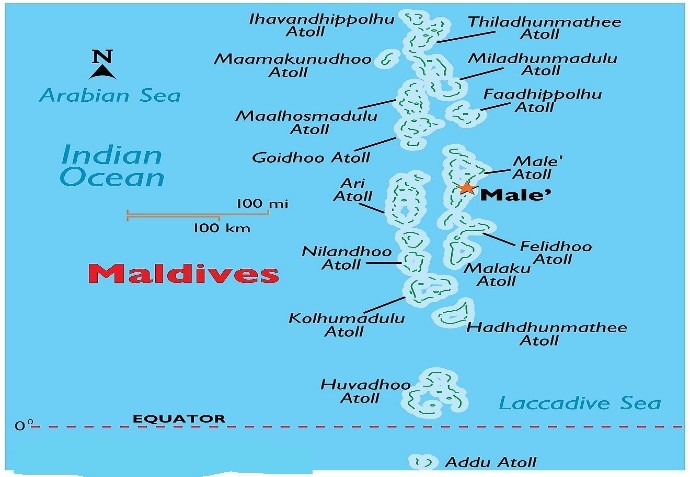
- 18 Oct 2025
In News:
In a landmark development in global public health, the Maldives has become the first country in the world to be validated by the World Health Organization (WHO) for eliminating mother-to-child transmission of HIV, syphilis, and hepatitis-B. This achievement represents a major milestone in protecting newborns from lifelong infections and advancing maternal-child health security.
Significance of the Achievement
Mother-to-child transmission (MTCT) of HIV, syphilis, and hepatitis-B remains a pressing concern worldwide, particularly in developing regions. In the WHO South-East Asia Region alone, thousands of infants are still born with congenital infections annually. Against this backdrop, Maldives’ accomplishment sets a benchmark for public health governance and disease elimination.
Key Drivers Behind Maldives’ Success
The achievement results from a comprehensive, integrated and equity-based healthcare strategy, backed by political commitment and strong health investments.
1. Universal Maternal Care and Screening
- Over 95% of pregnant women in Maldives receive antenatal care.
- Nearly all are screened for HIV, syphilis, and hepatitis-B.
- Universal access extends to migrants and remote island populations.
2. Robust ImmunisationProgramme
- Above 95% hepatitis-B birth-dose coverage within 24 hours of birth.
- Full childhood immunisation coverage consistently maintained.
3. Demonstrated Zero Transmission
- No infant HIV or syphilis cases reported since 2022.
- National survey (2023) confirmed zero hepatitis-B among school-entry children.
4. Strong Public Health Infrastructure
- Universal health coverage system offering free antenatal and diagnostic services.
- Government spends over 10% of GDP on health, among the highest in the region.
- Effective partnerships across public, private, and civil society sectors, supported by WHO technical assistance.
Strategic Measures Adopted
- Integrated maternal-child health services
- Early testing and treatment protocols
- Strong laboratory systems and surveillance
- Community outreach and migrant health inclusion
- High-quality vaccination logistics
Future Roadmap
To sustain the elimination status and deepen maternal-newborn care outcomes, Maldives plans to:
- Expand digital public-health systems
- Strengthen laboratory and monitoring quality
- Enhance services for key and migrant populations
- Increase private-sector collaboration
WHO will continue supporting Maldives to maintain momentum toward broader maternal, child, and adolescent health goals.
Maldives at a Glance
- Location: North-central Indian Ocean; southwest of India and Sri Lanka
- Capital:Malé
- Population: ~5.6 lakh (2025)
- Geography: ~1,200 coral islands across 26 atolls; ~200 inhabited
- Feature: Lowest-lying nation globally (maximum elevation ~1.8m)
- Climate: Tropical; Southwest monsoon (May–Aug), Northeast monsoon (Dec–Mar)
Mission Drishti
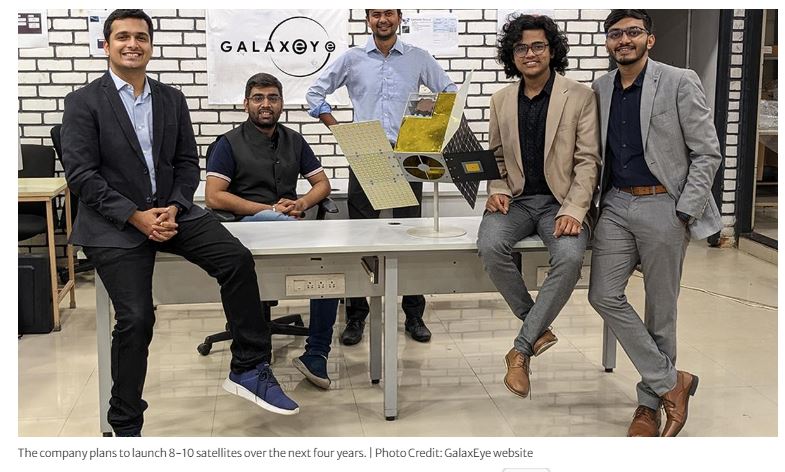
- 17 Oct 2025
In News:
India’s private space sector is set to achieve a major milestone with GalaxEye, a Bengaluru-based space-tech start-up, preparing to launch the world's first multi-sensor Earth observation (EO) satellite, Mission Drishti, in early 2026. The mission marks a significant step toward creating an advanced satellite constellation for real-time, high-precision geospatial intelligence.
About Mission Drishti
- World’s first multi-sensor EO satellite combining Synthetic Aperture Radar (SAR) and high-resolution optical imaging on a single platform.
- Built by GalaxEye — one of India’s leading private space-tech start-ups.
- India’s largest privately-built satellite and the highest-resolution satellite (1.5 m) developed in the country.
- Mass: ~160 kg.
- Underwent successful structural tests at ISRO’s U R Rao Satellite Centre, proving its ability to withstand harsh space conditions.
- Mission Drishti is the first step in deploying a constellation of 8–12 satellites by 2029 (company target: 8–10 in next four years).
Key Features & Technological Significance
- Dual Payload Technology: SAR + optical sensors enable:
- Imaging in all weather conditions
- Day and night coverage
- High-precision, multi-layered data
- High-resolution EO imagery optimized across spatial, spectral, and temporal dimensions.
- Enables actionable multisource imaging intelligence—a capability currently unexplored globally.
According to the company, Mission Drishti opens a new era in satellite imaging by fusing multiple sensing technologies to provide real-time situational awareness.
Applications
Mission Drishti aims to strengthen high-end geospatial capabilities across national and commercial sectors:
|
Sector |
Use-case |
|
Defence& Security |
Border surveillance, tactical intelligence |
|
Disaster Management |
Floods, landslides, cyclone & emergency monitoring |
|
Infrastructure & Utilities |
Structural health monitoring, urban planning |
|
Agriculture |
Crop monitoring, precision farming support |
|
Finance & Insurance |
Risk assessment, disaster claim validation |
The mission aligns with rising global demand for accurate Earth observation data, especially amid geopolitical tensions and climate-driven emergencies.
Significance for India’s Space Ecosystem
- Enhances India’s capabilities in commercial EO intelligence, traditionally dominated by the US & Europe.
- Strengthens private-sector participation under India’s space reforms and IN-SPACe framework.
- Potential to integrate AI and advanced imaging analytics, improving decision-making in governance and industry.
- Boosts India’s aspiration to become a global space-technology provider.
Mission for Aatmanirbharta in Pulses (2025–26 to 2030–31)
- 14 Oct 2025
In News:
- India has launched an ambitious Mission for Aatmanirbharta in Pulses (2025–26 to 2030–31),signalling a major push toward self-sufficiency in pulses and farmer-centric agricultural transformation.
- Announced during a special programme at the Indian Agricultural Research Institute (IARI), the Mission carries an outlay of ?11,440 crore and aims to meet India’s pulses requirement entirely through domestic production by December 2027.
- Pulses hold strategic importance for India as they ensure nutritional security, enrich soil through nitrogen fixation, support rural livelihoods, and reduce import bills. Despite being the world’s largest producer and consumer, India's demand-supply gap has led to significant imports—47.38 lakh tonnes in 2023-24. The Mission seeks to eliminate this dependence and strengthen farmer income security.
Key Targets (by 2030–31)
- Total production:350 lakh tonnes
- Cultivation area:310 lakh hectares (including 35 lakh ha rice fallows)
- Yield target:1,130 kg/ha
- Beneficiaries: Nearly 2 crore farmers
- Import elimination by Dec 2027
Core Components of the Mission
Seed & Technology Push
- 126 lakh quintals of certified seeds
- 88 lakh free seed kits
- Deployment of high-yielding, pest-resistant, climate-resilient varieties
- Launch of SATHI Portal (Seed Authentication, Traceability & Holistic Inventory) for seed lifecycle transparency
Assured MSP & Farmer Security
- 100% procurement of Tur, Urad, and Masoor for four years
- Procurement support via NAFED & NCCF
- Linked to PM-AASHA for guaranteed price support and reduced market risk
Cluster-Based Integrated Approach
- "One Block – One Seed Village" model
- FPO-driven clusters to streamline seed production & marketing
- Mechanization, soil health management, and balanced fertilization
- Agronomy support from ICAR, KVKs & state agriculture departments
Value Chain Strengthening
- 1,000 processing & packaging unitsincentive: up to ?25 lakh per unit
- Focus on storage, processing, branding, and market linkages
Social and Nutrition Focus
- Inclusion of pulses in PDS, ICDS, Mid-Day Meal schemes
- Strengthening food-based welfare with protein security
NITI Aayog Recommendations Integrated
- Expansion into rice fallows
- Cluster-based cultivation & seed hubs
- “One Block–One Seed Village”
- Data-driven monitoring through SATHI
- Public procurement strengthening at grassroots
- Climate-resilient, short-duration pest-resistant varieties
Strategic Significance
- Supports Vision 2047&Viksit Bharat
- Strengthens food sovereignty & rural employment
- Saves foreign exchange by cutting pulse imports
- Enhances soil fertility & climate resilience
- Boosts farmer incomes and reduces agrarian vulnerability
CBSE Provides Partial Relief on APAAR ID Submission for Board Students

- 18 Sep 2025
In News:
The Central Board of Secondary Education (CBSE) has recently announced partial relaxations for schools regarding the submission of Automated Permanent Academic Account Registry (APAAR) IDs linked to the List of Candidates (LOC) for Classes 10 and 12 board examinations. The move comes in response to multiple representations from schools highlighting technical and administrative challenges.
About APAAR
APAAR, launched under the National Education Policy (NEP) 2020 and aligned with the National Credit and Qualifications Framework (NCrF), aims to assign every student in India a unique 12-digit lifelong academic identity. Key objectives include:
- Consolidation of all academic achievements, such as marksheets, certificates, and co-curricular accomplishments, in a single digital record.
- Facilitating credit transfers, mobility between institutions, and recognition of prior learning.
- Enhancing flexibility in education and supporting seamless integration with the Academic Bank of Credits (ABC).
Integration with Academic Bank of Credits
The Academic Bank of Credits (ABC), conceptualized under NEP 2020, serves as a digital repository of students’ academic records, enabling storage, transfer, and redemption of credits across recognized institutions. Integrated with APAAR, it allows students to move between schools and higher education institutions without repeatedly submitting physical certificates, thus promoting educational mobility and continuity.
Challenges in APAAR Implementation
Since its rollout, schools have reported several hurdles in generating APAAR IDs:
- Technical integration issues between school portals and the APAAR system.
- Mismatches between school records and Aadhaar-linked student data.
- Time delays due to correction or updating processes.
- Lack of parental consent, often arising from privacy concerns.
CBSE’s Guidelines and Partial Relaxations
To address these challenges, CBSE has provided the following instructions for schools while submitting LOCs:
- Parental Consent Denial: If APAAR IDs cannot be generated due to refusal of parental consent, schools must retain a copy of the consent refusal and mark the entry in the LOC as “REFUSED”.
- Technical or Other Issues: For IDs that cannot be generated due to technical or administrative reasons, schools should mark the LOC entry as “NOGEN”.
- All Other Cases: Wherever feasible, APAAR IDs should be indicated in the LOC.
CBSE has also activated an online module for Children With Special Needs (CWSN), enabling schools to apply for various examination-related exemptions. Examination forms for private candidates of Classes 10 and 12 have been consolidated along with the LOC submission schedule to ensure clarity and timely compliance.
Support Measures
CBSE has emphasized that these relaxations are intended to ensure smooth and error-free LOC submission within the stipulated timelines. Schools facing further difficulties are advised to reach out to their respective regional CBSE offices for assistance.
Significance
The APAAR initiative represents a key step toward a digital, lifelong academic identity for Indian students, enhancing transparency, mobility, and integration with the Academic Bank of Credits. CBSE’s temporary relaxations reflect a pragmatic approach to smooth implementation while addressing operational challenges faced by schools.
Amrit Sarovar Mission
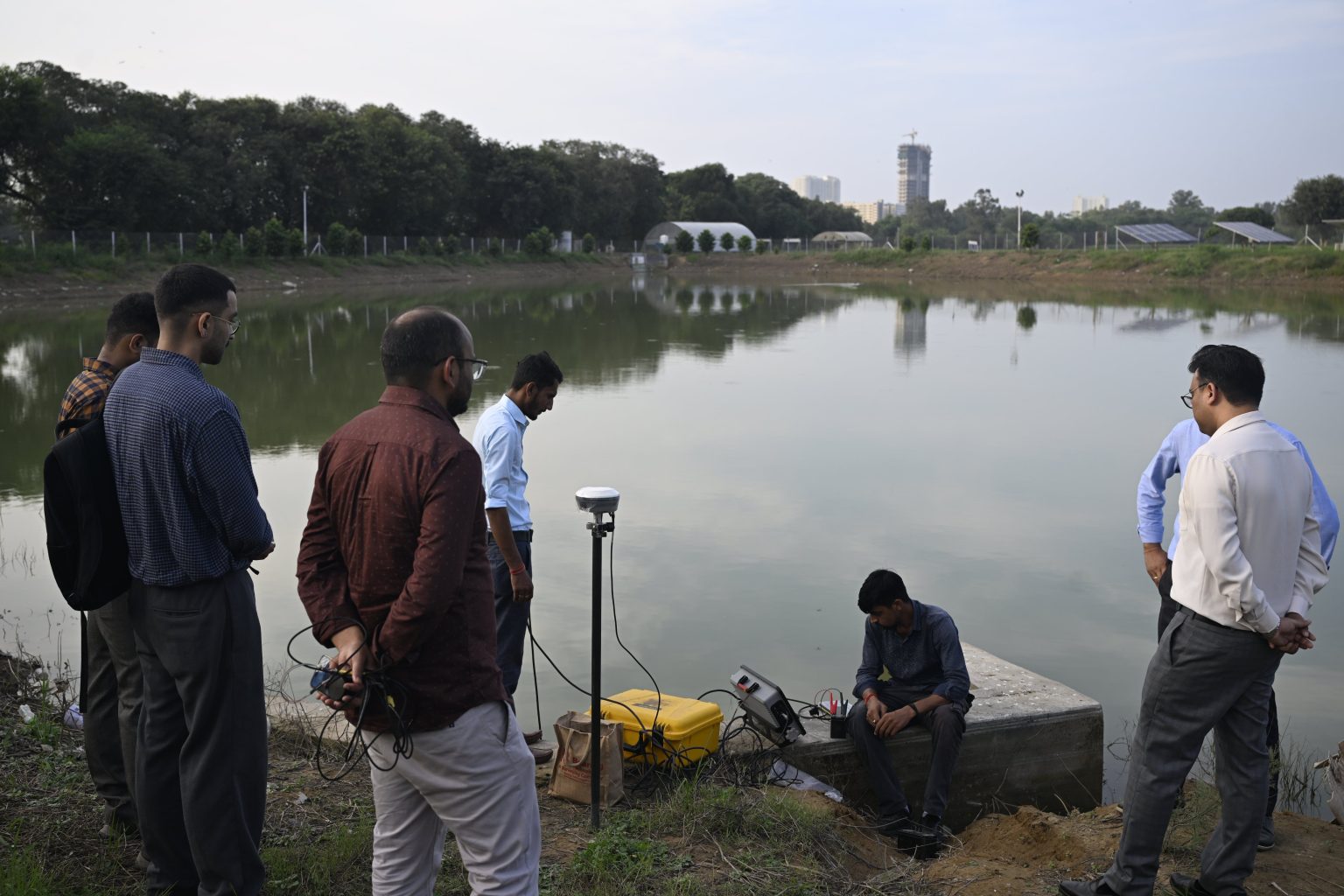
- 17 Sep 2025
In News:
- The Amrit Sarovar Mission, launched by Prime Minister Narendra Modi in April 2022, is a flagship initiative aimed at addressing water scarcity and promoting sustainable rural development across India.
- The mission seeks to construct or rejuvenate 75 Amrit Sarovars (ponds) in each district, as part of the celebrations of Azadi ka Amrit Mahotsav.
- As of 2025, the government has reported the creation of over 68,000 Amrit Sarovars nationwide, marking a significant milestone in water conservation and community engagement.
Objectives and Significance
The mission’s primary objectives include:
- Water conservation and management in rural areas.
- Enhancement of local livelihoods through irrigation, fisheries, duckery, cultivation of water chestnut, and water-based tourism.
- Promotion of social cohesion by establishing Amrit Sarovars as community gathering points.
- Integration of government initiatives through a “Whole of Government” approach, ensuring convergence of resources and expertise.
Each Amrit Sarovar is designed to have a minimum pondage area of one acre with a water-holding capacity of about 10,000 cubic metres. Surrounding vegetation typically includes trees such as Neem, Peepal, and Banyan, contributing to ecological sustainability and enhancing biodiversity.
Participatory and Institutional Framework
The site selection and supervision of Amrit Sarovars are conducted by Gram Sabhas, with Panchayat representatives overseeing the development. This participatory approach ensures that local communities have ownership and accountability for the maintenance and sustainable use of water resources.
The mission operates on convergence principles, utilizing funds and resources from multiple sources including:
- Mahatma Gandhi NREGS
- 15th Finance Commission Grants
- Pradhan Mantri Krishi Sinchai Yojana (PMKSY) sub-schemes, such as Watershed Development and Har Khet Ko Pani
- State government schemes
There is no separate financial allocation for the mission; rather, it leverages ongoing programs for maximum impact.
Technology and Monitoring
To ensure efficient implementation and progress tracking, the Bhaskaracharya National Institute for Space Applications and Geo-informatics (BISAG-N) has been engaged as a technical partner. The institute has developed the Amrit Sarovar Portal and Mobile App, which enables real-time monitoring, reporting, and evaluation of district-level activities.
Workshops and Capacity Building
The Ministry of Rural Development organized a national workshop in New Delhi to reinforce the mission’s technical foundations and promote community-driven sustainable practices. Officials from states and Union Territories discussed strategies to enhance technical capacity, innovation, and inter-departmental collaboration, paving the way for the next phase of the mission.
Impact and Prospects
The Amrit Sarovar Mission exemplifies integrated rural development, linking water security, ecological sustainability, and livelihood generation. By reviving traditional water bodies and creating new ponds, it contributes to groundwater recharge, climate resilience, and rural prosperity. The initiative also strengthens people’s participation in natural resource management, ensuring that water resources are used efficiently and sustainably.
As the mission progresses, it is expected to play a critical role in mitigating rural water crises, enhancing agricultural productivity, and fostering inclusive growth in India’s villages.
Mission Mausam
- 02 Sep 2025
In News:
The increasing frequency of extreme weather events—cloudbursts, flash floods, and landslides—has underlined the urgent need for robust forecasting and disaster management mechanisms in India’s Himalayan region.
In this context, the Indian Meteorological Department (IMD), under the Ministry of Earth Sciences (MoES), is set to install four additional radars in Jammu & Kashmir (J&K) as part of Mission Mausam (2024). This development coincides with intensified relief and rehabilitation efforts following unprecedented rainfall and floods in August–September 2025.
Mission Mausam: An Overview
- Launched: 2024 by the Ministry of Earth Sciences.
- Implementing Agencies: IMD, National Centre for Medium-Range Weather Forecasting (NCMRWF), and Indian Institute of Tropical Meteorology (IITM).
- Objectives:
- Enhance India’s forecasting capability across short, medium, extended, and seasonal scales.
- Develop high-resolution models for improved accuracy in monsoon prediction.
- Strengthen observational networks with radars, satellites, automated weather stations.
- Provide sector-specific advisories for agriculture, water resources, health, energy, and disaster management.
- Build capacity through national and international collaborations.
Significance: It represents a transformative milestone in India’s climate resilience strategy, supporting sustainable development, while safeguarding lives, livelihoods, and infrastructure.
Relief and Rehabilitation Measures in J&K (2025)
Following the cloudbursts and floods, the Centre and UT administration launched coordinated relief measures:
- Immediate Relief: Supply of rations, medicines, water filters, and medical kits. Additional consignments dispatched from MP funds to supplement government aid.
- Community Role: Civil society and local bikers acted as first responders, showcasing a whole-of-society approach.
Broader Relevance for Disaster Management
- Policy Linkages: Aligned with the Disaster Management Act, 2005 and the Sendai Framework (2015–2030), emphasizing early warning systems and community resilience.
- Socio-Economic Impact: Strengthening forecasting reduces agricultural losses, protects infrastructure, and prevents human casualties.
- Strategic Significance: Enhances preparedness in the fragile Himalayan ecosystem, prone to climate-induced disasters.
Higher Education Commission of India (HECI)
- 21 Aug 2025
In News:
India’s higher education system is poised for its most significant transformation since independence with the establishment of the Higher Education Commission of India (HECI), a unified regulatory body that will replace the fragmented oversight of University Grants Commission (UGC), All India Council for Technical Education (AICTE), and National Council for Teacher Education (NCTE).
Background & Genesis
- The HECI is a proposed unified regulator intended to replace the existing oversight bodies: UGC, AICTE, and NCTE—tasked with regulating non-technical, technical, and teacher-education domains respectively.
- The concept originates from NEP 2020, which advocates for a "light but tight" regulatory framework governed by one umbrella institution with four independent verticals.
- Originally floated in a 2018 draft bill, the idea regained momentum in 2021 and is currently under drafting, with status updates as recent as July–August 2025.
Objectives & Rationale
- Streamline governance: HECI aims to eliminate overlapping jurisdictions, reduce bureaucratic delays, and improve accountability across higher education institutions.
- Enhance autonomy and innovation: Under NEP 2020’s vision, it seeks to foster institutional independence coupled with data-driven oversight.
- Align with global best practices: The vertical structure (regulation, accreditation, funding, standards) mirrors international examples like the UK's Office for Students and Australia’s TEQSA.
Structural Framework: Four Vertical Councils
As per NEP 2020, HECI will function through four independent verticals:
- National Higher Education Regulatory Council (NHERC): Responsible for regulatory oversight, excluding medical and legal education.
- National Accreditation Council (NAC): Acts as a meta-accrediting body, setting phased benchmarks and ensuring quality across institutions.
- Higher Education Grants Council (HEGC): Will manage funding based on transparent, performance-linked criteria, replacing UGC’s funding role.
- General Education Council (GEC): Tasked with developing the National Higher Education Qualification Framework (NHEQF), defining graduate learning outcomes. It will subsume the NCTE and liaise with other professional standard-setting bodies.
Some sources also mention integration of accreditation entities such as NAAC and NBA into HECI’s accreditation wing, adopting peer-review models.
Legislative Journey & Current Status
- The HECI bill is being prepared following NEP 2020, specifically underwritten by Minister Sukanta Majumdar in July 2025. A Cabinet note is anticipated before formal introduction.
- Finalisation is pending, with no clear date as of mid-2025.
Expected Benefits
- Simplified administration—one regulator instead of multiple authorities.
- Improved transparency and efficiency, eliminating redundancy.
- Promoting global standards, quality enhancements, and integration of interdisciplinary and digital learning.
India Semiconductor Mission
- 20 Aug 2025
In News:
The Union Cabinet has cleared four new semiconductor manufacturing projects worth ?4,600 crore in Odisha, Punjab, and Andhra Pradesh under the India Semiconductor Mission (ISM). With this, the total number of approved projects under ISM has reached ten across six states, attracting cumulative investments of nearly ?1.60 lakh crore.
Details of Newly Approved Units
- SiCSem Pvt. Ltd. (Odisha):
- In partnership with UK-based Clas-SiC Wafer Fab Ltd.
- India’s first commercial compound semiconductor fabrication unit focused on Silicon Carbide (SiC) devices.
- Capacity: 60,000 wafers and 96 million packaged units annually.
- 3D Glass Solutions Inc. (Odisha):
- Will establish a vertically integrated packaging and embedded glass substrate unit.
- Focus: 3D Heterogeneous Integration modules.
- ASIP Technologies (Andhra Pradesh):
- Joint venture with APACT Co. Ltd., South Korea.
- Annual capacity: 96 million units.
- Applications: Mobile phones, set-top boxes, automobiles, and other electronic devices.
- Continental Device India Pvt. Ltd. (Punjab):
- Brownfield expansion of its Mohali facility.
- Focus: High-power discrete devices – MOSFETs, IGBTs, Schottky diodes, and transistors (using both silicon and SiC).
- Capacity: 158.38 million units annually.
Production from these units is expected to commence within the next 2–3 years.
Progress under ISM
- Launch Year: 2021
- Nodal Ministry: Ministry of Electronics and Information Technology (MeitY)
- Objective: Establish a self-reliant semiconductor and display ecosystem in India.
- Support: Incentive package of ?75,000 crore for fabs, ATMP/OSAT, compound semiconductor plants, and display fabs.
- Capacity Building: Target to train 60,000+ skilled professionals.
- Strategic Significance: Reduce import dependency, boost Atmanirbhar Bharat, and make India a global semiconductor hub.
Major Ongoing Projects under ISM
- Tata-PSMC Fab (Dholera, Gujarat): ?91,526 crore investment; capacity of 50,000 wafers/month for automotive and AI; operational by 2026.
- Micron ATMP (Sanand, Gujarat): ?22,900 crore investment; focus on DRAM and NAND packaging; expected by late 2025.
- Tata TSAT OSAT (Jagiroad, Assam): Output of 48 million chips/day.
- Kaynes OSAT (Sanand, Gujarat): Capacity of 6 million chips/day for telecom and industrial use.
- HCL–Foxconn JV (Uttar Pradesh): To produce 36 million display driver chips/month by 2027.
Jal Jeevan Mission (JJM)

- 13 Aug 2025
In News:
The Jal Jeevan Mission (JJM), launched in August 2019, aims to provide Functional Household Tap Connections (FHTCs) to every rural household, ensuring safe, adequate, and regular potable water supply. At the time of its launch, only 17% of rural households (3.23 crore) had tap water access. As of 14 August 2025, this has increased to 81% coverage (15.68 crore households) out of a total 19.36 crore rural households, with over 12.45 crore additional connections provided.
Institutional Framework
- State Subject: Drinking water supply is primarily the responsibility of States/UTs, while the Centre provides technical and financial support.
- Funding: An initial outlay of ?2,08,652 crore was approved; the scheme has now been extended until 2028 with enhanced allocation for completing pending works and strengthening Operation & Maintenance (O&M).
- Citizen Participation: The 2025 Budget emphasized “Jan Bhagidari” for sustainable and community-centric water service delivery.
Quality Standards and Monitoring
- Benchmark: Water quality is mandated to comply with BIS:10500 standards, which specify acceptable and permissible limits for chemical, physical, and bacteriological parameters.
- Testing: In December 2024, the government released a Concise Handbook for States/UTs, recommending comprehensive testing at multiple points—source, treatment plant, storage, and distribution.
- Remedial Actions: Include regular cleaning of overhead tanks and corrective measures in case of contamination.
- Transparency Tools:
- JJM Dashboard “Citizen Corner” displays village-level water test results.
- Complaints can be filed via CPGRAMS (pgportal.gov.in) and the Department’s website (jalshakti-ddws.gov.in).
- Aadhaar-linked monitoring, geo-tagging, IoT sensors, and third-party inspections are employed for real-time tracking.
Significance
- Public Health: Ensures safe drinking water, reducing the burden of waterborne diseases.
- Gender Empowerment: Frees women and girls from time-consuming water collection, enabling better education and livelihoods.
- Rural Development: Improves quality of life, reduces drudgery, and enhances rural productivity.
- Sustainability: Integrates with groundwater management initiatives like the Atal Bhujal Yojana, promoting long-term water security.
Current Status (2025)
- Coverage: 81% rural households have tap water supply.
- Target: Universal coverage by 2028 with a focus on infrastructure quality, O&M, and sustainable, citizen-driven service delivery.
National Critical Mineral Mission
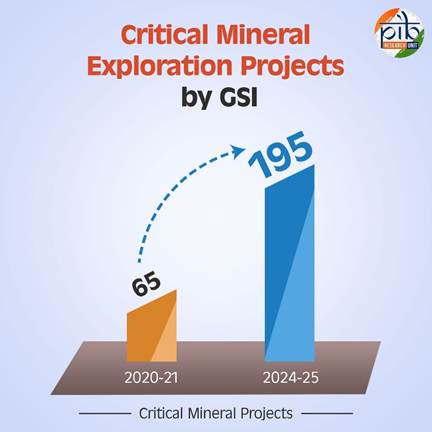
- 26 Jul 2025
In News:
The National Critical Mineral Mission (NCMM), launched by the Government of India in 2025, represents a strategic initiative to secure India's access to essential critical minerals, vital for clean energy, advanced electronics, defence, and emerging technologies. It aims to address India’s dependence on imports, strengthen domestic capacity, and build resilient supply chains.
What are Critical Minerals?
Critical minerals are those essential to economic development and national security, often marked by limited domestic availability and a high risk of supply disruption. These include lithium, cobalt, nickel, rare earth elements (REEs), graphite, and silicon, which are central to electric vehicles (EVs), solar panels, semiconductors, wind turbines, and defence applications.
Why NCMM? Strategic Context
- Energy Transition: India is 100% import-dependent for lithium, cobalt, and rare earths—crucial for EVs and energy storage.
- Tech Sovereignty: Strategic autonomy in AI, defence, and semiconductors depends on secure mineral access.
- Geopolitical Concerns: China controls 70–90% of global critical mineral processing. Diversifying supply chains is essential.
- Industrial Push: Schemes like PLI for EVs, electronics, and solar energy require a reliable mineral base.
- Climate Commitments: India aims to reduce emissions intensity by 45% (from 2005 levels) and reach net-zero by 2070.
Components of the National Critical Mineral Mission (NCMM)
Key Features of NCMM
1. Legal and Policy Framework
- Enacted under the Ministry of Mines in 2025.
- 30 critical minerals identified (24 inserted into Part D of the First Schedule of the MMDR Act, 1957).
- The Centre now has exclusive authority to auction mining leases for these minerals.
2. Domestic and Foreign Sourcing Targets (2024–2030)
|
Objective |
Target |
|
Domestic Exploration Projects |
1,200 |
|
Overseas Projects by PSUs |
26 |
|
Overseas Projects by Private Sector |
24 |
|
Recycling Incentive Scheme (in kilotons) |
400 |
|
Strategic Mineral Stockpile |
5 |
3. Capacity Building and Innovation
|
Objective |
Target |
|
Patents in Critical Mineral Tech |
1,000 |
|
Workforce Trained |
10,000 |
|
Processing Parks |
4 |
|
Centres of Excellence |
3 |
Sectoral Applications of Critical Minerals
- Solar Energy: Silicon, tellurium, indium, and gallium in photovoltaic cells; India’s solar capacity is 64 GW.
- Wind Energy: Neodymium and dysprosium in turbine magnets; target capacity: 140 GW by 2030.
- EVs: Lithium, nickel, cobalt in batteries; goal: 6–7 million EVs by 2024.
- Energy Storage: Lithium-ion battery storage systems; key for grid balancing and renewables.
Implementation Highlights
Exploration and Domestic Production
- 195 GSI projects launched in 2024–25, including 35 in Rajasthan.
- Over 100 mineral blocks identified for auction.
- Offshore exploration for polymetallic nodules (cobalt, REEs, nickel, manganese) underway.
- UNFC classification and MEMC Rules, 2015, guide the exploration methodology.
Asset Acquisition Abroad
- KABIL (Khanij Bidesh India Ltd):
- MoU with CAMYEN (Argentina) for lithium over 15,703 hectares.
- Ties with Australia for cobalt/lithium via Critical Mineral Office (CMO).
- Public–Private Partnership support via funding, MEA coordination, and guidelines for overseas investments.
Recycling and Circular Economy
- Incentives for mineral recovery from e-waste, fly ash, and tailings.
- Emphasis on building a formal recycling infrastructure.
- Current battery and electronics recycling sector is informal and lacks scale.
Processing and Midstream Infrastructure
- Development of dedicated Mineral Processing Parks.
- Encourage public–private partnerships and offer PLI-style incentives for refining technologies.
Challenges in India’s Critical Mineral Ecosystem
- High Import Dependence: 100% for lithium, cobalt, REEs.
- Underdeveloped Infrastructure: Lack of domestic refining, separation, and conversion capacity.
- Low Private Sector Participation: Technical and financial barriers deter participation.
- ESG Concerns: Mining zones often overlap with ecologically or tribally sensitive regions.
- Legal Bottlenecks: Environmental clearance delays due to weak ESG compliance.
- Informal Recycling Ecosystem: Fragmented, unregulated battery/e-waste recovery systems.
Strategic Roadmap Ahead
- Strengthen Exploration: Expand GSI capabilities; fund viability gap to attract investment.
- Diversify Global Sources: Engage in “friendshoring” with Australia, Argentina, U.S., etc.
- Build Midstream Capacity: Set up refining zones, mineral parks, and conversion units.
- Sustainable and Inclusive Mining: Implement ESG mandates and tribal welfare frameworks.
- Enhance Circular Economy: Provide tax breaks and subsidies for high-efficiency recovery systems.
Institutional Support
- IREL (India) Limited:
- Produces ilmenite, zircon, sillimanite, and rare earths.
- Operates Rare Earth Extraction Plant (Chatrapur, Odisha) and Refining Unit (Aluva, Kerala).
- Profitable PSU with ?14,625 million turnover (2021–22), including ?7,000 million exports.
Conclusion
India's National Critical Mineral Mission (NCMM) is pivotal for achieving strategic autonomy, industrial growth, and clean energy goals. By integrating domestic exploration, international partnerships, midstream processing, recycling, and regulatory reform, NCMM lays the foundation for a resilient and self-reliant mineral ecosystem. Its success is critical for India’s leadership in green technologies, manufacturing, and strategic geopolitics—making it a cornerstone initiative under Atmanirbhar Bharat and India's 21st-century industrial vision.
88th Executive Committee Session of the Codex Alimentarius Commission (CCEXEC88)

- 21 Jul 2025
In News:
India’s contributions were widely appreciated at the 88th Executive Committee Session of the Codex Alimentarius Commission (CCEXEC88) held at FAO Headquarters, Rome.
What is the Codex Alimentarius?
- A collection of internationally recognized food standards, guidelines, and codes of practice.
- Promotes consumer health protection, food safety, and fair-trade practices.
- Recognized under the WTO Agreement on the Application of Sanitary and Phytosanitary (SPS) Measures as a global reference point.
Codex Alimentarius Commission (CAC)
|
Feature |
Detail |
|
Established |
1963 by FAO and WHO |
|
Type |
Intergovernmental food standards body |
|
Headquarters |
Rome, Italy |
|
Objectives |
To protect consumer health and ensure fair practices in the food trade |
|
Members |
189 members: 188 countries + European Union |
|
India’s Membership |
Since 1964 |
Structure of CAC:
- Codex Commission
- Executive Committee (CCEXEC)
- Codex Secretariat
- Subsidiary Bodies and Committees
Meetings alternate between Geneva and Rome annually. Funded by regular budgets of FAO and WHO.
India’s Contributions at CCEXEC88 (2025):
1. Millet Standards: India chaired the development of Codex group standards for whole millet grains, alongside Mali, Nigeria, and Senegal. These standards are up for final approval at CAC48.
2. Strategic Planning (2026–2031):
- India led discussions on SMART (Specific, Measurable, Achievable, Relevant, Time-bound) indicators for monitoring Codex outcomes.
- These KPIs will guide Codex’s strategic direction and will be adopted at CAC48.
3. Regional Capacity Building:
- India mentored Bhutan, Nepal, Bangladesh, Sri Lanka, and Timor Leste under the Codex Trust Fund (CTF).
- Urged other developing countries to use the CTF for mentorship and twinning programs.
Other Leadership Roles by India in Codex:
|
Domain |
India's Role |
|
Spices & Herbs |
Chairs Codex Committee on Spices and Culinary Herbs (CCSCH) since 2014 |
|
Fresh Produce |
Led standard development for dates, co-chaired for turmeric and broccoli |
|
Digital Participation |
Promotes transparent, inclusive discussions in Codex committees |
National Codex Contact Point (NCCP), India
- Constituted by: Food Safety and Standards Authority of India (FSSAI)
- Role:
- Liaison with the Codex Secretariat
- Coordinate India’s input via National Codex Committee
- Facilitate domestic stakeholder consultation for Codex decisions
At Sea Observer Mission

- 02 Jul 2025
In News:
In a major milestone for regional security, the QUAD nations — India, Japan, the United States, and Australia — have launched their first-ever 'At Sea Observer Mission'. This cross-embarkation initiative, conducted under the Wilmington Declaration, seeks to deepen maritime interoperability, operational coordination, and domain awareness in the Indo-Pacific region.
This move signifies the QUAD’s growing shift from diplomatic coordination to practical maritime collaboration, in line with the vision outlined at the QUAD Leaders’ Summit in September 2024.
Key Features of the At Sea Observer Mission
- Participating Nations: India, Japan, USA, and Australia — the four QUAD countries.
- Agencies Involved:
- Indian Coast Guard (ICG)
- Japan Coast Guard (JCG)
- United States Coast Guard (USCG)
- Australian Border Force (ABF)
- Vessel Involved:USCGC Stratton (US Coast Guard Cutter) currently en route to Guam.
- Observer Teams: Two officers from each country, including women officers, embarked for the mission.
- Format:Cross-embarkation, where officers from different countries are hosted on board a partner nation's ship to enable firsthand operational learning.
Objectives and Strategic Relevance
- Strengthening Maritime Security
- Promotes collective surveillance, intelligence sharing, and maritime law enforcement.
- Enhances preparedness against common threats such as illegal fishing, piracy, smuggling, and disaster response.
- Boosting Interoperability and Coordination
- Lays groundwork for real-time joint operations and coordinated patrols.
- Encourages standardization of practices and communication protocols across QUAD navies and coast guards.
- Upholding the Rules-Based Order: Reinforces commitment to a Free, Open, Inclusive, and Rules-Based Indo-Pacific, countering unilateral actions and grey-zone threats in the region.
Indian Perspective: SAGAR and IPOI
India’s participation in the mission reflects its broader strategic vision of SAGAR (Security and Growth for All in the Region). It also aligns with India’s leadership in the Indo-Pacific Oceans Initiative (IPOI), particularly in the pillars of:
- Maritime Security
- Capacity Building and Resource Sharing
- Disaster Risk Reduction and Management
- Maritime Ecology and Maritime Resources
India's active role demonstrates its commitment to multilateral maritime cooperation, gender inclusivity, and regional stability.
Long-Term Implications: Toward a 'QUAD Coast Guard Handshake'
The ‘At Sea Observer Mission’ represents a foundation for the future institutionalisation of QUAD maritime security cooperation, informally dubbed the ‘QUAD Coast Guard Handshake.’ This aims to:
- Foster trust and operational familiarity
- Improve collective resilience against emerging maritime challenges
- Create a responsive, inclusive, and rule-abiding Indo-Pacific maritime domain
Axiom Mission 4 (Ax-4)
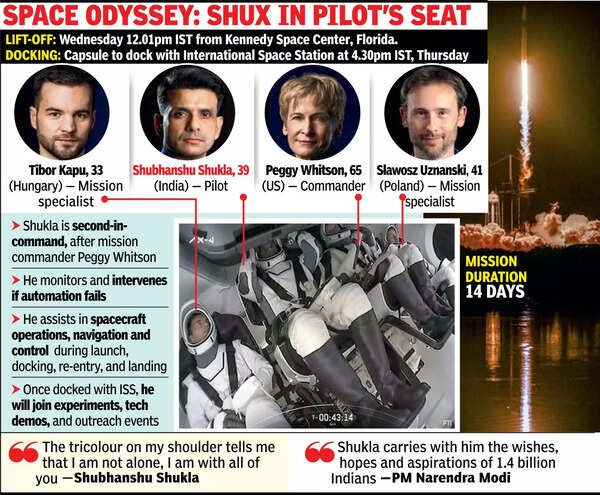
- 30 Jun 2025
In News:
India marked a historic moment in space exploration as Group Captain Shubhanshu Shukla became the first Indian to reach the International Space Station (ISS), 41 years after Rakesh Sharma’s 1984 mission.
Organizations Involved:
- Axiom Space – Mission organizer
- NASA – ISS host and operations support
- SpaceX – Provided Falcon 9 launch vehicle and Dragon capsule
Launch Details:
- Launch Date: June 25, 2025
- Launch Site: Launch Complex 39A, Kennedy Space Center, Florida
- Mission Duration: ~14 days aboard the ISS
Mission Objectives:
1. Scientific Research in Microgravity:
- Over 60 research experiments conducted across:
- Life sciences
- Material sciences
- Human physiology
- Earth observation
2. International Space Cooperation:
- Promotes global collaboration in low-Earth orbit science.
- Supports capacity-building for emerging space nations, including India, Poland, and Hungary.
3. National Space Program Development:
- Enables participating nations to strengthen human spaceflight capabilities.
- Acts as a stepping stone for India’s Gaganyaan and future space station plans.
Significance for India:
- Revival of Human Spaceflight:
- Marks India’s return to human space missions after four decades.
- Reinforces India's presence in international human space exploration.
- Boost to Gaganyaan Mission:
- Offers valuable operational experience and technical collaboration.
- Supports India’s vision to launch Gaganyaan, its first indigenous human spaceflight mission.
- Long-Term Space Ambitions:
- Aids India’s goal to establish its own space station by 2035.
- Positions India as a partner in space science diplomacy and global research.
- Scientific Prestige:India contributes to key microgravity experiments, enhancing its global research footprint in space.
Revised Green India Mission (GIM)
- 22 Jun 2025
In News:
Recently, the Ministry of Environment, Forest and Climate Change released the revised roadmap for the National Mission for a Green India (GIM). The updated strategy focuses on restoring degraded ecosystems, enhancing forest cover, and addressing climate impacts, especially in vulnerable landscapes like the Aravallis, Western Ghats, Himalayas, and mangroves.
About Green India Mission (GIM)
- Launched in: 2014
- Under: National Action Plan on Climate Change (NAPCC)
- Nodal Ministry: Ministry of Environment, Forest and Climate Change (MoEFCC)
- Core Objectives:
- Increase forest/tree cover by 5 million hectares.
- Improve the quality of forest cover on another 5 million hectares.
- Restore degraded ecosystems and enhance biodiversity.
- Improve the livelihoods of forest-dependent communities.
Achievements So Far
- Afforestation Activities: 11.22 million hectares covered (2015–16 to 2020–21) through central and state schemes.
- Funding: ?624.71 crore released (2019–24) to 18 states; ?575.55 crore utilized.
- Target Areas: Selected based on ecological vulnerability, sequestration potential, and restoration needs.
Key Features of the Revised Roadmap
- Landscape-Specific Restoration:
- Prioritizes Aravalli ranges, Western Ghats, Himalayas, and mangrove ecosystems.
- Emphasizes regionally adapted best practices for ecosystem restoration.
- Integration with Aravalli Green Wall Project:
- Aims to combat desertification and sandstorm risks in northern India.
- Initial restoration planned across 8 lakh hectares in 29 districts of 4 states.
- Estimated cost: ?16,053 crore.
- Aims to develop a 5 km buffer zone covering 6.45 million hectares around the Aravallis.
- Western Ghats Focus:
- Tackling deforestation, illegal mining, and degradation.
- Measures include afforestation, groundwater recharge, and mining site restoration.
Combating Land Degradation and Climate Change
- Land Degradation (2018–19): Affected 97.85 million hectares (~1/3rd of India’s land), per ISRO data.
- India’s Climate Targets (2030):
- Create an additional carbon sink of 2.5–3 billion tonnes of CO? equivalent via forest/tree cover.
- Restore 26 million hectares of degraded land.
- Carbon Sequestration Potential (FSI Estimates):
- Restoration of open forests can sequester 1.89 billion tonnes of CO? over 15 million hectares.
- With intensified afforestation and aligned schemes, forest cover could reach 24.7 million hectares—achieving a carbon sink of 3.39 billion tonnes CO? equivalent by 2030.
Significance of the Revised Mission
- Aligns with India’s NDCs under the Paris Agreement.
- Supports goals under UNCCD and UNFCCC.
- Helps mitigate climate change impacts by creating natural buffers and carbon sinks.
- Promotes ecological sustainability, biodiversity conservation, and community livelihood enhancement.
IndiaAI Mission
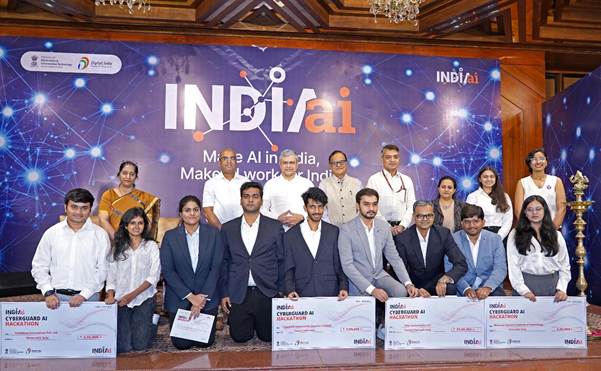
- 02 Jun 2025
In News:
India has taken a major step toward self-reliance in Artificial Intelligence with the expansion of its national AI compute infrastructure and the selection of three new startups to build indigenous foundation models under the IndiaAI Mission.
Key Highlights
- Compute Infrastructure Boost:India’s total GPU capacity has now surpassed 34,000 units, up from the initial 10,000-target. A fresh addition of 15,916 GPUs to the existing 18,417 empanelled GPUs brings the total to 34,333 GPUs, now available through the IndiaAI Compute Portal (operational since March 2025).
- Subsidised Access:These GPUs are made available at a subsidised rate of ?67/hour, well below the global average of ?115/hour. This has been made possible through private sector empanelment instead of government-built data centres. Service providers receive up to 40% capital subsidy, enabling rapid infrastructure rollout.
- Empanelled Providers:Seven private companies were empanelled for compute provisioning:
- Cyfuture India Pvt. Ltd.
- Ishan Infotech Ltd.
- Locuz Enterprise Solutions Ltd.
- Netmagic IT Services Pvt. Ltd.
- Sify Digital Services Ltd.
- Vensysco Technologies Ltd.
- Yotta Data Services Pvt. Ltd.
Foundation Model Development
Under the IndiaAI Foundation Model initiative, three new startups have joined Sarvam AI (selected earlier in April 2025) to build India-specific Large Language Models (LLMs):
- Soket AI: Will develop a 120-billion parameter open-source model focused on Indian languages and use cases in defence, healthcare, and education.
- Gnani AI: Building a 14-billion parameter Voice AI model for real-time, multilingual speech recognition and reasoning.
- Gan AI: Developing a 70-billion parameter multilingual TTS (text-to-speech) model aiming for "superhuman" capabilities surpassing global benchmarks.
- Sarvam AI: Previously selected to create a 120-billion parameter Sovereign AI model, following the release of Sarvam-1 (2B parameters) and Sarvam-M (24B parameters).
These foundation models will be trained on Indian datasets and tailored for governance, public service delivery, and regional language support.
AI Kosh& Innovation Initiatives
- AI Kosh: A public dataset platform with 367 datasets uploaded, enabling research and model training using India-relevant data.
- IndiaAI I4C CyberGuard Hackathon: In collaboration with the Ministry of Home Affairs, AI models were developed for identifying cybercrime patterns from complex inputs like handwritten FIRs and audio calls on the National Cyber Crime Reporting Portal.
- Startup Innovation & Skill Development: Funding support, AI labs in Tier-II cities, and talent development programs are part of a broader push to promote innovation and reverse brain drain.
About IndiaAI Mission
- Launched by: Ministry of Electronics & Information Technology (MeitY)
- Cabinet Approval: March 2024 with a budget of over ?10,000 crore
- Objectives:
- Develop indigenous AI capabilities and infrastructure
- Democratize AI access for governance, startups, and citizens
- Promote ethical and safe AI use
- Position India among the global AI leaders
ESA Biomass Satellite Mission
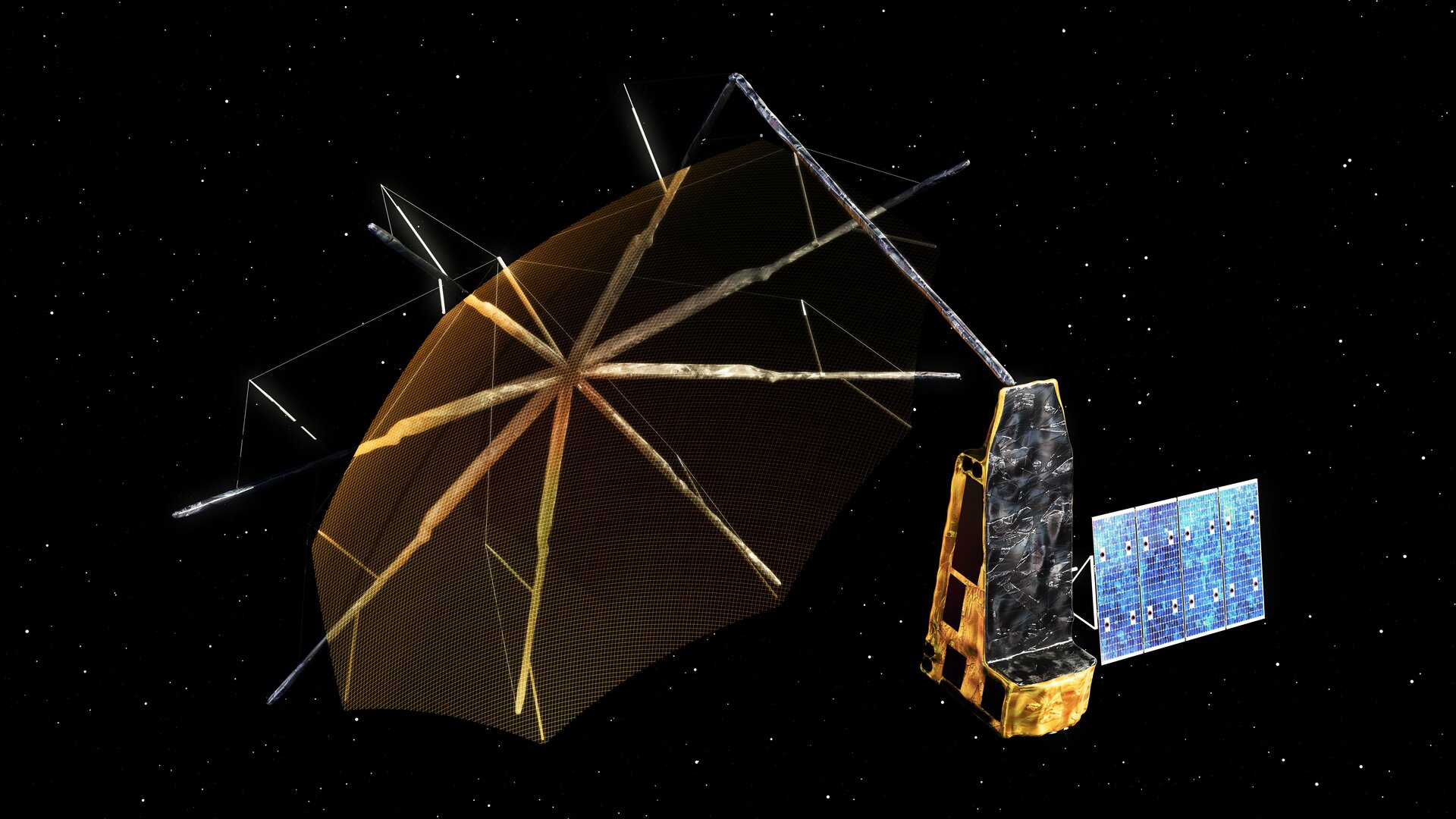
- 09 Apr 2025
In News:
The Biomass Mission is a new Earth observation mission by the European Space Agency (ESA) aimed at enhancing our understanding of the global carbon cycle through accurate forest biomass measurements.
Launch Details:
- Rocket: Vega-C
- Launch Site: Europe’s Spaceport, French Guiana
- Orbit: Sun-Synchronous Orbit (SSO) at an altitude of ~666 km
- Scheduled Launch Date: 29 April 2025 (subject to final checks)
Key Features:
- First satellite to use P-band radar (long-wavelength synthetic aperture radar).
- Capable of penetrating dense forest canopies to scan tree trunks, branches, and stems — where most of a tree’s carbon is stored.
- Will generate 3D maps of the world’s tropical forests.
Mission Objectives:
- Measure above-ground forest biomass and forest height.
- Create five global biomass maps over its five-year mission.
- Monitor changes in forests to assess their role in carbon sequestration and climate regulation.
Scientific Importance:
- Forests absorb ~8 billion tonnes of CO? annually and are often referred to as "Earth’s green lungs."
- By analyzing forest carbon storage and changes, the mission will contribute significantly to:
- Monitoring climate change
- Supporting carbon accounting
- Improving air quality assessments
Phases of the Mission:
- Initial Phase: Produces detailed 3D forest maps globally.
- Second Phase: Generates global estimates of forest height and biomass.
Relevance to Climate Action:
- Helps in quantifying carbon uptake and release.
- Supports global climate models and carbon budgeting.
- Aids in policy-making for sustainable forest management.
Gyan Bharatam Mission

- 19 May 2025
In News:
Prime Minister Narendra Modi will launch the revamped National Manuscripts Mission, which was announced in the Union Budget earlier this year, on June 9.
Key Highlights:
- Implementing Body: Ministry of Culture, Government of India
- Earlier Version: National Manuscripts Mission (est. 2003), under Indira Gandhi National Centre for the Arts (IGNCA)
- Objective:To survey, document, conserve, and digitize over one crore (10 million) Indian manuscripts located in academic institutions, libraries, museums, and private collections.
Key Features
- Massive Coverage: Targets over 1 crore manuscripts, making it India’s largest manuscript preservation project.
- Digital Repository: Creation of a National Digital Repository of Indian Knowledge Systems to ensure accessibility for researchers and the public. Includes AI-powered tools for metadata tagging, translation, and archiving.
- Modern Techniques: Uses advanced scientific conservation methods, including AI and 3D imaging.
- Collaborative Model: Engages academic institutions, libraries, museums, private collectors, and international bodies.
- Budgetary Support: Budget raised from ?3.5 crore to ?60 crore, with a total outlay of ?482.85 crore for 2024–31.
Background and Need
- The earlier NMM (2003) made limited progress. Out of 52 lakh manuscripts surveyed, only 3 lakh titles were digitized, and only 70,000 are currently viewable due to lack of access policy.
- 80% of manuscripts in India are privately owned, underscoring the need for public-private collaboration.
- Over 9 crore folios have been conserved (preventive and curative) in the last two decades.
What is a Manuscript?
A manuscript is a handwritten document (on paper, palm leaf, birch bark, etc.), at least 75 years old, and of historical, scientific, or artistic significance.
Example: The Bakhshali Manuscript (3rd–4th century BCE) is a key Indian text on mathematics, featuring the earliest known use of the symbol for zero.
GRAIL Mission

- 19 May 2025
In News:
The Moon, Earth's only natural satellite, exhibits a striking hemispheric contrast. The nearside, visible from Earth, is dominated by dark, flat basaltic plains (mare), while the farside is rugged, heavily cratered, and lacks these features. This asymmetry has long puzzled scientists.
Recent findings from NASA's GRAIL (Gravity Recovery and Interior Laboratory) mission, launched in 2011, have provided critical insights into this phenomenon.
GRAIL Mission: An Overview
- Objective: To map the Moon’s gravitational field in unprecedented detail.
- Spacecraft: Two identical probes named Ebb and Flow.
- Method: By measuring the tiny variations in the distance between the probes as they orbited the Moon, scientists could infer differences in crust thickness, interior composition, and subsurface structures.
Key discoveries:
- The Moon’s crust is more porous and thinner than previously thought.
- Detection of long, linear features called dikes, indicating early lunar expansion.
Reasons for Lunar Asymmetry
- Tidal Deformation and Gravitational Asymmetry
- The nearside flexes more than the farside during the Moon’s elliptical orbit, a result of tidal deformation caused by Earth’s gravity.
- The increased internal heat and flexibility on the nearside suggest it is warmer and more geologically active at depth.
- Volcanic Activity and Heat Distribution
- The nearside experienced intense volcanic activity billions of years ago, forming the large mare regions.
- This activity led to the concentration of radioactive, heat-producing elements (like thorium and titanium) in the nearside mantle.
- The nearside mantle is 100–200°C hotter than the farside, establishing a long-term thermal imbalance.
- Crustal Thickness and Surface Composition
- The nearside crust is significantly thinner, allowing magma to reach the surface more easily, contributing to extensive lava flows.
- The thicker farside crust restricted such activity, preserving its rugged, cratered appearance.
Implications for Space Science and Earth
- The findings aid in developing precise lunar navigation and positioning systems, essential for future human missions.
- The methodology can be applied to other celestial bodies like Enceladus (Saturn) and Ganymede (Jupiter), both candidates in the search for life.
- Understanding the Moon's structure enhances our grasp of Earth-Moon gravitational dynamics, which affect tides and planetary stability.
Mission Sankalp
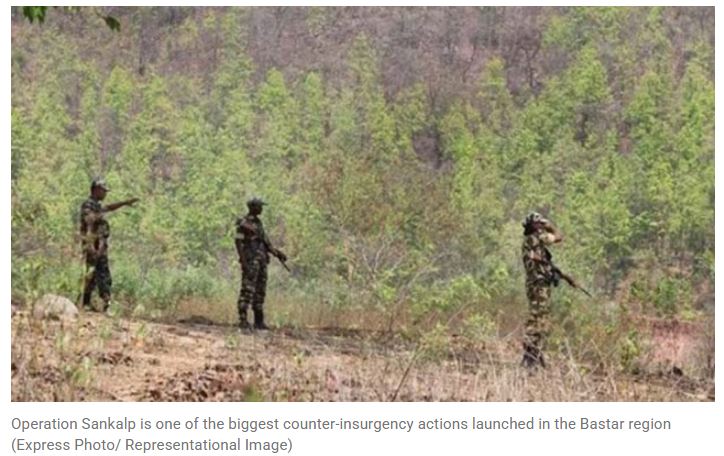
- 10 May 2025
In News:
Mission Sankalp is a large-scale counter-insurgency operation launched jointly by security forces of Chhattisgarh Police, Telangana Police, CRPF, and the elite CoBRA unit. The operation targets the dense forested Karregutta hills along the Chhattisgarh–Telangana border, focusing on dismantling Maoist strongholds and disrupting their operational capabilities.
Key Objectives and Area of Operation
- Primary Aim: Neutralize senior Maoist leaders, especially targeting Battalion 1 of the People’s Liberation Guerrilla Army (PLGA), the armed wing of the CPI-Maoist.
- Geographical Focus: Forested, hilly terrain covering parts of Bijapur district (Chhattisgarh) and Mulugu district (Telangana).
- Goals: Destroy Maoist hideouts, bunkers, arms caches, and logistics networks to cripple the insurgency infrastructure.
Forces Involved and Operational Scale
- Personnel: Over 28,000 personnel including District Reserve Guard (DRG), Bastar Fighters, Special Task Force (STF), CRPF, CoBRA, and support from the Indian Air Force.
- Tactics: Precision strikes guided by aerial surveillance and intelligence inputs in challenging forest terrain.
- Scope: The operation spans approximately 800 square kilometres across the inter-state border area.
Achievements and Impact
- Casualties and Encounters: Since its launch on April 21, around 35 encounters have taken place. At least 26 Maoists, including several senior cadres and three women cadres with bounties of ?8 lakh each, have been killed. Approximately 168 Maoists have been eliminated across Chhattisgarh in 2025, with 151 in the Bastar region.
- Seizures: Security forces have recovered over 2 tonnes of explosives, 400+ improvised explosive devices (IEDs), around 40 firearms, and more than 6 tonnes of ration, medicines, and daily essentials. Hundreds of Maoist hideouts and bunkers have been destroyed.
- Casualties Among Security Forces: Six personnel, including a CoBRA officer, were injured in IED blasts but are now stable.
- Strategic Outcome: The operation has dealt a severe blow to the Maoist command structure, disrupted logistics, and restored state authority in previously inaccessible tribal areas.
Strategic Importance
- Inter-State Cooperation: Mission Sankalp marks one of the largest coordinated anti-Naxal operations in recent years, reflecting enhanced synergy between central and state security forces.
- National Security: It aligns with the Centre’s zero-tolerance policy towards Left Wing Extremism, aiming to weaken the Maoists’ influence and support the restoration of governance and development in affected tribal regions.
- Long-Term Goals: By neutralizing the insurgency's core military units, the operation seeks to create conditions for improved infrastructure, welfare delivery, and civilian confidence in law enforcement.
National Technical Textiles Mission

- 31 Mar 2025
In News:
India’s textile sector plays a vital role in the country’s economy, contributing nearly 2% to GDP and ranking as the world’s 6th largest textile exporter with a 3.9% share of global textile exports. The sector is projected to grow to USD 350 billion by 2030, generating around 3.5 crore jobs. Alongside traditional textiles, technical textiles—specialized fabrics designed for specific industrial and functional uses—are emerging as a major growth driver.
What are Technical Textiles?
Technical textiles are fabrics engineered for performance rather than aesthetics. They serve diverse sectors such as agriculture, healthcare, construction, automotive, and safety by providing solutions like protective gear, medical textiles, geotextiles, and industrial fabrics. The industry segments technical textiles into 12 categories based on application.
National Technical Textiles Mission (NTTM)
To capitalize on this potential, the Ministry of Textiles launched the National Technical Textiles Mission (NTTM) in 2020, with an outlay of ?1,480 crore running through 2025-26. The mission aims to position India as a global leader in technical textiles by focusing on innovation, research, market expansion, export promotion, and skill development.
Four Pillars of NTTM:
- Research, Innovation, and Development: Funding and supporting R&D projects to develop new materials and processes.
- Promotion and Market Development: Facilitating wider adoption of technical textiles domestically and internationally.
- Export Promotion: Establishing dedicated export councils to enhance global market access.
- Education, Training, and Skill Development: Training 50,000 individuals, from students to professionals, through specialized courses and industry internships.
Since its inception, NTTM has approved 168 research projects worth ?509 crore and allocated ?517 crore towards mission activities. So far, ?393.39 crore has been utilized for research, market promotion, export, and skill training.
Key Initiatives under NTTM
- GIST 2.0 (Grant for Internship Support in Technical Textiles): Bridges academia and industry by providing hands-on learning and internships, fostering innovation and supporting the Make in India initiative.
- GREAT Scheme (Grant for Research & Entrepreneurship across Aspiring Innovators in Technical Textiles): Funds startups and educational institutions to commercialize innovative technical textile products. For example, 8 startups received ?50 lakh each to develop medical, industrial, and protective textiles. IIT Indore and NIT Patna were awarded ?6.5 crore to launch specialized courses in geotextiles and sports textiles.
- Skill Development: Courses developed by premier textile research associations like SITRA, NITRA, and SASMIRA train workers in sectors such as medical, protective, mobile, and agricultural textiles.
- Technotex 2024: A platform showcasing cutting-edge projects under the NTTM Innovation Zone, featuring 71 innovations to attract global investments.
Impact and Success Stories
India is witnessing rapid innovation in technical textiles. For instance, Eicher Goodearth’s “Mahina” is India’s first bonded leak-proof period underwear, providing 12-hour protection using natural materials and reusable up to 100 washes.
Several states are prioritizing technical textiles growth through policy support. Tamil Nadu’s budget highlights include establishing the PM MITRA Park in Virudhunagar and a textile park in Salem, along with increased subsidies for machinery modernization in spinning units—from 2% to 6%—to lower costs and boost competitiveness.
Kerala Establish Senior Citizens Commission

- 23 Mar 2025
In News:
In a landmark move, Kerala has become the first state in India to pass legislation creating a Senior Citizens Commission, with the passing of the Kerala State Senior Citizens Commission Bill, 2025.
Background: Rising Elderly Population in Kerala
- Kerala is witnessing rapid population ageing, outpacing national trends.
- Elderly (60+) as % of total population:
- 1961: 5.1% (Kerala) vs. 5.6% (India)
- 2001: 10.5% (Kerala) vs. 7.5% (India)
- 2015: 13.1% (Kerala) vs. 8.3% (India)
- Current elderly population: Approximately 4.8 million, expected to rise to 8.4 million by 2036.
- Key issues: neglect, abuse, financial insecurity, and loneliness.
Senior Citizens Commission: Key Highlights
- Statutory body under the Kerala State Senior Citizens Commission Act, 2025.
- Objective: Protection, welfare, rehabilitation, and empowerment of senior citizens.
- Will act as an independent authority with powers similar to a civil court.
Structure:
- Chairperson (status of Govt. Secretary) and three members (all senior citizens).
- Composition includes at least one woman and one member from SC/ST communities.
- Term: 3 years.
- Experts may be invited as special invitees (no voting rights).
Core Functions and Responsibilities:
- Policy Advisory:
- Recommends policies for elderly welfare.
- Aligns with national goals, such as the Maintenance and Welfare of Parents and Senior Citizens Act, 2007.
- Legal and Grievance Redressal:
- Investigates complaints of abuse, neglect, or exploitation.
- Can summon individuals, record evidence, and recommend protective actions.
- Healthcare and Mental Well-being:
- Promotes geriatric care, regular health check-ups, and mental health support.
- Addresses loneliness, depression, and social isolation.
- Social Inclusion and Engagement:
- Encourages intergenerational bonding and community programs.
- Utilizes skills and experience of the elderly for social and community development.
- Financial Security Support:Aids in accessing pensions, social security schemes, and financial counselling.
- Monitoring and Reporting:
- Submits periodic reports to the state government.
- Makes recommendations for policy improvement and conflict resolution.
- Custodial Oversight:Addresses issues related to elderly detainees in prisons and lock-ups.
Budget and Administrative Details:
- Annual expenditure: Approx. ?1 crore (salaries, allowances, operations).
- One-time setup cost: ?9 lakh from the Consolidated Fund of the State of Kerala.
Significance:
- First such commission in India, fulfilling recommendations under the National Policy on Senior Citizens, 2011.
- Aims to serve as a model for other Indian states facing similar demographic shifts.
- Reinforces Kerala’s leadership in elderly welfare policies.
Revised Rashtriya Gokul Mission (RGM)
- 21 Mar 2025
In News:
The Union Cabinet has approved the implementation of the Revised Rashtriya Gokul Mission (RGM) for 2024–25 and 2025–26, with an enhanced financial outlay.
Background:
- Launched: December 2014
- Type: Central Sector Scheme under the Development Programmes
- Nodal Ministry: Ministry of Fisheries, Animal Husbandry & Dairying
- Primary Aim: Conservation and development of indigenous bovine breeds and enhancement of milk productivity through advanced breeding technologies.
Revised Allocation:
- Total Outlay: ?3,400 crore
- Additional Allocation: ?1,000 crore for 2024–25 and 2025–26
- Finance Commission Cycle: 15th (2021–22 to 2025–26)
Objectives of Revised RGM:
- Enhance productivity of bovines and sustainable milk production.
- Promote scientific breeding using high genetic merit (HGM) bulls.
- Expand Artificial Insemination (AI) coverage across India.
- Conserve indigenous cattle and buffalo breeds through genomic and reproductive technologies.
Key New Initiatives (2024–26):
- Heifer Rearing Centres:
- One-time assistance of 35% of capital cost.
- To establish 30 housing facilities with a total of 15,000 heifers.
- Interest Subvention Scheme:
- 3% interest subsidy on loans for purchasing HGM IVF heifers.
- Applicable to farmers borrowing from milk unions, banks, or financial institutions.
Major Achievements (as of 2023–24):
- Milk Production Increase: 63.55% rise in 10 years.
- Per Capita Milk Availability:
- 2013–14: 307 grams/day
- 2023–24: 471 grams/day
- Productivity Increase: 26.34% over the last decade.
Nationwide Artificial Insemination Programme (NAIP):
- Coverage: 605 districts with <50% baseline AI coverage.
- Animals Covered: 8.39 crore
- Farmers Benefitted: 5.21 crore
- Service: Free AI at farmer's doorstep.
Technological Interventions:
- IVF Labs: 22 labs set up across States and Universities.
- HGM Calves Born: 2,541 through IVF.
- Indigenous Technologies Developed:
- Gau Chip &Mahish Chip: Genomic chips by NDDB & ICAR-NBAGR.
- Gau Sort: Indian-developed sex-sorted semen technology by NDDB.
Significance:
- Strengthens Atmanirbhar Bharat in livestock genomics and AI.
- Enhances livelihoods of 8.5 crore dairy farmers.
- Preserves India’s indigenous bovine biodiversity.
- Promotes scientific cattle rearing and milk self-sufficiency.
Mission Amrit Sarovar
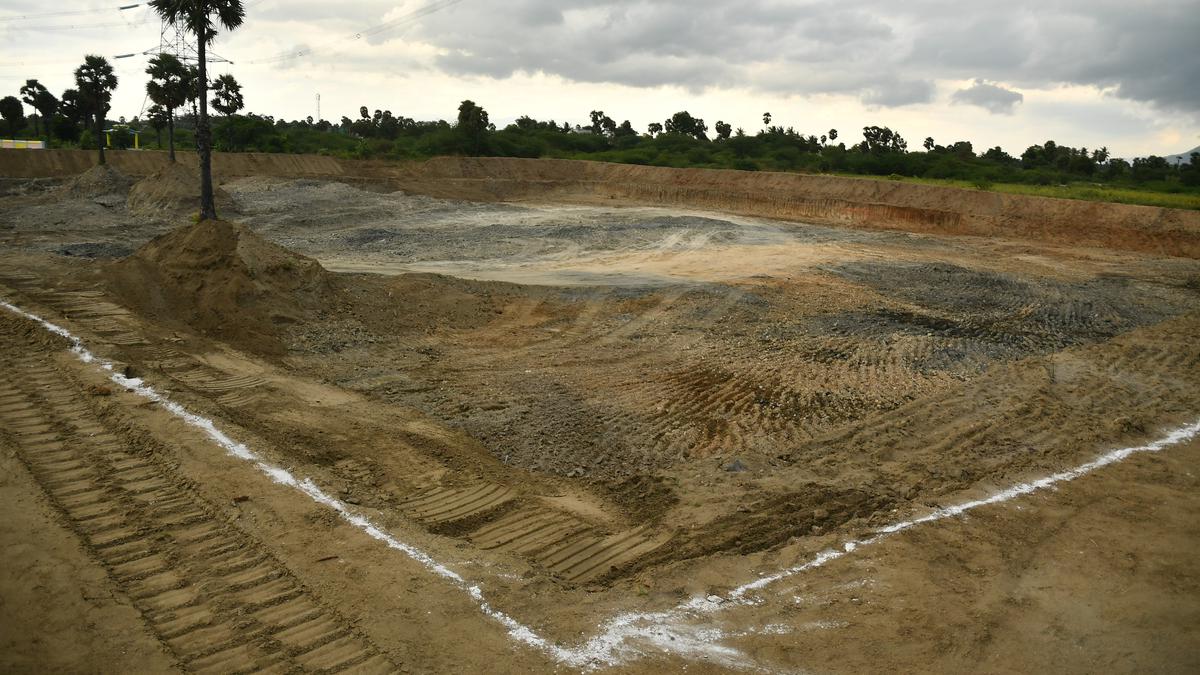
- 14 Mar 2025
In News:
Launched in April 2022, Mission Amrit Sarovar is a Government of India initiative aimed at addressing water scarcity, particularly in rural areas, by constructing or rejuvenating 75 water bodies in every district, targeting over 50,000 ponds nationwide. As of October 2024, over 68,000 ponds have been completed.
Key Features:
- Minimum Pond Size: 1 acre with a water holding capacity of ~10,000 cubic metres.
- Community Participation: Sites approved by special Gram Sabha, with a Panchayat Pratinidhi supervising development.
- Multi-Ministerial Collaboration: Involves the Ministries of Rural Development, Jal Shakti, Panchayati Raj, Culture, Environment, and others.
- Technical Support: BISAG-N (Bhaskaracharya National Institute for Space Applications and Geo-informatics) is the technical partner, offering a dedicated portal and mobile app for tracking progress.
- Whole-of-Government Approach: Ensures coordinated implementation across ministries.
Railways' Involvement (2025 Initiative):
- Under Phase II of the mission, Indian Railways is tasked with:
- Desilting existing water bodies or constructing new ponds near railway tracks.
- Using excavated soil for railway embankments, where suitable.
- Coordinating with district authorities and the Ministry of Rural Development to identify appropriate sites.
- The goal is to complete a significant number of ponds by August 15, 2025.
- Promotes climate resilience, ecological balance, and sustainable water resource management.
PUNCH Mission
- 09 Mar 2025
In News:
NASA is set to launch the PUNCH (Polarimeter to Unify the Corona and Heliosphere) mission on March 6, 2025, from Vandenberg Space Force Base, California. It will be the third major solar mission launched globally in the past 18 months.
About the PUNCH Mission:
Aspect Details
Agency NASA (National Aeronautics and Space Administration)
Launch Date March 6, 2025
Mission Objective Study the Sun’s corona (outer atmosphere) and how solar wind evolves as it moves
into the heliosphere
Unique Features - First dedicated mission to image the transition from the corona to the heliosphere
- Will use four identical suitcase-sized satellites for continuous imaging of the inner corona
Importance - Improves understanding of space weather
- Helps predict solar storms, safeguarding satellites, astronauts, and
communication networks
What is the Solar Cycle?
- The solar cycle is an ~11-year periodic change in the Sun’s magnetic field, where the north and south poles flip positions.
- This cycle governs the level of solar activity, including sunspots, solar flares, and coronal mass ejections (CMEs).
- Solar Maximum: Period of peak activity with increased sunspots and solar eruptions.
- Solar Minimum: Period of least activity.
The current solar cycle began gaining momentum around May 2022, and solar activity remained above normal through 2024. The solar maximum is anticipated around 2025, offering an ideal window for solar observation.
Why the Surge in Solar Missions?
- Solar maximum periods offer the best conditions to observe high-energy events like flares and CMEs.
- Scientists aim to maximize data collection before the next solar minimum (next solar max expected ~2035–36).
- Monitoring solar activity is crucial because solar storms can disrupt satellite communications, navigation systems, and power grids on Earth.
Recent Major Solar Missions (2023–25):
Mission Agency Launch Date Purpose
Aditya-L1 ISRO (India) Sept 2, 2023 India’s first solar observatory; studies solar flares, solar winds, and magnetic fields
Proba-3 ESA (Europe) Dec 4, 2024 Dual-satellite mission to study solar corona and space weather
PUNCH NASA (USA) Mar 6, 2025 First mission to study continuous evolution from solar corona to heliosphere
Blue Ghost Mission

- 05 Mar 2025
In News:
Firefly Aerospace’s Blue Ghost lunar lander successfully achieved a stable, upright landing on the Moon's Mare Crisium region on March 2, 2025, marking it as the second private spacecraft to land on the Moon and the first to do so upright. This mission is a part of NASA’s Commercial Lunar Payload Services (CLPS) initiative.
Key Details of the Blue Ghost Mission
- Developer: Firefly Aerospace, Texas-based private aerospace firm
- Launch Date: January 15, 2025
- Launch Vehicle: SpaceX Falcon 9
- Landing Site: Near Mons Latreille, a volcanic formation in the Mare Crisium
- Descent & Duration: 16-day lunar orbit followed by powered descent; operates for one lunar day (14 Earth days)
Mission Objectives
- Scientific Research:
- Study heat flow from the Moon’s interior to understand its thermal history
- Analyze plume-surface interactions to refine lunar landing techniques
- Collect data on magnetic and electric fields to infer geological evolution
- Conduct X-ray imaging of Earth's magnetosphere
- Examine lunar dust dynamics, particularly its levitation due to solar radiation
- Investigate soil adhesion for improved lunar hardware design
- Technology Demonstration:
- Test radiation-hardened systems
- Evaluate the use of Global Navigation Satellite System (GNSS) signals on the Moon
Payload and Instruments
- Number of Payloads: 10 NASA scientific payloads
- Notable Tools:
- Vacuum device for soil collection
- Subsurface drill measuring temperature up to 3 meters deep
Significant Observations
- Eclipse Imaging: Scheduled to capture a total lunar eclipse (March 14)
- Lunar Sunset: Will image lunar horizon glow during sunset (March 16), a phenomenon first noted during Apollo 17
- Firsts Achieved:
- First commercial lander to land upright on the Moon
- First of three major private lunar missions scheduled in 2025
Relevance for India and the World
- Demonstrates the viability of public-private partnerships in deep space missions
- Advances NASA’s Artemis program by developing cost-effective lunar logistics
- Paves the way for international lunar commerce and exploration
NASA’s Lunar Trailblazer and IM-2 Mission

- 03 Mar 2025
In News:
NASA launched the Lunar Trailblazer spacecraft aboard a SpaceX Falcon 9 rocket from Kennedy Space Center to enhance understanding of water distribution on the Moon—crucial for long-term human exploration under the Artemis program.
Lunar Trailblazer Mission:
- Type: Small satellite (orbiter); part of NASA’s Small, Innovative Missions for Planetary Exploration (SIMPLEX) program.
- Developed by: NASA in collaboration with Lockheed Martin.
- Objective:
- Map and analyze the presence of water, particularly in permanently shadowed craters near the Moon’s poles.
- Study the lunar water cycle and evaluate water as a potential resource for future missions.
- Instruments:
- Lunar Thermal Mapper (LTM): Measures surface temperature to track water movement.
- High-resolution Volatiles and Minerals Moon Mapper (HVM3): Detects spectral signatures of water molecules.
- Timeline:
- Fuel-efficient trajectory to reach the Moon in 4 months.
- Mission duration: At least 2 years of mapping operations.
- Significance:
- Supports Artemis program objectives—long-term human presence on the Moon.
- Identifies potential water sources for drinking, fuel, and oxygen.
- Enhances understanding of water on airless planetary bodies and may offer clues to Earth’s water origins.
IM-2 Mission and Intuitive Machines’ Lunar Lander:
- Landing Site:Mons Mouton, near the Moon’s south pole (landing scheduled for March 6).
- Under: NASA’s Commercial Lunar Payload Services (CLPS) and Artemis campaign.
Key Scientific Objectives and Instruments:
- Polar Resources Ice Mining Experiment-1 (PRIME-1):
- TRIDENT Drill: Extracts lunar soil samples.
- MSolo Spectrometer: Detects volatile compounds in samples (e.g., water vapor).
- Laser Retroreflector Array (LRA): Provides a precise, passive reference point for future orbiters using laser ranging.
- Micro Nova Hopper (“Grace”):
- Autonomous drone developed under NASA’s Tipping Point initiative.
- Capable of hopping into shadowed craters to collect and transmit data.
- Nokia Lunar Surface Communications System (LSCS):
- 4G/LTE system for high-definition video, telemetry, and command messaging.
- Supports inter-device connectivity between the lander, rover, and hopper.
Strategic Importance:
- Pioneers in-situ resource utilization (ISRU) demonstrations.
- Tests surface communications and autonomous mobility systems.
- Lays groundwork for sustainable human presence and commercial space infrastructure.
Aditya-L1 Mission
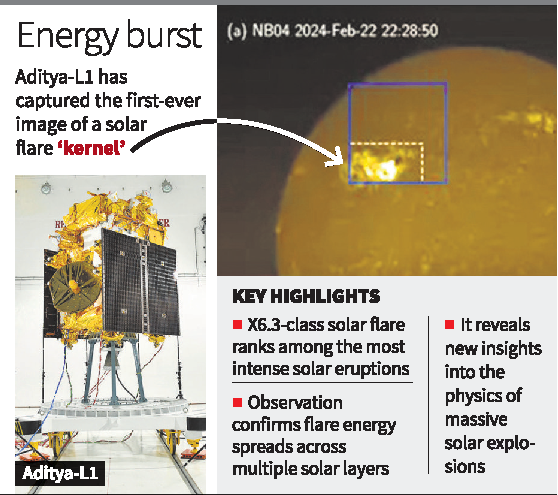
- 02 Mar 2025
In News:
ISRO’s Aditya-L1 mission has made a significant breakthrough by capturing the first-ever image of a solar flare 'kernel' using the Solar Ultraviolet Imaging Telescope (SUIT) payload.
Key Highlights:
- Captured Phenomenon:
- An X6.3-class solar flare (among the most intense categories) was observed on February 22, 2024.
- SUIT detected localized brightening in the Near Ultraviolet (NUV) wavelength (200–400 nm), a range never before observed in such detail.
- Scientific Significance:
- Observation occurred in the lower solar atmosphere (photosphere and chromosphere).
- Confirmed energy transmission from the flare through multiple solar atmospheric layers.
- Demonstrated a direct link between flare energy deposition and plasma temperature increase in the solar corona.
- Validated longstanding theories while offering new insights into solar flare physics.
About Aditya-L1 Mission:
- Launch Date: September 2, 2023
- Orbit: Placed in a halo orbit around the first Earth-Sun Lagrange Point (L1) on January 6, 2024.
- Objective: Study solar activities and their impact on space weather.
- Significance: India’s first space-based solar observatory, and ISRO’s second astronomy mission after AstroSat (2015).
Solar Flares – Quick Facts:
- Solar flares are massive explosions on the Sun's surface that release energy, light, and high-speed charged particles.
- Often associated with Coronal Mass Ejections (CMEs) that can affect Earth's magnetosphere and satellites.
- Classification: A, B, C, M, and X — with X-class being the most powerful, increasing tenfold in energy per class.
Remission and the Supreme Court’s 2025 Ruling

- 24 Feb 2025
In News:
Recently, the Supreme Court directed states with remission policies to consider the premature release of prisoners even if they don’t apply for remission beforehand.
What is Remission?
- Remission refers to the reduction of a convict's sentence by the government before the term is completed. It does not nullify the conviction, but shortens imprisonment.
- It is governed by:
- Section 473 of BNSS, 2023 (earlier Section 432 of CrPC, 1973) – empowers state governments to grant remission.
- Articles 72 and 161 of the Constitution – empower the President and Governors respectively to remit sentences.
- Section 475 of BNSS (earlier Section 433A CrPC) – restricts remission for life convicts found guilty of offences punishable by death until 14 years of imprisonment are completed.
Background: SC’s Suo Motu Intervention
- The Supreme Court in 2025, in the suomotu case In Re: Policy Strategy for Grant of Bail, altered the interpretation of remission rules to address prison overcrowding.
- The Court held that states must consider remission for eligible convicts even without a formal application, if a remission policy exists.
Shift in Judicial Interpretation
- Earlier rulings (Sangeet v. Haryana and Mohinder Singh v. Punjab, 2013) required a convict's application for remission.
- The 2025 judgment acknowledges that many state prison manuals already mandate prison authorities to initiate remission review.
- It recognized that failing to consider remission proactively could lead to arbitrary discrimination, violating Article 14 (Right to Equality).
Key Guidelines Issued by the Supreme Court
- Suo motu Remission:States must automatically assess eligibility under remission policies—no application needed.
- Mandatory Remission Policy:States without existing remission policies must formulate a comprehensive one within two months.
- Conditions for Remission Must Be:
- Reasonable, non-oppressive, and clearly defined.
- Based on factors like motive, criminal background, and public safety.
- Aimed at rehabilitation and prevention of recurrence.
- Safeguards Against Arbitrary Cancellation:
- Minor breaches shouldn’t lead to automatic cancellation.
- Notice and hearing must be given before cancellation.
- Transparency:
- Legal aid bodies must monitor remission cases.
- States to maintain real-time digital data on remission.
Significance and Implications
- The ruling helps streamline remission processes and could contribute to decongesting Indian prisons, which are heavily overcrowded.
- It ensures uniformity and fairness in the exercise of executive powers related to sentencing.
- Reinforces constitutional values of equality and procedural fairness for prisoners.
Note:
- Remission ≠ Pardon: Remission reduces sentence, doesn’t erase conviction.
- Articles 72 & 161: Concern constitutional remission powers (President & Governor).
- BNSS Sections 473 & 475: Replace CrPC Sections 432 & 433A, relevant for state remission powers.
- Suo motu action by SC: Taken to address systemic prison overcrowding.
- Article 14 invoked: To ensure equitable treatment of eligible prisoners.
Chief Election Commissioner Appointment
- 22 Feb 2025
In News:
Gyanesh Kumar has been appointed as the new Chief Election Commissioner (CEC) of India, becoming the first to be selected under the new legislative framework — The Chief Election Commissioner and Other Election Commissioners Act, 2023. He succeeds Rajiv Kumar. Simultaneously, Dr. Vivek Joshi, former Haryana Chief Secretary, was appointed as an Election Commissioner.
Constitutional Basis
- Article 324 of the Indian Constitution provides for the Election Commission of India (ECI), consisting of the CEC and such other Election Commissioners as the President may determine.
- It vests the superintendence, direction, and control of elections in the ECI for conducting elections to Parliament, State Legislatures, and for the offices of the President and Vice President.
Earlier Appointment Process
- Governed by convention and the Election Commission (Conditions of Service of Election Commissioners and Transaction of Business) Act, 1991.
- The CEC was appointed by the President on the advice of the Prime Minister, with no formal selection mechanism defined in law.
New Appointment Process (2023 Act)
The Chief Election Commissioner and Other Election Commissioners Act, 2023 introduced a formal selection process:
- Selection Committee:
- Prime Minister (Chairperson)
- A Union Cabinet Minister (nominated by the PM)
- Leader of Opposition (or largest opposition party leader) in the Lok Sabha
- Search Committee:
- Headed by the Cabinet Secretary, this body shortlists eligible candidates.
- Eligibility Criteria:
- Must be a person of integrity
- Must have experience in election management
- Must be or have been a Secretary (or equivalent) to the Government of India
Service Conditions (As per 2023 Act)
- Salary & Status: Equivalent to that of a Cabinet Secretary (earlier: Supreme Court judge).
- Tenure: 6 years or till the age of 65, whichever is earlier.
- Reappointment: Not permitted.
Removal Process
- CEC: Can only be removed in the same manner and on the same grounds as a Supreme Court judge (i.e., by Parliament through impeachment).
- Election Commissioners: Can only be removed on the recommendation of the CEC.
Functions & Powers of CEC
- Conducts elections to the Lok Sabha, Rajya Sabha, State Assemblies, and offices of the President & Vice President.
- Regulates political parties and election funding.
- Enforces the Model Code of Conduct (MCC).
- Maintains and updates electoral rolls and supervises the voter registration process.
- Has the authority to disqualify candidates and cancel elections in case of serious irregularities.
- Advises the President and Governors on election-related matters.
Judicial Context & Controversy
- In the Anoop Baranwal vs Union of India case, the Supreme Court ruled that the independence of the ECI must be preserved and directed that a law be enacted to define the appointment process.
- Until such legislation was passed, the Court had prescribed a selection committee comprising:
- The Prime Minister
- The Leader of Opposition in the Lok Sabha
- The Chief Justice of India (CJI)
- However, the 2023 Act excluded the CJI, replacing the judiciary with another executive appointee, raising concerns about executive dominance.
- Multiple petitions challenging the constitutionality of the Act are pending before the Supreme Court.
Restructured National Bamboo Mission (NBM)

- 12 Feb 2025
In News:
The National Bamboo Mission (NBM) was initially launched in 2006 under the Ministry of Agriculture & Farmers Welfare to promote bamboo-based development. Between 2014–2016, it was subsumed under the Mission for Integrated Development of Horticulture (MIDH).
In 2018-19, it was restructured under the National Mission for Sustainable Agriculture (NMSA) as a Centrally Sponsored Scheme (CSS) to revamp bamboo cultivation, processing, and value chain integration.
A key reform was the 2017 amendment to the Indian Forest Act, 1927, which removed bamboo grown outside forests from the definition of “tree.” This de-regulated its felling and transit, boosting private bamboo farming and easing trade.
Objectives
- Increase the availability of quality planting materials and expand area under bamboo cultivation, especially in non-forest land.
- Promote post-harvest management, primary treatment, seasoning, and preservation technologies.
- Develop market infrastructure, incubation centers, and tools & equipment for value addition.
- Encourage value-added product development, skill development, and entrepreneurship.
- Reduce import dependency on bamboo and bamboo-based products.
Funding Pattern
- General States: 60% Central and 40% State funding.
- Northeastern & Hilly States: 90% Central and 10% State.
- Union Territories, BTSGs & National Level Agencies: 100% Central funding.
Implementation Framework
- Implemented through the State Nodal Departments, nominated by respective State/UT governments.
- Notable example: Bareilly Bamboo Cluster operational in Shahjahanpur district, Uttar Pradesh, since 2019-20, with activities like nursery establishment, bamboo plantation, skill development, and bamboo product demonstration.
Bamboo – Ecological & Economic Significance
- Botanical Classification: Grass (Family: Poaceae, Subfamily: Bambusoideae), ~115 genera and ~1,400 species globally.
- Native to tropical, subtropical, and mild temperate zones, with highest concentration in East and Southeast Asia.
Properties & Applications:
- Carbon Sequestration: Produces 35% more oxygen than comparable vegetation; acts as a natural carbon sink.
- Climate Adaptability: Thrives in degraded lands; prevents soil erosion; vital for land restoration.
- Alternative Energy Source: Among the fastest-growing plants (up to 90 cm/day); can substitute fossil fuels.
- Food & Medicine: Bamboo shoots are consumed in Northeast India; roots and parts used in traditional medicine.
- Livelihood Support: Flexible harvest cycles provide year-round income for farmers.
Bamboo Production Status in India
- 18,000+ inventoried grids reported bamboo presence between 2016–17 to 2019–20.
- Estimated total bamboo culms: 53,336 million.
- 35.19% increase in bamboo culms from ISFR 2019 to ISFR 2021 (an increase of 13,882 million culms).
National Commission for SafaiKaramcharis (NCSK)
- 11 Feb 2025
In News:
The Union Cabinet, on February 7, 2025, approved the extension of the tenure of the National Commission for SafaiKaramcharis (NCSK) for three years beyond March 31, 2025, i.e., up to March 31, 2028.
The move is aimed at sustaining efforts to eradicate manual scavenging, improve the welfare of sanitation workers, and achieve zero fatalities in hazardous cleaning activities. The extension involves a financial outlay of ?50.91 crore.
Background and Legal Status
- Constitution: NCSK was established in August 1994 under the National Commission for SafaiKaramcharis Act, 1993 as a statutory body.
- Post-2004 Status: The statutory Act lapsed in 2004, and since then, NCSK has functioned as a non-statutory body under the Ministry of Social Justice and Empowerment, with periodic extensions.
- Current Demand: The current Chairperson, M. Venkatesan, has welcomed the extension but stressed the need for granting statutory status to the commission to enhance its authority and effectiveness.
Mandate and Functions
As per Government Notification and MS Act, 2013:
- Policy Recommendations:Recommend specific programmes of action to eliminate inequalities in the status, facilities, and opportunities of SafaiKaramcharis.
- Monitoring and Evaluation:
- Study and evaluate implementation of welfare schemes and programmes.
- Monitor working conditions, including health, safety, and wages of sanitation workers.
- Grievance Redressal:
- Investigate specific complaints and take suomotu cognizance of non-implementation of policies or schemes related to SafaiKaramcharis.
- Report to governments on issues affecting SafaiKaramcharis.
- Role under the Prohibition of Employment as Manual Scavengers and their Rehabilitation Act, 2013:
- Monitor the implementation of the Act.
- Enquire into violations, and convey findings with recommendations to authorities.
- Advise the Centre and States on effective implementation.
- Take suomotu notice of non-compliance.
- Data Collection:
- NCSK remains the only national body tracking sewer and septic tank deaths.
Significance of the Extension
- Aims to improve working conditions in the sanitation sector.
- Supports the socio-economic upliftment of one of the most marginalized communities in India.
- Enhances implementation of manual scavenging prohibition laws.
- Facilitates rehabilitation and dignity for sanitation workers.
- Aligns with the broader vision of inclusive development and social justice.
Gyan Bharatam Mission
- 06 Feb 2025
In News:
The Union Budget 2025–26 announced the launch of the Gyan Bharatam Mission, a significant cultural initiative aimed at the survey, documentation, digitization, and conservation of over one crore manuscripts across India.
Key Details:
- A special national mission focusing on India’s manuscript heritage preserved in:
- Academic institutions
- Libraries
- Museums
- Private collections
- Objective:
To document and conserve more than one crore manuscripts, centralize them into a national digital repository, and make them accessible to researchers, students, and institutions globally. - Significance:
- Facilitates knowledge-sharing through digitization.
- Promotes India's traditional knowledge systems.
- Enhances academic and historical research in the Indian knowledge domain.
What is a Manuscript?
- A manuscript is a handwritten composition on materials such as:
- Palm leaf, paper, cloth, bark, or metal.
- Must be at least 75 years old and possess scientific, historical, or aesthetic value.
- Printed texts and lithographs are not considered manuscripts.
- Manuscripts may exist in hundreds of languages and scripts, e.g.:
- Sanskrit manuscripts written in Devanagari, Grantha, Oriya, and other scripts.
- Unlike epigraphs or official records (firmans, revenue documents), manuscripts hold knowledge content, not just historical data.
National Manuscripts Mission (NMM)
- Launched in 2003 under the Ministry of Culture, operated through the Indira Gandhi National Centre for the Arts (IGNCA).
- Mandate: Identify, preserve, and make accessible India's manuscript wealth.
- Revival: The 2025–26 Budget seeks to rejuvenate NMM to implement the Gyan Bharatam Mission effectively.
Budgetary Provisions
- NMM allocation increased from ?3.5 crore to ?60 crore for FY 2025–26.
- Culture Ministry overall allocation:
- ?3,360.96 crore, up from a revised estimate of ?3,260.93 crore.
- Other Key Allocations:
- Archaeological Survey of India (ASI): ?1,278.49 crore
- National Libraries and Archives: ?156.55 crore
- Museums (National Museum, NGMA): ?126.63 crore
- Note: Allocations for centenary events, cultural collaborations have been reduced.
National Geospatial Mission
- 03 Feb 2025
In News:
Finance Minister Nirmala Sitharaman announced the launch of a National Geospatial Mission in the Budget 2025-26.
Key Highlights:
Objective: To modernize land records, enhance urban planning, and create a robust geospatial infrastructure to support India’s broader development goals, including sustainable growth, efficient governance, and improved public service delivery.
Key Features of the Mission:
- Modernization of Land Records:
- Digitization and updation of land records using geospatial technology.
- Aim to reduce land disputes and promote efficient and transparent land use.
- Urban and Infrastructure Planning:
- Provides high-resolution geospatial data for informed urban planning.
- Supports better design and execution of infrastructure through integration with the PM Gati Shakti framework.
- Development of National Geospatial Data Infrastructure (NGDI):
- Integrates geospatial data from multiple departments and ministries.
- Enables seamless access and interoperability for users across sectors.
- Open Geospatial Data Policy:
- Encourages private sector participation by allowing access to non-sensitive, high-resolution data.
- Reduces reliance on foreign geospatial data providers.
- Sectoral Impact:
- Agriculture: Precision farming, resource mapping, and yield optimization.
- Disaster Management: Enhances early warning systems and response planning.
- Environmental Monitoring: Facilitates conservation, deforestation tracking, and ecosystem health analysis.
- Transportation: Improves logistics, routing, and infrastructure placement.
- Climate Monitoring: Aids in data-driven climate action and adaptation planning.
- Technological Integration:
- Utilizes emerging technologies such as AI, drones, and quantum computing for spatial data collection and analysis.
- Promotes research and development in geospatial science to drive innovation.
- Support to Private Sector:
- Anticipated growth in demand for services from geospatial startups, drone companies, and mapping enterprises.
- Strengthens India’s indigenous geospatial capability aligned with the booming global geospatial market (projected to reach $1,064 million by 2030).
Significance and Alignment with National Goals:
- Enhances transparency and efficiency in land governance.
- Contributes to sustainable urban development.
- Aligns with Digital India and Atmanirbhar Bharat by reducing data dependency on foreign sources.
- Acts as a foundational enabler for India’s development agenda, particularly in areas of resource management, climate resilience, and national security.
National Manufacturing Mission
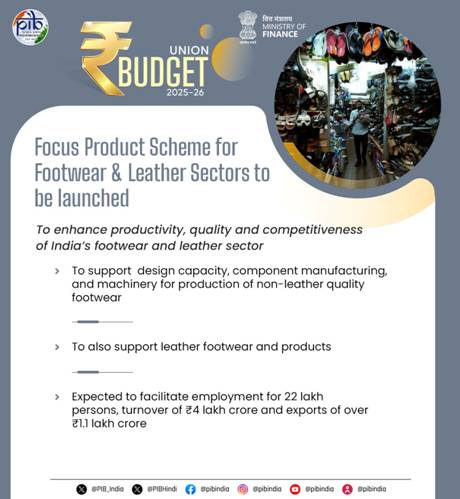
- 02 Feb 2025
In News:
- The National Manufacturing Mission (NMM) has been launched to accelerate India’s transition into a global manufacturing hub.
- This mission is a key component of the Make in India initiative and aims to raise the manufacturing sector’s contribution to GDP from 17% to 25% by 2025.
Scope & Coverage
- Targets small, medium, and large industries across sectors.
- Provides a comprehensive support framework involving policy guidance, execution roadmaps, and governance structures for central ministries and state governments.
Five Core Focus Areas:
- Ease and cost of doing business
- Skilling for future-ready jobs
- Support for a dynamic MSME sector
- Technology availability and innovation
- Enhancement of product quality
Clean Tech Manufacturing Focus
In line with India's sustainable development goals, the mission will promote domestic value addition and build robust manufacturing ecosystems for:
- Solar PV cells
- Electric vehicle (EV) batteries
- Motors and controllers
- Electrolyzers
- Wind turbines
- Very high-voltage transmission equipment
- Grid-scale batteries
Strategic Objective: Reduce reliance on Chinese imports and integrate India into global clean tech supply chains.
MSME Sector Support
- Credit Guarantee Cover for MSMEs increased from ?5 crore to ?10 crore.
- Revised Classification Criteria: Investment and turnover limits enhanced by 2.5x and 2x, respectively.
- Aims to empower MSMEs with greater access to credit and growth incentives.
Sector-Specific Measures
1. Footwear & Leather Sector
- A new Focus Product Scheme will support:
- Design capacity
- Component manufacturing
- Machinery for non-leather and leather footwear
- Expected Impact:
- Employment for 22 lakh persons
- Turnover of ?4 lakh crore
- Exports over ?1.1 lakh crore
2. Toy Manufacturing – National Action Plan for Toys
- Objective: Make India a global hub for innovative and sustainable toys.
- Strategy:
- Develop manufacturing clusters
- Promote skilling and innovation
- Strengthen the ‘Made in India’ brand in the global toy market
3. Food Processing – ‘Purvodaya’ Focus
- Establishment of a National Institute of Food Technology, Entrepreneurship and Management in Bihar.
- Purpose:
- Boost food processing in Eastern India
- Enhance value addition for farmers
- Create employment and entrepreneurial opportunities
National Critical Mineral Mission
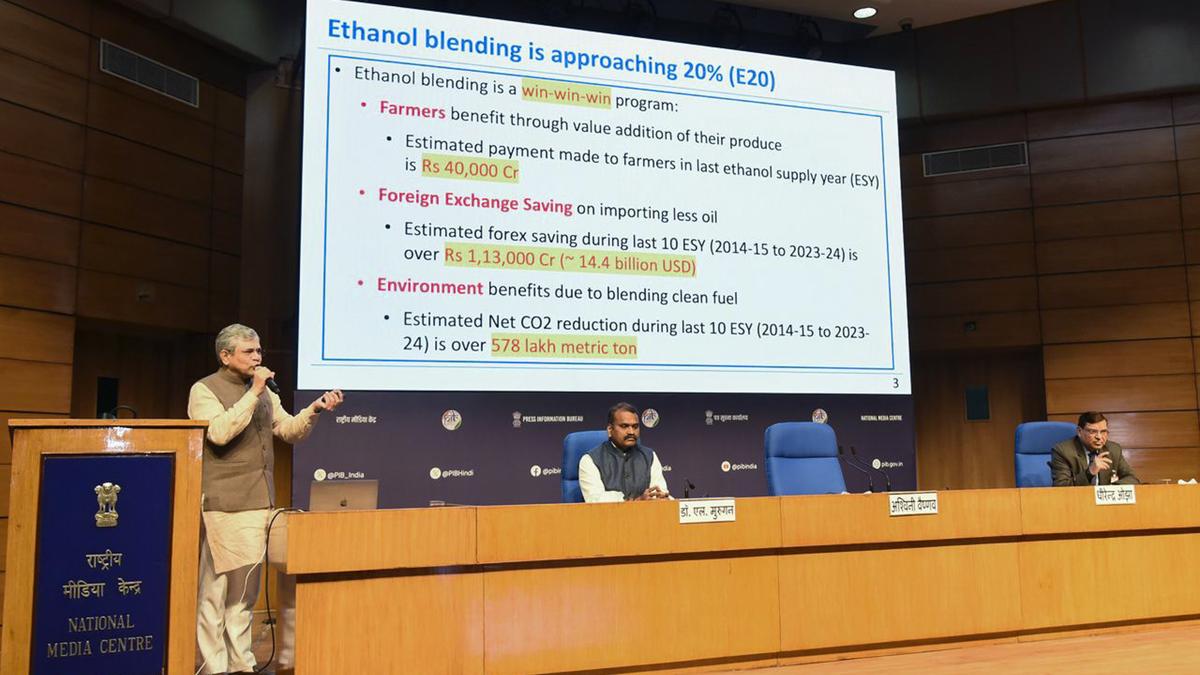
- 31 Jan 2025
In News:
The Union Cabinet has launched the National Critical Mineral Mission (NCMM) with a total outlay of ?34,300 crore over seven years, including ?16,300 crore government expenditure and ?18,000 crore investment from PSUs and private players.
Key Highlights:
Objectives of NCMM
- Reduce import dependence on critical minerals vital for clean energy, electronics, defence, and high-tech industries.
- Promote domestic exploration, mining, processing, and recycling of critical minerals.
- Facilitate overseas acquisition of mineral assets.
- Strengthen India’s mineral security and ensure self-reliance (Atmanirbhar Bharat).
Key Features
- Value Chain Coverage: Exploration → Mining → Beneficiation → Processing → Recycling of end-of-life products.
- Fast-track regulatory approvals for mining projects.
- Creation of mineral processing parks and promotion of sustainable extraction technologies.
- Establishing a strategic stockpile of critical minerals.
- Development of a Centre of Excellence on Critical Minerals to support R&D.
- Expansion of PRISM initiative to fund startups and MSMEs in the sector.
- Whole-of-government approach: Collaboration among ministries, PSUs, private sector, and research institutions.
Why Critical Minerals Matter
Critical minerals are essential inputs for:
- Green energy: EV batteries, solar panels, wind turbines.
- Electronics: Semiconductors, fiber optics.
- Defence: Aircraft, missile guidance systems.
- Medical technologies: MRI machines, pacemakers.
India’s clean energy transition and manufacturing competitiveness hinge on a steady and secure supply of these minerals.
India’s Import Dependence
India is dependent on imports, especially from China, for several critical minerals like lithium, cobalt, titanium, graphite, and tellurium. This exposes India to supply chain vulnerabilities amid shifting global geopolitics.
List of 30 Critical Minerals for India
Includes: Lithium, Cobalt, Nickel, Graphite, Rare Earth Elements (REEs), Beryllium, Titanium, Tungsten, Gallium, Indium, Selenium, Cadmium, etc.
Strategic and Legislative Initiatives
- Amendment to MMDR Act (1957) in 2023: Enabled auction of 24 critical mineral blocks.
- OAMDR Act (2002) amendment: Introduced transparent offshore mineral exploration.
- Duty waivers in Union Budget 2024–25: Customs duties removed on key critical minerals to promote domestic processing.
- Exploration by GSI: 368 projects in last 3 years; 227 more planned for FY 2025–26.
- KABIL: Acquired 15,703 ha in Argentina for lithium mining.
Global Context
- Global powers (US, EU, Japan) are pursuing strategies for critical mineral security.
- China dominates refining of lithium, cobalt, and REEs.
- India is part of the Minerals Security Partnership (MSP) to diversify global mineral supply chains.
Significance for India
- Ensures long-term resource security for clean technologies.
- Supports EV and renewable energy manufacturing goals.
- Enhances strategic autonomy in defence and electronics.
- Makes India an attractive hub for foreign investment in green technologies.
Challenges and the Way Forward
- Geopolitical risks in overseas asset acquisition.
- Environmental impacts of large-scale mining.
- Need for strong R&D ecosystem, financial incentives, and public-private partnerships.
- Sustainable mining practices and global collaboration are essential for long-term success.
Aroma Mission
- 30 Jan 2025
In News:
The Aroma Mission, also known as the Lavender Revolution, is emerging as a transformative initiative for regions like Jammu & Kashmir and the North East, prioritised under Prime Minister Narendra Modi’s vision for inclusive development.
It aims to harness the untapped potential of India’s biodiverse regions through the scientific cultivation of aromatic crops and production of essential oils, with the dual goals of economic upliftment and sustainable innovation.
Key Objectives and Features:
- Launched By: Ministry of Science & Technology
- Nodal Agency: CSIR-Central Institute of Medicinal and Aromatic Plants (CIMAP), Lucknow
- Started In: Jammu & Kashmir, now extended to the North East
- Known As: Lavender Revolution
- Purpose: Boost India’s aroma industry by promoting the cultivation of high-value aromatic crops and increasing the production of essential oils.
Major Focus Areas:
- Crops Cultivated: Lavender, lemongrass, citronella, palmarosa, vetiver, patchouli, rose, peppermint, and chamomile
- Target Sectors: Cosmetics, aromatherapy, pharmaceuticals, and food flavouring industries
Impact and Achievements:
- Over 5,000 hectares brought under aromatic crop cultivation in the North East.
- Establishment of 39 essential oil distillation units.
- Distribution of 1 lakh agarwood saplings planned to boost the region's share in global aromatic plant trade.
- Expected annual essential oil production: 2,000 tonnes, valued at over ?300 crores.
- Estimated to generate 60 lakh man-days of rural employment.
- Projected increase in farmers’ income by ?60,000–?70,000 per hectare annually.
Institutional Support: IICON – Incubation and Innovation Complex
- Location: CSIR-North East Institute of Science and Technology (CSIR-NEIST), Jorhat, Assam
- Launched By: Dr. Jitendra Singh (Minister of Science & Technology)
- Purpose: Provide technical assistance, advanced facilities, and business incubation support for startups, MSMEs, and SHGs.
- Facilities: Access to 27 cutting-edge technologies for up to two years to help refine production and marketing strategies.
Integrated Development Approach:
The Aroma Mission exemplifies the “whole-of-government” approach, aligning with various flagship programmes such as:
- Start-Up India
- MSME Development
- Doubling Farmers’ Income
- Women Empowerment (e.g., through Rural Women Technology Parks)
- Act East Policy (enhancing North East's connectivity and trade potential)
Over 25 startups and self-help groups have already been empowered through access to facilities and entrepreneurial training at IICON, contributing to local innovation ecosystems.
Strategic Significance:
- Regional Empowerment: Converts underutilised natural resources into economic assets, especially in remote regions like J&K and the North East.
- Environmental Sustainability: Encourages eco-friendly cultivation and reduces pressure on traditional farming.
- Economic Diversification: Supports India’s transition to a bio-economy, with aromatic plant industries offering export potential and rural employment.
- Vision India@2047: Positions the North East as a hub for biotechnology, essential oils, innovation, and trade, aligning with long-term national growth goals.
India’s Deep Ocean Mission
- 24 Jan 2025
In News:
India is set to deploy its first human-operated deep-sea submersible as part of the Deep Ocean Mission (DOM), marking a significant leap in the country’s marine research and technological capability.
Key Highlights:
- Submersible Deployment (2024):
- India will operate its first human submersible at a depth of 500 meters this year.
- The goal is to reach a depth of 6,000 meters by 2025.
- The project aligns with the timelines of Gaganyaan, India’s first human space mission—showcasing parallel progress in marine and space technology.
- Indigenous Technology:
- The mission is powered by 100% indigenous technology, underlining India’s growing self-reliance in high-end scientific infrastructure.
About Deep Ocean Mission (DOM):
- Launched: 2021
- Nodal Ministry: Ministry of Earth Sciences (MoES)
- Budget: ?4,077 crore over five years
- Framework: One of nine key missions under PM-STIAC (Prime Minister’s Science, Technology, and Innovation Advisory Council)
Core Objectives:
- Develop deep-sea technologies, including a manned submersible for ocean exploration.
- Explore and harness ocean resources such as: Polymetallic nodules, Hydrothermal sulphides & Rare earth metals
- Study marine biodiversity for sustainable fisheries and conservation.
- Support India’s blue economy through innovation and research.
- Monitor ocean climate change and develop advisory services.
- Promote marine biology and biotechnology via dedicated marine research stations.
- Harvest renewable energy and freshwater from ocean sources.
Key Components and Technologies:
Matsya6000 Submersible:
- India’s first manned deep-sea vehicle.
- Designed to reach 6,000 meters depth.
- Crew Capacity: Three members
- Developed by: National Institute of Ocean Technology (NIOT), Chennai
- Structure: Made of titanium alloy, withstanding 6,000 bar pressure
- Equipped with: Scientific sensors, tools for sampling, viewports, propellers, and acoustic communication systems.
- Combines capabilities of ROVs (Remotely Operated Vehicles) and AUVs (Autonomous Underwater Vehicles).
Varaha Deep-Ocean Mining System:
- Developed by NIOT
- Successfully conducted trials at 5,270 meters
- Key to India’s future in deep-sea mining of critical minerals
Strategic Importance:
- Scientific Advancement: DOM places India among a select group of nations (USA, Russia, China, France, Japan) with human-crewed deep-ocean exploration capacity.
- Economic Potential: Unlocks access to underwater mineral wealth, critical for electronics, defense, and energy sectors.
- Environmental Sustainability: Supports marine biodiversity conservation and promotes sustainable use of oceanic resources.
- Geopolitical Significance: Enhances India’s presence and influence in the Indian Ocean Region (IOR).
- Technological Leap: Strengthens India’s capabilities in underwater robotics, materials engineering, and ocean sciences.
Mission SCOT

- 23 Jan 2025
In News:
The Prime Minister of India praised Indian space startup Digantara for the successful launch of Mission SCOT (Space Camera for Object Tracking) — the world’s first commercial SSA satellite, launched via SpaceX’s Transporter-12 rideshare mission.
What is Mission SCOT?
Feature Description
Developer Digantara (Indian space startup), supported by Aditya Birla Ventures & SIDBI
Launched on SpaceX Transporter-12 mission (rideshare platform)
Type First commercial Space Situational Awareness (SSA) satellite
Orbit Sun-Synchronous Orbit – ideal for consistent Earth observation
Function Tracks Resident Space Objects (RSOs) as small as 5 cm in Low Earth Orbit (LEO)
What is Space Situational Awareness (SSA)?
- SSA involves the detection, tracking, cataloging, and prediction of natural and man-made objects in Earth's orbit (like satellites, debris, etc.).
- Ensures safe and sustainable operations by minimizing collision risks.
- Critical due to increasing congestion in LEO, especially with rising numbers of small satellites and mega-constellations.
Key Features of Mission SCOT
Feature Advantage
High Revisit Rate More frequent observations of objects in orbit
Precision Tracking Can track debris ≥ 5 cm in size
All-Weather Monitoring Overcomes limitations of ground-based systems like cloud cover, FoV
Space-based System Unhindered by geography, providing continuous global surveillance
Supports SSA Infrastructure Aids in collision avoidance, space traffic management, and defence preparedness
???????? India’s SSA Ecosystem
Initiative Role
ISRO’s IS4OM Provides Indian Space Situational Assessment Report (ISSAR); enables safe & sustainable space operations
NETRA Project Network for Space Objects Tracking & Analysis – aims to build a dedicated SST (Space Surveillance & Tracking) network using radars & optical telescopes
Multi-Object Tracking Radar Operated at Sriharikota – limited range, being augmented
Collision Avoidance Manoeuvres (CAMs) Regularly performed by ISRO to protect its satellites from debris threats
Global Context: Transporter-12 Rideshare
- A SpaceX program providing low-cost access to space by allowing multiple customers to launch small payloads on a single rocket.
- Enhances global commercial space activity, democratizes space access.
Significance for India
Strategic:
- Strengthens national space defence by enabling indigenous tracking of space threats.
- Reduces reliance on foreign SSA data (e.g., NORAD/US Space Command).
Technological:
- Demonstrates India’s capability in space-based surveillance tech.
- Positions India as a global contributor in the emerging SSA domain.
Economic:
- Boosts private sector space innovation aligned with India’s NewSpace Policy.
- Attracts venture capital and international collaboration.
Eighth Pay Commission
- 17 Jan 2025
In News:
The Union government has approved the constitution of the Eighth Pay Commission, benefiting 50 lakh central government employees and 65 lakh pensioners, including serving and retired defence personnel. The decision, taken ahead of the Delhi Assembly elections, aims to address long-standing demands from trade unions and employee organizations.
Key Features of the 8th Pay Commission
- Early Constitution: Although the Seventh Pay Commission's term ends in 2026, the early establishment of the Eighth Pay Commission ensures timely recommendations and implementation.
- Composition: The commission will have a Chairperson and two members, typically led by a retired Supreme Court judge.
- Terms of Reference (ToR):
- Revision of Pay: Recommend updates to salary structures and allowances.
- Addressing Pay Disparities: Resolve wage differences across various cadres.
- Market Parity: Align pay structures with industry standards.
- Pension and Retirement Benefits: Improve pension schemes and adjust them for inflation.
- Economic Impact Analysis: Assess how salary hikes contribute to economic growth.
- Stakeholder Consultations: Engage with governments and other stakeholders before finalizing recommendations.
Economic Implications of the 8th Pay Commission
- Employee Well-being: Higher wages will enhance the quality of life for government employees.
- Boost to Consumption: Increased salaries are expected to stimulate demand and support economic expansion.
- Ripple Effect on PSUs & States: Many public sector undertakings and state governments follow the central pay commission’s recommendations, potentially leading to wider economic benefits.
- Fiscal Considerations: The implementation of the Seventh Pay Commission in 2016-17 led to an expenditure increase of ?1 lakh crore. A similar rise in 2026-27 could impact fiscal space for capital expenditures.
Challenges and Concerns
- Implementation Delays: Past commissions have taken two years to submit recommendations, which could push implementation beyond 2027.
- Living Wage & Pension Issues: Existing formulas for minimum wage and pension calculations may need revision to reflect rising healthcare, education, and digital access costs.
- Financial Burden on the Exchequer: A significant increase in revenue expenditure could limit the government’s ability to invest in infrastructure and development projects.
Commissioning of Three Indian Naval Combatants

- 15 Jan 2025
In News:
In a major boost to India’s maritime defense capabilities, three frontline warships—INS Nilgiri, INS Surat, and INS Vaghsheer—were commissioned into the Indian Navy at the Naval Dockyard in Mumbai. This marks a significant step in India's self-reliance in defense manufacturing and strengthens its presence in the Indian Ocean Region (IOR).
INS Nilgiri: Project 17A Stealth Frigate
INS Nilgiri is the lead ship of the Project 17A class, an advanced version of the Shivalik-class frigates, designed for multi-mission capabilities in blue-water operations.
Key Features:
- Advanced stealth technology reducing radar and infrared signatures.
- Equipped with supersonic surface-to-surface missiles, Medium Range Surface-to-Air Missiles (MRSAM), upgraded 76 mm guns, and rapid-fire close-in weapon systems.
- Versatile roles in anti-surface, anti-air, and anti-submarine warfare.
- Constructed using integrated modular design for faster assembly.
- Other ships in this class—Himgiri, Taragiri, Udaygiri, Dunagiri, and Vindhyagiri—are under construction at Mazagon Dock Shipbuilders Limited (MDL) and Garden Reach Shipbuilders and Engineers (GRSE).
INS Surat: Project 15B Stealth Destroyer
INS Surat is the fourth and final guided missile destroyer under Project 15B, following INS Visakhapatnam, INS Mormugao, and INS Imphal. It represents an upgraded version of the Kolkata-class destroyers.
Key Features:
- AI-Enabled Operations: First Indian warship integrated with artificial intelligence solutions for enhanced combat efficiency.
- High-Speed Capability: Can exceed speeds of 30 knots (56 km/h).
- Advanced Armament: Equipped with modern surface-to-air and anti-ship missiles, torpedoes, and sophisticated network-centric warfare sensors.
- Strategic Role: Acts as a high-speed, maneuverable warship with increased strike capability and endurance.
Project 15B was initiated in 2011, with ships named after major Indian cities to symbolize national unity. These destroyers serve as critical assets in naval operations, ensuring dominance in maritime warfare.
INS Vaghsheer: Project 75 Scorpene-Class Submarine
INS Vaghsheer is the sixth and final Kalvari-class submarine built under Project 75, designed for stealth and versatile naval operations.
Key Features:
- Scorpene-Class Design: Developed in collaboration with the French Naval Group.
- Diesel-Electric Propulsion: Silent and highly maneuverable, making it one of the world’s most advanced attack submarines.
- Mission Capabilities: Specializes in anti-surface warfare, anti-submarine warfare, intelligence gathering, and special operations.
- Weapons Systems: Armed with wire-guided torpedoes, anti-ship missiles, and state-of-the-art sonar systems.
The Kalvari-class submarines continue India's legacy of submarine warfare, named after decommissioned Soviet-origin Foxtrot-class submarines post-Independence.
National Mission on Edible Oils - Oil Palm (NMEO-OP)

- 11 Jan 2025
In News:
- Union Minister Shri Shivraj Singh Chouhan urges states to accelerate efforts under the National Mission on Edible Oils - Oil Palm (NMEO-OP) to enhance domestic production of edible oils and reduce reliance on imports.
Key Facts Regarding the NMEO-OP Scheme:
About the Scheme:
- Objective: Enhance domestic production of crude palm oil (CPO) and reduce India's dependence on edible oil imports.
- Centrally Sponsored Scheme: Focuses on expanding oil palm cultivation in India.
Key Targets:
- Area Expansion: Aim to cover an additional 6.5 lakh hectares by 2025-26, reaching a total of 10 lakh hectares.
- Production Increase: CPO production is targeted to rise from 0.27 lakh tonnes (2019-20) to 11.20 lakh tonnes by 2025-26, and further to 28 lakh tonnes by 2029-30.
- Per-Capita Consumption: Maintain a consumption level of 19 kg/person/annum until 2025-26.
Focus Regions:
- Special Focus: North-Eastern States and Andaman & Nicobar Islands for oil palm cultivation and CPO production.
Key Features:
- Viability Price (VP) Mechanism: Aims to protect farmers from market volatility by providing price assurance. Payments are made through Direct Benefit Transfer (DBT).
- Increased Assistance:
- Assistance for planting material increased from Rs 12,000/ha to Rs 29,000/ha.
- Special assistance of Rs 250 per plant for rejuvenating old gardens.
- Regional Support:
- For North-East and Andaman, an additional 2% of the CPO price is borne by the government to ensure fair payments to farmers.
- Special provisions for half-moon terrace cultivation, bio-fencing, and land clearance for integrated farming.
Oil Palm Cultivation:
- Origin: Native to the tropical rainforests of West Africa, oil palm is a new crop in India with high oil-yielding potential.
- Oil Yield: Oil palm produces five times the yield of traditional oilseeds per hectare.
- Types of Oil Produced:
- Palm Oil: Extracted from the mesocarp (fruit's fleshy part), containing 45-55% oil.
- Palm Kernel Oil: Derived from the kernel, used in lauric oils.
- Major States for Cultivation: Andhra Pradesh, Telangana, Kerala (98% of total production).
- Other Key States: Karnataka, Tamil Nadu, Odisha, Gujarat, Mizoram, Arunachal Pradesh, Assam, Manipur, Nagaland.
India's Oil Palm Potential:
- Cultivated Area: India currently has 3.70 lakh hectares under oil palm cultivation.
- Total Potential Area: Around 28 lakh hectares.
- Imports: India is the world's largest palm oil importer, with imports of 9.2 million tonnes in 2023-24, accounting for 60% of total edible oil imports. The country primarily imports from Indonesia, Malaysia, and Thailand.
Smart Cities Mission (SCM)
- 31 Dec 2024
In News:
The introduction of smart classrooms as part of the Smart Cities Mission (SCM) has had a significant impact on education, leading to a 22% increase in enrolment across 19 cities, according to a report from the Indian Institute of Management, Bangalore (IIM-B). The study covers the period from 2015-16 to 2023-24 and highlights several key benefits of this initiative, which aims to improve the overall learning environment in government schools.
Key Findings:
- Increased Enrolment: The introduction of smart classrooms has been linked to a 22% increase in student enrolment across 19 cities, suggesting that the initiative has made education more appealing and accessible.
- Smart Classroom Development: By 2023-24, 71 cities had developed 9,433 smart classrooms in 2,398 government schools. The states with the most smart classrooms are:
- Karnataka (80 classrooms)
- Rajasthan (53 classrooms)
- Tamil Nadu (23 classrooms)
- Delhi (12 classrooms)
- West Bengal has a very limited number, with just two classrooms.
- Improved Learning Experience: Teachers have expressed positive feedback, agreeing that the smart classrooms have improved learning experiences and attendance among students. Additionally, the smart classroom setup has contributed to increased comfort for teachers and higher preference for these modern facilities.
- Teacher Training: Special training provided to teachers has enhanced their comfort with using the smart classroom tools, with senior secondary teachers showing the highest comfort levels.
- Digital Libraries: The study also found that 41 cities have developed Digital Libraries with 7,809 seating capacity, offering essential resources for students. Cities like Raipur (Chhattisgarh) and Tumakuru (Karnataka) have seen positive outcomes from these libraries, particularly in supporting students preparing for competitive exams.
Smart Cities Mission (SCM)
- Launched in June 2015, the Smart Cities Mission aims to promote cities that offer core infrastructure, a decent quality of life, a sustainable environment, and the application of smart solutions. As of November 2024, 91% of the projects under the mission have been completed.
SAAR Platform and Research
- In 2022, the Smart Cities Mission introduced the SAAR (Smart Cities and Academia towards Action and Research) platform to bridge the gap between academia and the government. Under this platform, 50 impact assessment studies have been initiated by 29 premier institutions, including six Indian Institutes of Management (IIMs), eight Indian Institutes of Technology (IITs), and 12 specialized research institutes.
PM- Ayushman Bharat Health Infrastructure Mission (PM-ABHIM) Scheme
- 29 Dec 2024
In News:
- The Delhi High Court has ordered the signing of a Memorandum of Understanding (MoU) between the Union Ministry of Health and Family Welfare and the Delhi Government.
- This MoU will facilitate the implementation of the PM-Ayushman Bharat Health Infrastructure Mission (PM-ABHIM) in Delhi.
About PM-Ayushman Bharat Health Infrastructure Mission (PM-ABHIM):
- Scheme Type: Centrally Sponsored Scheme (CSS) with some Central Sector Components (CS).
- Total Outlay: Rs. 64,180 Crores for the period 2021-22 to 2025-26.
- Objective:
- To strengthen healthcare infrastructure across India, focusing on:
- Building capacities in health systems at primary, secondary, and tertiary levels.
- Preparing health systems to effectively respond to current and future pandemics/disasters.
- Key Focus Areas:
- Filling critical gaps in health infrastructure, surveillance, and health research in both urban and rural areas.
- Improving healthcare delivery across the entire continuum of care.
- Central Sector Components (CS) under the Scheme:
- 12 Central Institutions: To act as training and mentoring sites with 150-bedded Critical Care Hospital Blocks (CCBs).
- Strengthening NCDC: Boosting the National Centre for Disease Control (NCDC) and establishing 5 new regional NCDCs.
- Health Surveillance: Creation of 20 metropolitan health surveillance units and expansion of Integrated Health Information Portal across all States/UTs.
- Public Health Units: Operationalization of 17 new Public Health Units and strengthening 33 existing units at Points of Entry (Airports, Seaports, Land Crossings).
- Emergency Health Infrastructure: Establishment of 15 Health Emergency Operation Centres and 2 mobile hospitals.
- Research and Virology Institutes: Setting up a national institution for One Health, 4 new National Institutes for Virology, and 9 Biosafety Level III laboratories.
- Support for States/UTs under CSS Component:
- Health and Wellness Centres (HWCs):
- 17,788 rural HWCs: To be built in areas with populations of 5000 (plain) or 3000 (difficult terrain like hills, tribals, desert).
- 11,024 urban HWCs: Focus on slum and vulnerable areas with a population of 15,000-20,000.
- Block Public Health Units (BPHUs): Establishment of 3,382 BPHUs at the block level to strengthen healthcare accessibility.
- Integrated Public Health Labs (IPHLs): Setting up 730 IPHLs across districts for better health monitoring.
- Critical Care Hospital Blocks (CCBs): Establishment of 602 CCBs in districts with populations exceeding 5 lakh and referral linkages in other districts.
- Overall Goal: PM-ABHIM aims to significantly enhance healthcare infrastructure in India, making healthcare more accessible and effective, especially in rural and underdeveloped areas.
Private Aviation and Emissions

- 26 Dec 2024
In News:
Private aviation is releasing more than its ‘fair share’ of emissions.
Key Highlights:
- Aviation Sector's Global Emissions:
- The aviation sector contributed 2% of global CO2 emissions in 2022, around 800 Mt CO2 (International Energy Agency).
- If considered as a nation, aviation would rank among the top 10 emitters worldwide.
- Emissions from aviation have grown faster than other sectors like rail, road, or shipping in recent decades.
- Private Aviation and Its Impact:
- Private jets emit 5 to 14 times more CO2 per passenger than commercial flights and 50 times more than trains.
- Emissions from private aviation increased by 46% between 2019 and 2023.
- Each private flight contributes 3.6 tonnes of CO2 on average, intensifying global warming.
- Private aviation is responsible for significant nitrogen oxide (NOx) emissions and the creation of vapor trails, which further amplify environmental damage.
Trends in Private Aviation Growth:
- Global Trends:
- The number of private jets increased from 25,993 in December 2023 to 26,454 in February 2024.
- In the U.S., 69% of private aviation activity is concentrated.
- 8,500 more jets are expected to be delivered in the next 10 years globally.
- Private Aviation in India:
- 112 private planes were registered in India as of March 2024, placing it among the top 20 countries for private aircraft ownership.
- India's private aviation sector is expanding, driven by the growing billionaire and millionaire population.
- Private aircraft ownership in India stands at 1 per 1 lakh population, which is low compared to countries like Malta (46.51 per lakh) and the U.S. (5.45 per lakh).
Emission Reduction Efforts and Solutions:
- Sustainable Aviation Fuels (SAFs):
- SAFs are bio-based or waste-derived fuels that can reduce carbon emissions by up to 80% compared to conventional jet fuels.
- Airlines like SpiceJet (2018) and AirAsia (2023) have tested SAFs, but large-scale adoption is hindered by high costs and limited production.
- India aims to leverage its ethanol production chain, with potential to meet 15-20% of aviation fuel demand by 2050 if only surplus sugar is used.
- Hydrogen and Electric Aviation:
- Hydrogen offers a higher energy density than kerosene and emits only water vapor, making it a clean fuel alternative. However, hydrogen faces challenges with storage, infrastructure, and aircraft redesign.
- Battery-electric propulsion offers zero emissions but is currently limited by battery weight, energy density, and charging infrastructure.
India’s Policy and Initiatives:
- Government Initiatives:
- UDAN Scheme (Ude Desh ka Aam Nagrik) aims to enhance rural connectivity.
- NABH (Nextgen Airports for Bharat Nirman) seeks to increase airport capacity by five times.
- Sustainability Efforts:
- Indian airlines have tested SAFs, such as a 25% jatropha oil blend by SpiceJet in 2018.
- Ethanol for aviation fuel: India plans to use surplus sugar for ethanol, potentially fulfilling 15-20% of aviation fuel needs by 2050.
- Challenges to Decarbonisation:
- SAFs are costly and limited in availability.
- Hydrogen requires extensive infrastructure and aircraft redesign.
- Battery-electric solutions are currently unsuitable for long-haul flights due to energy limitations.
National Human Rights Commission (NHRC)

- 24 Dec 2024
In News
Justice V. Ramasubramanian, a retired Supreme Court judge, has been appointed as the new chairperson of the National Human Rights Commission (NHRC). This decision was made by President Droupadi Murmu, and it comes following the completion of Justice Arun Kumar Mishra's tenure as NHRC chairperson in June 2023. After Justice Mishra's retirement, Vijaya Bharathi Sayani served as the acting chairperson. Alongside Justice Ramasubramanian, Priyank Kanoongo and Dr. Justice Bidyut Ranjan Sarangi (Retd.) have also been appointed as members of the commission.
Justice Ramasubramanian had been appointed a judge of the Supreme Court in September 2019 and retired in June 2023. His appointment to the NHRC is seen as a significant development for human rights advocacy and protection in India.
National Human Rights Commission (NHRC)
Establishment and Legal Framework
- Formation Date: The NHRC was established on October 12, 1993, under the Protection of Human Rights Act (PHRA), 1993.
- Paris Principles: It was created in alignment with the Paris Principles (1991), which were endorsed by the UN General Assembly in 1993, aimed at setting standards for national human rights institutions.
- Statutory Body: NHRC is a statutory body, meaning it is established by law, with a primary function to safeguard human rights in India.
Objectives
The NHRC's primary objective is to promote and protect human rights as defined in Section 2(1)(d) of the PHRA, which include fundamental rights such as:
- Right to Life
- Right to Liberty
- Right to Equality
- Right to Dignity
These rights are guaranteed by the Indian Constitution and are essential to the protection of individuals' freedoms and welfare.
Composition of NHRC
- Chairperson: A former Chief Justice of India or a former Supreme Court judge serves as the chairperson.
- Members:
- One former or sitting Supreme Court judge.
- One former or sitting Chief Justice of a High Court.
- Three members, with at least one woman, who have experience in human rights matters.
- Ex-Officio Members: The chairpersons of various National Commissions (e.g., SC/ST, Women, Minorities) and the Chief Commissioner for Persons with Disabilities are also part of the NHRC.
Functions and Powers
The NHRC has several crucial functions and powers to ensure the protection and promotion of human rights:
- Inquiry into Human Rights Violations: The commission can inquire into violations of human rights by public servants or negligence in protecting rights.
- Recommendations: It can make recommendations on how to protect, promote, and effectively implement human rights within India.
- Review of Laws: NHRC assesses various laws, treaties, and international instruments related to human rights.
- Research and Awareness: It promotes research, publications, and awareness about human rights issues, including educating the public about their rights and safeguards.
- Inspection of Institutions: NHRC has the authority to visit and inspect institutions such as jails, detention centers, and other places of confinement to ensure the humane treatment of individuals.
Space Docking Experiment (SpaDeX) Mission
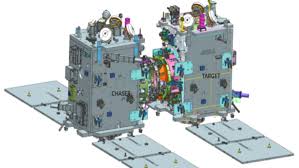
- 24 Dec 2024
In News:
The Indian Space Research Organisation (ISRO) is set to launch its Space Docking Experiment (SpaDeX) mission, a key milestone in India’s space capabilities. The mission will deploy two 220-kg satellites, SDX01 (Chaser) and SDX02 (Target), into a 740 km orbit using the PSLV-C60 rocket. SpaDeX aims to demonstrate the technology for satellite docking, a critical component for future space missions such as lunar exploration and the development of India's own space station, Bharatiya Antariksh Station (BAS).
Key Objectives of SpaDeX Mission:
- Primary Objective: To demonstrate the rendezvous, docking, and undocking of two small spacecraft (SDX01 and SDX02) autonomously.
- Secondary Objectives: Include testing electric power transfer between the docked spacecraft, composite spacecraft control, and post-docking payload operations.
The mission will see the two spacecraft gradually approach each other, performing a series of maneuvers, starting at a 20 km distance and closing to millimeter-scale distances before docking. Once docked, they will execute secondary tasks, such as scientific payload operations, using advanced technologies including high-resolution cameras, multi-spectral payloads, and radiation monitors.
Technological Innovations:
- Docking Mechanism: An indigenous, motor-driven, low-impact, androgynous docking system with capture, extension/retraction, and rigidization mechanisms. Both spacecraft are equipped with identical docking systems to simplify operations.
- Advanced Sensors: The spacecraft will use a Laser Range Finder (LRF), Proximity & Docking Sensors (PDS), and Rendezvous Sensors for precise distance measurement and to guide the docking process.
- Inter-Satellite Communication: The spacecraft will employ autonomous inter-satellite links (ISL) for real-time communication and data sharing.
- RODP Processor: This system, based on GNSS, ensures accurate position and velocity determination for the spacecraft during the docking procedure.
Significance of the SpaDeX Mission:
- Technological Milestone: SpaDeX positions India as the fourth country, after the US, Russia, and China, to develop space docking technology.
- Space Exploration: The successful demonstration will facilitate future space exploration, including Chandrayaan-4 and interplanetary missions.
- Modular Space Infrastructure: Space docking is essential for building multi-modular space stations, which allows the construction of large structures in space and enhances flexibility for future missions.
- Satellite Servicing: Docking enables satellite servicing, including repairs, refueling, and upgrades, which increases the operational lifespan of satellites.
SpaDeX Mission for India’s Space Station:
The SpaDeX mission is a crucial step towards India’s plans for the Bharatiya Antariksh Station (BAS). This will be India’s first modular space station, designed to conduct advanced scientific research, including in life sciences and medicine. BAS is expected to begin operations by 2035, and the development of docking technology is pivotal for its assembly and operation.
Mission Launch Details:
The PSLV-C60 rocket is set to launch the SpaDeX mission from Sriharikota. The mission is a demonstration of India's growing space capabilities and its indigenous technologies, including the Bharatiya Docking System (BDS).
Challenges and Technological Requirements:
The docking process requires extremely precise maneuvering, as the two spacecraft will be traveling at speeds of 28,800 km/h and must reduce their relative velocity to just 0.036 km/h before docking. This level of precision is crucial for future missions involving spacecraft servicing, crew transfers, and the construction of space infrastructure like BAS.
In addition to the docking demonstration, SpaDeX will carry 24 academic and startup payloads aboard the PSLV’s fourth stage, POEM (PSLV Orbital Experimental Module-4), offering a valuable platform for microgravity research.
Future Prospects:
The success of SpaDeX will pave the way for more complex missions, such as India’s lunar and Mars exploration programs, the development of the Bharatiya Antariksh Station, and international collaborations in satellite servicing and space infrastructure.
India’s National Quantum Mission

- 22 Dec 2024
In News:
India is preparing to launch its first quantum satellite within 2-3 years as part of its National Quantum Mission (NQM), a significant initiative aimed at positioning India as a global leader in quantum technologies. This satellite will play a pivotal role in enhancing the security of communications, particularly in the face of the potential threat posed by quantum computers to existing cryptographic systems.
What is a Quantum Satellite?
A quantum satellite is a type of communication satellite that uses quantum physics principles to secure data transmission. Unlike conventional satellites that rely on classical encryption, quantum satellites leverage quantum mechanics to achieve unbreakable encryption through Quantum Key Distribution (QKD).
Key Features:
- Quantum Key Distribution (QKD): Ensures secure key sharing, revealing any attempts of eavesdropping.
- Security Advantage: Provides "unconditional security" by detecting any interference during the transmission process.
- Data Transmission: Unlike conventional satellites that encode data in classical bits, quantum satellites encode information in quantum states or qubits.
What is Quantum Cryptography?
Quantum cryptography is a technique that uses the laws of quantum mechanics to secure communications. The most widely used method is Quantum Key Distribution (QKD), which ensures that the keys used to encrypt and decrypt messages remain secret and unbreakable.
Key Mechanisms:
- Quantum Measurement: Any attempt to measure the quantum state (such as a photon carrying information) changes its state, alerting the sender and receiver to potential eavesdropping.
- Quantum Entanglement: When two quantum particles (photons) are entangled, a change in one will instantaneously affect the other, ensuring that the key remains secure.
Why is Quantum Satellite Important?
The advent of quantum computing threatens the cryptographic methods that secure current digital communications. Quantum computers, with their vast computational power, could potentially crack encryption codes that are currently deemed secure. Quantum satellites aim to counteract this threat by using quantum cryptography to make communications tamper-proof.
Security in the Quantum Era:
- Classical Encryption: Relies on mathematical problems that are difficult to solve without the decryption key.
- Quantum Encryption: Uses quantum properties, such as superposition and entanglement, to offer superior security.
National Quantum Mission (NQM)
The National Quantum Mission (NQM) was approved by the Union Cabinet in April 2023 with a budget of ?6,000 crore for implementation over eight years (2023-2031). The mission aims to accelerate the development and application of quantum technologies, with a focus on quantum communication, quantum computing, quantum sensing, and quantum metrology.
Key Objectives:
- Development of Quantum Computers: Building intermediate-scale quantum computers with 50-1000 qubits.
- Quantum Communication: Establishing secure, satellite-based quantum communication systems within India and internationally.
- Research and Innovation: Fostering quantum technologies and creating a self-reliant ecosystem.
India’s Advancements in Quantum Technology
India is making significant progress in quantum research and communication. The Raman Research Institute in Bengaluru has identified Hanle, Ladakh as an ideal location for quantum communication experiments due to its optimal atmospheric conditions.
The Indian Space Research Organisation (ISRO) has already demonstrated successful free-space quantum communication over short distances (300 meters). The upcoming quantum satellite will build upon this progress to create secure quantum communication networks within India and internationally.
Global Context: Micius Satellite and China’s Lead
China is a global leader in quantum communications, having launched the world’s first quantum satellite, Micius, in 2016. Micius demonstrated the feasibility of secure quantum communication by generating pairs of entangled photons. India’s quantum satellite will build on this technology to create robust, long-range quantum communication networks.
Limitations of Quantum Key Distribution (QKD)
Despite its promise, QKD faces several limitations:
- Technological Maturity: The technology is still in the experimental phase, and large-scale commercial implementation is not yet feasible.
- Authentication Issues: QKD lacks reliable methods to authenticate the transmission source, leaving it vulnerable to impersonation attacks.
- Infrastructure Costs: Establishing and maintaining QKD networks requires specialized hardware, leading to higher costs.
- Denial-of-Service Risks: Eavesdroppers can trigger the abort mechanism, leading to transmission interruptions.
- Signal Loss: Atmospheric and distance-related attenuation can degrade the quality of quantum signals.
National Quantum Mission and Sectoral Impact
The NQM aligns with India's national priorities, including Digital India, Make in India, and Start-up India. The mission’s outcomes are expected to impact various sectors, such as:
- Healthcare: Quantum computing for drug design and medical research.
- Space Exploration: Enhancing communication security for space missions.
- Banking and Financial Services: Strengthening data security and transaction integrity.
- Energy: Improving energy systems and smart grids through advanced sensing technologies.
INS Tushil Commissioned into the Indian Navy in Russia

- 10 Dec 2024
In News:
Recently, the Indian Navy officially commissioned INS Tushil, a multi-role stealth guided missile frigate, at Kaliningrad, Russia. This marks a significant milestone in India-Russia defense cooperation and strengthens India’s maritime capabilities.
About INS Tushil:
- Class & Design: INS Tushil is the seventh ship in the Krivak III class (Project 1135.6) of frigates. It is part of an upgraded series, following the Talwar-class and Teg-class frigates, and was built at the Yantar Shipyard in Kaliningrad, Russia.
- Development & Contract: The construction was initiated under a 2016 contract between the Indian Government, JSC Rosoboronexport (a Russian defense company), and the Indian Navy. The ship incorporates 26% indigenous technology, highlighting growing cooperation between Indian and Russian industries.
- Key Features:
- Stealth Design: With advanced radar-absorbing features, it is less detectable by enemy radar.
- Weaponry: Equipped with BrahMos supersonic cruise missiles, Shtil Surface-to-Air Missiles, anti-submarine torpedoes, electronic warfare systems, and more.
- Versatility: Designed for blue-water operations, the ship can engage in air, surface, underwater, and electromagnetic warfare.
- Helicopter Deck: Supports operations of upgraded Kamov 28 and Kamov 31 helicopters.
- Speed: Capable of exceeding 30 knots.
Significance:
- Enhanced Naval Capabilities: The commissioning of INS Tushil boosts India’s defense strength in the Indian Ocean Region (IOR), a vital area for global maritime trade and security.
- Maritime Security: INS Tushil is designed to support India’s vision of maintaining stability in the IOR and to act as a deterrent against piracy and other maritime threats.
- Defense Cooperation: This commissioning exemplifies the growing defense ties between India and Russia, underscored by joint development, technology transfer, and shared expertise. The ship reflects a major step in India's self-reliance in defense, in line with the “Aatmanirbhar Bharat” initiative.
- Strategic Role in Global Defense: The ship is a key asset in the Indian Navy's efforts to secure maritime trade routes, enhance regional security, and provide humanitarian assistance in times of need.
Key Events & Facts:
- Construction Timeline: The keel of INS Tushil was laid in 2013, and it launched in 2021. After completing extensive sea and weapon trials in 2024, it was formally commissioned into the Navy.
- Collaborative Effort: The ship is a product of collaborative efforts between Indian and Russian industries, marking a significant achievement in joint defense manufacturing.
Moths' Reproductive Choices Based on Plant Acoustic Emissions

- 09 Dec 2024
In News:
A new study, "Female Moths Incorporate Plant Acoustic Emissions into Their Oviposition Decision-Making Process," published last month, explores how female moths use sounds emitted by plants to choose where to lay their eggs.
Key Highlights:
Significance of Plant Emitted Sounds:
- Background: Last year, it was discovered that plants emit ultrasonic clicks or pops when stressed (e.g., dehydration). These sounds, although inaudible to humans, can be detected by animals, including insects.
- Moths’ Sensitivity: Moths, particularly the Egyptian cotton leafworm, are shown to be sensitive to these plant sounds, which they use as cues for laying eggs on plants.
Methodology:
- Experimental Setup: Researchers placed a hydrated tomato plant in an experimental arena with another hydrated plant that emitted distress sounds. They observed the behavior of female Egyptian cotton leafworms to understand how these sounds influenced their oviposition choices.
- Initial Finding: Moths typically choose healthy, thriving plants to lay eggs, as they provide better food sources for the larvae.
Study Findings:
- Moths’ Response to Sounds: The moths preferred to lay eggs on the “silent” plant rather than the one emitting distress sounds. This indicates that moths can not only detect the presence of a plant but also interpret acoustic signals to inform their egg-laying decisions.
- Implications: This behavior suggests that moths use a complex set of sensory inputs, including plant-emitted sounds, to select the most suitable plant for offspring development.
Broader Ecological Context:
- Moths as Insects: Moths belong to the order Lepidoptera and are found in diverse environments globally, except polar regions. With around 160,000 species, they are highly adapted and often nocturnal, though some species are diurnal.
- Impact on Agriculture: Certain moth species, especially during their caterpillar stage, are major agricultural pests (e.g., corn borers, bollworms), making understanding their behavior crucial for pest management strategies.
- Climate Change Considerations: Moths, like other species, are impacted by climate change, which can alter the timing and growth of plants they depend on, potentially influencing their reproductive strategies.
Conclusion:
- Innovative Findings: The study reveals a previously unknown aspect of moth behavior, showing that they incorporate plant acoustic emissions into their oviposition decisions.
- Future Implications: This discovery opens avenues for further studies on how environmental signals, like sound, affect the behavior of insects, and how these behaviors could be impacted by changing environmental conditions.
U.N. Peacebuilding Commission

- 30 Nov 2024
In News:
India has been re-elected to the United Nations Peacebuilding Commission (PBC) for the term 2025–2026, continuing its strong commitment to global peace and stability.
UN Peacebuilding Commission (PBC)
It is an advisory body established by the UN General Assembly and UN Security Council in 2005. It is tasked with supporting peace efforts in conflict-affected countries by advising and recommending strategies for post-conflict recovery and long-term peacebuilding.
Composition of PBC:
- The PBC is composed of 31 member states, elected from the General Assembly, Security Council, and Economic and Social Council.
- It includes key financial and troop-contributing countries, which play a central role in shaping global peacebuilding initiatives.
Key Mandates of the PBC
- Coordination of Resources and Strategies:The Commission brings together all relevant actors to propose integrated strategies for post-conflict recovery and peacebuilding.
- Reconstruction and Development:It focuses on rebuilding conflict-affected countries through institution-building and supporting sustainable development efforts.
- Improving Coordination:The PBC ensures better coordination within and outside the UN, develops best practices, and secures predictable financing for early recovery initiatives.
- Sustaining Peace:The Commission promotes sustained international attention to peacebuilding efforts and offers political support to countries emerging from conflict, with their consent.
- Integrated Approach:The PBC advocates for an integrated approach that links security, development, and human rights as interrelated and mutually reinforcing.
- Bridging Role:It serves as a platform to connect UN bodies, Member States, national authorities, civil society, and other stakeholders, sharing good practices in peacebuilding.
India’s Contributions to UN Peacebuilding and Peacekeeping
India has been at the forefront of UN peacebuilding initiatives due to its long-standing commitment to international peace and stability.
- Largest Contributor of Personnel:India is one of the largest contributors of uniformed personnel to UN Peacekeeping. Currently, around 6,000 Indian military and police personnel are deployed across multiple missions in Abyei, Central African Republic, Cyprus, Democratic Republic of Congo, Lebanon, Middle East, Somalia, South Sudan, and Western Sahara.
- Sacrifices in Service:India holds the tragic distinction of having lost over 180 peacekeepers, the highest number from any troop-contributing nation. These sacrifices reflect India's enduring commitment to global peace.
- Financial Support:India contributes to the Peacebuilding Fund, the primary financial instrument for conflict prevention and peacebuilding, which supports countries transitioning from conflict to peace.
- Championing South-South Cooperation:India has actively promoted South-South cooperation, a model for post-conflict recovery that emphasizes shared learning and capacity-building among developing nations.
- Women in UN Peacekeeping:India has led efforts for gender parity in UN peacekeeping. In 2007, India became the first country to deploy an all-women contingent to a UN peacekeeping mission. It has since deployed Female Engagement Teams (FETs) and Female Formed Police Units (FFPUs) in Lebanon and the Democratic Republic of Congo.
- Training and Capacity Building:India has invested in capacity development for both the UN and host nations. The Centre for UN Peacekeeping (CUNPK) in New Delhi, established by the Indian Army, trains over 12,000 troops annually in peacekeeping operations. India also deploys Mobile Training Teams to share best practices with other countries.
India’s Pledges at the UN Peacekeeping Ministerial (2023)
At the UN Peacekeeping Ministerial held in Accra, Ghana (December 2023), India made significant pledges:
- To contribute an Infantry Battalion Group, along with various sub-groups and pre-deployment training courses, for the next two years.
- India’s ongoing commitment to strengthening peacekeeping efforts and supporting the UN’s peacebuilding agenda was reaffirmed.
Mission Shukrayaan
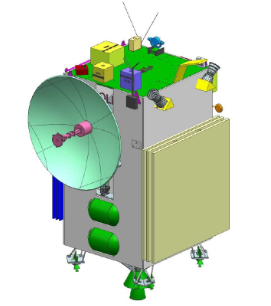
- 29 Nov 2024
In News:
ISRO received approval for its first Venus mission, Shukrayaan. The probe will undertake a detailed investigation of Venus, including its surface, atmosphere and geological structure.
Shukrayaan Mission (Venus Orbiter Mission):
- Launch Timeline: Scheduled for 2028.
- Objective: Investigate Venus to gather data on its surface, atmosphere, and geological structure.
- Scientific Focus: Study weather patterns, geological activities, and atmospheric composition (e.g., carbon dioxide and sulfuric acid clouds).
- Instrumentation: Equipped with synthetic aperture radar, infrared, and ultraviolet imaging devices to study Venus’s ionosphere.
- Significance: Offers global coverage of Venus, addressing gaps in previous missions' spatial coverage.
- Cost: Estimated at Rs 1,236 crore.
- Launch Vehicle: ISRO plans to use the LVM-3 (GSLV Mk III) rocket to launch the mission into an elliptical parking orbit (170 km x 36,000 km).
- Mission Data Processing: Data will be archived and disseminated through the Indian Space Science Data Center (ISSDC).
Chandrayaan 4 Mission:
- Collaborative Effort: Joint mission between India (ISRO) and Japan.
- Launch Objective: Land on the moon's south pole, with a focus on the region at 90°S (compared to previous missions at 69.3°S).
- Mission Details:
- Includes a rover weighing 350 kg (12 times heavier than previous rover).
- The rover will be equipped with advanced scientific tools for lunar exploration.
- Government Approval: Awaiting approval, with a target execution date of 2030.
Gaganyaan Mission (Human Spaceflight Program):
- Timeline: Unmanned flight in 2026, followed by a manned mission.
- Indian Space Station: Construction approved; to be completed by 2035, comprising five modules.
- Purpose: To serve as a transit facility for deep space exploration, including future lunar missions.
Mars Exploration Plans:
- Future Missions: Plans to send satellites to Mars and attempt a landing on the Martian surface.
- Significance: Demonstrates India’s growing ambitions in interplanetary exploration.
INSAT-4 Series of Satellites:
- Goal: Launch of new meteorological and oceanographic sensors to improve weather forecasts and disaster management.
- Technological Advancements: Need for India to catch up with global advancements in space-based sensors.
International Collaboration in Space:
- Chandrayaan 4: A collaboration between ISRO and Japan to explore the moon’s south pole, showcasing India's growing international cooperation in space exploration.
Strategic Importance of Shukrayaan:
- Contribution to Science: The mission’s global dataset will provide unique insights into Venus, enhancing the understanding of planetary atmospheres and geological processes.
- Potential for Discoveries: Research on Venus’s ionosphere and possible volcanic activity.
National Mission on Natural Farming (NMNF)
- 27 Nov 2024
In News:
The Union Cabinet approved the launching of the National Mission on Natural Farming (NMNF) as a standalone Centrally Sponsored Scheme under the Ministry of Agriculture & Farmers' Welfare.
Key Highlights
Objective & Focus:
- Launch of NMNF by the Union Cabinet to promote chemical-free farming in India.
- Aim to improve soil health, reduce input costs, and produce nutritious food.
- Support the shift to natural farming (NF), emphasizing local knowledge and agro-ecological principles.
Financial Allocation:
- Total Outlay: ?2481 crore (Government of India share ?1584 crore, State share ?897 crore) until FY 2025-26.
Key Features of NMNF:
- Coverage: Targeting 15,000 clusters in Gram Panchayats, covering 7.5 lakh hectares and impacting 1 crore farmers.
- Bio-Input Resource Centres (BRCs): 10,000 BRCs to supply ready-to-use natural farming inputs.
- Krishi Vigyan Kendras (KVKs) and Agricultural Universities (AUs): Establishment of 2,000 model demonstration farms for hands-on training in natural farming techniques.
- Farmer Training: 18.75 lakh farmers to be trained in NF practices such as preparation of organic inputs like Jeevamrit and Beejamrit.
- Krishi Sakhis/CRPs: Deployment of 30,000 workers for farmer mobilization and awareness.
Implementation Strategy:
- Farmer Certification System: Providing easy, simple certification for marketing natural farming produce with dedicated branding.
- Monitoring: Real-time, geo-tagged monitoring of implementation through an online portal.
- Convergence with other government schemes and organizations for market linkages and support.
Natural Farming Practices:
- Zero Budget Natural Farming (ZBNF): Promote sustainable farming by using local livestock and diverse crop systems.
- Benefits: Reduce dependence on external inputs like chemical fertilizers and pesticides, rejuvenate soil quality, and increase resilience to climate risks (e.g., drought, floods).
- Encourage biodiversity, and improve soil carbon content and water-use efficiency.
Targeted Areas and Farmer Support:
- Focus on areas where NF practices are already being followed or where farmer producer organizations (FPOs) or self-help groups (SHGs) are active.
- Training through model demonstration farms will focus on practical, location-specific NF techniques tailored to regional agro-ecologies.
Impact on Agriculture and Environment:
- Environmental Impact: Encourages sustainable farming by reducing chemical exposure, improving soil health, and promoting climate resilience.
- Farmer Well-being: By reducing input costs and promoting nutritious food, it aims to improve farmer incomes and family health.
- Contributing to the long-term health of the environment, ensuring a healthy Mother Earth for future generations.
Challenges and Concerns:
- Soil Nutrient Compromise: Concerns that some crops, like rice, might require chemical fertilizers (e.g., NPK) for optimal growth, which may not be sufficiently replaced by organic manure alone.
- The shift to natural farming requires significant awareness and training to ensure sustainable and productive yields.
Institutional Framework:
- Ministry of Agriculture and Farmers’ Welfare is the implementing body.
- Collaboration with KVKs, AUs, and farmer organizations ensures grassroots level support and knowledge dissemination.
Proba-3 mission
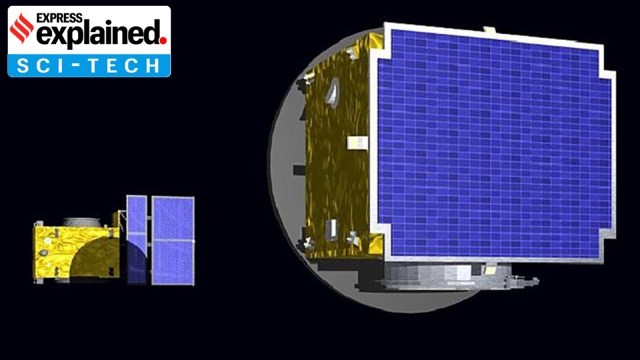
- 26 Nov 2024
In News:
The Indian Space Research Organisation (ISRO) will launch the European Space Agency’s Proba-3 mission on its PSLV rocket to study the solar corona, the outermost and hottest part of the Sun’s atmosphere, from Sriharikota on December 4.
Key Highlights:
- Mission Objective:The mission will study the Sun’s outermost and hottest atmosphere, the solar corona. The mission will also demonstrate the first-ever precision formation flying with two satellites working in tandem.
- Satellite Formation:Proba-3 consists of two satellites that will fly together, maintaining a fixed formation to study the Sun's corona.
What is Proba-3?
- Proba-3 is a solar mission developed by ESA, with an estimated cost of 200 million euros. The mission involves launching two satellites that will separate after launch, but fly in precise formation. The satellites will create a solar coronagraph, which blocks the Sun’s bright light to observe the solar corona, the Sun’s outermost atmosphere.
- Orbit: Proba-3 will orbit in a highly elliptical path (600 x 60,530 km) with an orbital period of 19.7 hours.
- Mission Duration: The expected mission life is two years.
What will Proba-3 Study?
The Sun's corona is extremely hot (up to 2 million degrees Fahrenheit), making it difficult to observe with conventional instruments. However, studying the corona is essential because it generates space weather phenomena such as solar storms and solar winds, which can impact satellite communications, navigation systems, and power grids on Earth.
Proba-3 will use three main instruments for its mission:
- ASPIICS (Association of Spacecraft for Polarimetric and Imaging Investigation of the Corona of the Sun):This coronagraph will observe the Sun’s outer and inner corona, similar to how the corona is visible during a solar eclipse. It features a 1.4-meter occulting disk to block the Sun’s light and facilitate close-up observations.
- DARA (Digital Absolute Radiometer):This instrument will measure the Sun’s total energy output (total solar irradiance).
- 3DEES (3D Energetic Electron Spectrometer):It will study electron fluxes as they pass through Earth's radiation belts, providing valuable data on space weather.
Why is Proba-3 Unique?
- Proba-3 is designed to mimic a natural solar eclipse, allowing continuous study of the Sun’s corona. Typically, solar scientists observe the corona for only about 10 minutes during an eclipse, occurring around 1.5 times a year. Proba-3 will provide up to six hours of data per day, equivalent to 50 eclipse events annually.
- The two satellites will maintain a precise formation, with one acting as an occulting spacecraft to cast a shadow, while the other (the coronagraph) stays in the shadow and observes the Sun’s corona. They will be positioned 150 meters apart, maintaining their formation autonomously.
- This artificial eclipse will enable scientists to study the corona and its less-understood features more effectively.
Proba-3 Mission
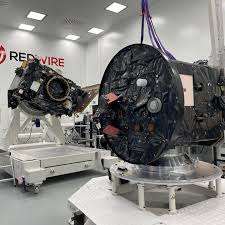
- 06 Nov 2024
In News:
Europe's Proba-3 mission to arrive in India for launch aboard PSLV-XL by ISRO
Key Highlights:
- Objective: The Proba-3 mission, led by the European Space Agency (ESA), aims to observe the Sun’s corona by creating an artificial solar eclipse. This will allow continuous observation of the Sun’s faint outer atmosphere, which is typically only visible during a natural solar eclipse.
- Key Features:
- Artificial Solar Eclipse: The two spacecraft will fly in formation to maintain a shadow between them, enabling the uninterrupted observation of the solar corona.
- Formation Flying: The satellites must maintain a precise formation with an accuracy of one millimetre, equivalent to the thickness of a fingernail.
Mission Details
- Launch Date: Scheduled for December 4, 2024.
- Launch Location: Satish Dhawan Space Centre near Chennai, India.
- Launch Vehicle: The PSLV-XL rocket developed by ISRO will be used for the launch.
- Spacecraft Mass: The combined mass of the two spacecraft is 550 kg.
- Orbit: The spacecraft will be placed in a highly elliptical orbit with a maximum altitude of 60,000 km to facilitate the precise formation flying.
- This high altitude minimizes Earth’s gravitational pull and reduces the amount of propellant required to maintain their positions during the mission.
Mission Significance
- Solar Observation: The primary objective is to observe the Sun’s corona, which has been challenging to study due to its faintness. The artificial eclipse will allow continuous data collection on solar activity.
- Formation Flying: This technology will allow the two satellites to maintain autonomous flight with millimetre-level precision, which is a significant advancement in satellite formation control.
- Six-Hour Observation Windows: Each formation flying session will last for up to six hours, during which the satellites will observe the Sun's corona.
Technological and Scientific Contributions
- ASPIICS Instrument: The ASPIICS (AStronomical PIcture Camera for the Intense Corona of the Sun) will be the mission's primary instrument, developed by the Royal Observatory of Belgium. It will provide crucial data on solar activity and space weather.
- International Collaboration: The mission is a collaborative effort involving 14 ESA member states and various organizations across Europe.
- Mission Control: The mission will be managed from the ESA’s European Space Operations Centre (ESOC) in Belgium, with significant pre-launch training and preparations already underway.
ISRO's Role and Historical Context
- Launch by ISRO: The Proba-3 mission will be ISRO’s first launch for ESA since 2001, marking an important milestone in India-Europe space cooperation.
- PSLV-XL Rocket: ISRO’s PSLV-XL rocket is known for its reliability and capability in deploying satellites into precise orbits. It is well-suited to carry the 550 kg Proba-3 duo into a highly elliptical orbit for the mission.
First Science Result from India's Aditya-L1 Mission
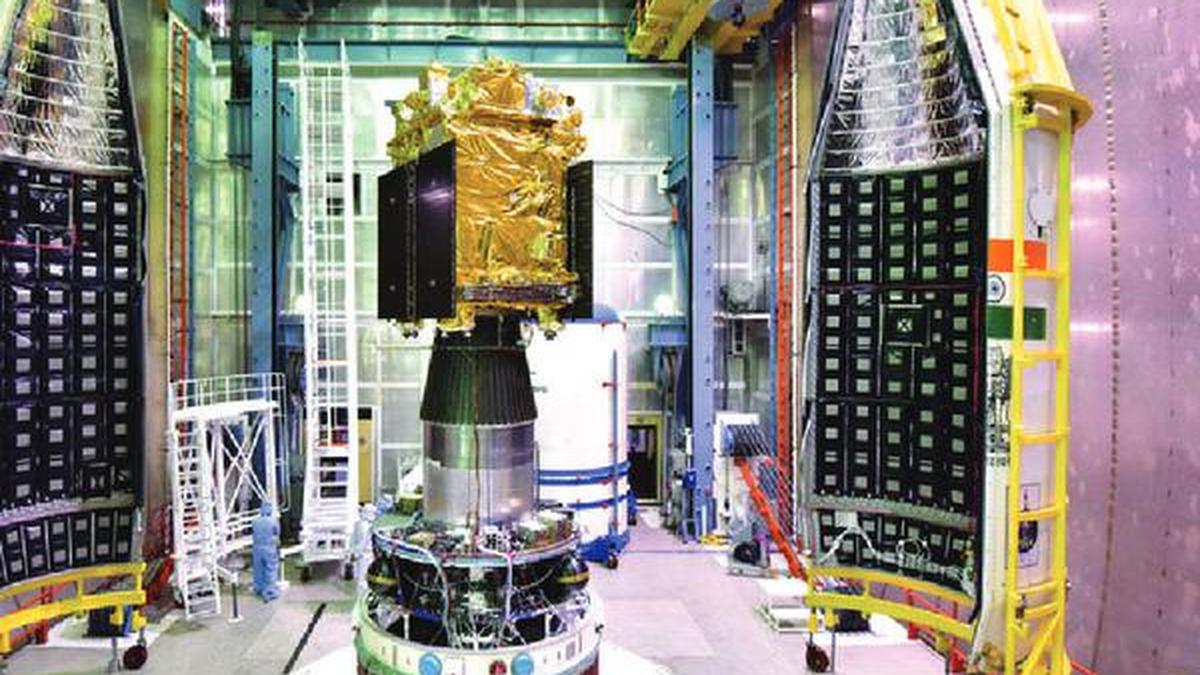
- 04 Nov 2024
In News:
- The Aditya-L1 mission, launched by the Indian Space Research Organisation (ISRO) on September 2, 2023, is India's first dedicated scientific mission to study the Sun.
- Primary Payload: The Visible Emission Line Coronagraph (VELC), developed by the Indian Institute of Astrophysics (IIAp), Bengaluru, is the spacecraft's main instrument.
Key Highlights:
- First Science Outcome:The first scientific result from the mission, involving VELC, has been released. It successfully estimated the onset time of a coronal mass ejection (CME) that occurred on July 16, 2023.
- CMEs are massive solar eruptions that can disrupt electronics in satellites and communications on Earth.
- Key Findings:
- VELC's Role: The VELC payload was crucial in observing the CME close to the solar surface, providing a detailed understanding of its onset.
- CMEs are typically observed in visible light after they have traveled far from the Sun. However, VELC’s unique spectroscopic observations allowed scientists to study the CME much closer to the Sun's surface.
- Publication:The results will be published in the Astrophysical Journal Letters.
- Future Significance:
- As the Sun approaches the maximum phase of its current solar cycle (No. 25), CMEs are expected to become more frequent. Continuous monitoring with VELC will provide valuable data for understanding these events.
- Monitoring the thermodynamic properties of CMEs near the Sun is essential to understand their source regions and behavior.
- Mission Details:
- The spacecraft is in a halo orbit around the Lagrange Point 1 (L1), about 1.5 million kilometers from Earth.
- Mission Lifetime: 5 years.
ISRO's Analogue Space Mission in Ladakh
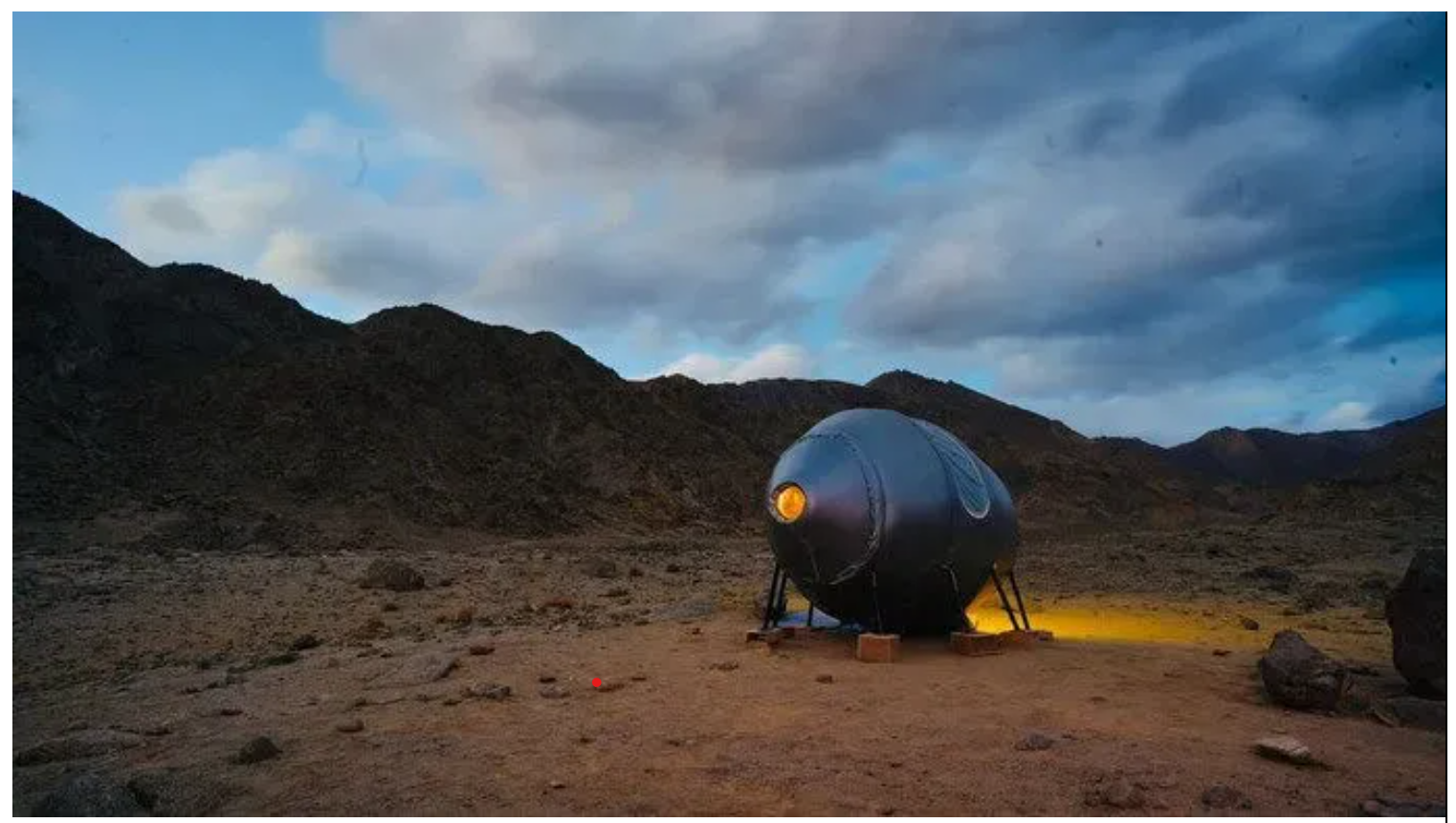
- 02 Nov 2024
In News:
In a significant leap for the country’s space exploration aspirations, India has embarked on its first analogue space mission in Leh, a landmark step that will attempt to simulate life in an interplanetary habitat to tackle the challenges of a base station beyond Earth.
Mission Overview:
- Objective: To simulate living conditions in an interplanetary habitat, addressing challenges astronauts may face during deep-space missions (e.g., Moon, Mars).
- Goal: Study long-term isolation, habitat design, resource management, and psychological effects on astronauts.
- Partners: ISRO’s Human Spaceflight Centre, AAKA Space Studio, University of Ladakh, IIT Bombay, Ladakh Autonomous Hill Development Council.
Rationale for Ladakh:
- Geological Similarities: Ladakh’s terrain mirrors Martian and lunar surfaces, making it ideal for testing space technologies.
- Climate: Cold, dry, high-altitude conditions simulate the extreme environments of space.
- Focus Areas: Testing habitat construction, microbial studies, and survival strategies for long-duration space travel.
What are Analogue Space Missions?
- Definition: Simulated space missions on Earth designed to replicate the conditions of space exploration.
- Purpose:
- Test technologies (e.g., life support, habitat design, in-situ resource utilization).
- Study human behavior, psychological impacts of isolation, and operational readiness for extended space travel.
- Relevance: Crucial for preparing astronauts for missions to the Moon, Mars, or asteroids.
Significance of Analogue Missions:
- Technological Testing: Analogue missions help in evaluating systems for habitat design, life support, and health monitoring.
- Human Factors: They provide insights into crew health, teamwork under pressure, and performance during isolation.
- Psychological Studies: Address the impact of confinement, isolation, and communication delays on astronauts.
- Training: Participants (analogue astronauts) are trained for real-world space missions by conducting scientific experiments and managing emergencies.
Global Examples of Analogue Missions:
- NASA’s NEEMO: An underwater mission simulating microgravity conditions to train astronauts for space tasks.
- SIRIUS Program (UAE): Focuses on the psychological impacts of long-duration space isolation, featuring international collaborations.
- Arctic Mars Analogue Svalbard Expedition (AMASE): Uses the extreme Arctic environment of Svalbard to test Mars exploration technologies and procedures.
Relation to India’s Space Aspirations:
- Gaganyaan Mission: ISRO’s human spaceflight mission aiming to send Indian astronauts into space.
- Interplanetary Exploration: The analogue mission supports India’s broader goal of advancing human space exploration and technology development for Mars and beyond.
Mission for Integrated Development of Horticulture (MIDH)
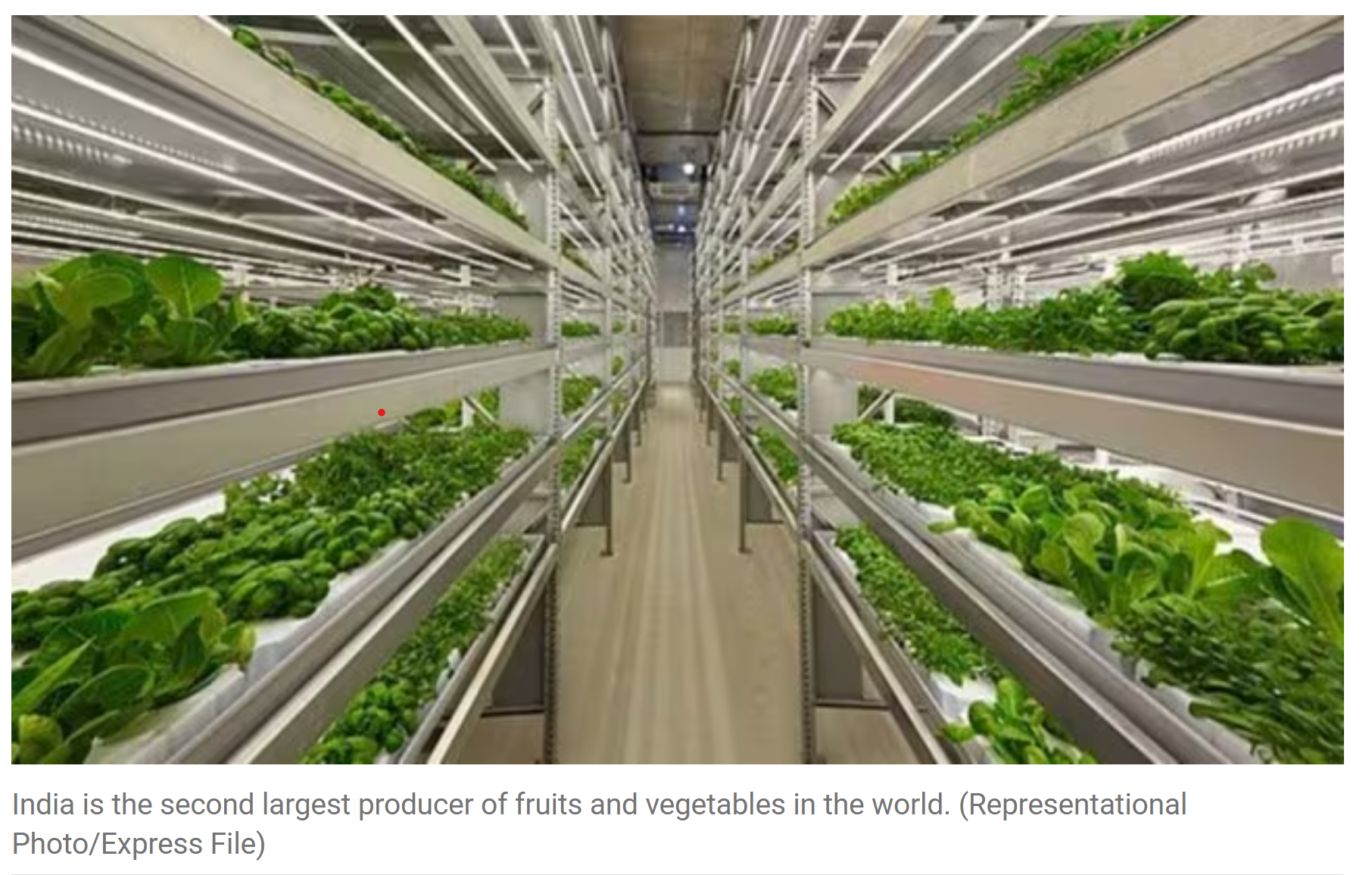
- 29 Oct 2024
In News:
- The Union Government has decided to introduce four new components under the Mission for Integrated Development of Horticulture (MIDH), aimed at promoting modern farming techniques:Hydroponics, Aquaponics, Vertical Farming&Precision Agriculture
Key Features of MIDH:
- MIDH is a Central Sponsored Scheme (CSS) aimed at the integrated development of various horticulture crops, including:
- Fruits, vegetables, root and tuber crops, mushrooms, spices, flowers, aromatic plants, coconut, cashew, cocoa, and bamboo.
- The scheme focuses on pre-production, production, post-harvest management, processing, and marketing activities.
Revision of Operational Guidelines and Cost Norms:
- The Ministry of Agriculture and Farmers' Welfare is revising the MIDH operational guidelines and cost norms, which were last updated in April 2014.
- The revised guidelines are expected to be released within one month.
- Cost norms are likely to increase by 20% compared to the existing rates, addressing concerns from various states about outdated guidelines.
Reason for Revision:
- Several states, including Odisha, have raised concerns over the old rates under MIDH. For example, Odisha’s Agriculture Minister highlighted that the state was still using 10-year-old rates.
- The Union Cabinet had already approved the rationalization of all CSS operating under the Ministry into two umbrella schemes:
- Pradhan Mantri Rashtriya Krishi Vikas Yojana (PM-RKVY)
- Krishonnati Yojana (KY)
Growth in India's Horticulture Sector:
- India’s horticulture production has significantly increased in recent years:
- Total production reached 334.60 million metric tonnes in 2020-21, up from 240.53 million metric tonnes in 2010-11.
- India is now the second largest producer of fruits and vegetables globally, surpassing food grain production.
- MIDH Annual Budget:The annual allocation for MIDH in the current financial year (2024-25) is ?2,000 crore.
Emissions Gap Report 2024

- 28 Oct 2024
In News:
The United Nations Environment Programme (UNEP) recently published the Emissions Gap Report 2024, in anticipation of the COP29 meeting of the UNFCCC to be held in Baku, Azerbaijan.
Key Highlights:
- Current Trajectory of Global Warming:
- If countries continue with current environmental policies, global temperatures are expected to rise by 3.1°C above pre-industrial levels.
- This is significantly higher than the Paris Agreement target of limiting global warming to well below 2°C, with an effort to cap it at 1.5°C.
- Paris Agreement at Risk:
- Even if all Nationally Determined Contributions (NDCs) are fully implemented (including both unconditional and conditional emissions reduction targets), the world would still experience 2.6°C of warming by 2030.
- This presents a major challenge to achieving the Paris Agreement’s climate goals.
- Urgent Need for Action:
- To limit global warming to 1.5°C, greenhouse gas emissions must peak before 2025 and decline by 43% by 2030.
- The report highlights the emission gap between current pledges and what is required to meet the 1.5°C goal.
- Record High Emissions:
- Global greenhouse gas emissions hit a record 57.1 gigatons of CO? equivalent in 2023.
- This represents an increase of 1.3% compared to 2022, continuing the upward trend from the previous decade.
- India’s Emissions:
- India’s greenhouse gas emissions grew by 6.1% between 2022 and 2023.
- Per capita emissions in India were 2.9 tCO?e in 2022, significantly lower than China (11 tCO?e) and the U.S. (18 tCO?e).
- G20 Countries’ Contribution:
- G20 countries, excluding the African Union, contributed 77% of global emissions in 2023.
- The six largest emitters (including China, U.S., and India) were responsible for 63% of global emissions.
- This shows a significant imbalance in emissions, with developed countries having much higher per capita emissions compared to developing nations like India and Africa.
- Necessary Emissions Cuts:
- To keep the 1.5°C target within reach, global emissions need to be cut by at least 7.5% annually until 2035.
- Cost of bridging the emissions gap: Achieving net-zero by 2050 will require USD 900 billion to USD 2.1 trillion annually, approximately 1% of global GDP.
- Emission Reduction Pathways:
- Renewable Energy: Scaling up solar and wind energy technologies could contribute up to 27% of the required emissions reductions by 2030.
- Forest Conservation: Protecting and restoring forests could provide 20% of the required emissions reductions by 2030.
- Other crucial measures include improving energy efficiency, transitioning to electric vehicles, and focusing on fuel switching in key sectors like transport, industry, and buildings.
- Disparities in Emissions:
- Despite changes over the past two decades, large disparities remain between emissions across regions.
- Developed countries have three times higher per capita emissions compared to the global average, while India, the African Union, and least developed countries continue to have much lower emissions.
- Call to Action:
- UNEP Executive Director Inger Andersen urged countries to act now, stating: “No more hot air, please.” The urgency is to ramp up climate pledges and ensure stronger actions in the upcoming COP29 talks in Baku, Azerbaijan (November 2024), where nations must work to get on a 1.5°C pathway.
United Nations Environment Programme (UNEP)
- Established: 1972, following the United Nations Conference on the Human Environment in Stockholm.
- Headquarters: Nairobi, Kenya.
- Governing Body: The United Nations Environment Assembly (UNEA), which is the world’s highest-level decision-making body on environmental matters, with 193 Member States.
- Programs & Initiatives: UNEP leads global efforts on climate action, ecosystem restoration, clean seas, and supports the Sustainable Development Goals (SDGs).
- Reports: UNEP publishes crucial assessments like the Emissions Gap Report, Global Environment Outlook, and Adaptation Gap Report, influencing global environmental policies.
New Space Missions and Developments
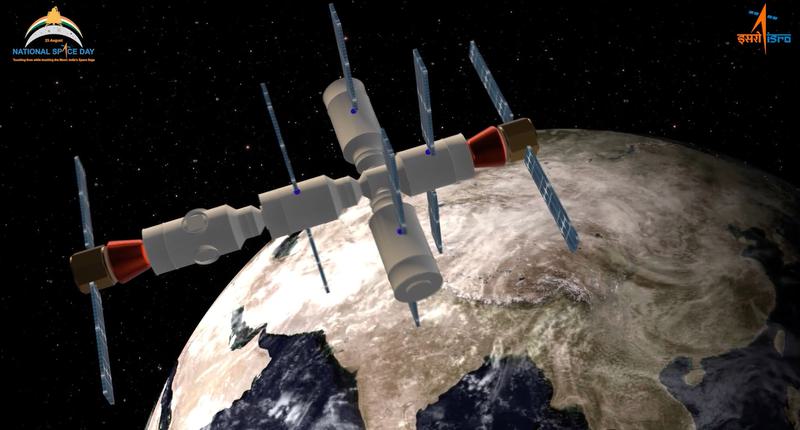
- 28 Oct 2024
In News:
The Space Commission also approved a joint moon mission with Japan called the Lunar Polar Exploration Mission. For LUPEX, ISRO is developing a different moon lander than the one it used for Chandrayaan-3
New Space Missions and Developments
- Chandrayaan-4 (Moon Mission):
- Type: Sample-return mission.
- Launch: Expected by 2027.
- Cost: ?2,104 crore.
- Objective: Sample collection of moon soil and rock to return to Earth.
- Mission Details: Two LVM-3 launch vehicles will launch components that will dock in Earth orbit before heading to the moon. The samples will be sent back using a bespoke canister.
- Lunar Polar Exploration Mission (LUPEX):
- Collaboration: Joint mission with Japan.
- Objective: Exploration of lunar poles with a new lander design, intended for potential crewed missions in future.
- Venus Orbiter Mission:
- Launch Window: March 2028.
- Cost: ?1,236 crore.
- Objective: Study Venus' surface and atmosphere to understand planetary evolution in the Solar System.
- Next Generation Launch Vehicle (NGLV):
- Development Budget: ?8,240 crore for first three development flights.
- Objective: A new launcher developed with private sector collaboration for future space missions.
Cabinet Approvals for Space Initiatives
- Human Spaceflight Programme (Gaganyaan):
- Four new missions under Gaganyaan, including an uncrewed Gaganyaan flight.
- Focus on developing technologies for India’s first space station, Bharatiya Antariksh Station (BAS), planned by 2028.
- Space-Based Surveillance (SBS) Missions:
- Phase 3: Approval for building 21 ISRO satellites, with 31 additional satellites by private companies.
- Total Cost: ?26,968 crore.
- Development of a Third Launch Pad:
- To support the NGLV and additional space missions at Sriharikota.
Upcoming Satellite Missions
- NISAR (NASA-ISRO Synthetic Aperture Radar):
- Launch: Early 2025 on a GSAT launch vehicle.
- Purpose: Earth observation using advanced radar technology.
- Issue: Protective coating added due to high temperatures during testing.
- Proba-3 (European Space Agency):
- Launch: November 29, 2024, aboard PSLV-XL.
- Objective: Study the Sun’s corona using two satellites in formation, mimicking an eclipse to capture unique solar data.
Private Sector Involvement
- Manastu Space & Dhruva Space:
- Collaboration: Testing green propulsion technology for the LEAP-3 mission.
- Technology: Hydrogen-peroxide-based green propulsion system.
- Launch: LEAP-3 mission in 2025.
- Bellatrix Aerospace:
- Project: Prototype satellite for ultra-low earth orbit at 200 km altitude.
- Ananth Technologies:
- Achievement: First private company to assemble, integrate, and test Space Docking Experiment (SpaDEx) satellites for ISRO.
Space Science and Research Updates
- Chandrayaan-3:
- Findings: The crater where Chandrayaan-3 landed is older than the South Pole-Aitken Basin (4.2-4.3 billion years old).
- Data Source: Optical High-Resolution Camera (Chandrayaan-2) and Pragyaan rover (Chandrayaan-3).
- Astrosat (India’s First Space Observatory):
- Mission Life: Expected to last two more years (originally planned for 5 years).
- Significance: Contributed to over 400 published papers based on multi-wavelength space observatory data.
National Mission for Manuscripts (NMM)
- 26 Oct 2024
In News:
- The Union Ministry of Culture plans to revive and relaunch the National Mission for Manuscripts (NMM) to enhance the preservation and accessibility of India’s ancient texts.
- The mission’s objective is to document, conserve, digitize, and disseminate India’s rich manuscript heritage, ensuring their protection and public access.
Formation of a New Autonomous Body:
- The National Mission for Manuscripts (NMM) is likely to be restructured into an autonomous body called the National Manuscripts Authority, which will be under the Ministry of Tourism and Culture.
- The new body will address the challenges and gaps in manuscript preservation and management, offering more focused and flexible governance.
Background and Achievements:
- Established in 2003, the NMM has been part of the Indira Gandhi National Centre for Arts (IGNCA).
- Key achievements:
- 52 lakh manuscripts have had metadata prepared.
- Over 3 lakh manuscripts have been digitized, though only one-third have been uploaded for public access.
- Preventive and curative conservation of over 9 crore folios of manuscripts has been undertaken over the last 21 years.
- The NMM has set up 100 Manuscripts Resource Centres and Manuscripts Conservation Centres across India.
Current Challenges and Gaps:
- Data Uploading and Access:
- Of the 130,000 digitized manuscripts, only 70,000 are accessible online due to the absence of a comprehensive access policy.
- A significant portion (around 80%) of manuscripts areprivately owned, restricting public access and usage.
- Digitization Mismatch:
- There have been concerns about discrepancies between the digitized data and the original manuscripts, which requires correction to ensure authenticity and accuracy.
- Lack of Comprehensive Access Policy:
- Limited public access to manuscripts due to policy restrictions hinders further research and public engagement with this rich heritage.
Scope and Future of NMM:
- India's Manuscript Heritage: India is believed to have around 10 million manuscripts, spread across various regions, languages, scripts, and topics.
- Digitization and Accessibility: Moving forward, the key challenge will be ensuring that a larger proportion of the manuscripts are digitized, uploaded, and made publicly available, particularly from private collections.
- The establishment of the National Manuscripts Authority is expected to streamline efforts and enhance coordination between government bodies, private institutions, and scholars.
India's Mission Mausam and the Cloud Chamber
- 23 Oct 2024
In News:
Mission Mausamaims to not just improve weather forecasting in the country but also ‘manage’ certain weather events, and on demand, enhance or suppress rainfall, hail, fog and, later, lightning strikes.
- Focus Areas:
- Enhancing or suppressing rainfall, hail, fog, and later, lightning strikes on demand.
- Strengthening cloud physics research to better understand and modify weather conditions.
- Establishment of Cloud Chamber:
- Location: The cloud chamber is being built at the Indian Institute of Tropical Meteorology (IITM) in Pune.
- Purpose: To study cloud physics in detail and develop methods for weather modification.
- Key Feature: It will be a convective cloud chamber, capable of simulating conditions specific to Indian monsoon clouds.
What is a Cloud Chamber?
- A scientific apparatus that mimics the conditions required for cloud formation.
- Function: Water vapour, aerosols, and other particles are injected into the chamber, and under controlled temperature and humidity conditions, clouds can be formed.
- Global Context: While many countries have cloud chambers, India is building one with convection properties, which are essential for studying monsoon clouds. Only a few such chambers exist globally.
Why India Needs a Convective Cloud Chamber?
- Cloud Physics: The chamber will allow scientists to study various phenomena such as:
- Cloud behaviour under normal and extreme conditions.
- Formation of rain droplets and ice particles.
- Influence of moisture from cyclones or low-pressure systems.
- Interactions between different cloud layers.
- Objective: To gain insights into cloud formation specific to the Indian monsoon and develop strategies for weather modification.
Applications for Weather Modification:
- The cloud chamber will help scientists simulate and understand how to influence weather events like rain and fog, particularly in monsoon systems.
- It will allow testing of new ideas and theories under controlled conditions, adjusting temperature, humidity, and convection parameters to suit Indian weather conditions.
India’s Experience with Cloud Seeding:
- Cloud Seeding: A technique tested in India to enhance rainfall by introducing particles (seeds) into clouds.
- CAIPEEX Program: India conducted the Cloud Aerosol Interaction and Precipitation Enhancement Experiment (CAIPEEX) over a decade to study cloud seeding's effectiveness.
- Findings: Cloud seeding increased rainfall by up to 46% in some regions, showing its potential under specific conditions.
- Limitations: Cloud seeding is not a one-size-fits-all solution and is effective only under certain conditions.
Significance for India’s Weather Forecasting:
- Improved Weather Modification: The cloud chamber and insights from it could lead to better management of weather events, especially in regions affected by monsoon rains, cyclones, and droughts.
- Tailored Strategies: India will be able to implement targeted weather interventions, especially in agricultural regions, to reduce the negative impacts of extreme weather.
???????Global and Regional Relevance:
- Cloud Chamber: The Pune facility will be one of the few globally with the specific focus on convective properties needed to study Indian monsoon systems.
- Role in Climate Science: India’s investment in cloud physics research positions it at the forefront of developing technologies to manage climate variability and extreme weather events.
National Green Hydrogen Mission

- 19 Oct 2024
In News:
- The Union Government has sanctioned three pilot projects under the National Green Hydrogen Mission to explore the use of green hydrogen in steel production.
- The initiative aims to demonstrate safe and efficient hydrogen-based steelmaking processes, validate their technical feasibility, and evaluate economic viability for low-carbon steel production.
- Objectives of the Scheme:
- Identify and test advanced technologies for utilizing green hydrogen in the steel sector.
- Demonstrate safe and secure operation of hydrogen-based steel production.
- Validate technical and economic feasibility, contributing to decarbonization of iron and steel manufacturing.
- Pilot Project Components:
-
- 100% Hydrogen-based Direct Reduced Iron (DRI) using vertical shaft furnaces.
- Hydrogen use in Blast Furnace to reduce coal/coke consumption.
- Hydrogen injection in vertical shaft-based DRI units.
-
- Sanctioned Pilot Projects:
- Matrix Gas and Renewables Ltd
- Capacity: 50 tons per day (TPD).
- Consortium Partners: Gensol Engineering Ltd, IIT Bhubaneswar, Metsol AB (Sweden).
- Simplex Castings Ltd
- Capacity: 40 TPD.
- Consortium Partners: BSBK Pvt. Ltd., Ten Eight Investment, IIT Bhilai.
- Steel Authority of India Ltd (SAIL)
- Capacity: 3,200 TPD (Ranchi).
- Financial Support:
- Total Government Funding: ?347 crore for the three projects.
- These pilot projects are expected to be commissioned within the next three years and may serve as a blueprint for scaling up such technologies in India.
- About the National Green Hydrogen Mission:
- Launched: January 4, 2023.
- Total Budget: ?19,744 crore (up to FY 2029-30).
- Primary Goal: Establish India as a global hub for green hydrogen production and export while fostering decarbonization in sectors like steel, mobility, and energy.
- Key Features of the Mission:
- SIGHT (Strategic Interventions for Green Hydrogen Transition):
- Supports domestic manufacturing of electrolysers and promotes the production and use of green hydrogen.
- Expected Outcomes by 2030:
- Green Hydrogen Production: At least 5 million metric tons (MMT) annually.
- Renewable Energy: Addition of 125 GW in renewable energy capacity.
- Investment: Over ?8 lakh crore in green hydrogen technologies.
- Employment: Creation of 6 lakh jobs.
- Reduction in Fossil Fuel Imports: Savings of over ?1 lakh crore.
- GHG Emissions Reduction: Avoidance of nearly 50 MMT of annual greenhouse gas emissions.
- SIGHT (Strategic Interventions for Green Hydrogen Transition):
- Phase-wise Implementation:
- Phase I (2022-26): Focus on demand creation and initial deployment in existing hydrogen-using sectors (like steel and mobility).
- Phase II (2026-30): Expansion to new sectors with a push toward commercialization of green hydrogen.
The National Green Hydrogen Mission aims to significantly decarbonize India’s steel sector and other industries by leveraging hydrogen technology. With ?347 crore allocated for pilot projects in steelmaking, the initiative sets the stage for scalable, low-carbon steel production, contributing to India's clean energy transition and supporting its goal to become a global leader in green hydrogen.
Mission for Advancement in High-Impact Areas - Electric Vehicle (MAHA-EV) Mission
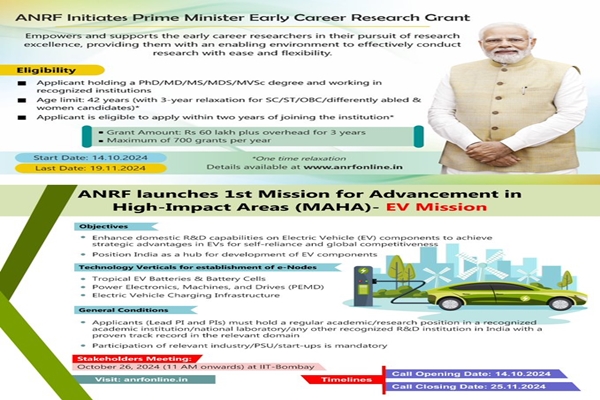
- 15 Oct 2024
In News:
The Anusandhan National Research Foundation (ANRF) has officially launched its first two initiatives: the Prime Minister Early Career Research Grant (PMECRG) and the Mission for Advancement in High-Impact Areas - Electric Vehicle (MAHA-EV) Mission. These initiatives aim to enhance India’s research landscape and support innovation in critical sectors.
Prime Minister Early Career Research Grant (PMECRG)
- Objective: The PMECRG is designed to empower early career researchers by providing flexible funding and support for high-quality innovative research. It aims to foster creativity and drive technological progress, positioning India as a global leader in science and technology (S&T).
- Significance: This grant recognizes the essential role of young researchers in advancing India's scientific agenda. By investing in their development, ANRF aims to cultivate a vibrant research ecosystem that encourages groundbreaking discoveries.
Mission for Advancement in High-Impact Areas - Electric Vehicle (MAHA-EV) Mission
- Focus: The MAHA-EV Mission targets the development of key technologies for electric vehicles, specifically in areas such as tropical EV batteries, power electronics, machines and drives (PEMD), and charging infrastructure.
- Goals:
- Reduce Import Dependency: By fostering domestic innovation in EV components.
- Global Leadership: Positioning India as a leader in the electric vehicle sector, aligning with the government's Atmanirbhar Bharat (self-reliant India) vision.
- Collaboration: The mission is designed to encourage multi-institutional and multi-disciplinary collaboration to address critical scientific challenges, thereby enhancing the competitiveness of India's EV sector.
Significance of Both Initiatives
- Bridging Gaps: Both initiatives aim to bridge the gap between academic research and industrial applications, a key goal of ANRF. This alignment is crucial for translating research into practical applications that benefit society.
- Strategic Interventions: These programs reflect the discussions held during the ANRF's Governing Board meeting, which emphasized global positioning in key sectors, capacity building, and fostering an innovation ecosystem.
- Long-term Vision: The initiatives contribute to India's goal of achieving a Viksit Bharat (Developed India) by 2047, accelerating the country's progress toward a sustainable and technologically advanced future.
The launch of the PMECRG and MAHA-EV Mission marks a significant step in enhancing India's research ecosystem. By supporting early career researchers and advancing electric vehicle technologies, ANRF is poised to drive innovation, foster collaboration, and strengthen India’s position on the global scientific stage. These initiatives reflect a commitment to sustainable development and technological leadership, paving the way for transformative advancements in various sectors.
USCIRF Report on India: Key Highlights

- 04 Oct 2024
In News:
The United States Commission on International Religious Freedom (USCIRF), a Washington DC-based bipartisan U.S. federal government agency, has released a country update on India, flagging “collapsing religious freedom conditions”.
- Agency Overview:
- The United States Commission on International Religious Freedom (USCIRF) is an independent, bipartisan U.S. federal commission established under the 1998 International Religious Freedom Act (IRFA).
- Its primary functions include reviewing global religious freedom violations, providing policy recommendations to U.S. leaders, and publishing annual reports.
- Current Concerns:
- USCIRF's latest report indicates a “collapse” in religious freedom conditions in India, particularly worsening throughout 2024, especially around national elections.
- Legal and Policy Changes:
- Strengthening of discriminatory legislation, including:
- State-level anti-conversion and anti-terrorism laws.
- Implementation rules for the 2019 Citizenship (Amendment) Act (CAA).
- Passage of a State-level Uniform Civil Code (UCC) Bill in Uttarakhand.
- Strengthening of discriminatory legislation, including:
- Violations and Incidents:
- Expropriation of Places of Worship:
- Authorities have facilitated the construction of Hindu temples on former mosque sites.
- Increased attacks on religious minorities, particularly following the consecration of the Ayodhya temple in January 2024.
- Targeting of Religious Minorities:
- Arrests of Christians accused of forced conversions under anti-conversion laws.
- Anti-cow slaughter laws exploited by vigilante groups to target Muslims, Christians, and Dalits, often with little to no legal repercussions for perpetrators.
- Expropriation of Places of Worship:
- Recommendations:
- USCIRF urges the U.S. State Department to designate India as a “Country of Particular Concern” due to severe violations of religious freedom.
About USCIRF
- Composition: Comprised of nine commissioners appointed by the U.S. President or Congressional leaders, supported by non-partisan staff.
- Objective: To monitor and recommend actions on religious freedom violations aligned with international human rights standards.
National Mission on Edible Oils – Oilseeds (NMEO-Oilseeds)

- 04 Oct 2024
In News:
Cabinet Approves National Mission on Edible Oils – Oilseeds (NMEO-Oilseeds) (2024-25 to 2030-31).
Objective:
- Achieve self-reliance in edible oil production in seven years.
Financial Outlay:
- ?10,103 crore for the mission period.
Key Goals:
- Increase primary oilseed production from 39 million tonnes (2022-23) to 69.7 million tonnes by 2030-31.
- Boost domestic edible oil production to 25.45 million tonnes, meeting 72% of projected requirements.
Focus Areas:
- Enhance production of key oilseed crops: Rapeseed-Mustard, Groundnut, Soybean, Sunflower, Sesamum.
- Improve extraction efficiency from secondary sources (e.g., Cottonseed, Rice Bran).
Strategies:
- Promote high-yielding, high oil content seed varieties.
- Extend cultivation to rice fallow areas and encourage intercropping.
- Use advanced technologies like genome editing for seed development.
SATHI Portal:
- Launch of an online 5-year rolling seed plan for timely seed availability.
- Coordination with cooperatives, Farmer Producer Organizations (FPOs), and seed corporations.
Infrastructure Development:
- Establish 65 new seed hubs and 50 seed storage units.
- Develop over 600 Value Chain Clusters across 347 districts, covering over 1 million hectares annually.
Support for Farmers:
- Access to high-quality seeds, training on Good Agricultural Practices (GAP), and pest management advisory.
Environmental Benefits:
- Promote low water usage, improve soil health, and utilize crop fallow areas.
Background Context:
- India relies on imports for 57% of its edible oil demand.
- Previous initiatives include the National Mission on Edible Oils – Oil Palm (NMEO-OP) and significant increases in Minimum Support Price (MSP) for oilseeds.
- Imposition of 20% import duty on edible oils to protect local producers.
The NMEO-Oilseeds mission aims to enhance domestic oilseed production, reduce import dependency, and improve farmers' incomes while contributing to environmental sustainability.
Cruise Bharat Mission

- 01 Oct 2024
In News:
The central government launched the five-year Cruise Bharat Mission, aiming to boost cruise tourism in India to 1 million passengers and create 400,000 jobs by 2029.
Mission Goals
- Passenger Traffic: Increase from 0.5 million to 1 million sea cruise passengers by 2029.
- River Cruise Passengers: Grow from 0.5 million to 1.5 million.
- Job Creation: Generate 400,000 jobs in the cruise sector.
- Infrastructure Expansion:
- International cruise terminals: From 2 to 10.
- River cruise terminals: From 50 to 100.
- Marinas: From 1 to 5.
Implementation Phases
- Phase 1 (2024-2025):
- Conduct studies and master planning.
- Form alliances with neighboring countries.
- Modernize existing cruise terminals and destinations.
- Phase 2 (2025-2027):
- Develop new cruise terminals and marinas.
- Activate high-potential cruise locations.
- Phase 3 (2027-2029):
- Integrate cruise circuits across the Indian Subcontinent.
- Continue developing infrastructure and enhancing cruise experiences.
Strategic Focus Areas
- Sustainable Infrastructure:
- Develop world-class terminals, marinas, and water aerodromes.
- Emphasize digitalization (e.g., facial recognition) and decarbonization (shore power).
- Create a National Cruise Infrastructure Masterplan 2047.
- Operational Efficiency:
- Streamline operations using digital solutions (e.g., e-clearance and e-visa facilities).
- Cruise Promotion & Circuit Integration:
- Focus on international marketing and investment.
- Host events like the "Cruise India Summit."
- Form alliances with neighboring countries (UAE, Maldives, Singapore).
- Regulatory and Financial Policies:
- Establish tailored fiscal and financial policies.
- Launch a National Cruise Tourism Policy.
- Capacity Building & Employment:
- Create a Centre of Excellence for cruise-related economic research.
- Develop National Occupational Standards to enhance youth employment opportunities.
Expected Outcomes
- Tourism Growth: Position India as a global cruise destination.
- Cultural Promotion: Highlight the cultural, historical, and natural heritage of Bharat through cruise circuits.
- Community Benefits: Ensure inclusive growth for local communities and stakeholders in the cruise sector.
The Cruise Bharat Mission is set to redefine India's cruise tourism landscape, focusing on infrastructure development, operational efficiency, and promoting cultural heritage, while ensuring economic growth and job creation for the future.
Digital Agriculture Mission
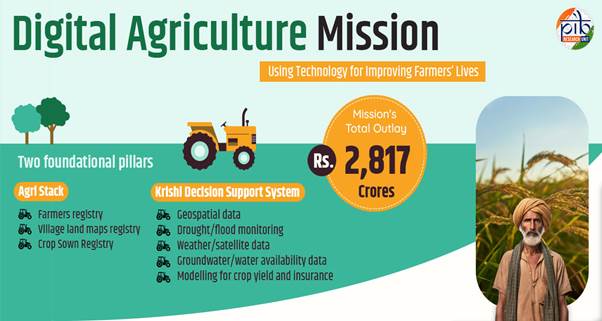
- 03 Sep 2024
Introduction
India's digital revolution has significantly transformed governance and service delivery in recent years by creating digital identities, secured payments and transactions. This progress has paved the way for a thriving digital ecosystem across various sectors, including finance, healthcare, education, and retail, positioning India as a leader in citizen-centric digital solutions.
For a similar transformation of the Agriculture Sector, the Union Cabinet Committee, chaired by Prime Minister Narendra Modi approved the 'Digital Agriculture Mission' with a substantial financial outlay of Rs. 2,817 Crore, including a central government share of Rs. 1,940 Crore, on September 2, 2024.
The Digital Agriculture Mission is designed as an umbrella scheme to support various digital agriculture initiatives. These include creating Digital Public Infrastructure (DPI), implementing the Digital General Crop Estimation Survey (DGCES), and supporting IT initiatives by the Central Government, State Governments, and Academic and Research Institutions.
The scheme is built on two foundational pillars:
- Agri Stack
- Krishi Decision Support System.
Additionally, the mission includes ‘Soil Profile Mapping’ and aims to enable farmer-centric digital services to provide timely and reliable information for the agriculture sector.
AgriStack: Kisan ki Pehchaan
AgriStack is designed as a farmer-centric Digital Public Infrastructure (DPI) to streamline services and scheme delivery to farmers. It comprises three key components:
1. Farmers' Registry
2. Geo-referenced village maps
3. Crop Sown Registry
- A crucial feature of AgriStack is the introduction of a 'Farmer ID', similar to Aadhaar card, serving as a trusted digital identity for farmers.
- These IDs, created and maintained by the State Governments/ Union Territories, will be linked to various farmer-related data, including land records, livestock ownership, crops sown, and benefits availed.
- The implementation of AgriStack is progressing through partnerships between the Central and State Governments, with 19 states having signed MoUs with the Ministry of Agriculture. Pilot projects have been conducted in six states to test the creation of Farmer IDs and the Digital Crop Survey.
- The six states include Uttar Pradesh (Farrukhabad), Gujarat (Gandhinagar), Maharashtra (Beed), Haryana (Yamuna Nagar), Punjab (Fatehgarh Sahib), and Tamil Nadu (Virudhnagar).
Key targets include:
- Creating digital identities for 11 crore farmers over three years (6 crore in FY 2024-25, 3 crore in FY 2025-26, and 2 crore in FY 2026-27)
- Launching the Digital Crop Survey nationwide within two years, covering 400 districts in FY 2024-25 and all districts in FY 2025-26
2. Krishi Decision Support System
- The Krishi Decision Support System (DSS) will integrate remote sensing data on crops, soil, weather, and water resources into a comprehensive geospatial system.
3. Soil Profile Mapping
Under the mission, detailed soil profile maps on a 1:10,000 scale for approximately 142 million hectares of agricultural land have been envisaged, with 29 million hectares of soil profile inventory already being mapped.
- Further under the Digital Agriculture Mission, the Digital General Crop Estimation Survey (DGCES) will be used for crop-cutting experiments to provide precise yield estimates, enhancing agricultural production accuracy.
- The mission is expected to create direct and indirect employment in agriculture, providing opportunities for around 2,50,000 trained local youth and Krishi Sakhis.
- By leveraging modern technologies like data analytics, AI, and remote sensing, the mission will improve service delivery for farmers, including streamlined access to government schemes, crop loans, and real-time advisories.
Key Components of the Mission
The Digital Agriculture Mission focuses on grassroots implementation, targeting farmers as the primary beneficiaries. Some of the key benefits of the mission include:
- Digital authentication for accessing services and benefits, reducing paperwork and the need for physical visits.
- Enhanced efficiency and transparency in government schemes, crop insurance, and loan systems through accurate data on crop area and yield.
- Crop map generation and monitoring for better disaster response and insurance claims.
- Development of digital infrastructure to optimize value chains and provide tailored advisory services for crop planning, health, pest management, and irrigation.
Digital Public Infrastructure for Agriculture
- Union Finance Minister Nirmala Sitharaman announced in the Union Budget 2024-25 that the Government, in partnership with states, will implement Digital Public Infrastructure (DPI) for agriculture over the next three years.
- This initiative will cover farmers and their lands, with a digital crop survey for Kharif planned for 400 districts this year. The goal is to update registries with details of 6 crore farmers and their lands.
- The Union Budget 2023-24 had previously introduced the DPI for agriculture, which aims to provide comprehensive data on farmers, including demographic details, land holdings, and crops sown. The DPI will integrate with state and central digital infrastructures to offer a range of farmer-centric services, including information on livestock, fisheries, soil health, and available benefits.
Conclusion
- The Union Cabinet also approved six major schemes alongside the Digital Agriculture Mission, with a total outlay of Rs 14,235.30 crore.
- These initiatives include Rs 3,979 crore for Crop Science aimed at ensuring food security and climate resilience by 2047, and Rs 2,291 crore for strengthening Agricultural Education, Management, and Social Sciences to support students and researchers. Rs 1,702 crore is allocated for Sustainable Livestock Health and Production to boost incomes from livestock and dairy, while Rs 1,129.30 crore is designated for Sustainable Development of Horticulture to increase income from horticulture. Additionally, Rs 1,202 crore will be invested in strengthening Krishi Vigyan Kendra, and Rs 1,115 crore towards Natural Resource Management.
- These comprehensive approaches leverage digital technologies to enhance productivity, efficiency, and sustainability in India's agricultural sector, potentially transforming the lives of millions of farmers across the country. By extending the digital revolution to agriculture, India aims to further solidify its position as a global leader in innovative, technology-driven solutions for critical sectors of the economy.
AYUSHMAN BHARAT DIGITAL MISSION (ABDM)

- 28 Sep 2024
In News:
Over 67 crore Ayushman Bharat Health Accounts (ABHA) have been created in the past three years under the Ayushman Bharat Digital Mission (ABDM). The digital healthcare mission marked its three-year anniversary.
Key Highlights:
- Launch Date: September 27, 2021.
- Vision: Establish a robust digital health infrastructure to enhance healthcare accessibility, efficiency, and transparency.
- Duration: A transformative three-year journey aimed at revolutionizing India’s digital healthcare ecosystem.
Objectives and Background
- Alignment with National Health Policy: The mission stems from the National Health Policy (2017), emphasizing accessibility and the integration of digital technologies.
- Building Blocks:
- National Health Stack (2018) introduced unique health identifiers and verified registries.
- National Digital Health Blueprint (2019) provided guidance for implementing ABDM.
Key Features of ABDM
- Unique Health Identifier (ABHA ID): Assigns a unique ID to every individual for managing health records.
- Healthcare Professionals Registry (HPR): Comprehensive database of healthcare professionals across all systems of medicine.
- Health Facility Registries (HFR): Repository of public and private health facilities, including hospitals, clinics, and pharmacies.
- Health Information Exchange and Consent Manager (HIE-CM): Allows secure access and sharing of health records based on informed consent.
- Unified Health Interface (UHI): Facilitates the discovery and delivery of health services.
- National Health Claims Exchange (HCX): Standardizes the insurance payment process for quicker claims.
- Data Privacy and Security: Ensures confidentiality and security of health-related information in compliance with the Digital Personal Data Protection Act, 2023.
- Interoperability: Enables seamless data exchange among stakeholders, supported by key gateways (HIE-CM, NHCX, UHI).
- Transparency: Offers individuals access to both public and private health services, ensuring transparent pricing and accountability.
Key Initiatives
- Scan and Share: QR-code based OPD registration reduces wait times and improves data accuracy.
- Digital Health Incentive Scheme (DHIS): Financial incentives to encourage participation in the ABDM ecosystem, launched on January 1, 2023.
- Microsites for Private Sector Adoption: Operationalized 106 microsites to facilitate ABDM adoption among private providers.
- End-to-End ABDM Adoption Pilot: Aimed at digitizing healthcare facilities across India, with 131 selected for participation.
Achievements
- Health Accounts Creation: Over 67 crore Ayushman Bharat Health Accounts (ABHA) established, linking 42 crore health records.
- Ecosystem Participation: Involvement of 236 private entities and leading public institutions, enhancing interoperability.
- Healthcare Facility Registration: 3.3 lakh health facilities and 4.7 lakh healthcare professionals registered.
Moving Towards Transformation
- Collaborations: Partnerships with IIT Kanpur and Maharashtra University of Health Sciences to drive digital health education and public goods development.
- Training Initiatives: Introduction of a WhatsApp Chatbot for stakeholder training on digital health practices.
- Digital Health Standards: Launched by the National Accreditation Board of Hospitals to promote digital health technology adoption.
- Integration of eSwasthya Dham Portal: Extends ABDM benefits to Char Dham Yatris.
Vision for the Future
ABDM aims to create a seamless digital health ecosystem, ensuring every Indian citizen has access to their health records through a unique ABHA ID. The initiative includes:
- Clinical Decision Support System (CDSS): Aids healthcare professionals in improving clinical decision-making and patient outcomes.
INDIA’s FIRST MISSION TO VENUS
- 25 Sep 2024
In News:
India is set to launch its first mission to Venus in March 2028, following the recent approval from the Union Cabinet. This mission, led by the Indian Space Research Organisation (ISRO), marks India’s second interplanetary endeavor after the successful Mars Orbiter Mission in 2013.
Importance of Studying Venus
- Earth's Twin: Venus is often referred to as Earth’s twin due to its similar mass, density, and size. Understanding Venus can provide insights into Earth’s own evolution.
- Extreme Conditions: The planet has a surface temperature around 462°C and an atmospheric pressure similar to that found deep under Earth’s oceans. Its atmosphere consists primarily of 96.5% carbon dioxide and features clouds of sulfuric acid.
- Historical Water Presence: Venus may have had water in the past, leading scientists to explore how it transitioned to its current hostile environment, likely due to a runaway greenhouse effect.
Mission Overview
- Launch Timeline: The mission will utilize a strategic launch window when Earth and Venus are closest, occurring every 19 months. It was initially planned for 2023 but is now set for 2028.
- Payload: The mission will carry around 100 kg of scientific instruments, including 17 Indian and 7 international experiments.
- Journey to Venus: After exiting Earth's orbit, the spacecraft will take about 140 days to reach Venus.
Aero-Braking Technique
- First-time Use: This mission will employ aero-braking, a technique to adjust the spacecraft’s orbit by skimming through Venus's atmosphere, creating drag that reduces altitude.
- Target Orbit: The satellite will initially be in a highly elliptical orbit of 500 km x 60,000 km and will be gradually lowered to an orbit of either 300 x 300 km or 200 x 600 km over about six months.
Scientific Payloads
- Synthetic Aperture Radar: For imaging the surface of Venus.
- Thermal Camera: To study temperature variations.
- Interplanetary Dust Analysis: Investigating dust particle flow.
- High-Energy Particle Studies: Examining particles entering the atmosphere and their ionization effects.
- Atmospheric Composition Study: Assessing the structure, variability, and thermal state of Venus’s atmosphere.
Which countries are trying to study Venus?
- There have been several missions to Venus in the past by the United States, the erstwhile USSR, Japan, and a collaborative mission of the European Space Agency (ESA) with Japan.
- The US has planned at least two more missions to Venus in the future — DaVinci in 2029 and Veritas in 2031 — and the ESA has planned the EnVision mission for 2030.
SWACHH BHARAT MISSION 2.0
- 24 Sep 2024
Mission Overview:
- Launched on October 1, 2021, as the second phase of the Swachh Bharat Mission.
- Aims for "Garbage-Free Status" in all urban areas by 2026.
- Focuses on 100% source segregation, door-to-door waste collection, and scientific waste management.
Legacy Waste Issues:
- Legacy waste consists of improperly collected and stored solid waste, often found in landfills and abandoned sites.
- Approximately 15,000 acres of prime land are buried under nearly 16 crore tonnes of legacy waste in India.
- The mission seeks to convert legacy dumpsites into green zones and establish scientific landfills to manage untreated waste.
Current Progress:
- Of 2,424 identified dumpsites (each with over 1,000 tonnes of waste), only 470 have been fully remediated (16% reclaimed).
- 1,224 sites are under ongoing remediation, while 730 remain untouched.
- Out of 28,460 acres of affected land, 4,552 acres have been reclaimed, with 23,908 acres still to be addressed.
State Performance:
- Tamil Nadu: 837 acres reclaimed (42% of its total dumpsite area).
- Gujarat: Leads in percentage, reclaiming 75% of its landfill area (698 out of 938 acres).
Financial Aspects:
- Central assistance of ?3,226 crore has been approved for remediation efforts.
- States and Union Territories must provide a matching share to access these funds.
Challenges:
- Legacy waste management involves complexities such as radiological characterization, leachate management, and fire control.
- Current municipal solid waste generation in India is around 150,000 tonnes per day.
Historical Context:
- The original Swachh Bharat Mission (SBM-U 1.0) launched on October 2, 2014, focused on making urban areas Open Defecation Free (ODF).
EUROPA CLIPPER MISSION
- 21 Sep 2024
In news:
NASA is preparing to launch the Europa Clipper mission, which aims to investigate Jupiter's icy moon, Europa.
Key Details:
- Objective: This mission will place a spacecraft in orbit around Jupiter to conduct a thorough study of Europa, focusing on its potential habitability.
- Significance: Europa Clipper will be NASA's first mission specifically designed to explore an ocean world beyond Earth. Europa is believed to have a subsurface ocean beneath its icy surface, which raises the possibility of supporting life.
- Spacecraft Specifications:
- The spacecraft measures 100 feet (30.5 meters) from end to end and 58 feet (17.6 meters) across, making it the largest NASA spacecraft ever built for a planetary mission.
- Mission Plan:
- Europa Clipper will orbit Jupiter and conduct 49 close flybys of Europa to gather critical data regarding its environment and potential habitability.
- Instrumentation:
- Equipped with nine scientific instruments and a gravity experiment that leverages its telecommunications system, the spacecraft will maximize data collection by operating all instruments simultaneously during each flyby. This approach will allow scientists to compile comprehensive data layers, creating an in-depth understanding of Europa.
- Power Source:
- The spacecraft is outfitted with large solar arrays to harness sunlight for its energy needs while operating in the challenging environment of the Jupiter system.
Solar Array
A solar array is a collection of solar panels interconnected to generate electrical power. When combined with other components like an inverter and battery, it forms a complete solar energy system.
TRISHNA MISSION
- 20 Sep 2024
In News:
During a recent event, the President of the French Space Agency, Centre National d’Etudes Spatiales (CNES), addressed various topics, celebrating 60 years of collaboration between France and India in space exploration, alongside discussions on the Gaganyaan and TRISHNA missions.
Overview of the TRISHNA Mission
The Thermal Infrared Imaging Satellite for High-resolution Natural Resource Assessment (TRISHNA) is a joint initiative by the Indian Space Research Organisation (ISRO) and CNES.
Mission Objectives
TRISHNA aims to provide high-resolution, timely observations of Earth's surface temperature, monitor vegetation health, and analyze water cycle dynamics. It will facilitate:
- Assessment of urban heat islands
- Detection of thermal anomalies related to volcanic activity and geothermal resources
- Monitoring of snowmelt runoff and glacier behavior
- Collection of data on aerosol optical depth, atmospheric water vapor, and cloud cover
Satellite Payloads
TRISHNA is equipped with two main payloads:
- Thermal Infra-Red (TIR) Payload: Supplied by CNES, this payload includes a four-channel long-wave infrared imaging sensor that enables high-resolution mapping of surface temperature and emissivity.
- Visible-Near Infra-Red-ShortWave Infra-Red (VNIR-SWIR) Payload: Developed by ISRO, this payload consists of seven spectral bands aimed at detailed mapping of surface reflectance, which is crucial for calculating biophysical and radiation budget variables.
The data retrieved from both payloads will aid in solving surface energy balance equations to estimate heat fluxes.
Operational Details
- TRISHNA will operate in a sun-synchronous orbit at an altitude of 761 km, with a scheduled overpass time of 12:30 PM at the equator.
- This orbit will achieve a spatial resolution of 57 meters for land and coastal regions, and 1 km for oceanic and polar areas.
- The mission is expected to have an operational lifespan of five years.
India Semiconductor Mission (ISM)
- 04 Sep 2024
In News:
The Union Cabinet, chaired by Prime Minister Narendra Modi, approved the proposal of Kaynes Semicon Pvt Ltd to setup a semiconductor unit in Sanand, Gujarat, with an investment of Rs 3,300 crore.
Key Highlights:
- The proposed unit, under the India Semiconductor Mission (ISM), will produce nearly 60 lakh chips per day.
- The chips produced in this unit will cater to a wide variety of applications which include segments such as industrial, automotive, electric vehicles, consumer electronics, telecom and mobile phones, etc.
- The initiative aligns with India’s goal of developing indigenous semiconductor capabilities.
- As per the reports, India’s semiconductor market is projected to reach $64 billion by 2026, positioning the country as a major global semiconductor hub.
- The first indigenously-developed chip is set to arrive in the country by the end of this year.
- In March, PM Modi laid the foundation stone of three semiconductor projects worth Rs 1.25 lakh crore.
- Tata Electronics is setting up a semiconductor fab in Dholera, Gujarat and one semiconductor unit in Morigaon, Assam.
- CG Power is setting up one semiconductor unit in Sanand. These units will produce lakhs of direct and indirect jobs.
- These four units will bring an investment of almost Rs 1.5 Lakh crore. The cumulative capacity of these units is about 7 crore chips per day, according to the Ministry of Electronics & IT.
- The Programme for Development of Semiconductors and Display Manufacturing Ecosystem in India was notified in 2021 with a total outlay of Rs 76,000 crore.
About India Semiconductor Mission (ISM)
- It is a specialized and independent Business Division within the Digital India Corporation that aims to build a vibrant semiconductor and display ecosystem to enable India’s emergence as a global hub for electronics manufacturing and design.
- ISM has all the administrative and financial powers and is tasked with the responsibility of catalysing the India Semiconductor ecosystem in manufacturing, packaging, and design.
- ISM has an advisory board consisting of some of the leading global experts in the field of semiconductors.
- ISM has been working as a nodal agency for the schemes approved under the Semicon India Programme.
Semicon India Programme:
- Launched in 2021 with a total budget of Rs. 76,000 crore, the ISM is overseen by the Ministry of Electronics and IT (MeitY), Government of India. This initiative is part of a broad effort to develop a sustainable semiconductor and display ecosystem within the country.
- The programme is designed to offer financial support to companies involved in semiconductor and display manufacturing and design. It also aims to foster the creation of domestic Intellectual Property (IP), and to promote and incentivize the Transfer of Technologies (ToT).
- Under this programme, four key schemes have been introduced:
- Scheme for establishing Semiconductor Fabs in India.
- Scheme for establishing Display Fabs in India.
- Scheme for setting up Compound Semiconductors/Silicon Photonics/Sensors Fabs and Semiconductor Assembly, Testing, Marking, and Packaging (ATMP)/OSAT facilities in India.
- Design Linked Incentive (DLI) Scheme.
Commission for Scientific and Technical Terminology (CSTT)
- 12 Sep 2024
In News:
The Commission for Scientific and Technical Terminology (CSTT) has recently unveiled a groundbreaking web portal, ‘shabd.education.gov.in,’ which is set to be a significant resource for technical terminology across all 22 official Indian languages. This initiative, supported by the Union Education Ministry, aims to consolidate and digitize scientific and technical terminologies, making them accessible to users in multiple languages.
Key Features of the Portal:
- Central Repository: The website serves as a central repository for glossaries developed by CSTT and other institutions. It currently hosts 322 glossaries with approximately 2.2 million words, with a goal to expand to 450 glossaries.
- Search Functionality: Users can search for technical terms using various criteria, including language, subject, type of dictionary, or specific language pairs. This comprehensive search capability allows for targeted and efficient access to information.
- Feedback Mechanism: The portal enables users to provide feedback on the terminologies, helping to refine and update the database based on real-world use and expert input.
- Expanding Technical Education: The launch of this platform supports the broader goal of enhancing technical education in Indian languages, which is crucial for fields like medicine and engineering.
Historical Context and Support:
- CSTT's Role: Established in 1961, CSTT is tasked with developing and defining scientific and technical terms in Hindi and other Indian languages. The commission also publishes textbooks, monographs, and journals, and organizes various academic events to promote standardized terminology.
- Process of Compilation: Terminologies are compiled through specialized committees for each subject area, with separate language committees ensuring the standardization of terms. The CSTT has been assisted by the National Translation Mission in this effort.
Impact and Usage:
- Since its launch in March 2024, the portal has seen significant engagement, with over 122,000 hits from both domestic and international users. This reflects the growing interest and need for accessible technical terminology in multiple languages.
- The portal is poised to play a crucial role in standardizing and disseminating technical knowledge across diverse linguistic communities in India, facilitating better understanding and education in various scientific and technical fields.
23rd Law Commission of India
- 06 Sep 2024
Constitution and Tenure:
- Notification and Term:
- The 23rd Law Commission of India was notified by the Union government on September 2, with effect from September 1.
- The commission will have a three-year term, concluding on August 31, 2027.
- The tenure of the previous Law Commission, chaired by former Karnataka High Court Chief Justice Ritu Raj Awasthi, ended on August 31.
Role and Importance of the Law Commission:
- Purpose:
- The Law Commission is a non-statutory body formed by the Union Ministry of Law and Justice through a gazette notification.
- Its role includes reviewing the functioning of laws, recommending the repeal of obsolete legislation, and providing recommendations on issues referred by the government.
- Composition:
- Typically chaired by a retired Supreme Court or High Court judge.
- Includes legal scholars and can also have serving judges.
- Impact:
- Over the years, 22 Law Commissions have submitted 289 reports.
- Their recommendations have influenced significant legislation, such as the Code of Criminal Procedure, 1973 (CrPC), and the Right of Children to Free and Compulsory Education Act, 2009 (RTE Act).
Constitution of the 23rd Law Commission:
- Structure:
- The commission will consist of:
- A full-time chairperson.
- Four full-time members, including a member-secretary.
- Up to five part-time members.
- Ex officio members including the secretaries of the Legal Affairs and Legislative departments.
- The commission will consist of:
- Appointment and Remuneration:
- Chairperson and full-time members can be serving Supreme Court or High Court judges or other experts chosen by the government.
- The chairperson will receive a monthly salary of ?2.50 lakh, while members will receive ?2.25 lakh.
- The member-secretary must be an officer of the Indian Legal Service of the rank of Secretary.
- Serving judges appointed to the commission will serve until retirement or the end of the commission’s term, without additional remuneration.
Terms of Reference:
- Primary Tasks:
- Identify and recommend the repeal of obsolete or irrelevant laws.
- Create a Standard Operating Procedure (SOP) for periodic review and simplification of existing laws.
- Identify laws that are misaligned with current economic needs and suggest amendments.
- Directive Principles and Reforms:
- Examine laws in light of Directive Principles of State Policy and suggest improvements and new legislation to achieve constitutional objectives.
- Address laws affecting the poor, conduct post-enactment audits of socio-economic legislation, and review judicial administration for responsiveness.
Previous Commission's Contributions:
- Reports and Recommendations:
- The 22nd Law Commission produced 11 reports, including:
- A report in April 2023 recommending retention of Section 124A of the Indian Penal Code (sedition law), with suggested amendments for clarity.
- A report recommending a new law to protect trade secrets.
- A report on simultaneous elections, though it was not submitted to the government before the commission’s chairperson assumed office as a Lokpal member.
- The 22nd Law Commission produced 11 reports, including:
Upcoming Focus:
- The 23rd Law Commission is expected to continue examining key issues, including the implementation of a uniform civil code, which was also considered by the 22nd Commission but whose recommendations remain unpublished.
Magellan Mission
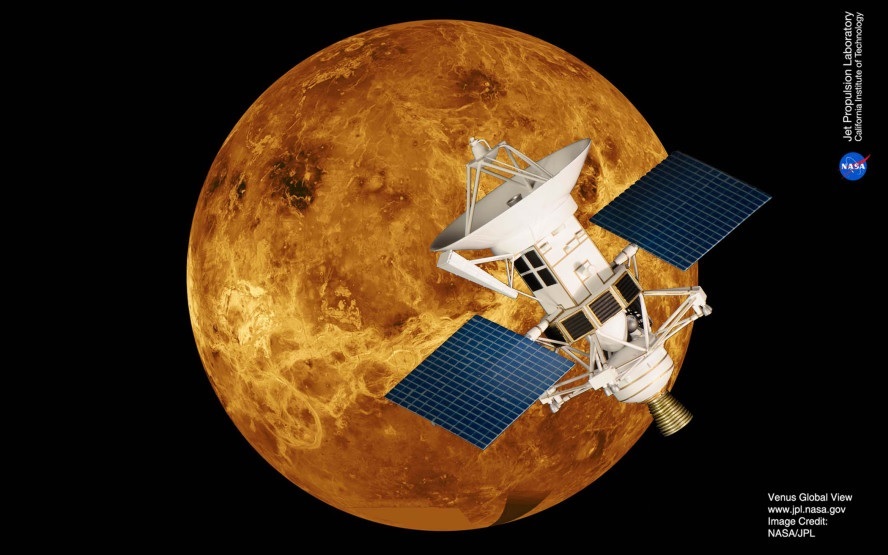
- 29 May 2024
Why is it in the News?
After analysing the archived data from the space agency’s Magellan mission, scientists suggest that Venus, the almost Earth-sized planet was volcanically active between 1990 and 1992.
What is the Magellan Mission?
- NASA's Magellan mission to Venus was one of the most successful deep space missions launched from Kennedy Space Center in Florida in the year 1989.
- It was the first spacecraft to image the entire surface of Venus and made several discoveries about the planet.
- Magellan burned up about 10 hours after being commanded to plunge into the Venusian atmosphere.
- Magellan's primary mission was to use a synthetic aperture radar (SAR) to create detailed maps of the surface of Venus.
- The SAR allowed Magellan to penetrate a thick cloud layer which made it challenging to study Venus from Earth.
- By mapping the planet's surface, scientists aimed to investigate the planet's geology and landforms, including its vast plains, steep mountains, and impact craters.
- Magellan was also sent to measure the planet's gravity and magnetic fields.
- This information was considered important to NASA scientists as it would provide more information about the planet's interior structure and composition.
- Because Venus is a planet close to Earth that compares in size and composition, mapping and studying Venus was considered an important mission as it added to understanding the evolution and geology of rocky planets like Earth.
What is the Magellan Spacecraft?
- The Magellan spacecraft was a space probe launched into space on May 4, 1989, by NASA on the Space Shuttle Atlantis.
- NASA named Magellan after the Portuguese explorer Ferdinand Magellan, who was the first documented person to circumnavigate the Earth.
- The Magellan probe aimed to map the planet Venus and collect data about its atmosphere and physical characteristics.
- Venus is the second planet from the sun in the Milky Way solar system and is, along with Mercury, one of two planets that orbit between Earth and the sun.
- Known for being the first spacecraft to map the surface of Venus, Magellan remained in Venus' orbit for four years before being burned up in its atmosphere in October 1994.
What does the study reveal?
- The study identified a 2.2 square kilometre volcanic vent associated with Maat Mons, the second-highest volcano on Venus, located in the Atla Regio near the planet's equator.
- The vent showed signs of drained lava, and the radar images indicated that it had doubled in size over eight months, with the lava lake seeming to have reached the rim. These changes suggested that the vent had been actively erupting and spewing lava.
This discovery provides new insights into the geology and activity of Venus and highlights the importance of studying the planet's surface features to better understand its history and evolution.
Shallow Aquifer Management (SAM)
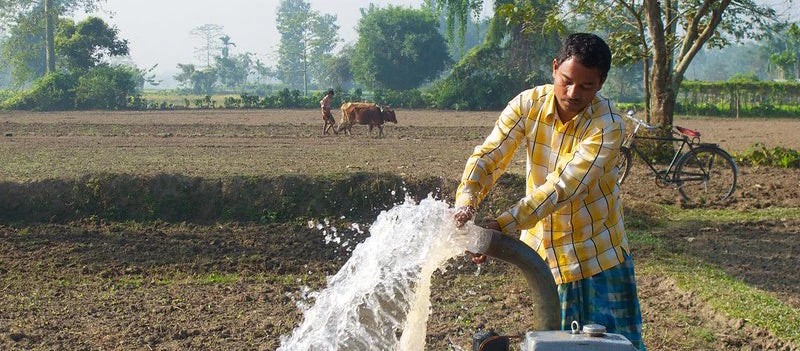
- 24 May 2024
Why is it in the News?
Securing water for the future as the mantra, the Greater Hyderabad Municipal Corporation (GHMC) in the latest intervention has taken up the Shallow Aquifer Management (SAM) model on a pilot basis in the city.
What is an Aquifer?
- An aquifer is a body of porous rock or sediment that is saturated with groundwater.
- Groundwater enters an aquifer through precipitation that seeps down through the soil.
- It can then move through the aquifer and emerge at the surface via springs and wells.
- Aquifers are classified into two types:
- Deep Aquifers
- Shallow Aquifers
What is Shallow Aquifer Management (SAM)?
- In 2022, the Atal Mission for Rejuvenation and Urban Transformation (AMRUT) launched a Shallow Aquifer Management (SAM) pilot program in ten cities across nine states:
- Bengaluru (Karnataka), Chennai (Tamil Nadu), Dhanbad (Jharkhand), Gwalior (Madhya Pradesh), Hyderabad (Telangana), Jaipur (Rajasthan), Kolkata (West Bengal), Pune and Thane (Maharashtra), and Rajkot (Gujarat).
- The SAM pilot is overseen by the National Institute of Urban Affairs (NIUA) and supported by the Advanced Center for Water Resources Development and Management (ACWADAM) in Pune and the Biome Environmental Trust in Bengaluru.
- Under SAM, the Greater Hyderabad Municipal Corporation (GHMC) has identified five municipal parks for implementation this year.
How does it work?
- The project involves drilling shallow water injection borewells to depths of 100-120 feet to extract water from shallow aquifers.
- This process helps recharge the underlying layers during rainfall events by collecting water from the surrounding watershed and directing it through recharge pits.
- Consequently, underground water layers are replenished, leading to a rise in the water table.
Boeing Starliner
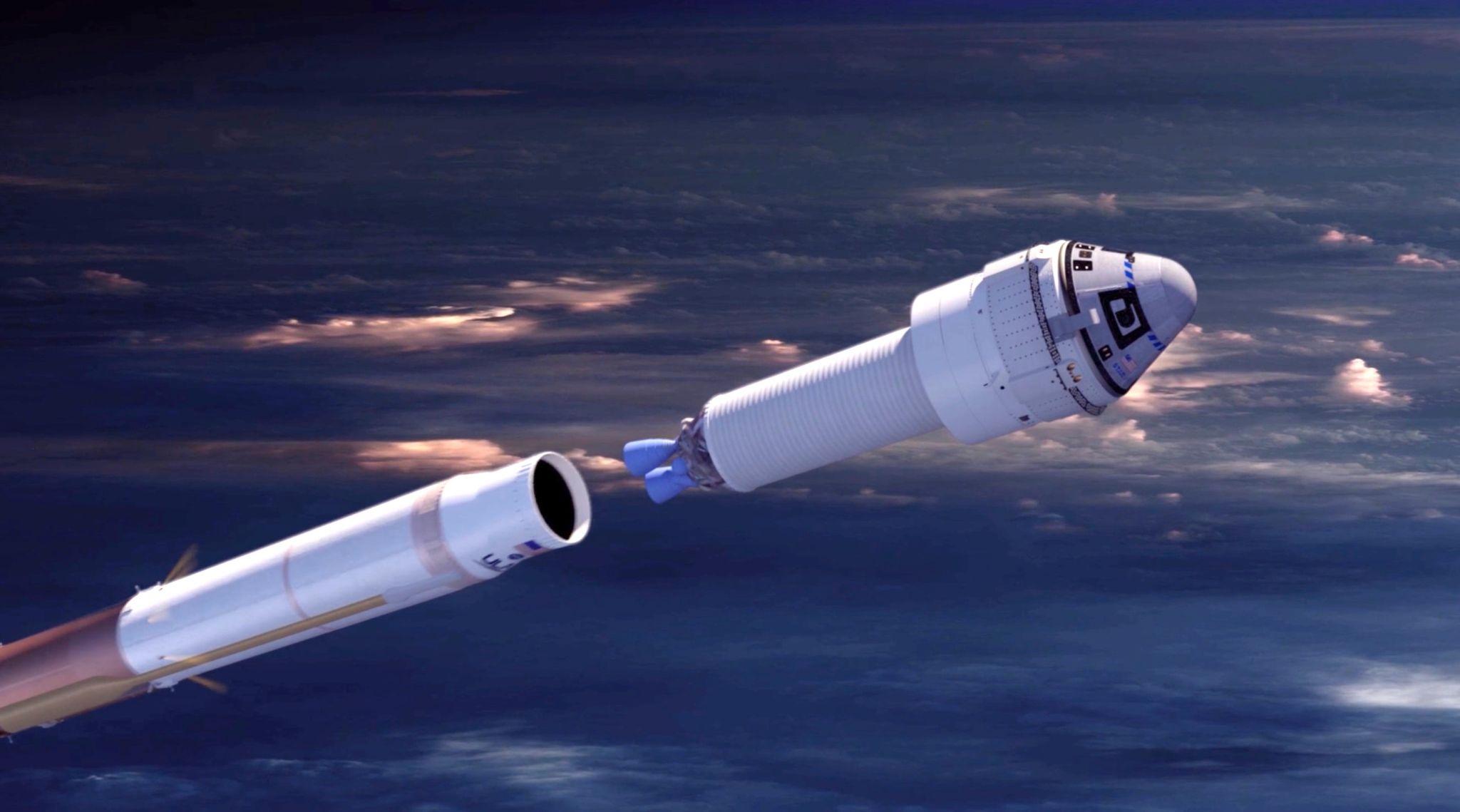
- 06 May 2024
Why is it in the News?
Boeing’s Starliner spacecraft, carrying two NASA astronauts, will be launched by an Atlas V rocket from the Kennedy Space Center in Cape Canaveral, Florida, to the International Space Station (ISS).
What is Boeing’s Starliner?
- Starliner, a reusable spacecraft, has a pusher abort system.
- This allows the crew to safely escape throughout the launch and the ascent phases of the mission.
- In addition to being software-driven, the Starliner has wireless internet that will help with “crew communication, entertainment and docking with the International Space Station”
- The spacecraft can fly and course-correct on its own.
- It operates like advanced self-driving cars, with features similar to sophisticated cruise control and hands-free driving, allowing astronauts to simply enjoy the ride without intervention.
- It also allows astronauts to choose their level of control.
- Consisting of a crew capsule and a service module, the Starliner aims to revolutionize space travel with its advanced features and capabilities.
Crew Capsule:
- The crew capsule is the heart of the spacecraft, providing housing for astronauts during their journey.
- Designed to withstand the rigours of reentry, the capsule ensures a safe return to Earth for its occupants.
Service Module:
- The service module is equipped with essential systems for astronaut survival, such as air and temperature control, water supply, and sanitation facilities.
- Additionally, it contains the necessary engines and fuel required for manoeuvring the spacecraft in space.
- This module is not reusable and is designed for single use.
Starliner Specifications:
- With a width of over 4 meters, the Starliner can accommodate up to seven astronauts at once.
- The spacecraft boasts a unique weldless structure, making it both durable and reusable, with a potential for up to 10 missions and a six-month turnaround time between launches.
- Furthermore, the Starliner incorporates modern technologies like wireless internet and tablet interfaces for enhanced crew interaction.
Launch Vehicle:
- The Starliner is compatible with the Atlas V rocket, operated by United Launch Alliance (ULA), a joint venture between Boeing and Lockheed Martin.
- This collaboration ensures the seamless integration of the spacecraft and launch vehicle, optimizing mission success.
Why is the mission significant?
- In 2014, NASA selected Boeing and SpaceX to develop spacecraft for transporting astronauts to the International Space Station (ISS).
- While SpaceX has already conducted multiple successful missions with its Dragon crew capsule, the Starliner's success would mark the first time the United States has two domestically produced spacecraft capable of carrying astronauts to space.
- Once operational, Boeing and SpaceX will alternate missions to the ISS, with each crew's expedition lasting up to six months.
- This partnership will continue until the ISS is decommissioned in the next decade.
China’s Chang’e-6 Mission
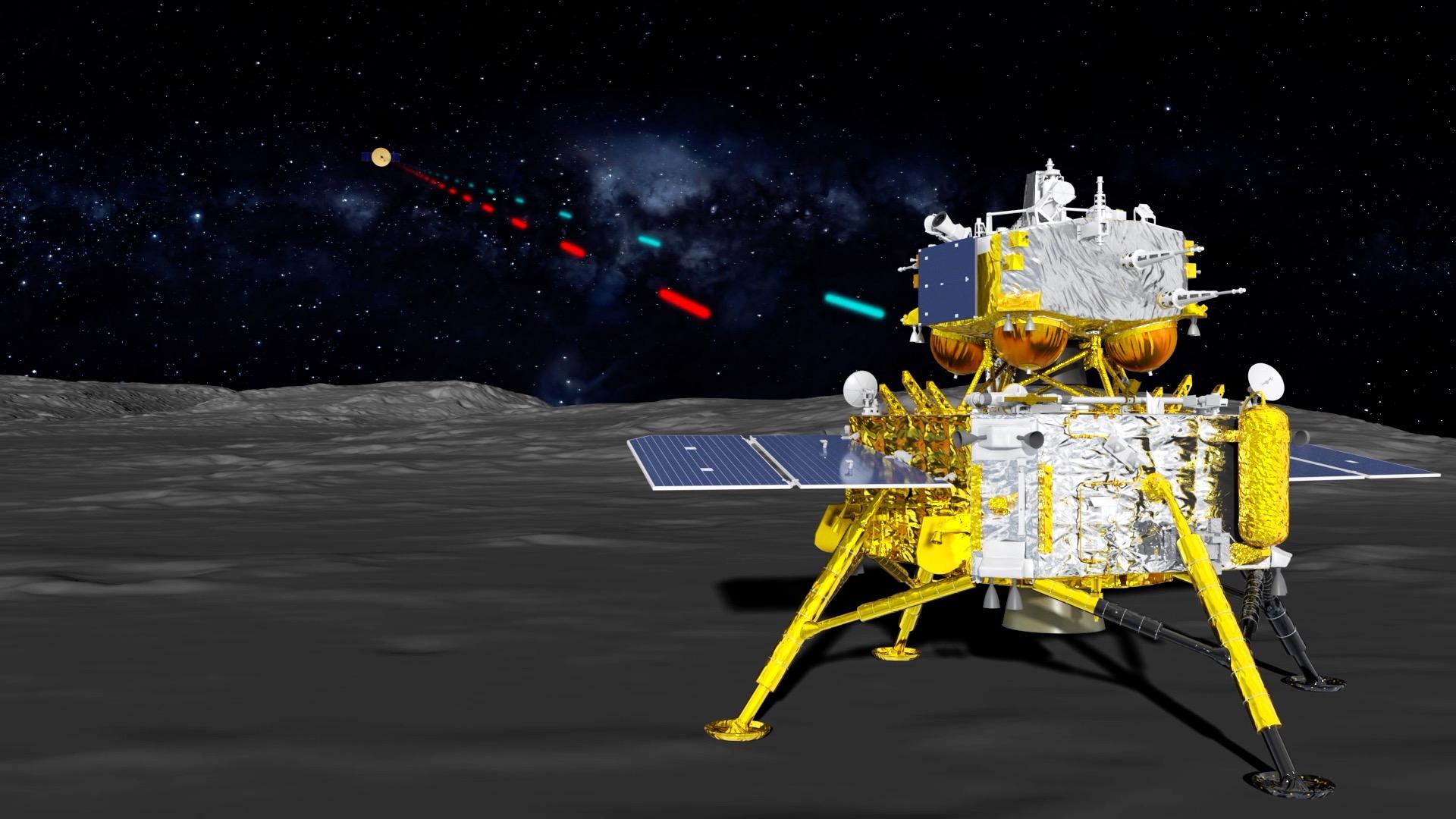
- 06 May 2024
Why is it in the News?
Recently, China launched its second mission to the far side of the Moon. If successful, it will be the world’s first mission to bring back samples from the part of the Moon that the Earth never gets to see.
What is Chang’e-6 Mission?
- China's Chang'e-6 spacecraft launched recently, on a mission to collect samples from the far side of the Moon.
- The mission aims to grab samples containing material ejected from the lunar mantle and thus provide insight into the history of the Moon, Earth, and Solar System.
- It is a 53-day-long mission. After reaching the Moon’s orbit, the mission’s orbiter will circle the natural satellite while its lander will descend into the 2,500-kilometre-wide South Pole-Aitken basin on the lunar surface.
- The impact that created the basin, among the largest in the history of the solar system, is thought to have dug up material from the lunar mantle.
- If that material can be retrieved, scientists can learn more about the history of the Moon’s insides.
- After collecting samples through scooping and drilling, the lander will launch an ascent vehicle, which will transfer the samples to the orbiter’s service module.
- This module will then return to the Earth.
- China is the only country to achieve a soft landing on the far side of the Moon.
- In 2019, its Chang’e-4 mission landed on the region and explored the Moon’s Von Karman crater with the help of a rover.
Why is the Far Side of the Moon Important?
- The Moon’s far side is often referred to as the dark side because it cannot be seen from the Earth, not because it does not catch the Sun’s rays.
- The Moon is tidally locked with the Earth and therefore, we see only one side of the Moon, also known as the near side.
- The far side has been under the spotlight in recent years as it is very different from the near side.
- It has a thicker crust, more craters and fewer maria, or plains where lava once flowed.
- Examining the samples from the far side can help scientists solve mysteries about the origin and evolution of the Moon — till now, scientists have only been able to analyse samples from the near side.
- The far-side samples can also give answers to the longstanding question: why is it different from the near side?
- Going to the far side, getting samples and doing different kinds of geophysical measurements is really important to figuring out this really long, long-standing mystery.
Electrolysers
- 03 May 2024
Why is it in the News?
Developing a domestic manufacturing infrastructure for electrolyzers is expected to reduce the cost of green hydrogen and strengthen India's competitive advantage.
What are Electrolysers?
- Electrolysers are devices that produce hydrogen through a chemical process called electrolysis, which splits water molecules into hydrogen and oxygen molecules using electricity.
How do They work?
- These devices consist of a stack of conductive electrodes separated by a membrane, to which a high voltage and current are applied.
- This induces an electric current in the water, causing it to decompose into its constituents: hydrogen and oxygen.
- The generated oxygen is either released into the atmosphere or stored for future use as a medical or industrial gas.
- The hydrogen produced can be stored as a compressed gas liquefied for industrial use or utilised in hydrogen fuel cells, which power various transportation vehicles like trains, ships, and aircraft.
Types of Electrolysers:
- Alkaline Electrolysers: This technology, predominantly used by the fertiliser and chlorine industries, employs thick membranes and nickel-based electrodes.
- It currently represents a significant portion of global electrolyser capacity.
- Proton Exchange Membrane (PEM) Electrolysers: Operating at high pressure, PEM electrolysers utilise thin perfluorosulfonic acid (PFSA) membranes.
- Though they require gold and titanium-plated electrodes and catalysts like platinum, iridium, and ruthenium, they produce high-purity hydrogen and are easy to cool, making them a popular choice.
- Solid Oxide Electrolysis Cell (SOEC) Electrolysers: These devices utilise heat to produce hydrogen from steam and are ideal for locations with available heat sources such as nuclear or industrial facilities.
- Operating at high temperatures ranging from 500 to 850 degrees Celsius.
- Anion Exchange Membrane (AEM) Electrolysers: Operating at significantly lower temperatures of 50 to 60 degrees Celsius, AEM electrolysers combine the less harsh conditions of alkaline electrolysers with the simplicity and high efficiency of PEM electrolysers.
Electrolyzers and Green Hydrogen Production:
- Green hydrogen is renewable hydrogen produced using water electrolysis technology and electricity generated from renewable energy sources, such as solar or wind.
- It is gaining unprecedented momentum globally, and it is believed that it is a key component in accelerating the shift to clean energy.
- The commercialization of electrolyzers can make green hydrogen more readily available and enable energy systems across the globe to undergo fundamental transformations to lower emissions and reduce their negative impact on the environment.
Indian Historical Records Commission (IHRC)
- 26 Apr 2024
Why is it in the News?
Recently, the Indian Historical Records Commission (IHRC) has adopted a new logo and motto.
About Indian Historical Records Committee (IHRC):
- The Indian Historical Records Committee (IHRC) is a national forum established in 1919, comprising creators, custodians, and users of records.
- Its primary purpose is to advise the Government of India on matters related to record management and their utilization for historical research.
Secretariat:
- The National Archives of India, New Delhi, serves as the Secretariat for the IHRC, formerly known as the Indian Historical Records Committee since 1911.
Leadership and Membership:
- Led by the Union Minister of Culture, the IHRC consists of 134 members, including government agencies, government-appointed nominees, representatives from State/UT Archives, universities, and learning institutions.
- Over the years, the IHRC has convened 62 sessions.
Committee Structure: The IHRC operates with two adjunct bodies:
- Editorial Committee: Responsible for reviewing and approving papers based on archival sources for presentation at committee sessions.
- Standing Committee: Tasked with reviewing the implementation of committee recommendations and providing input on meeting agendas.
- The Secretary of the Ministry of Culture chairs the Standing Committee of IHRC.
- The Indian Historical Records Commission (IHRC) has adopted a new logo and motto recently.
- The logo signifies the theme and uniqueness of IHRC entirely.
- The pages in the shape of lotus petals represent IHRC as the resilient nodal institution for maintaining historical records.
- The Sarnath pillar in the middle represents India's glorious past.
- Brown as the colour theme reinforces the organization's mission of preserving, studying, and honouring India's historical records.
- The motto translates as "Where history is preserved for the future."
- The IHRC plays a vital role in identifying, collecting, cataloging, and maintaining historical documents, manuscripts other sources of historical information.
- By doing so the Commission ensures that valuable historical knowledge is conserved for future generations.
- The motto, therefore, reflects the Commission's commitment to ensuring the safeguarding of historical documents and making these accessible for the benefit of present and future generations.
United Nations Entity for Gender Equality and the Empowerment of Women (UN Women)

- 18 Apr 2024
Why is it in the News?
According to a recent report by UN Women, six months into the war, Gaza is facing a humanitarian crisis disproportionately impacting women and girls.
What is UN Women?
- Founded in 2010 by the United Nations General Assembly as part of the UN reform agenda.
- Merges resources and mandates to create a more significant impact on gender equality and women's empowerment.
- Serves as a global advocate for women and girls, addressing their needs and accelerating progress.
Key Roles:
- Supports intergovernmental bodies like the Commission on the Status of Women in developing policies, global standards, and norms for gender equality.
- Assists member states in implementing these standards and offers technical and financial support upon request.
- Builds effective partnerships with civil society organizations.
- Leads and coordinates the UN system's work on gender equality while promoting accountability through regular monitoring of progress.
Sustainable Development Goals (SDGs):
- Works globally to realize the SDGs for women and girls.
- Promotes women's equal participation in all aspects of life.
Country-level Support:
- Collaborates with government and non-governmental partners in countries that request assistance.
- Helps implement policies, laws, services, and resources to advance gender equality.
Grant-making Funds:
- Fund for Gender Equality: Provides grants to support innovative, high-impact programs by government agencies and civil society groups.
- UN Trust Fund to End Violence against Women: Finances initiatives that address violence against women and girls.
Commission on the Status of Women (CSW):
- A global policy-making body focused on gender equality and women's advancement.
- Operates as a functional commission of the United Nations Economic and Social Council (ECOSOC).
Information and Advocacy:
- Regularly provides information on women's rights issues to the General Assembly, ECOSOC, and the Security Council.
- Maintains the UN Secretary-General's database on violence against women, tracking measures taken by UN Member States and organizations.
- UN Women plays a vital role in advancing gender equality and women's empowerment worldwide by providing crucial support, resources, and advocacy through its various initiatives and collaborations.
Voter Verifiable Paper Audit Trail (VVPAT)
- 02 Apr 2024
Why is it in the News?
The Congress has hailed as an “important first step” the Supreme Court’s notice to the Election Commission and the Centre on a plea seeking a complete count of VVPAT slips and said the matter should be decided before the Lok Sabha polls commence.
What is the Voter Verifiable Paper Audit Trail (VVPAT)?
- The Voter Verifiable Paper Audit Trail, or VVPAT system, was first introduced in 2014 for the first time during the 2014 Lok Sabha Elections.
- The ECI conducted pilot tests of VVPAT systems in a few constituencies in 2011, and after successful trials, VVPAT was gradually deployed across all polling stations in subsequent elections.
- It is connected to Electronic Voting Machines (EVM) and enables voters to confirm that their votes were cast as intended.
- The concept of VVPAT was to enhance the credibility and transparency of EVMs.
What are VVPAT Slips?
- VVPAT slips are an integral part of the EVMs used in elections.
- It provides a physical paper trail for voters to verify that their vote has been correctly recorded by the EVM.
- It ensures transparency and accountability in the electoral process by allowing voters to verify their vote before casting it finally.
- The VVPAT produces a paper slip that permits the voter to confirm the accuracy of their vote on the EVM.
- This slip displays the name and symbol of the party chosen by the voter.
- Additionally, the machine features a transparent window through which the voter can observe the printed slip.
- Subsequently, the slip is securely deposited into a sealed compartment within the machine.
- However, in the event of a dispute, this sealed box can be opened for further examination.
Controversies Surrounding VVPAT:
- Despite its intended purpose of enhancing transparency, VVPAT has been subject to several controversies over the years.
- Some critics have raised concerns about the reliability of VVPAT systems, citing instances of malfunctioning printers, paper jams, and discrepancies between electronic and paper records.
- The Opposition parties within the INDIA bloc have been advocating for the full counting of VVPATs, to bolster public trust in the EVMs, which itself has been subjected to intense scrutiny recently.
- Their concern has mostly stemmed from allegations of delay in the printing and displaying of VVPAT slips for every vote, which they claim can significantly increase the time required for vote counting.
Supreme Court’s intervention in VVPATs:
- In April 2019, the SC asked the poll panel to increase the number of EVMs that undergo VVPAT physical verification from one to five per assembly segment in a parliamentary constituency.
- In the month of May the same year, the Supreme Court dismissed a writ petition seeking 100 percent counting of VVPAT in the 2019 Lok Sabha elections.
- Earlier in the same month, the Supreme Court had also dismissed the review petition filed by opposition parties to increase verification of VVPAT-EVM to 50 percent.
C-Vigil App
- 30 Mar 2024
Why is it in the News?
Ever since the general election was announced two weeks ago, a total of 79,000 violations have been reported on the Election Commission of India’s (ECI) cVigil app across the country.
About C-Vigil App:
- cVigil is a user-friendly and easy-to-operate application, that connects vigilant citizens with the District Control Room, Returning Officer and Field Unit (Flying Squads), or Static Surveillance Teams.
- By using this app, citizens can immediately report incidents of political misconduct within minutes and without having to rush to the office of the returning officer.
- As soon as the complaint is sent on the cVigil app, the complainant receives a unique ID, through which the person will be able to track the complaint on their mobile.
- This creates a rapid and accurate reporting, action, and monitoring system.
The cVIGIL app enabled voters to
- Register Complaints: The app allows every citizen within the election boundaries to report the Model Code of Conduct / Expenditure Violations by taking photos/audio/video through their mobile phones by signing into the application.
- Anonymous User: The app also allows the citizen to complain anonymously, without revealing their details/ identity.
- Geotagging: The app automatically enables a geo-tagging feature when users switch on their camera in the cVIGIL to report a violation, which helps the field unit to know the precise location of the incident.
Benefits of the Application:
- cVIGIL is a convenient and user-friendly app allowing citizens to send pictorial evidence of the model code of conduct violations in their vicinity.
- Each reported incident is tracked and scrutinized from the beginning to the endpoint, thus bringing accountability into the system.
- The immediate location verification feature of the cVIGIL will act as a strong deterrence for miscreants and wrong-doers as they can be easily tracked.
- A combination of all these factors will encourage citizens to keep vigil over unhealthy electoral practices and bring them to the notice of the Election Commission.
- This in turn will help the commission reach its objective of conducting free and fair elections.
Solar and Heliospheric Observatory (SOHO)

- 28 Mar 2024
Why is it in the News?
Recently, NASA's Soho mission, which is tasked with observing the Sun, has captured its 5000th comet as it dives around the star in our Solar System.
About Solar and Heliospheric Observatory (SOHO):
- SOHO was built as a general solar observatory, with twelve suites of scientific instruments to track all of these properties of the Sun.
- During its operations, it has provided important insights, including:
- Details about the interior of the Sun,
- What sunspots look like beneath the surface,
- Measurements of the speed of the solar wind,
- The charged particles that escape from the corona,
- Mapping the magnetic field behavior over the Sun’s surface; and
- Revealing new phenomena such as “solar tornadoes”.
- Built in Europe, SOHO is operated jointly by ESA and NASA, with contributions from a large number of scientists, engineers, and other staff around the world.
- The spacecraft was launched in 1995 with a planned two-year mission.
- Its work was successful enough to justify keeping the observatory going, and it’s still operating more than 20 years later.
- The probe orbits the Sun at a place where the gravity of the Sun and Earth balance each other out, known as the first Lagrange point (L1).
- Center for Astrophysics (CfA) scientists and engineers provided SOHO’s Ultraviolet Coronagraph Spectrometer (UVCS), which operated until 2013 and measured the ultraviolet spectrum of the hot solar atmosphere.
- UVCS provided the insight that the corona is too hot to be produced by ordinary thermal transfer, where particles collide and pass energy to each other.
- Instead, the corona and solar wind must be accelerated by the magnetic field interactions in some way.
- Other SOHO instruments measure the speed and composition of the solar wind; the seismic waves that travel across the Sun’s surface; the fluctuations in the temperature, composition, and density of different parts of the corona; and the motion of matter upward from the Sun’s interior to its surface.
Black Carbon
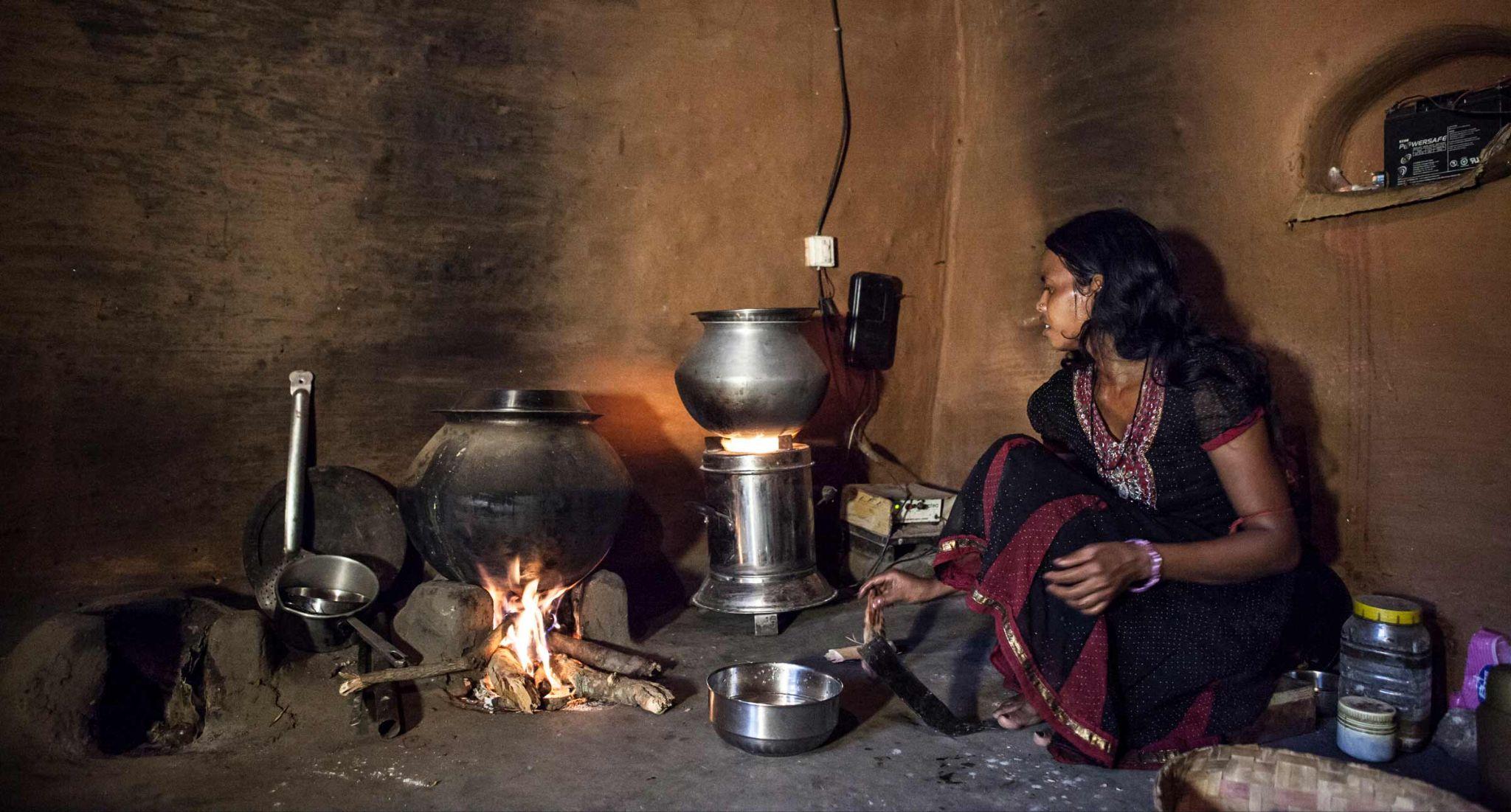
- 27 Mar 2024
Why is it in the News?
As per a study, the residential sector is responsible for 47% of India's overall black carbon emissions.
What is Black Carbon?
- Black carbon is the dark, sooty material emitted alongside other pollutants when biomass and fossil fuels are not fully combusted.
- It contributes to global warming and poses severe risks.
- Studies have found a direct link between exposure to black carbon and a higher risk of heart disease, birth complications, and premature death.
- Most black carbon emissions in India arise from burning biomass, such as cow dung or straw, in traditional cookstoves.
- According to a 2016 study, the residential sector contributes 47% of India’s total black carbon emissions.
- Industries contribute a further 22%, diesel vehicles 17%, open burning 12%, and other sources 2%.
- Decarbonization efforts in the industry and transport sectors in the past decade have yielded reductions in black carbon emissions, but the residential sector remains a challenge.
- Black carbon is a potent contributor to global warming due to its efficient absorption of light and subsequent heating of its surroundings.
- This process leads to the conversion of incoming solar radiation into heat.
- Moreover, black carbon influences cloud formation and affects regional circulation and precipitation patterns.
- When deposited on ice and snow, it diminishes surface albedo, reducing their ability to reflect sunlight and causing surface warming.
Impacts:
- Black carbon significantly contributes to global warming and poses substantial risks to human health.
- Exposure to black carbon has been linked to increased incidences of heart disease, birth complications, and premature mortality.
- Its warming effect on climate is estimated to be 460-1,500 times more potent than that of CO2.
Small-Scale LNG (SSLNG)
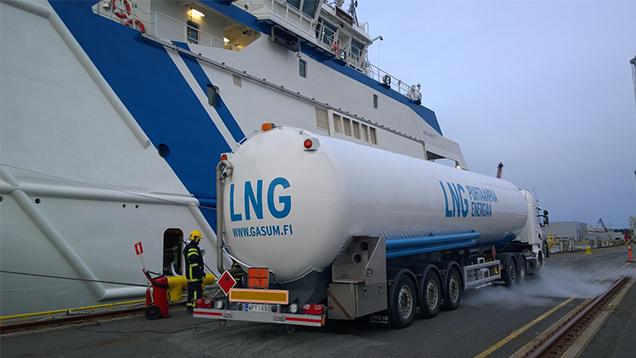
- 20 Mar 2024
Why is it in the News?
India's largest gas utility GAIL (India) Ltd commissioned the country's first SSLNG unit at its Vijaipur complex in Madhya Pradesh recently.
India Unveils Its First Small-Scale LNG Plant:
- In a significant step towards a cleaner energy mix, GAIL (India) Ltd. has commissioned India's first Small-Scale LNG (SSLNG) plant in Vijaipur, Madhya Pradesh.
- This plant will produce 36 tonnes of Liquefied Natural Gas (LNG) daily, utilizing cutting-edge technology like treatment skids and liquefaction skids to convert natural gas into LNG.
- As part of India's commitment to increasing the proportion of natural gas in its primary energy mix from 6% to 15% by 2030, the SSLNG plant will play a pivotal role in reducing pollution emissions while catering to the nation's growing energy demands.
- This milestone achievement paves the way for a greener future and positions India as a significant player in the global LNG landscape.
What is Small-Scale LNG?
- Small-scale LNG (SSLNG) is an emerging industry that offers a novel approach to natural gas distribution.
- While there is no standard international definition, SSLNG typically involves the liquefaction and transportation of natural gas in smaller quantities using specialized trucks and vessels.
- This allows for the supply of LNG to industrial and commercial consumers in regions without pipeline connectivity.
- SSLNG can be sourced from existing large-scale LNG import terminals or small liquefaction plants in gas-rich locations.
- End-users regasify the LNG using small vaporizers for traditional use cases like supplying Compressed Natural Gas (CNG) for vehicles and piped gas for households and industries.
- Alternatively, LNG can be supplied in its liquid form for direct use.
Benefits of Small-Scale LNG (SSLNG):
- Expanded Accessibility: SSLNG overcomes the constraints of traditional pipeline infrastructure, enabling natural gas delivery to regions previously lacking access.
- This opens new avenues for cleaner fuel alternatives and widespread energy availability.
- Operational Flexibility: SSLNG's modular design allows for rapid deployment in response to local demand fluctuations, making it an ideal solution for remote locations, industrial environments, and diverse transportation requirements.
- Sustainability Promotion: By fostering the adoption of cleaner fuels, SSLNG significantly reduces emissions in various transportation sectors, including trucks, buses, and marine vessels. This contributes to a greener future and combats climate change.
- Strengthened Energy Security: Decentralized SSLNG distribution systems diversify fuel sources and bolster energy security, ensuring reliable and stable energy supply amid global fluctuations and uncertainties.
Challenges of Small-Scale LNG (SSLNG) Implementation:
- Vehicle Availability Constraints: Limited options for LNG-powered vehicles impede the widespread adoption of LNG as a fuel source, underscoring the need for increased production and diversification of vehicle models.
- Insufficient Retail Infrastructure: The lack of a well-established LNG retail network hinders convenient consumer access to LNG fuel, emphasizing the importance of infrastructure expansion and enhancement.
- Higher Upfront Investment: The comparatively higher initial costs of LNG vehicles compared to traditional diesel options may deter potential buyers, necessitating innovative financial solutions and incentives.
- Financing Barriers: The absence of dedicated financing options for LNG vehicles poses obstacles for interested buyers, requiring tailored financial instruments to support SSLNG uptake.
- Restricted Pipeline Coverage: SSLNG faces logistical challenges in areas without existing natural gas pipeline networks, highlighting the need for infrastructure development to extend its reach to remote regions.
- Regulatory and Permitting Hurdles: SSLNG projects may encounter regulatory and permitting setbacks, including environmental and safety concerns, potentially prolonging project timelines and inflating costs.
- Addressing these challenges is essential for expediting SSLNG implementation and fostering its growth.
SAKHI App To Assist Gaganyaan Crew

- 19 Mar 2024
Why is it in the News?
The Vikram Sarabhai Space Centre (VSSC), the Indian Space Research Organisation (ISRO) facility at Thumba in Thiruvananthapuram, has developed a multi-purpose app that will help astronauts on the Gaganyaan space flight mission carry out a range of tasks such as looking up vital technical information or communicating with one another.
About SAKHI App:
- The Vikram Sarabhai Space Centre (VSSC), an ISRO facility in Thumba, Thiruvananthapuram, has created the versatile 'SAKHI' app for astronauts on the Gaganyaan space flight mission.
- SAKHI stands for 'Space-borne Assistant and Knowledge Hub for Crew Interaction'.
Purpose:
- During the mission, the app will assist Gaganyaan crew members in various tasks such as accessing vital technical information and communicating with each other.
Utility:
- Health Monitoring: It will monitor key health parameters like blood pressure, heart rate, and oxygen saturation, providing crucial insights into the crew's physical condition during the mission.
- Additionally, it will remind them of hydration, dietary schedules, and sleep patterns.
- Connectivity:
- Astronauts can use the app to maintain mission logs in various formats, including voice recordings, texts, and images.
- It will ensure seamless communication between the crew, the onboard computer, and ground-based stations.
- Current Status: An engineering model of the custom-built hand-held smart device featuring SAKHI has been tested, with the development of a flight model underway.
About the Gaganyaan Mission:
- The primary objective of the mission is to demonstrate the capability to launch and safely return three crew members to low Earth orbit.
- The Launch Vehicle Mark-3 (LVM3) is designated as the launch vehicle for the Gaganyaan mission.
- Crew Escape System (CES): A vital component of the mission, CES is powered by quick-acting, high-burn rate solid motors.
- It ensures the safe evacuation of the Crew Module and crew in case of emergencies during launch or ascent.
- Orbital Module: Comprising the Crew Module (CM) and Service Module (SM), the Orbital Module orbits the Earth, providing safety and support throughout the mission phases.
- Crew Module (CM): Designed to offer a habitable space with Earth-like conditions for the crew during their time in space.
- Service Module (SM): This module supports the CM during orbit, containing essential systems such as thermal, propulsion, power, avionics, and deployment mechanisms.
- This will mark ISRO's inaugural manned spaceflight mission, joining the ranks of the US, Russia, and China, which have previously conducted human spaceflights.
Vision for Edible Oil Self-Reliance takes root in the North-East

- 15 Mar 2024
Why is it in the News?
Prime Minister Narendra Modi has reiterated the Government’s commitment to move towards self-sufficiency in edible oils production and harped on the importance of oil palm cultivation in the northeast region.
About the National Mission for Edible Oils - Oil Palm (NMEO-OP):
- The National Mission for Edible Oils - Oil Palm (NMEO-OP) is an initiative launched by the Government of India in August 2021 to significantly enhance oil palm cultivation and crude palm oil production.
- This centrally sponsored scheme prioritizes the North East region and the Andaman and Nicobar Islands, aiming to boost the area and productivity of oilseeds and Oil Palm.
- The targets of NMEO-OP include expanding the oil palm area to 10 lakh hectares by 2025-26, a substantial increase from 3.5 lakh hectares in 2019-20, along with elevating Crude Palm Oil production to 11.20 lakh tonnes by 2025-26 from 0.27 lakh tonnes in 2019-20.
- Furthermore, the mission seeks to enhance consumer awareness to maintain a consumption level of 19.00 kg/person/annum until 2025-26.
- Implementation of NMEO-Oil Palm involves various stakeholders such as the State Departments of Agriculture and Horticulture, Central University, ICAR-Institutions, CDDs, SAUs, KVKs, Central Agencies/Cooperatives, Oil palm processors/ Associations, DD Kisan, AIR, DD, TV channels.
- The salient features of NMEO-OP encompass assistance for planting material, inputs for intercropping up to a gestation period of 4 years, the establishment of seed gardens and nurseries, micro-irrigation, bore well/pump set/water harvesting structure, vermicompost units, solar pumps, harvesting tools, custom hiring center cum harvester groups, farmers and officers training, and replanting of old oil palm gardens, among others.
Oil Palm Production in India:
- Originating in West Africa, Oil Palm (Elaeis guineensis) is a relatively recent crop in India known for its high vegetable oil yield per hectare.
- It yields two main oils, palm oil, and palm kernel oil, utilized in both culinary and industrial applications.
- The primary oil palm-growing states in India include Andhra Pradesh, Telangana, and Kerala, which collectively contribute to 98% of the total production.
- Additionally, Karnataka, Tamil Nadu, Odisha, Gujarat, and Mizoram also have significant areas dedicated to oil palm cultivation.
Mission Divyastra: India's Agni-V missile makes maiden flight with MIRV
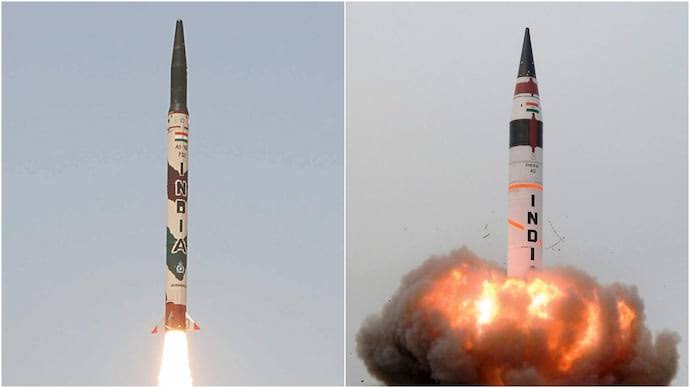
- 12 Mar 2024
Why is it in the News?
India on Monday announced the successful testing of an Agni missile capable of carrying multiple warheads meant to hit multiple targets simultaneously.
What are Agni-5 Missiles?
- Agni is a long-range missile developed indigenously by the Defence Research and Development Organisation, DRDO.
- The family of Agni missiles has been in the arsenal of the Indian armed forces since the early 1990s.
- This latest variant of the missile is equipped with what is known as MIRV (Multiple Independently Targetable Re-entry Vehicle) technology, first developed at least five decades ago but in possession of only a handful of countries.
Salient Features of Agni-5:
- Powered by a three-stage solid-fuel engine, Agni-5 boasts a range exceeding 5,000km.
- The Agni series encompasses medium to Intercontinental variants, spanning Agni-1 to Agni-5, with ranges varying from 700 km to over 5,000 km.
- DRDO’s successful June 2021 test of Agni P, a canisterized missile, demonstrated a range capability ranging between 1,000 and 2,000 km.
- With its ability to be launched from both road and rail platforms, Agni-5 ensures ease of deployment and swift launch capabilities.
What is MIRV Technology?
- The MIRV have revolutionized the concept of ballistic missile payloads by enabling a single missile to carry multiple warheads, each capable of targeting enemies at different locations.
- The technology was first introduced in the US with the successful test of the Minuteman III in 1968, which brought the technology into actual use in the 1970.
- The Soviet Union developed their own MIRV-enabled ICBM and SLBM technology by the end of the 1970s.
- The strategic shift started by MIRV has enabled many nations to greater target damage and reduce the effectiveness of enemy missile systems, altering the landscape of global nuclear deterrence.
- The warheads on MIRVs can be launched at different speeds and in different directions.
- Some MIRVed missiles can hit targets as far as 1,500 km apart.
- The technology requires a delicate combination of large missiles, small warheads, precise guidance, and a complex mechanism for releasing warheads sequentially during flight.
How does MIRV Work?
- The MIRV-equipped missile follows a trajectory into space similar to other ballistic missiles.
- After the boost phase, the missile’s upper stage, known as ‘bus’, reaches suborbital spaceflight, and aligns itself based on designated targets.
- The ‘bus’ sequentially deploys multiple warheads along with decoys and countermeasures.
- Each warhead can be assigned a different target or trajectory.
- After the deployment, the warheads re-enter the Earth’s atmosphere and proceed to their respective targets.
What are the Challenges?
- The MIRV technology enhances first-strike proficiency and complicates the calculus of mutual assured destruction.
- With the ability to deploy multiple warheads from a single missile, nations can achieve a broader spread of targets, making the defense system less effective and more costly.
- Although MIRVs were not initially made to defeat ballistic missile defenses, they are much more difficult to defend against than traditional missiles.
- Possession of MIRV technology not only exhibits a country’s nuclear prowess but plays a crucial role in shaping international security and nuclear deterrence strategies.
UGC notifies framework for private universities to set up off-campus centers
- 11 Mar 2024
Why is it in the News?
In line with the “future academic vision” instead of “commercial interests”, the UGC has notified modalities on March 6 for state private universities to set up off campus centers within their respective states.
News Summary:
- The University Grants Commission (UGC) recently permitted private universities to establish off-campus centers and outlined regulations for the same.
- Previously, private universities in the country were restricted from opening off-campus centers in other states.
- In a meeting held on March 5, the UGC decided to authorize state private universities to establish off-campus centers across the country, provided they meet specific criteria.
- Criteria include a minimum of five years of establishment and accreditation from the National Assessment and Accreditation Council (NAAC), without requiring an A or B grade.
- Universities seeking to establish off-campus centers must meet staff, infrastructure, and financial requirements mandated by the commission and obtain approvals from statutory and regulatory bodies.
- These universities must ensure the provision of infrastructure, faculty, and courses offered at the main campus to students at their off-campus centers.
- A one-time establishment fee of Rs 10 lakh is required to be paid to the UGC by the universities.
- The UGC reserves the right to conduct inspections and take punitive actions against universities in case of irregularities or complaints.
- Additionally, the UGC may order the closure of a university’s off-campus center for violations, with the university responsible for relocating affected students to the main campus.
About University Grants Commission (UGC):
- The University Grants Commission (UGC) of India operates as a statutory body established under the UGC Act, 1956.
- Its primary mandate encompasses coordinating, determining, and upholding standards within higher education institutions across India.
- UGC holds the authority to grant recognition to universities and colleges within the country and allocates funds to these recognized institutions.
- Nodal Ministry: Department of Higher Education, Ministry of Education.
Mandate of UGC:
- Facilitating and coordinating university education initiatives.
- Establishing and maintaining standards in teaching, examination, and research activities within universities.
- Formulating regulations to define minimum education standards.
- Monitoring advancements in collegiate and university education while disbursing grants to these institutions.
- Serving as a crucial intermediary between the Union and State governments and higher education institutions.
- Providing advisory services to the Central and State governments concerning measures aimed at enhancing university education standards.
Conclusion
Academic experts said that this decision may prove beneficial for students as they will get more options to choose from. However, it also means that the 16 government-run universities in the state will face more competition. More students may shift to these centers, leaving a large number of approved seats in the public universities vacant every year.
Union Cabinet approves India AI Mission with 10,372 cr outlay

- 08 Mar 2024
Why is it in the News
India has made its first move to address a key shortcoming it currently has in unlocking opportunities around generative artificial intelligence (AI) – that of computing hardware.
What is IndiaAI Mission?
- India's AI Mission entails the launch of an artificial intelligence (AI) initiative, announced by the Prime Minister at the Global Partnership on Artificial Intelligence (GPAI) Summit 2023 in New Delhi, with implementation overseen by the 'IndiaAI' Independent Business Division (IBD) under Digital India Corporation (DIC).
- Led by the Ministry of Electronics and IT (MeitY), the mission aims to establish a computing capacity exceeding 10,000 graphics processing units (GPUs) and develop foundational models trained on datasets encompassing major Indian languages, focusing on priority sectors such as healthcare, agriculture, and governance.
- Additionally, the mission will involve the establishment of AI Curation Units (ACUs) in 50-line ministries and the creation of an AI marketplace to provide AI services and pre-trained models to AI application developers.
- Implementation of the AI computer infrastructure will follow a public-private partnership model, with 50% viability gap funding, with Rs 4,564 crore allocated from the total outlay of Rs 10,372 crore for building computing infrastructure.
Key Features of the IndiaAI Mission:
- IndiaAI Compute Capacity: Establishing a scalable AI computing ecosystem to meet the growing demands of India's burgeoning AI start-ups and research community.
- IndiaAI Innovation Centre: Focusing on the development and deployment of indigenous Large Multimodal Models (LMMs) and domain-specific foundational models in critical sectors.
- IndiaAI Datasets Platform: Streamlining access to high-quality non-personal datasets to fuel AI innovation.
- IndiaAI Application Development Initiative: Promoting the adoption of AI applications in critical sectors, addressing problem statements sourced from Central Ministries, State Departments, and other entities.
- IndiaAI FutureSkills: Mitigating barriers to entry into AI programs by expanding AI courses at undergraduate, master's, and Ph.D. levels.
- IndiaAI Startup Financing: Supporting and accelerating deep-tech AI startups by providing streamlined access to funding for futuristic AI projects.
- Safe & Trusted AI: Ensuring the responsible implementation of AI projects through the development of indigenous tools and frameworks to foster trust and safety in AI applications.
The Significance of the IndiaAI Mission:
- The IndiaAI Mission aligns with the vision of fostering indigenous AI development and leveraging AI technology for the benefit of India.
- It aims to demonstrate to the international community the positive impact of AI technology on society, thereby enhancing India's global competitiveness.
- By establishing a comprehensive ecosystem for AI innovation through strategic partnerships across public and private sectors, the mission will catalyze AI-driven advancements.
- It will foster creativity and bolster internal capabilities, ensuring India's technological sovereignty.
- Furthermore, the mission is poised to create employment opportunities that demand advanced skills, leveraging India's demographic advantage.
PM Modi launches India’s first hydrogen-powered ferry built at Cochin Shipyard

- 01 Mar 2024
Why is it in the News?
Prime Minister Modi recently virtually launched India’s first indigenously developed hydrogen fuel cell ferry manufactured by Cochin Shipyard Limited (CSL), which will be deployed for service at Varanasi in Uttar Pradesh.
What is the "Harit Nauka" (Green Boat) Initiative?
- Initiated by the Ministry of Ports, Shipping, and Waterways, "Harit Nauka" aims to facilitate a sustainable transition of inland vessels.
- In January 2024, the shipping ministry introduced the "Harit Nauka" guidelines, outlining the path towards environmentally friendly practices for inland vessels.
- According to these guidelines, all states are mandated to progressively adopt green fuels for 50% of their inland waterway-based passenger fleets within the next decade, to achieve 100% adoption by 2045. This initiative aligns with the Maritime Amrit Kaal Vision 2047, aimed at reducing greenhouse gas emissions.
- The implementation of this initiative not only contributes to reducing emissions but also paves the way for replicating such environmentally friendly ferry models across the country to enhance urban mobility.
- Furthermore, it serves as a significant catalyst for advancing the objectives of the National Green Hydrogen Mission.
What are Hydrogen Fuel Cells?
- Hydrogen fuel cells harness the chemical energy of hydrogen to generate electricity, offering a clean energy solution with electricity, heat, and water as the sole products and by-products.
Functioning:
- Similar to batteries, fuel cells continuously produce electricity and heat as long as fuel is supplied. A typical fuel cell comprises two electrodes—an anode (negative electrode) and a cathode (positive electrode)—surrounding an electrolyte.
- Hydrogen fuel is supplied to the anode, while air is directed to the cathode. At the anode, a catalyst separates hydrogen molecules into protons and electrons, which then travel different paths.
- Electrons create an electric current through an external circuit, while protons migrate through the electrolyte to the cathode, combining with oxygen and electrons to form water and heat.
Challenges in India:
- High Cost: Fuel cell systems remain relatively expensive compared to conventional energy sources.
- Infrastructure Deficiency: India currently lacks the necessary infrastructure for the widespread adoption of fuel cell technology, including hydrogen production and distribution networks.
- Technical Hurdles: Despite ongoing advancements, fuel cell technology is still in its nascent stages, facing persistent technical challenges.
- Policy Constraints: The absence of a comprehensive policy framework from the Indian government has constrained the development and adoption of fuel cell technology, impeding research and investment.
India's Initiatives:
- In response to these challenges, India has formulated the National Green Hydrogen Policy, delineating a vision for the growth of the hydrogen and fuel cell industry.
- The policy aims to position India as a global hub for the production, utilization, and export of Green Hydrogen and its derivatives, signalling a strategic commitment to advancing sustainable energy solutions.
Characteristics of the Hydrogen-Powered Ferry:
- Length and Capacity: The hydrogen fuel cell vessel is a 24-meter-long catamaran, capable of accommodating up to 50 passengers in its air-conditioned passenger area.
- Battery-Free Operation: Distinguished by its innovative design, this ferry does not rely on conventional batteries for storing electrical energy.
- Instead, it utilizes hydrogen fuel, stored in cylinders onboard the vessel. With five hydrogen cylinders capable of carrying 40kg of hydrogen, the ferry can sustain operations for eight hours. Additionally, it features a 3-kW solar panel to complement its power source.
- Fuel Cell Technology: Equipped with a 50-kW PEM (proton-exchange membrane) fuel cell, coupled with Lithium-Ion Phosphate batteries, the ferry boasts adaptability in response to varying power demands.
- PEM fuel cells, renowned for their lower operating temperature, lightweight, and compactness, are commonly employed in automotive applications.
- Environmental Sustainability: With zero emissions and noise, coupled with enhanced energy efficiency, the hydrogen fuel cell-powered ferry stands as an environmentally friendly alternative.
- Its minimal moving parts contribute to reduced maintenance requirements compared to combustion vessels.
- Additional Advantages: While hydrogen fuel cell technology has been in development for maritime purposes, only a handful of countries worldwide have executed demonstration projects.
- Thus, this ferry positions India at the forefront, providing an early advantage in harnessing the potential of hydrogen as an emerging green fuel within the marine sector.
An initiative to improve nutrition in adolescent girls using Ayurveda under Mission Utkarsh
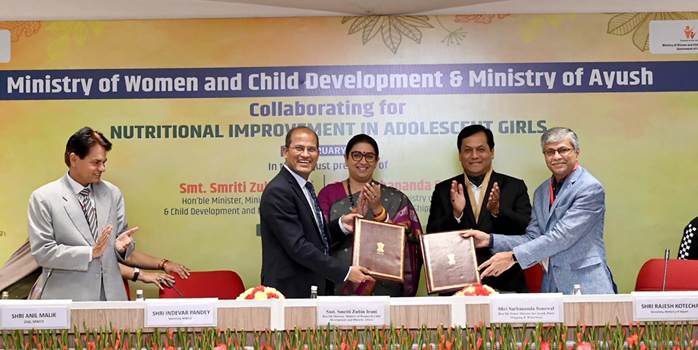
- 27 Feb 2024
Why is it in the News?
The project for anemia control under Mission Utkarsh will be a joint public health initiative by the Ministries of Ayush and Women and Child Development and will be launched in five aspirational districts first as a pilot project.
About Mission Utkarsh:
- Mission Utkarsh was launched in January 2022, a new initiative of “rapid improvement of selected Districts” to improve.
- Under this mission, 15 central ministries and departments are working to bring select key performance indicators in bottom districts to the state and national average.
- Over 94,000 adolescent girls between the age group of 14-18 years registered under Poshan Tracker at approximately 10,000 Anganwadi Centres will benefit in 12 12-month periods of the program.
- The coordinating agency for the project will be the Central Council for Research in Ayurvedic Sciences (CCRAS).
- Classical Ayurveda medicines (Drakshavaleha and Punarnavadi mandoor) for better nutrition to improve the health of the anemic adolescent girls will be provided for a period of 3 months.
- These five districts are Dhubri in Assam, Bastar in Chhattisgarh, Paschimi Singhbhum in Jharkhand, Gadchiroli in Maharashtra, and Dholpur in Rajasthan.
- Building research capacity through training, conferences, workshops, and seminars with the active participation of researchers of integrative healthcare would be enhanced.
What is Anaemia?
- According to WHO, anemia occurs when there is a lower-than-normal count of red blood cells or a reduced hemoglobin concentration within them, crucial for oxygen transport throughout the body.
Symptoms
- This condition leads to symptoms like fatigue, weakness, dizziness, and shortness of breath due to decreased oxygen-carrying capacity in the blood.
Causes:
- Iron deficiency is the most common nutritional cause, although deficiencies in folate, vitamins B12 and A can also contribute.
- Chronic diseases like kidney or liver disease, cancer, and genetic conditions such as sickle cell anemia further exacerbate anemia.
Significance:
- Anaemia has significant implications, particularly affecting vulnerable populations like pregnant women and children under five, impacting reproductive health and reducing work capacity, thus posing an economic burden.
Anaemia in India:
- India faces a substantial anemia burden, with recent surveys indicating alarming prevalence rates among women aged 15-49 and children aged six months to five years, highlighting the urgent need for public health interventions.
First moon-landing by private company
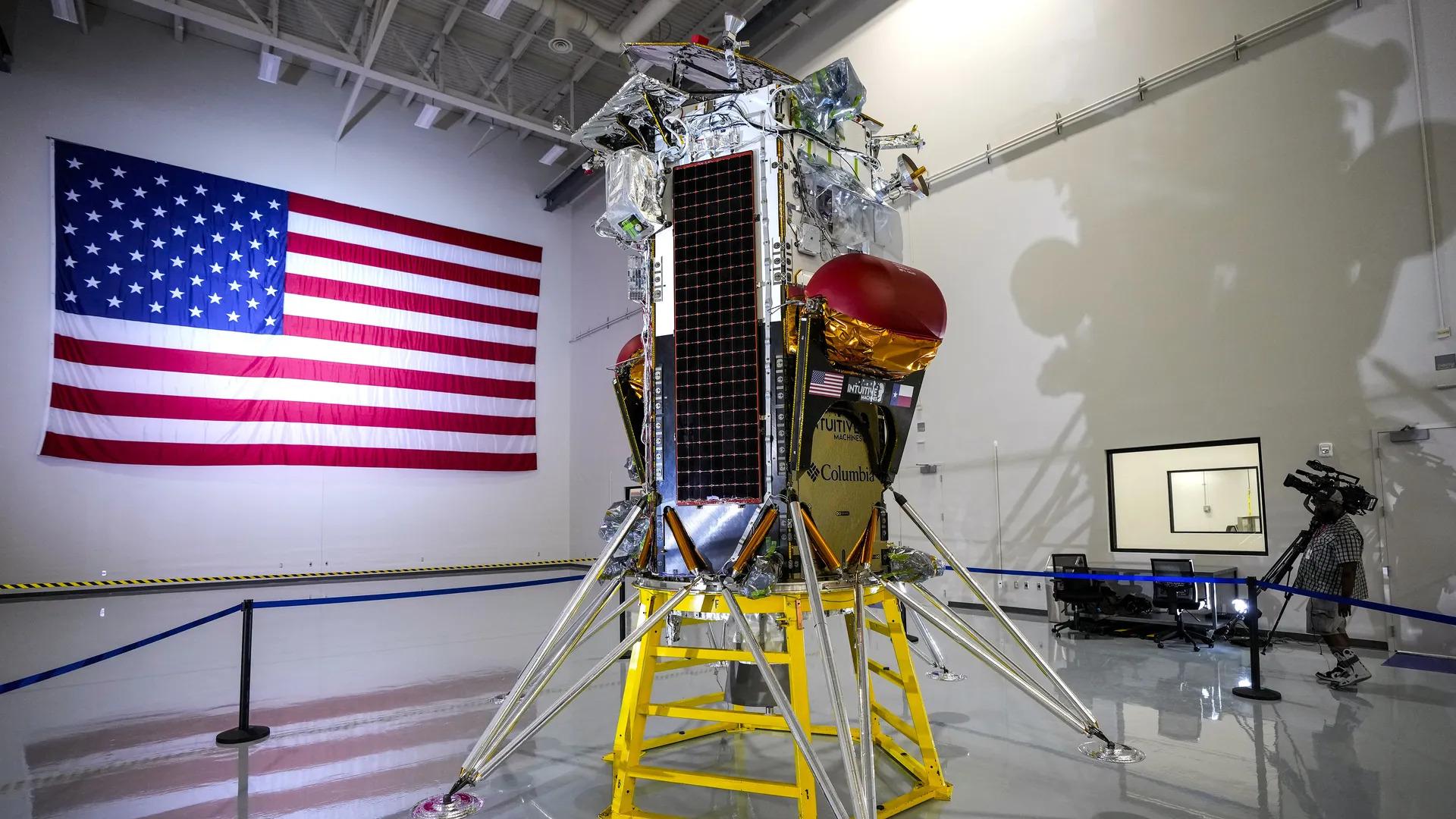
- 24 Feb 2024
Why is it in the News?
Fifty-two years after the last successful Apollo mission, a US-made spacecraft landed on the Moon recently which also marks the arrival of private space companies on the lunar surface.
What is Odysseus Lunar Exploration?
- Odysseus is a spacecraft built by Intuitive Machines, embarked on its journey from Earth aboard a Falcon 9 rocket by SpaceX recently.
- Intuitive Machines, headquartered in Houston, USA, boasts a decade-long legacy in space exploration endeavours.
- Loaded with six NASA payloads, Odysseus set its course for the Moon.
- Its lander module, Nova-C, achieved the milestone of landing in the Moon's south pole region, following Chandrayaan-3's similar feat last year.
- This marks the third successful moon-landing event in under a year, alongside Chandrayaan-3 and Japan's SLIM (Smart Lander for Investigating Moon).
Mission Objectives:
- The primary aim of the lunar lander is to assess the environmental conditions at the Moon's south pole.
- This assessment holds significant importance as NASA gears up for a crewed mission in September 2026 with Artemis III.
- Before sending astronauts to this area, NASA seeks to gather crucial data, including insights into water presence and accessibility, to inform mission planning.
Funding:
- Under the Commercial Lunar Payload Services (CLPS) program, NASA allocated $118 million to Intuitive Machines for this mission.
- CLPS has engaged at least 14 private companies to ferry NASA payloads to the Moon, fostering a collaborative environment aimed at nurturing the private space industry's capabilities in lunar exploration technology and science.
The Significance of Odysseus:
- Advancing Long-Term Lunar Presence: Odysseus' successful landing heralds a transformative phase in lunar exploration, aiming to establish infrastructure and a technological ecosystem capable of sustaining extended human presence.
- Diverging from Past Lunar Missions: In contrast to the moon landings of the 1960s and 1970s spearheaded by the US and the Soviet Union, Odysseus' mission focuses on leveraging lunar resources for sustained exploration.
- While historic moon landings were remarkable feats, technological limitations of the time hindered the immediate utilisation of lunar resources such as mining.
- Supporting US Commitment to Moon Exploration via Artemis Program: Odysseus' touchdown aligns with the US commitment to rekindle lunar exploration through the ambitious Artemis program.
- This endeavour transcends mere lunar landing missions, aiming to establish essential infrastructure and a thriving lunar economy conducive to comprehensive exploration.
- Unlocking Lunar Potential as a Gateway to Deep Space: By laying the groundwork for lunar infrastructure and economic activity, missions like Odysseus pave the way for leveraging the Moon as a springboard for deeper space exploration, offering nations unprecedented opportunities for cosmic discovery.
About 400 Smart Cities Mission Projects are Likely to Miss June 30 Deadline (Indian Express)

- 09 Feb 2024
Why is it in the News?
Recently, the Union Housing and Urban Affairs Secretary Manoj Joshi told the Parliamentary Standing Committee on Housing and Urban Affairs that Some projects under the Smart Cities Mission would not be able to meet the June 30 deadline and the respective state governments would be responsible for completing them thereafter.
Key Highlights of the Report:
- Approximately 400 Smart City Mission (SCM) projects are facing challenges in meeting the extended deadline of June 2024, according to a recent report by the Parliamentary committee.
- These projects, being implemented by around ten cities under the Center's flagship SCM, are at risk of not being completed within the timeframe.
- The Ministry of Housing and Urban Affairs (MoHUA) has granted a second extension to the Smart Cities Mission, giving it until June 2024 to finalize pending work.
- However, if these projects are not completed by then, the respective state governments will be responsible for completing them at their own expense.
- The role of the ministry extends beyond merely transferring funds; it also involves overseeing project execution and ensuring successful completion.
- Despite the challenges, the ministry has emphasized that there will be no further extensions to the mission.
- Delays have been attributed to various factors, including difficulties in relocating local populations, legal hurdles such as land procurement issues, frequent turnover of smart cities' CEOs, and delays in projects requiring coordination with other government entities.
- In light of these challenges, the committee has proposed extending the Smart Cities Mission to Tier-2 cities located within 50-100 km of capital cities and tourist destinations.
- Additionally, the committee has highlighted the importance of protecting privacy rights, especially given the extensive deployment of surveillance technology like CCTV cameras and Integrated Command and Control Centers across all 100 cities involved in the mission.
What is the Smart Cities Mission (SCM)?
- The Smart Cities Mission (SCM) was initiated on 25th June 2015, to foster urban centers that offer essential infrastructure and a sustainable, clean environment.
- Through a competitive process spanning from 2016 to 2018, 100 cities were selected for development as Smart Cities, each receiving five years from their selection to complete designated projects.
- Administered as a Centrally Sponsored Scheme under the Union Ministry of Housing and Urban Affairs (MoHUA), the program entails financial support from the Central Government amounting to Rs. 48,000 crores over five years, equating to an average of Rs. 100 crore per city per year, matched by an equivalent contribution from the State or Urban Local Body (ULB).
- Guided by six core principles, the Smart Cities initiative aims to enhance the quality of life for residents through the implementation of innovative solutions, fostering economic growth, and addressing social, economic, physical, and institutional aspects of urban development. It prioritizes sustainable and inclusive progress, endeavouring to establish scalable models that can serve as beacons for other cities aspiring for advancement.
- Financing for the Smart Cities Mission entails shared responsibilities between the Central Government, state governments, and ULBs, requiring equal contributions for project implementation.
- As of December 1, 2023, significant progress has been made, with 6,419 projects worth Rs. 1,25,105 crore completed out of a total of 7,970 projects valued at Rs. 1,70,400 crore.
- An additional 1,551 projects worth Rs. 45,295 crore are currently in progress, though certain cities, particularly those in the North-Eastern and Himalayan regions, as well as small Union Territories, face challenges in keeping pace.
- Budget allocations for the Smart Cities proposal have seen adjustments, with a reduction in the outlay from Rs. 7,634 crores to Rs. 7,535 crores in the revised budget for 2023-24, and a further decrease to Rs. 2,236 crores for the 2024-25 fiscal year.
INS Sandhayak - the Indian Navy’s First Survey Vessel Large (SVL) Ship (TOI)
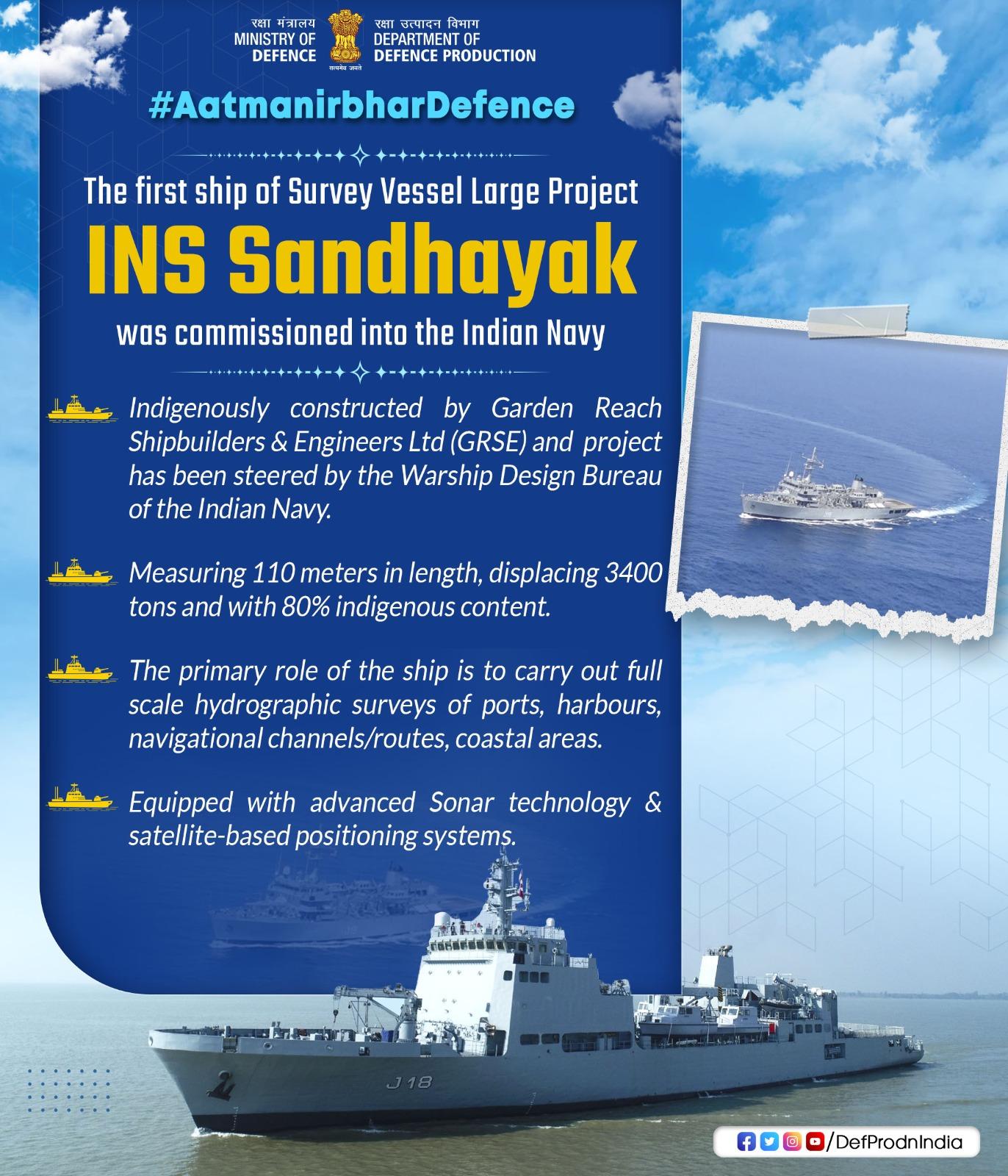
- 05 Feb 2024
Why is it in the News
Defense minister Rajnath Singh commissioned survey vessel INS Sandhayak into the Indian Navy at the Naval Dockyard recently.
About INS Sandhayak:
- INS Sandhayak stands as the first unit in a series of four Survey Vessel (Large) ships under construction at Garden Reach Shipbuilders & Engineers (GRSE), Kolkata.
- Its primary mission is to conduct thorough coastal and deep-water Hydrographic Surveys, focusing on Port and Harbour approaches, navigational channels, and routes.
- The operational scope extends to maritime limits, encompassing the Exclusive Economic Zone (EEZ) and extended continental shelf.
Features:
-
- The vessel is equipped to gather oceanographic and geophysical data, serving the needs of both defense and civil applications.
- In a secondary role, it provides limited defense capabilities and can function as a hospital ship during wartime or emergencies.
- Cutting-Edge Technology:
-
- Equipped with advanced hydrographic tools, including a Data Acquisition and Processing System, Autonomous Underwater Vehicle, Remotely Operated Vehicle, DGPS Long-range positioning systems, and Digital side-scan sonar.
- Performance Specifications:
-
- Powered by two diesel engines, INS Sandhayak boasts a speed capability exceeding 18 knots.
- With a length of 110 meters and a displacement of 3400 tons, the vessel maintains an indigenous content exceeding 80 per cent by cost.
- Historical Continuity:
-
- This ship has been re-incarnated in its current form from the previous Sandhayak, decommissioned in 2021.
: Law Commission of India (Indian Express)
- 03 Feb 2024
Why is it in the News?
The 22nd Law Commission of India led by Justice Ritu Raj Awasthi has recommended that the offense of criminal defamation should be retained in the new criminal laws.
About the Law Commission of India:
- The Law Commission of India is a non-statutory body, constituted by the Government of India from time to time.
- The commission's function is to research and advise the government on legal reform, and is composed of legal experts, and headed by a retired judge.
- The commission is established for a fixed tenure and works as an advisory body to the Ministry of Law and Justice.
- The first Law Commission was established during colonial rule in India by the East India Company under the Charter Act of 1833 and was presided over by Lord Macaulay.
- After that, three more commissions were established in British India.
- The first Law Commission of independent India was established in 1955 for a three-year term.
- Since then, twenty-one more commissions have been established.
- The 22nd Law Commission has been notified with effect from 21st February 2020 for a term of 3 years.
- Cabinet approves the extension of the term of the 22nd Law Commission of India up to 31st August 2024.
- Justice Rituraj Awasthi (Former Chief Justice of the Karnataka HC) was appointed as the chairperson of the current 22nd Law Commission.
- The last chairman of the 21st Law Commission was retired Supreme Court judge Justice B.S. Chauhan.
The Responsibilities of the Law Commission:
- Identification of laws which are no longer relevant and recommending the repeal of obsolete and unnecessary enactments;
- Suggesting enactment of new legislations as may be necessary to implement the Directive Principles and to attain the objectives set out in the Preamble of the Constitution;
- Considering and conveying to the Government its views on any subject relating to law and judicial administration that may be specifically referred to it by the Government through the Ministry of Law & Justice (Department of Legal Affairs);
- Considering the requests for providing research to any foreign countries as may be referred to it by the Government through the Ministry of Law & Justice (Department of Legal Affairs);
- Preparing and submitting to the Central Government, from time to time, reports on all issues, matters, studies and research undertaken by it and recommending such reports for effective measures to be taken by the Union or any State; and
- Performing such other functions as may be assigned to it by the Central Government from time to time.
National Quantum Mission to call for proposals to set up four tech hubs (PTI)
- 19 Jan 2024
Why is it in the News?
The government will set up a coordination cell to implement the National Quantum Mission (NQM) with a focus on establishing four technology hubs in the format of consortia of academia, research and development labs and industry.
What is the National Quantum Mission (NQM)?
- The National Quantum Mission (NQM) will assist India take a giant leap into the future of technology.
- India has entered the ranks of the select few nations actively pursuing the advancement of quantum technology by establishing this programme.
- In 2023, the government sanctioned the National Quantum Mission (NQM), spanning from 2023-24 to 2030-31, with the following key features:
- The mission aims to initiate, foster, and amplify scientific and industrial research and development in Quantum Technology (QT), establishing a dynamic and innovative ecosystem.
- Its ultimate goal is to propel quantum technology-led economic growth, foster the QT ecosystem, and position India as a leading nation in the field of Quantum Technologies & Applications.
- It willl be implemented by the Department of Science & Technology (DST) under the Ministry of Science & Technology.
Key Objectives:
- Develop intermediate-scale quantum computers with 50-1000 physical qubits across platforms like superconducting and photonic technology within eight years.
- Implement satellite-based secure quantum communications over a 2000-kilometre range within India, ensuring long-distance secure quantum communications with other countries.
- Establish inter-city quantum key distribution over 2000 km and multi-node Quantum networks with quantum memories.
- Develop highly sensitive magnetometers in atomic systems and Atomic Clocks for precision timing, communications, and navigation.
- Support the design and synthesis of quantum materials like superconductors, novel semiconductor structures, and topological materials for quantum device fabrication.
- Develop single photon sources/detectors and entangled photon sources for applications in quantum communications, sensing, and metrology.
Implementation:
- The mission involves the establishment of four Thematic Hubs (T-Hubs) in leading academic and National R&D institutes, focusing on Quantum Computing, Quantum Communication, Quantum Sensing & Metrology, and Quantum Materials & Devices.
- These hubs will concentrate on generating new knowledge through basic and applied research and promote R&D in their respective domains.
Significance:
- NQM has the potential to elevate India's Technology Development ecosystem to global competitiveness.
- It is expected to significantly benefit various sectors such as communication, health, finance, and energy, with applications ranging from drug design to space, banking, and security.
- The mission aligns with national priorities, including Digital India, Make in India, Skill India, Stand-up India, and Start-up India, and contributes to Sustainable Development Goals (SDG).
- With the launch of this mission, India will be the seventh country to have a dedicated quantum mission after the US, Austria, Finland, France, Canada and China.
What is Quantum Technology?
- The term "quantum technology" is used to describe the research and development of techniques to build supercomputers with enhanced speed, security, and efficiency in data processing above conventional computers.
- Quantum mechanics, which governs the behaviour of subatomic particles, is used to design these novel systems.
- The peculiar characteristics of subatomic particles are the key to quantum technology's capabilities in processing massive quantities of information concurrently.
Ganga mission gets the power to allow treated sewage into water bodies (Indian Express)

- 12 Jan 2024
Why is it in the News?
The National Mission for Clean Ganga (NMCG), the Centre’s nodal agency responsible for the abatement of pollution in river Ganga and its tributaries, has assumed new powers under which it may now permit the discharge of treated sewage and effluent that conforms to the prescribed “norms” into the river, canal or water bodies.
About the National Mission for Clean Ganga (NMCG):
- The National Clean Ganga Mission (NMCG) is a flagship programme developed by the National Council for the Rejuvenation, Protection and Management of the Ganga River, also known as the National Ganga Council.
- It is registered as a society under the Societies Registration Act, 1860.
- It came into existence on August 12th 2011 and is supported by the State-Level Program Management Groups (SPMGs) in Uttar Pradesh, Uttarakhand, Bihar, Jharkhand and West Bengal.
- The Government of India established this body to encourage a coordinated effort by the listed states to tackle the contamination of the Ganga River by offering financial and technological assistance.
Key objectives of the National Mission for Clean Ganga (NMCG):
- The project entails rehabilitating and boosting existing STPs and immediate short-term action to reduce pollution at the exit points on the riverfront in order to control the inflow of sewage.
- To preserve the consistency of the water cycle without altering the fluctuations of the natural season.
- Restore and control surface and groundwater supply.
- Regenerate and preserve the natural flora of the city.
- To preserve and invigorate the aquatic biodiversity and the riparian biodiversity of the Ganga River basin.
- Enable the public to engage in the process of protecting, rejuvenating and maintaining the water.
Major functions of the National Mission for Clean Ganga (NMCG):
- Execution of the National Ganga River Basin Authority (NGRBA) work program
- Integration of the National Ganga River Basin Project supported by the World Bank
- Supervise and manage the execution of projects approved by the Government of India under NGRBA
- To perform some additional research or duties as may be delegated by MoWR, RD & GJ in the context of restoration of the Ganga River
- Layout regulations and procedures for the conduct of NMCG affairs and contribute or revise, vary or amend them as and when required
- Grant or accept financial aid, loan securities or properties of any kind, and undertake and approve the management of any endowment trust, fund or gift that is not incompatible with the objectives of the NMCG.
- Take all such action and take any other action that might seem appropriate or relevant to the accomplishment of the goals of the NGRBA.
Chandrayaan-3 Propulsion Module Retraces Steps to Earth Orbit (Indian Express)
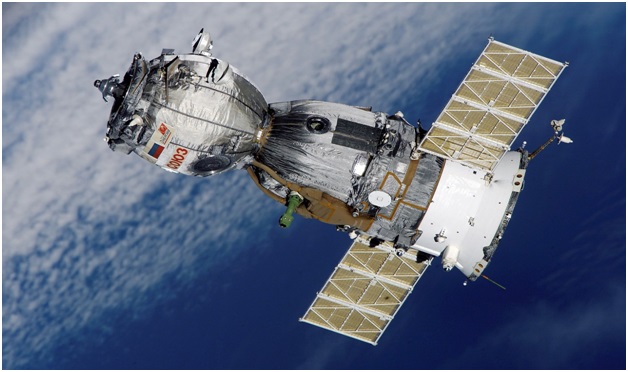
- 07 Dec 2023
Why is it in the News?
Scientists have brought the Propulsion Module (PM) of the Chandrayaan-3 mission , which initially brought the Vikram lander to within 100 km of the Moon's surface before detaching and executing a historic controlled descent on August 23, back into Earth orbit.
What is a Propulsion Module in Chandrayaan-3?
- The Propulsion Module is a rectangular component of the Chandrayaan-3 spacecraft, equipped with solar panels for power.
- Its primary purpose was to transport the Lander module to the lunar polar circular orbit and facilitate its separation.
- Following separation, the SHAPE payload within the Propulsion Module was activated.
- Initially intended for a three-month operation during the mission, the ISRO announced on December 4th that the Chandrayaan-3's Propulsion Module had been manoeuvred out of lunar orbit.
- Placed high above Earth for an additional mission, the module is currently sustained by residual fuel.
- This bonus mission will showcase technologies crucial for future lunar sample retrieval, according to ISRO.
- As of now, the ISRO has not disclosed its plans for the spacecraft once it depletes its fuel.
Importance of Propulsion Module's Return to Earth's Orbit:
- ISRO highlighted the key achievements resulting from the return manoeuvres conducted on the Propulsion Module (PM) in connection to upcoming missions:
- Planning and executing the trajectory and manoeuvres for the return journey from the Moon to Earth.
- Developing a software module for planning such manoeuvres, along with its initial validation.
- Planning and executing a gravity-assisted flyby around a planet or celestial body.
- Preventing uncontrolled crashing of the PM onto the Moon's surface at the end of its life, aligning with the requirement of avoiding debris creation.
What is Chandrayaan-3 Mission?
Codex Alimentarius Commission (CAC) (PIB)

- 02 Dec 2023
Why is it in the News?
The Codex Alimentarious Commission (CAC) has recently praised India’s Standards on Millets and accepted its proposal for the development of global standards for millets during its 46th session held in Rome, Italy.
About Codex Alimentarius Commission (CAC):
- The Codex Alimentarious Commission (CAC) is an international food safety and quality standard-setting body created by WHO and FAO of the United Nations with 188 member countries.
- It is the body responsible for all matters regarding the implementation of the Joint FAO/WHO Food Standards Programme.
- Membership of the Commission is open to all Member Nations and Associate Members of FAO and WHO which are interested in international food standards.
- The Commission meets in regular session once a year alternating between Geneva and Rome.
- The programme of work of the Commission is funded through the regular budgets of WHO and FAO with all work subject to approval of the two governing bodies of the parent organizations.
- The Commission works in the six UN official languages.
- India has been a member of this commission since 1964.
- The 46th session of the Codex Alimentarius Commission (CAC) was held from 27 November to 2 December (2023) in Rome, Italy.
- In the current session, India has framed a comprehensive group standard for 15 types of millets specifying 8 quality parameters, which received resounding applause at the international meet.
- India put forward a proposal for the development of global standards for millet, particularly for Finger millet, Barnyard millet, Kodo millet, Proso millet, and Little millet as group standards as in the case of pulses.
Good Governance Day: Govt launches 3 new features on iGOT Mission Karmayogi platform (TOI)
- 26 Dec 2023
Why is it in the News?
On the occasion of Good Governance Day, Union Minister Dr Jitendra Singh launched the Extended Version of Mission Karmayogi by introducing three new features on the iGOT Karmayogi platform that include My iGOT, Blended Programs and Curated Programs..
About Mission Karmayogi:
- Mission Karmayogi, the National Programme for Civil Services Capacity Building (NPCSCB), is geared towards equipping Civil Servants with enhanced creativity, constructiveness, and innovation, utilising transparency and technology to prepare them for future challenges.
- This innovative program serves as a cornerstone for the country's civil servants, emphasizing a balanced approach between 'on-site learning' and traditional 'off-site learning.'
- Approved by the Government on September 2, 2020, Mission Karmayogi encompasses six key pillars:
- Policy Framework
- Institutional Framework
- Competency Framework
- Digital Learning Framework (iGOT-Karmayogi)
- The electronic Human Resource Management System (e-HRMS), and
- The Monitoring and Evaluation Framework.
- Encompassing all civil servants, including contractual employees, across various ministries, departments, organizations, and agencies of the Union Government, the program introduces three new features on the iGOT Karmayogi platform:
- My iGOT: Delivers targeted training courses on the home page of individual officers, directly addressing their unique capacity-building needs identified in the Capacity-Building Plan for their Ministries/Departments.
- Blended Programs: Facilitates equitable access to training methodologies across all levels by integrating traditional offline (in-person) classroom courses with online learning components.
- This approach enables officers and faculty to benefit from both the flexibility of online courses and the invaluable interactions of face-to-face classroom sessions.
- Curated Programs: Designed to cater to diverse learning needs of Ministries/Departments and Training Institutions, offering a custom approach to address the specific requirements of different segments within the civil services.
Atmospheric Perturbations around the Eclipse Path (APEP) mission (HT)

- 07 Oct 2023
Why in the News?
Dr Aroh Barjatya, an Indian-origin scientist is set to lead the multi-institution NASA rocket mission on October 14.
About Atmospheric Perturbations around the Eclipse Path (APEP) mission:
- The APEP mission entails the launch of three rockets, each equipped with scientific instruments, to explore changes in the upper atmosphere during a solar eclipse, particularly during the critical phase of sudden light reduction.
- Mission Objective: To investigate alterations in the ionosphere induced by the abrupt decrease in sunlight during an eclipse, leading to the generation of waves in this atmospheric layer.
- Measurements will encompass changes in electric and magnetic fields, as well as variations in density and temperature.
- Launch Details: The launch site is the White Sands Missile Range in New Mexico, with a specific focus on studying the ionosphere's response during an eclipse.
- Potential Impact on Communications: NASA notes projections indicating a temperature and density reduction in the ionosphere during the eclipse, potentially causing disruptive wave disturbances that could affect GPS and satellite communications.
- Process: Rockets will be strategically positioned just beyond the path of annularity, where the Moon directly aligns with the Sun.
- Each rocket will deploy four compact scientific instruments designed to capture data on electric and magnetic fields, density, and temperature changes.
- NASA's primary objective is to achieve unprecedented simultaneous measurements from multiple ionospheric locations during a solar eclipse.
- Rationale for Rocket Selection: Sounding rockets were chosen for their precision in pinpointing and measuring specific regions of space.
- Their ability to investigate lower altitudes, inaccessible to satellites, makes them ideal for this mission.
- Sounding rockets offer precise data recording as they ascend and descend during suborbital flights, covering altitudes ranging from 45 to 200 miles (70 to 325 kilometres) above Earth's surface along their flight path.
Ayushman Arogya Mandir (The Hindu)
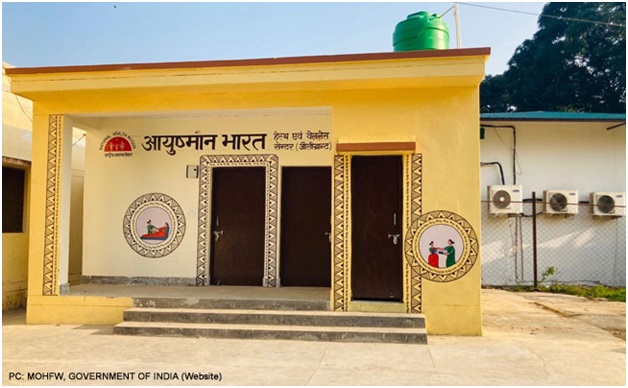
- 30 Nov 2023
Why is it in the News?
Recently, the Union Government has decided to rename the current Ayushman Bharat Health and Wellness Centres (AB-HWCs) as 'Ayushman Arogya Mandir.'
About Ayushman Arogya Mandir:
- The government has decided to rename the Ayushman Bharat-Health and Wellness Centres as 'Ayushman Arogya Mandir'
- The rebranded AB-HWCs will also have a new tagline -- 'Arogyam Parmam Dhanam'.
- Under the Government of India's flagship Ayushman Bharat Yojana, more than 1.6 lakhs AB- HWCs have been successfully established across states and UTs over the last five years with 219 crore footfalls so far.
- Ayushman Arogya Mandir is an attempt to move from a selective approach to health care to deliver a comprehensive range of services spanning preventive, promotive, curative, rehabilitative, and palliative care.
- It has two components which are complementary to each other.
- Under its first component, 1,50,000 Ayushman Arogya Mandir will be created to deliver Comprehensive Primary Health Care, that is universal and free to users, with a focus on wellness and the delivery of an expanded range of services closer to the community.
- The second component is the Pradhan Mantri Jan Arogya Yojana (PM-JAY) which provides health insurance cover of Rs. 5 lakhs per year to over 10 crore poor and vulnerable families seeking secondary and tertiary care.
- Ayushman Arogya Mandirs are envisaged to deliver an expanded range of services that go beyond Maternal and child health care services.
- It includes care for non-communicable diseases, palliative and rehabilitative care, Oral, Eye, and ENT care, mental health, and first-level care for emergencies and trauma , including free essential drugs and diagnostic services
- More than 2.71 crore wellness sessions have been held at these centers.
Indian Ocean Tuna Commission (IOTC) (PIB)
- 29 Nov 2023
Why is it in the News?
The Department of Fisheries, Ministry of Fisheries, Animal Husbandry & Dairying, GoI is organizing the 19th Working Party on Data Collection and Statistics (WPDCS19) of the Indian Ocean Tuna Commission (IOTC) from 28th November to 2nd December 2023.
About the Indian Ocean Tuna Commission:
- The Indian Ocean Tuna Commission (IOTC) is an intergovernmental organisation responsible for the management of tuna and tuna-like species in the Indian Ocean.
- It works to achieve this by promoting cooperation among its Contracting Parties (Members) and Cooperating Non-Contracting Parties in order to ensure the conservation and appropriate utilisation of fish stocks and encouraging the sustainable development of fisheries.
- The Food and Agriculture Organization of the United Nations adopted the Agreement for the Establishment of the Indian Ocean Tuna Commission during its 105th Session in Rome on 25 November 1993.
- The Indian Ocean holds the position as the second-largest tuna fishery globally, making it a crucial focus for the IOTC.
- Currently, the IOTC boasts 31 contracting parties, including countries and two cooperating non-contracting parties, Liberia and Senegal.
- Membership is open to Indian Ocean coastal countries, countries or regional economic integration organizations that are UN members, countries that are members of UN special organizations, and countries involved in tuna fishing in the Indian Ocean.
- India is an active member of the IOTC, with its headquarters located in Victoria, Seychelles.
Psyche Mission (Indian Express)
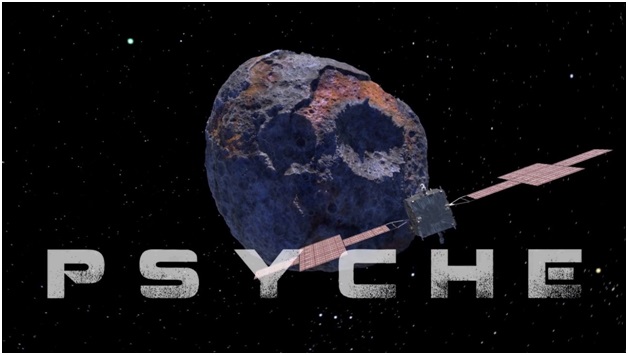
- 24 Nov 2023
Why is it in the News?
A NASA experiment on the Psyche spacecraft has beamed back a near-infrared laser that contains test data from almost 16 million kilometers away.
About the Psyche Mission:
- Psyche is a NASA mission to study a metal-rich asteroid ‘Psyche’, located in the main asteroid belt between Mars and Jupiter.
- The mission launched on October 13, 2023, from Kennedy Space Center and will arrive at Psyche in August 2029.
- The spacecraft will orbit the asteroid for about two years, studying its geology, composition, and magnetic field.
- Scientists believe that Psyche may be the exposed core of an early planet that never fully formed.
- If so, studying Psyche could provide important insights into the formation of our solar system.
- It is also the first in a series of NASA science missions to be the primary payload launched on a SpaceX Falcon Heavy rocket.
- The goals of the Psyche mission are to:
- Understand the composition and structure of a metallic asteroid.
- Determine how Psyche formed and evolved.
- Learn more about the formation of planetary cores.
- The Psyche spacecraft is a solar-powered spacecraft that uses Hall effect thrusters for propulsion.
- The spacecraft also carries a suite of scientific instruments, including:
- A magnetometer to measure Psyche's magnetic field.
- A spectrometer to measure the composition of Psyche's surface.
- A gamma-ray spectrometer to measure the abundance of elements on Psyche's surface.
PM PVTG Development Mission (NewsOnAir)
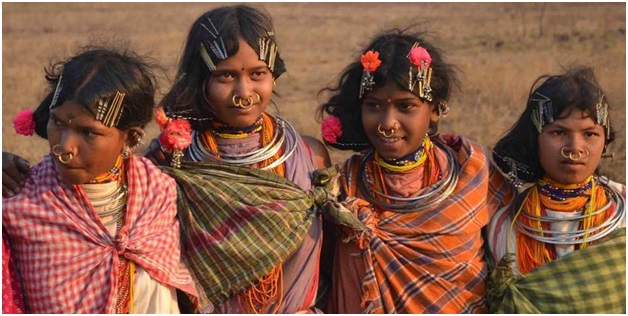
- 14 Nov 2023
Why in the News?
Prime Minister Narendra Modi is going to launch the PM PVTG (Particularly Vulnerable Tribal Groups) Development Mission in a huge step to empower tribal people.
About PM PVTG Development Mission:
- The PM PVTG Development Mission plans to saturate PVTG families and habitations with basic facilities such as road and telecom connectivity, electricity, safe housing, clean drinking water, and sanitation, improved access to education, health and nutrition, and sustainable livelihood opportunities.
- The Mission will be implemented through the convergence of 11 interventions of nine Ministries.
- In addition, saturation will be ensured for schemes such as the Pradhan Mantri Jan Arogya Yojna, Sickle Cell Disease Elimination, TB Elimination, 100 percent immunisation, PM Surakshit Matritva Yojana, PM Matru Vandana Yojana, PM Poshan, and PM Jan Dhan Yojana.
Who are Particularly Vulnerable Tribal Groups (PVTGs)?
- PVTGs, or Particularly Vulnerable Tribal Groups, represent the most vulnerable subsets within India's diverse tribal communities, requiring heightened support and development efforts.
- There are 75 PVTGs in 18 States and Union Territories living in 22 thousand 544 villages having a population of around 28 lakhs.
- These tribes stay in scattered, remote, and inaccessible habitations, often in forest areas.
- The Government of India employs specific criteria for their identification, encompassing pre-agricultural technological levels, low literacy rates, economic disadvantages, and either a declining or stagnant population.
- The origin of the PVTG category dates back to 1975 when the government identified 52 vulnerable tribal groups, later augmented by an additional 23 in 1993.
- Notable examples of PVTGs include:
- the Cholanaikayan in Kerala
- Kathodi in Gujarat
- Jarawas in the Andaman & Nicobar Islands and
- Koraga in Karnataka
- The distinctive classification of PVTGs underscores a commitment to addressing the unique challenges faced by these marginalized tribal communities, aiming to uplift them through targeted support and development initiatives.
Euclid Mission (NASA)
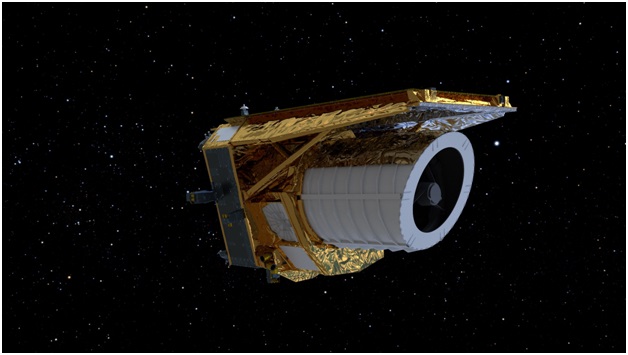
- 07 Nov 2023
Why in the News?
The Euclid mission, which will investigate the mysteries of dark matter and dark energy, released its first five science images recently.
About Euclid Mission:
- Euclid is a European mission, built and operated by European Space Agency (ESA), with contributions from NASA.
- Euclid is designed to give important new insights into the "dark side" of the universe -- namely dark matter and dark energy, both thought to be key components of our cosmos.
- It was launched from Cape Canaveral, Florida, (USA) on 1 July 2023 and the launch vehicle used was ‘SpaceX Falcon 9’.
- The mission derives its name from Euclid of Alexandria, an ancient Greek mathematician from around 300 BC, who laid the foundations of geometry.
- Euclid Mission Objective: The primary goal of the Euclid mission is to create a three-dimensional map of the universe, with time as the third dimension.
- This will be achieved by observing billions of galaxies, extending up to 10 billion light-years away, and covering over a third of the celestial sphere.
- Euclid will explore how the Universe has expanded and how structure has formed over cosmic history, revealing more about the role of gravity and the nature of dark energy and dark matter.
- The Euclid Consortium – consisting of more than 2,000 scientists from 300 institutes in 13 European countries, the U.S., Canada, and Japan – is responsible for providing the scientific instruments and scientific data analysis.
- NASA provided the detectors of the Near-Infrared Spectrometer and Photometer, NISP.
- Euclid is a medium-class mission in ESA’s Cosmic Vision Programme.
Lucy Mission (NASA) (Indian Express)
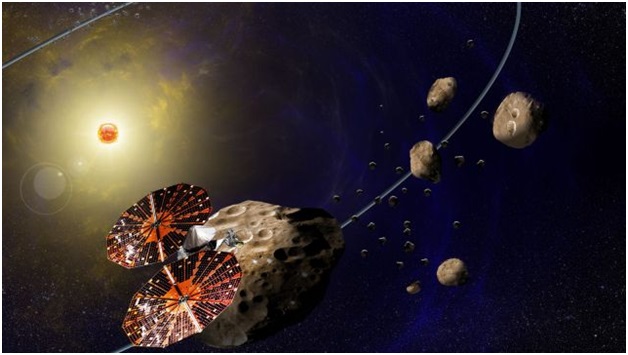
- 04 Nov 2023
Why in the News?
Recently NASA's Lucy mission has discovered that the asteroid Dinkinesh is actually a binary system of two asteroids.
About Lucy Mission:
- The Lucy Mission is a NASA space probe designed to explore the Trojan asteroids.
- These are the asteroids that share an orbit with Jupiter around the Sun.
- It's on a twelve-year journey to visit eight different asteroids and the entire mission costs around $981 million.
- It was launched on October 16, 2021, from Cape Canaveral Space Force Station or Kennedy Space Centre in Florida.
- The Lucy Mission is named for the fossilized skeleton of a human ancestor, which was named for the Beatles song "Lucy in the Sky with Diamonds."
- The mission's scientists hope that Lucy will help them to better understand our own origins, just as the Lucy fossil helped us to better understand our evolutionary history.
- The Lucy spacecraft is equipped with a suite of instruments that will be used to study the asteroids it encounters. These instruments include:
- A high-resolution visible camera
- A near-infrared spectrometer
- A thermal emission spectrometer
- A dust detector
- A radio occultation instrument
- Lucy's mission will provide new insights into the diversity of the Trojan asteroids, their formation, and their role in the early solar system.
- The mission will also test new technologies for deep space exploration, such as a solar-powered propulsion system and a terminal tracking system.
- It made its first gravity assist from Earth on October 16, 2022, and on November 1, 2023, it flew by its first asteroid, Dinkinesh, a binary asteroid in the main belt.
- Lucy will make another gravity assist from Earth in 2024, and in 2025, it will fly by the inner main-belt asteroid 52246 Donaldjohanson.
NASA all set to launch of PACE mission to study air quality, key climate factors and more (NASA)

- 15 Dec 2023
Why is it in the News?
NASA is ready to enhance our understanding of Earth’s atmosphere with the upcoming Plankton, Aerosol, Cloud, Ocean Ecosystem (PACE) mission, scheduled for launch in early 2024.
What is NASA's PACE Mission?
- The mission will leverage advanced polarimeters to investigate the intricate interactions of light, aerosols, and clouds, enhancing our understanding of their impact on both air quality and climate.
- Beyond aerosol analysis, the PACE mission will delve into the study of ocean colour.
- At its core, the Ocean Colour Instrument (OCI) serves as the primary science instrument for PACE, designed to measure the ocean's colour across a spectrum ranging from ultraviolet to shortwave infrared.
- The mission includes two polarimeters:
- The Spectro-polarimeter for Planetary Exploration (SPEXone) and
- The Hyper Angular Research Polarimeter (HARP2)
- Working in tandem, these instruments offer complementary spectral and angular sampling, ensuring polarimetric accuracy and extensive spatial coverage.
- This integrated approach aims to deliver enhanced atmospheric correction and a comprehensive dataset on aerosols and clouds, surpassing the capabilities of OCI alone.
- The collaborative payload of OCI, SPEXone, and HARP2 is poised to achieve significant breakthroughs in aerosol-cloud-ocean research.
What are Aerosols and their Effect?
- Aerosols are comprised of liquid or solid particles suspended in a gaseous or liquid medium.
- In the atmosphere, these particles are predominantly found in the lower layers (< 1.5 km) since aerosol sources are terrestrial.
- However, specific aerosols may extend into the stratosphere, particularly those ejected by volcanoes at high altitudes.
- Sources of Aerosols:
- Natural Sources: Generated from breaking waves (sea salt), wind-blown mineral dust from the surface, and volcanic emissions.
- Anthropogenic Aerosols: These include sulphate, nitrate, and carbonaceous aerosols, primarily originating from fossil fuel combustion.
- Effects of Aerosols:
- Impact on Atmospheric Chemistry.
- Reduction of Visibility.
- Significance for Air Quality and Human Health: Aerosols can adversely affect the heart and lungs.
- Role as Nuclei: Serve as nuclei for cloud droplets or ice crystals in ice clouds.
ISRO’s Gaganyaan TV-D1 test flight tomorrow: Everything you need to know (Indian Express)
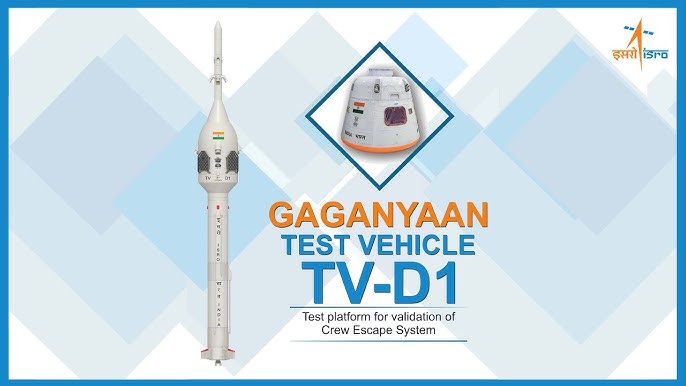
- 20 Oct 2023
Why in the News?
The Indian Space Research Organization (ISRO) is preparing to launch its first-ever test flight, TV-D1, for the Gaganyaan mission, marking a watershed moment in the country's pursuit of human spaceflight.
About the TV-D1 Mission:
- Test Vehicle Abort Mission-1 (TV-D1) will assess the crew module's readiness for the Gaganyaan mission.
- It is a single-stage liquid rocket designed specifically for this abort mission.
- The payloads include the Crew Module (CM) and Crew Escape Systems (CES) with their fast-acting solid motors, as well as the CM fairing (CMF) and Interface Adapters.
- This flight will simulate the abort condition encountered during the Gaganyaan mission's ascent trajectory, which corresponds to a Mach number of 1.2.
- The Crew Escape System is designed to operate automatically at various altitudes if the onboard computer detects any problems.
United Nations Conference on Trade and Development (UNCTAD) (DownToEarth)

- 03 Oct 2023
Why in the News?
As per the United Nations Conference on Trade and Development's Review of Maritime Transport 2023, international shipping witnessed a notable increase of 20 percent in greenhouse gas (GHG) emissions in 2023 compared to the previous decade.
Key Highlights from the Review:
- The shipping industry plays a pivotal role, accounting for over 80 percent of global trade volume, yet contributes nearly three percent of total global greenhouse gas emissions.
- Containerized trade, after a 3.7 percent decline in 2022, is projected to grow by 1.2 percent in 2023 and is expected to further expand by three percent from 2024 to 2028.
- Oil and gas trade exhibited robust growth in 2022, with tanker freight rates experiencing a significant resurgence driven by geopolitical developments.
About the United Nations Conference on Trade and Development (UNCTAD):
- UNCTAD serves as the United Nations' primary institution addressing trade and development matters.
- Established in 1964 by the United Nations General Assembly, it functions as a permanent intergovernmental body.
- UNCTAD's mission is to promote equitable and effective access to the benefits of a globalized economy for developing countries.
- It offers economic and trade analysis, fosters consensus-building, and provides technical assistance to assist developing nations in leveraging trade, investment, finance, and technology for inclusive and sustainable development.
- Headquartered in Geneva, Switzerland, UNCTAD publishes influential reports, including the Trade and Development Report, the World Investment Report, and The Least Developed Countries Report.
RASHTRIYA GOKUL MISSION (Down to Earth)
- 28 Oct 2023
What is the News ?
The Rashtriya Gokul Mission is actively supporting the promotion of the Gir indigenous cow breed.
Facts About:
- It is being implemented for the development and conservation of indigenous bovine breeds since December 2014.
- With a budget of Rs. 2400 crore, the program is also carried out under the general Rashtriya Pashudhan Vikas Yojna from 2021 to 2026.
- The Ministry of Fisheries, Animal Husbandry, and Dairying is the nodal ministry.
Mission Objectives:
- To use cutting-edge technologies to raise milk production and sustainably improve the productivity of cows.
- To spread the practice of breeding bulls with high genetic merit.
- To increase the breeding network's strength and provide farmers with doorstep artificial insemination services to increase the coverage of artificial insemination.
- To encourage the scientific, all-encompassing rearing of native cattle and buffalo as well as conservation.
CALIPSO Mission (Indian Express)
- 30 Sep 2023
What is the News ?
Recently, NASA declared the conclusion of the CALIPSO mission, which conducted assessments of climate, weather, and air quality.
Facts About:
- CALIPSO (Cloud-Aerosol LIDAR and Infrared Pathfinder Satellite Observations), is a dedicated mission aimed at understanding the influence of clouds and aerosols on Earth's climate.
- A collaborative endeavor between NASA (National Aeronautics and Space Administration) and CNES (Centre National d'Études Spatiales), the French space agency, CALIPSO took to the skies in 2006 as a satellite-based observatory.
- Scientists have harnessed CALIPSO's data to construct three-dimensional atmospheric models, enhancing our capacity to forecast future climate changes.
- CALIPSO has been an integral part of the "A-Train" constellation of spacecraft, which includes Aqua, Aura, and PARASOL, all dedicated to the study of Earth's weather and environment.
Key Instrumentation:
- The mission is equipped with CALIOP, a lidar system that operates at two wavelengths and is sensitive to polarization.
Additionally, it carries two passive sensors functioning in the visible and thermal infrared spectral ranges.
- CALIOP emits laser pulses and measures the light scattered back by clouds and aerosols, enabling the creation of vertical profiles detailing properties such as height, thickness, and optical depth.
- Notably, CALIOP is the first lidar to provide continuous atmospheric measurements from Earth's orbit.
- This invaluable data aids scientists in generating comprehensive three-dimensional profiles of cloud and aerosol distributions.
- Throughout its 17 years of operation, the mission amassed over 10 billion LIDAR measurements and contributed to the creation of numerous scientific reports.
Scheme for Remission of Duties and Taxes on Exported Products (LiveMint)
- 28 Sep 2023
What is the News ?
The RoDTEP scheme, which initially lasted until September 30, 2023, will now continue until June 30, 2024, with the same rates for products that are already being exported.
Facts About:
- The RoDTEP Scheme, officially known as the Scheme for Remission of Duties and Taxes on Exported Products, plays a crucial role in helping Indian exporters.
- It became operational on January 1, 2021, replacing the earlier export incentive program called Merchandise Exports from India (MEIS).
- This change was necessary because the World Trade Organization (WTO) found that the MEIS scheme violated WTO rules by providing export subsidies for a wide range of goods.
- How it Works: Under the RoDTEP Scheme, exporters receive a rebate based on a percentage of the value of their exports (known as FOB or Freight On Board value).
This rebate is given in the form of a transferable duty credit/electronic scrip (e-scrip), and the details of these credits are maintained digitally by the Central Board of Indirect Taxes and Customs (CBIC).
The RoDTEP Committee, which operates within the Department of Revenue, is responsible for reviewing and recommending the maximum rates for different export sectors under this scheme.
- Main Objective: The primary goal of the RoDTEP Scheme is to offer comprehensive support to exporters by refunding the duties and taxes incurred during the production and distribution of exported products.
Importantly, it covers taxes, duties, and levies imposed at the central, state, and local levels, which are not reimbursed through other existing mechanisms.
- Financial Support: In the fiscal year 2023-24, the Indian Government has allocated a substantial budget of Rs. 15,070 crores to support the RoDTEP Scheme.
- Engaging with Stakeholders: The RoDTEP Committee has recently started its work by collaborating with Export Promotion Councils (EPCs) and Chambers of Commerce.
Competition Commission of India (CCI) (TOI)
- 08 Sep 2023
What is the News ?
The Competition Commission of India has recently unveiled preliminary rules for overseeing mergers and acquisitions involving significant India-based operations, particularly those in the technology sector, thereby extending the authority of the antitrust regulator.
Facts About:
- CCI is a government-established statutory body founded in March 2009 under the Competition Act, 2002.
- The primary objective of CCI is to foster fair competition in the economy, ensuring a level playing field for producers and promoting market dynamics that benefit consumers.
- The Commission's key focus areas include eradicating practices detrimental to competition, fostering and maintaining competitive environments, safeguarding consumer interests, and upholding the freedom of trade in India's markets.
Mandate: CCI enforces the provisions of The Competition Act, 2002, which:
- Prohibits anti-competitive agreements and the abuse of dominant positions by enterprises.
- Regulates mergers and acquisitions (M&A) that could potentially harm competition within India. Hence, deals exceeding certain thresholds require clearance from CCI.
- Monitors the activities of large enterprises to ensure they do not misuse their 'dominant position' by controlling supply, setting high purchase prices, or engaging in unethical practices that may harm emerging businesses.
Composition: CCI functions as a quasi-judicial body, consisting of one chairperson and six additional members, all appointed by the Central Government.
Headquarters: The Commission is headquartered in New Delhi.
Malaviya Mission (PIB)
- 07 Sep 2023
What is the News ?
The Malaviya Mission - Teachers Training Programme, initiated by the University Grants Commission, was recently unveiled at Kaushal Bhawan in New Delhi by the Union Minister for Education and Skill Development & Entrepreneurship.
Facts About:
- The primary objective is to offer customized training programs for educators.
- This initiative is focused on enhancing the capabilities of faculty members in higher education institutions (HEI).
- It is dedicated to achieving continuous professional development and strengthening the skills of 15 lakh HEI teachers across India through 111 Malaviya Mission centers within a specific timeframe.
- The program is designed to elevate the quality of teacher training, foster leadership qualities among educators, and align with the objectives of the National Education Policy (NEP).
- Capacity building activities under this Mission will be aligned with a credit framework to facilitate career advancement opportunities for teachers.
- Notably, the Indian Knowledge System has been incorporated into the program's modules.
- As part of this initiative, Human Resource Development Centers will undergo a transformation and be renamed as Madan Mohan Malaviya Teachers Training Centers.
National Medical Commission (Indian Express)
- 25 Aug 2023
What is the News ?
The National Medical Commission (NMC) has put on hold the regulations that make it mandatory for doctors to prescribe generic drugs.
Facts About:
- In light of the criticism received by the Indian Medical Association (IMA) as well as the as the Indian Pharmaceutical Alliance (IPA), the National Medical Commission put on hold the Medical Practitioner (Professional Conduct) Regulations, 2023.
- Even the country’s apex drug regulator, the Central Drugs Standard Drug Control Organisation (CDSCO), questioned the language in the notification.
- The participating bodies suggested that the guidelines be kept in abeyance until the WHO’s good manufacturing practices are implemented.
- The participants said that prescribing only generic drugs will prompt pharmacies to sell generic drugs at high-profit margins, disincentivising firms that manufacture quality branded generics
National Medical Commission:
- The National Medical Commission is a statutory body established under the National Medical Commission Act, 2019.
- The NMC replaced the erstwhile Medical Council of India (MCI) which was established in 1934.
Objectives of NMC –
- Improve access to quality and affordable medical education;
- Ensure availability of adequate and high-quality medical professionals in all parts of the country;
- Promote equitable and universal healthcare that encourages community health perspective and makes services of medical professionals accessible to all the citizens;
- Encourages medical professionals to adopt latest medical research in their work and to contribute to research;
- Objectively assess medical institutions periodically in a transparent manner;
- Maintain a medical register for India;
- Enforce high ethical standards in all aspects of medical services;
- Have an effective grievance redressal mechanism.
Composition of NMC –
- NMC is a 25-member body, majority of them being nominated by the Central government.
- Tenure of NMC members is four years (except for part-time members whose tenure is two years).
- The NMC has 11 part-time members representing states or state medical councils.
- The NMC chairpersons and other members, nominated by the Central government, cannot be renominated.
- Any decision requires approval of the majority (minimum 13 out of 25) of the Commission.
Medical Practitioner (Professional Conduct) Regulations, 2023:
- On August 2nd, the National Medical Commission had published the Medical Practitioner (Professional Conduct) Regulations, 2023 aimed at reshaping prescription practices.
- It mandated that registered medical practitioners prescribe medications using “generic”, “non-proprietary”, or “pharmacological” names.
- The guidelines define a generic drug as a “drug product that is comparable to brand/reference listed product in dosage form, strength, route of administration, quality and performance characteristics, and intended use.”
- It says branded generic drug is one which has come off patent and is manufactured by drug companies and sold under different companies’ brand names.
- The guidelines say, “Every RMP (Registered Medical Practitioner) should prescribe drugs using generic names written legibly and prescribe drugs rationally, avoiding unnecessary medications and irrational fixed-dose combination tablets.”
- The guidelines have also talked about punitive measures against those violating the directive.
- Besides the instructions on generic drugs, the NMC guidelines included directives on issues ranging from continued medical education, usage of social media platforms and maintaining a dynamic register of doctors.
- It also barred doctors from attending events sponsored by pharmaceutical companies.
- However, the NMC guidelines have not gone down well with the Indian Medical Association (IMA).
Issued Raised by the Indian Medical Association (IMA):
- The IMA issued a statement in response to the regulations introduced by the NMC.
- The IMA says the biggest impediment to generic drugs is the uncertainty about its quality.
- IMA said that the quality control in the nation being very weak, there’s practically no guarantee of the quality of drugs and prescribing drugs without assured quality would be detrimental to patient health.
- The statement added that less than 0.1% of the drugs manufactured in India are tested for quality.
- The IMA said that step should be deferred till the Government can assure the quality of all the drugs released into the market.
- The statement says patient care and safety are not negotiable.
- The IMA says it has been demanding for long that only good quality drugs should be made available in the country and prices should be uniform and affordable.
- It urges the Government to have ‘one drug, one quality, one price’ system whereby all brands should either be sold at the same price or banned and only generics allowed while ensuring highest quality of these drugs.
Source: https://indianexpress.com/article/india/nmc-hold-regulations-mandating-doctors-prescribe-generic-drugs-bar-them-endorsing-drug-brand-8907964/
National Medical Commission’s New Guidelines (Indian Express)
- 14 Aug 2023
What is the News ?
According to the National Medical Commission’s Registered Medical Practitioner (Professional Conduct) Regulations or NMC RMP Regulations 2023, doctors can now refuse treatment to the unruly and violent patients.
Facts About:
The National Medical Commission Act, 2019:
- It was introduced to address various issues and challenges in the medical field, including improving the quality of medical education, enhancing access to healthcare services, and ensuring ethical and transparent practices.
- Key Provisions include:
- Ethical and Professional Conduct: The Act emphasizes maintaining ethical and professional conduct among medical practitioners and includes provisions to address any deviations from these standards.
- Community Health Providers: The Act introduces the concept of Community Health Providers who are allowed to practice limited medicine in underserved rural areas to address the shortage of doctors.
- Formation of the National Medical Commission (NMC): NMC is an regulatory body which regulates medical education and medical professionals.
- Establishment of Medical Advisory Council.
- Reforms in Medical Education.
Refusing treatment is a complex issue that involves various stakeholders viz. doctors and healthcare professionals, patients and their families, healthcare institutions, medical associations and regulatory bodies, legal authorities, ethics committees, public opinion and media, religious and cultural communities, etc.
Arguments in Favour of the Regulation:
- Unruly Behaviour
- Justice: If an unruly patient’s behaviour poses a threat to their own safety, the safety of healthcare staff, or the safety of other patients, refusing treatment might be justified as a means to mitigate these risks.
- For example, a 21-year-old patient attacked a doctor with a knife during consultation at Delhi’s Sir Ganga Ram Hospital.
- Dignity and Integrity: Unruly behaviour can sometimes cross ethical boundaries, leading to disrespectful or abusive treatment of healthcare staff. Doctors have a right to work in an environment that respects their dignity and professional integrity.
- For example, a 40-year-old doctor on duty in a hospital in Faridabad was assaulted by attendants of a patient as the doctor was attending to another patient, he could not immediately attend to the patient.
- Brings Deterrence: Allowing unruly behaviour to go unchecked might enable a cycle of disruptive or non-compliant behaviour, which could negatively impact the patient’s overall health outcomes. By refusing treatment, the doctor may communicate that certain standards of behaviour are expected for a therapeutic relationship to proceed.
- Right to Freedom to practise any profession: The regulations give the doctors the right to choose whom they will serve, except in case of a life-threatening emergency.
- Justice: If an unruly patient’s behaviour poses a threat to their own safety, the safety of healthcare staff, or the safety of other patients, refusing treatment might be justified as a means to mitigate these risks.
- Financial Constraints
- Autonomy and Consent: Doctors are ethically obligated to provide patients with accurate information about their treatment options,including potential costs.
- If a patient cannot afford the treatment, the doctor might argue that proceeding with treatment without full financial transparency could undermine the patient’s autonomy and informed consent.
- In extreme cases, relatives of patients have been known to hold doctors or hospital staff hostage, demanding treatment.
- Professional Boundaries: Some proponents of this perspective argue that doctors have a professional duty to provide medical care and expertise, but they are not obligated to address broader societal issues such as patients’ financial difficulties.
- Autonomy and Consent: Doctors are ethically obligated to provide patients with accurate information about their treatment options,including potential costs.
- Ethical Boundaries: Doctors have ethical responsibilities not only toward their patients but also toward themselves, their families and the healthcare community.
- For example, potential threats and violence have long-lasting impacts which manifests in the degradation of personal and professional relations.
- Objectivity: Taking decisions which are free from subjectivity caused by emotions, perceptions and individual bias is necessary for long term sustainability.
- For example, Free medical care for a desperate patient may be ethical, but providing it to many patients may not be feasible for one provider.
- Selfless Duty: Medical practitioners often prioritize the well-being of their patients above their own comfort, personal time and space. However, the job can be thankless at times.
- For example, During COVID-19 despite their selfless dedication, medical professionals were subjected to regular assaults and verbal abuse throughout the country.
Arguments against the Regulation
- Dedication and the Duty of Care: Dedication is the sense of deep rooted commitment to devote oneself to a cause.. This includes a duty to provide care to those in need, regardless of their financial status.
-
- In India, out-of-pocket health expenditure accounts for more than half of total health expenditure pushing many households into poverty. This shows the dire need for empathy and compassion towards those in need.For example, Dr Ramanand Singh has been treating his patients for just Rs 50 for the past 35 years in Bihar. He even waives off his fees in cases where the patients cannot afford medical treatment.
- Justice and Equity: The principle of justice requires that healthcare be distributed fairly and equitably.Denying treatment to a patient solely based on their inability to pay could be seen as unjust, perpetuating disparities in healthcare access.
- Hippocratic Oath: Physicians pledge to do what is in the best interest of their patients and to avoid causing harm.
- Physicians promise to treat all patients fairly, regardless of their background, and to provide care to the best of their abilities without bias.
- Unholy Nexuses: Many doctors form nexuses with drugmakers to prescribe specific drugs from their brand instead of generic drugs leads to considerable rise in treatment costs for patients.
- For example, freebies given to doctors including travel expenses, gifts etc. by drugmakers is a common practice.Beneficence: It means kindness or generosity and this principle refers to the moral obligation to act in a manner that will benefit others.The principle of beneficence obligates doctors to act in the best interests of their patients and to promote their well-being.
- Compassion: It is the desire to end someone’s suffering which forms the core principle of a medical practitioner. Refusing treatment to individuals on certain grounds could lead to the possibility of crisis of conscience among several practitioners.
- Loss of Trust and Credibility: The medical profession relies on public trust, and denying treatment to those in need could erode that trust and damage the reputation of the medical community.
- Responsibility: Some argue that healthcare professionals have a broader social responsibility to address systemic issues in healthcare, including affordability and access. Refusing treatment might be seen as abdicating this responsibility.
- Undermining Right to Life: Providing a legal caveat for the registered physicians to refuse treatment is against the fundamental right guaranteed under Article 21 of the Constitution.
- Further, there is no specific definition of “abusive” in law as it is purely a subjective interpretation that may depend on the personal opinion of any individual.
- Subjective interpretation may further lead to exclusion on the basis of race, religion, caste, sex etc.
What Should be Done?
- Persuasion: Influencing patients to follow prescribed norms for behaviour and ensuring smooth functioning.
- For example, during COVID-19 pandemic, voice messages were circulated using caller tune to make people aware of the importance of vaccination and prevent attacks on health workers.
- Emotional Intelligence: Equipping and training medical personnel with necessary skills so that they can manage their emotions and try to avoid escalation of situation and providing practical solutions to the given problems.
- Transparent Approaches: Consider alternative approaches before refusing treatment. This might involve social workers, mental health professionals, or conflict resolution experts to address the underlying issues contributing to the unruly behaviour.
- For example, Doctors in San Diego (USA)refer patients to low-cost family health centersthat provide caring, affordable, high-quality health care and supportive services to everyone.
- Ethical Principles Balancing: Weigh the principles of patient autonomy, duty of care, patient safety, and respect for healthcare personnel’s well-being. Consider how refusing treatment aligns with these principles and what potential consequences might arise from the decision.
- For example, Doctors Without Borders is a Nobel Peace Prize receiver charity that provides humanitarian medical care in conflict zones to all those in need of medical care, irrespective of the role played by them in the conflict.
- Tolerance: Accepting actions and practices which may be considered to be incorrect but still tolerable to some extent that they should not be prohibited or penalised heavily.
- For example, a significant number of the cases of unruly behaviour arises in situations which may not be considered as “common” and even the most well-behaved might behave in a way which is not acceptable in society due to the shock or intensity of the moment which one may not be able to handle.
- Consent: Communicating the decision clearly to the patient, and explaining the reasons behind it thus ensuring that the patient understands the potential consequences of their behaviour on their health and the doctor-patient relationship.
- Offering Continuity of Care: If possible, provide recommendations for alternative sources of care, whether within your healthcare institution or elsewhere. Ensure the patient’s ongoing health needs are addressed.
Conclusion
We must protect those who heal. Ethical decisions in healthcare are rarely black and white. It’s important to approach each situation with sensitivity, professionalism, and a commitment to upholding the well-being of patients, healthcare staff, and the broader community. Consulting with colleagues, supervisors, and ethics committees can provide valuable guidance in making these difficult decisions
Source: https://indianexpress.com/article/explained/explained-health/doctors-new-national-medical-commission-guidelines-8890632/#:~:text=The%20guidelines%20say%20that%20doctors,but%20at%20least%20three%20credits.
Bill on Election Commission members’ Appointments (Indian Express)
- 11 Aug 2023
What is the News ?
A Bill is set to be introduced in the Rajya Sabha with the view of overturning the effect of the Supreme Court’s (SC) verdict on the appointment of the Chief Election Commissioner (CEC) and Election Commissioners (ECs).
Facts About:
- The Bill seeks to establish a committee of the Prime Minister, the Leader of Opposition in the Lok Sabha and a Cabinet Minister nominated by the PM for selecting members of the Election Commission of India (ECI).
- Current Procedure: Currently, the Law Minister suggests a pool of suitable candidates to the Prime Minister for consideration.
- The President makes the appointment on the advice of the PM.
- As per the Bill, a Search Committee headed by the Cabinet Secretary and comprising two other members, not below the rank of Secretary to the government, having knowledge and experience in matters relating to elections, shall prepare a panel of five persons who can be considered for appointment.
- Then, as per the Bill, a Selection Committee consisting of the Prime Minister, the Leader of Opposition in the Lok Sabha, and a Union Cabinet Minister to be nominated by the Prime Minister will appoint the CEC and other ECs.
Present structure to appoint CEC and ECs:
- Under Article 324 (2), the President appoints the CEC and other ECs.
- The President makes the appointment on the advice of the Union Council of Ministers headed by the Prime Minister.
- The Constitution does not prescribe any qualifications, academic or otherwise, for appointment to these offices.
- Tenure:
- The tenure of office and the conditions of service of all the commissioners is determined by the President.
- The tenure of commissioners is 6 years or up to the age of 65, whichever is earlier.
- The CEC and the two other ECs have the same powers and emoluments, including salaries, which are the same as a Supreme Court judge.
- All three commissioners have the same right of taking a decision. In case of a difference of opinion amongst the three members, the matter is decided by the Commission by a majority.
Process of removal:
- Article 324 of the Constitution of India mentions the provisions to safeguard and ensure the independent and impartial functioning of the Election Commission.
- The CEC is provided with security of tenure. He cannot be removed from his office except in the same manner and on the same grounds as a judge of the Supreme Court.
- Any other election commissioner or a regional commissioner cannot be removed from office except on the recommendation of the CEC.
Supreme Courts’ Judgment:
- On March 2, a five-judge bench of the Supreme Court unanimously ruled that a high-power committee consisting of the Prime Minister, Leader of Opposition in Lok Sabha, and the Chief Justice of India must pick the CEC and ECs.
- The judgement by a bench came in 2015, challenging the constitutional validity of the practice of the Centre-appointed members of the Election Commission.
- According to the judgement, the SC has now given the Opposition and the judiciary a say in the matter, ruling that the CEC and ECs must be appointed by the President on the advice of a committee comprising the PM, Leader of Opposition in Lok Sabha, and the Chief Justice of India.
- Also, in 2018, a two-judge bench of the SC referred the case to a larger bench since it required a close examination of Article 324 of the Constitution, which deals with the role of a Chief Election Commissioner.
Debate around appointment of CEC and ECs:
- Article 324(2) reads that “The Election Commission shall consist of the Chief Election Commissioner and such number of other Election Commissioners, if any, as the President may from time-to-time fix and the appointment of the Chief Election Commissioner and other Election Commissioners shall, subject to the provisions of any law made in that behalf by Parliament, be made by the President.”
- The Parliament has the power to nullify the effect of a Court ruling by addressing the concerns flagged in the judgment.
- In this case, the arrangement prescribed by the Supreme Court was specifically because the Court noted that there was a “legislative vacuum.” Filling that vacuum is well within the purview of the Parliament.
- However, the idea of an independent body that conducts elections permeates through the judgement.
- The Court repeatedly stated that to be the objective of the framers of the Constitution.
- The composition of the Selection Committee in the Bill raises questions on whether the process is now independent or still rigged in favour of the Executive.
Source: https://indianexpress.com/article/explained/explained-law/bill-election-commission-members-appointment-process-explained-8885676/#:~:text=The%20Centre%27s%20Bill%20seeks%20to,Commission%20of%20India%20(ECI).
National Commission for Protection of Child Rights (NCPCR) (Indian Express)

- 25 Jul 2023
Why in the News?
The National Commission for Protection of Child Rights (NCPCR) recently addressed the Manipur DGP, urging the filing of an FIR against three individuals.
About the National Commission for Protection of Child Rights (NCPCR):
- NCPCR is a statutory body set up in March 2007 under the Commissions for Protection of Child Rights (CPCR) Act, 2005.
- It is under the administrative control of the Ministry of Women & Child Development.
- The Commission's mandate is to ensure that all laws, policies, programmes, and administrative mechanisms are in consonance with the child rights perspective as enshrined in the Constitution of India and also the UN Convention on the Rights of the Child.
- It inquires into complaints relating to a child's right to free and compulsory education under the Right to Education Act, 2009.
- It monitors the implementation of Protection of Children from Sexual Offences (POCSO) Act, 2012.
Composition of NCPCR:
- This commission has a chairperson and six members of which at least two should be women.
- All of them are appointed by Central Government for three years.
- The maximum age to serve in commission is 65 years for Chairman and 60 years for members.
Functions and responsibilities of NCPCR:
- Examine and assess current safeguards for child rights and propose effective implementation strategies.
- Submit periodic reports to the central government on the efficacy of these safeguards.
- Conduct investigations into child rights violations and recommend legal action when appropriate.
- Raise awareness about child rights and available safeguards through diverse channels, such as publications, media, and seminars.
- Conduct inspections of institutions housing children, including juvenile homes, and suggest remedial measures if required.
- Investigate complaints and proactively address issues related to child rights deprivation, violation, and non-implementation of protective laws.
National Dental Commission Bill, 2023 (TIO)
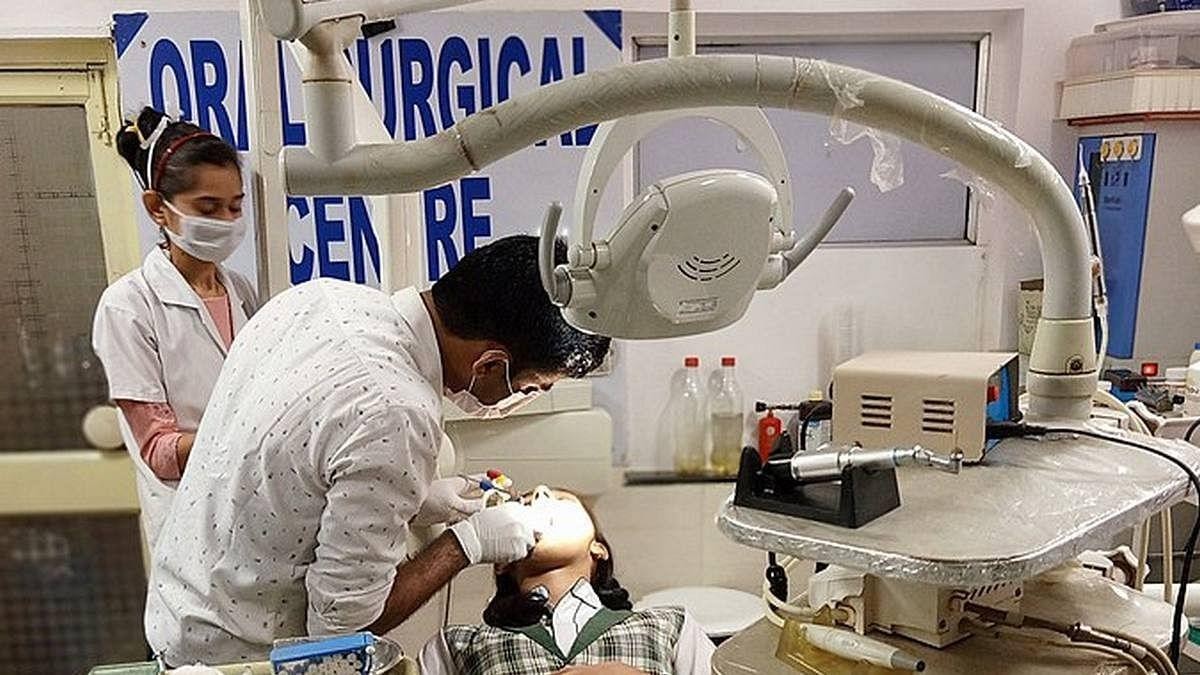
- 24 Jul 2023
Why in the News?
The Lok Sabha recently witnessed the introduction of the National Dental Commission Bill, 2023, by the government.
About National Dental Commission Bill, 2023:
- The primary objective of the Bill is to revoke the Dentists Act of 1948, ushering in new regulations and reforms.
- With a focus on affordability, the bill strives to enhance dental education accessibility and ensure quality oral healthcare services.
- In place of the existing Dental Council of India, the Bill proposes the establishment of the National Dental Commission (NDC) to oversee dental education and related matters effectively.
What is National Dental Commission (NDC)?
- The establishment of the new commission entails the formulation of policies and the maintenance of quality standards in dental education and the dental profession.
- A key responsibility of the commission will be to regulate fees for 50% of seats in private dental colleges.
Composition of NDC:
- The structure of the NDC will mirror that of the National Medical Commission (NMC), which replaced the Medical Council of India.
- The head office of the National Dental Commission will be located in New Delhi, consisting of a chairperson, eight ex officio members, and 24 part-time members and the appointment of members will be done by the central government.
- The Bill mandates that all members of the commission must declare their assets and liabilities upon entering and leaving office, along with disclosing any professional and commercial engagements they are involved in.