
Blue-and-White Flycatcher
- 13 Mar 2026
In News:
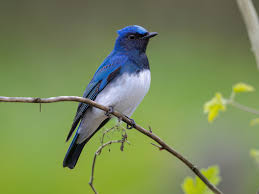
A male Blue-and-White Flycatcher, a rare migratory bird in India, was recently recorded on the Pavagadh Hills in Gujarat. The sighting is significant because the species is seldom observed in the Indian subcontinent, highlighting the ecological importance of hill and forest habitats that occasionally serve as stopover sites for migratory birds.
About the Blue-and-White Flycatcher
The Blue-and-White Flycatcher is a migratory songbird belonging to the Old World flycatcher family (Muscicapidae).
- Scientific Name: Cyanoptila cyanomelana
- Common Name: Japanese Flycatcher
- Type: Small insectivorous migratory bird
Flycatchers are known for their agile aerial movements and their ability to catch insects mid-flight, which makes them important for natural pest control and ecological balance.
Geographic Distribution and Migration
The Blue-and-White Flycatcher is mainly distributed in East and Southeast Asia.
Breeding Range
- Japan
- South Korea
- Northeastern China
- The Russian Far East
Wintering Range
- Vietnam
- Cambodia
- Thailand
- Islands such as Sumatra and Borneo
During migration, individual birds may occasionally appear outside their normal range, which explains rare sightings in India such as the one in Gujarat.
Habitat
The species typically inhabits forested landscapes and prefers:
- Wooded lowlands
- Submontane forests
- Taiga-like environments
- Wooded slopes and gullies
It is usually found at elevations up to about 1,200 metres. The bird may also adapt to scrublands, bushes, and plantation areas, especially during migration.
Physical Characteristics
The Blue-and-White Flycatcher exhibits sexual dimorphism, meaning males and females have distinct appearances.
Male
- Upper body covered in bright cobalt-blue plumage
- Blue coloration on wings, tail, and upperparts
- Black chin, throat, breast, and flanks
- White belly and vent
- Black bill and dark brown eyes
Female
- Grey-brown upperparts, including head and face
- Blackish wings with rufous-brown edges on tertial feathers
- Grey to grey-brown chin and throat
- Cream-coloured throat patches
These differences help birdwatchers distinguish between sexes in the field.
Conservation Status
According to the International Union for Conservation of Nature (IUCN) Red List, the Blue-and-White Flycatcher is classified as Least Concern.
Despite its stable global population, the species still depends on healthy forest ecosystems and migratory corridors for survival.