
Dhvani Hypersonic Missile
- 03 Nov 2025
In News:
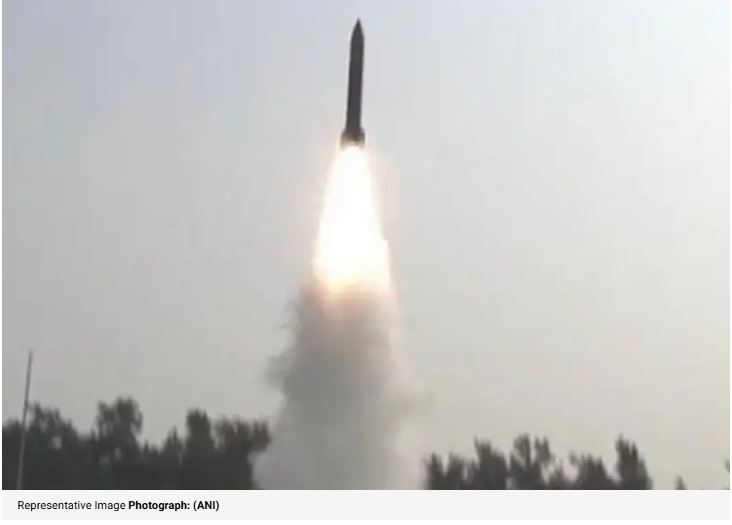
The Defence Research and Development Organisation (DRDO) is preparing for the first test of Dhvani, India’s next-generation hypersonic missile system. Its development marks a major advancement in India’s indigenous strategic and aerospace capabilities, placing the country among a select group working on Hypersonic Glide Vehicle (HGV) technology.
What is Dhvani?
- Dhvani is an upcoming hypersonic missile being developed by DRDO.
- It is designed as a Hypersonic Glide Vehicle (HGV), enabling high-speed, maneuverable flight at hypersonic speed (greater than Mach 5 or approx. 7,400 km/h).
- The system departs from conventional ballistic or cruise missile trajectories by:
- Being launched to very high altitudes, and
- Then gliding at hypersonic speeds toward the target with significant maneuvering capability.
This flight profile complicates detection and interception by most existing missile defence systems.
Key Technical Features
1. Speed & Range
- Expected to fly at Mach 5–6+.
- Estimated operating range: 6,000–10,000 km (long-range strategic class).
2. Hypersonic Glide Vehicle Design
- Blended wing–body configuration
- Approx. 9 m length
- Approx. 2.5 m width
- Optimized for lift generation and maneuverability during hypersonic glide.
3. Thermal Protection System
- Uses ultra-high-temperature ceramic composites.
- Can withstand 2,000–3,000°C generated during atmospheric re-entry and sustained hypersonic flight.
4. Stealth Features
- Stealth-shaped geometry with:
- Angled surfaces
- Smooth contours
- Intended to reduce radar cross-section (RCS) and enhance survivability against surveillance systems.
5. Guidance & Precision: Designed to strike both land and maritime targets with high accuracy.
Technology Background
- Dhvani builds on technologies proven in the Hypersonic Technology Demonstrator Vehicle (HSTDV), including:
- Scramjet propulsion research
- Thermal shielding systems
- High-temperature material development
The success of HSTDV provided DRDO the platform to develop operational HGV systems such as Dhvani.
Axial Seamount

- 02 Nov 2025
In News:
The Axial Seamount, an active underwater volcano located in the northeast Pacific Ocean off the coast of Oregon (USA), has shown increased seismic activity, prompting scientists to warn of a possible eruption in the near future. Despite the alert, experts emphasize that any eruption would pose no threat to coastal populations due to the volcano’s great depth.
Location & Geological Setting
- Located ~300 miles off the Oregon coast in the Pacific Ocean.
- Situated on the Juan de Fuca Ridge, a divergent boundary between the Pacific Plate and the Juan de Fuca Plate.
- Classified as a shield volcano with a summit caldera.
- Rises to a depth of approx. 1,400 m (≈4,900 ft) below sea level.
- Formed by a hotspot, where mantle plumes rise beneath the oceanic crust.
Scientific Importance
- Considered the most active submarine volcano in the northeast Pacific.
- Documented eruptions: 1998, 2011, 2015.
- The 2015 eruption triggered:
- ~8,000 earthquakes
- 400-ft-thick lava flows
- Seafloor subsidence of nearly 8 ft
Current Activity
- Recent USGS-recorded quakes of M4.8 and M5.4 occurred close to Axial Seamount.
- Over 2,000 micro-earthquakes in a single day were noted this year.
- Scientists expect the next eruption between late 2025 and early 2026, though the timing remains unpredictable.
- Surface uplift has been observed, matching levels seen prior to the 2015 eruption.
Hydrothermal Vent Ecosystem
- Hosts hydrothermal vents, releasing super-heated, mineral-rich fluids.
- Supports unique chemosynthetic ecosystems, including:
- Microbes using volcanic gases for energy
- Giant tubeworms
- Crabs, clams, fish, octopuses
- Provides a natural laboratory for studying extreme environments and deep-sea biodiversity.
Monitoring Infrastructure
- Part of the Ocean Observatories Initiative (OOI).
- Hosts the New Millennium Observatory (NeMO) — the world’s first underwater volcanic observatory.
- Real-time monitoring via undersea cables transmitting continuous data on:
- Seismic activity
- Gas emissions
- Vent temperatures
- Seafloor deformation
Hazards & Human Impact
- Despite increased activity, eruptions do not threaten humans or coastal infrastructure.
- Events occur deep underwater and may pass unnoticed at the surface.
- However, they are crucial for advancing scientific understanding of:
- Mid-ocean ridge volcanism
- Crustal formation
- Seafloor hydrothermal systems
Dhvani Missile
- 07 Oct 2025
In News:
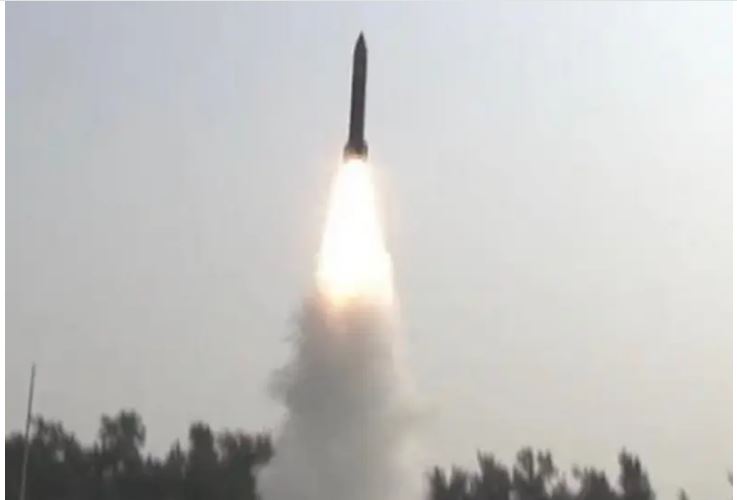
India is on the verge of a historic breakthrough with the upcoming test of Dhvani, a cutting-edge hypersonic missile developed by the Defence Research and Development Organisation (DRDO). This missile positions India among an elite group of nations with hypersonic capabilities, including the United States, Russia, and China.
About Dhvani:
- Dhvani is being developed as a Hypersonic Glide Vehicle (HGV), capable of speeds exceeding Mach 5 (over 7,400 km/h).
- Unlike conventional missiles that follow predictable trajectories, Dhvani is launched to extreme altitudes and then glides toward its target with high maneuverability, making detection and interception extremely difficult. It is designed to strike both land-based and maritime targets with precision.
- Estimated ranges are 6,000 to 10,000 kilometers, potentially doubling the reach of India’s current Agni-V intercontinental ballistic missile.
Design and Technology:
- Dimensions: Approximately 9 meters long and 2.5 meters wide with a blended wing-body configuration.
- Heat Protection: Uses ultra-high-temperature ceramic composites to withstand 2,000–3,000°C during atmospheric reentry.
- Stealth Features: Angled surfaces and smooth contours reduce radar visibility.
- Indigenous Development: Built on technologies demonstrated by the Hypersonic Technology Demonstrator Vehicle (HSTDV), including scramjet propulsion and thermal shielding.
Strategic Implications:
The Dhvani missile significantly enhances India’s strategic deterrence, creating a technological edge in South Asia. Its ability to perform unpredictable maneuvers during the terminal phase renders most current missile defense systems ineffective, thereby deterring adversaries.
Global Context:
Dhvani is comparable to China’s DF-ZF, Russia’s Avangard, and U.S. programs such as Dark Eagle and HACM, which face developmental delays. India’s achievement demonstrates self-reliance in critical defense technologies and strengthens its capability for both regional security and global power projection.