
Vikram-1 Rocket
- 05 Jul 2026
In News:
India's first privately developed orbital-class rocket, Vikram-1, is set for its maiden launch, marking a major milestone in the country's expanding private space sector.
About Vikram-1 Rocket
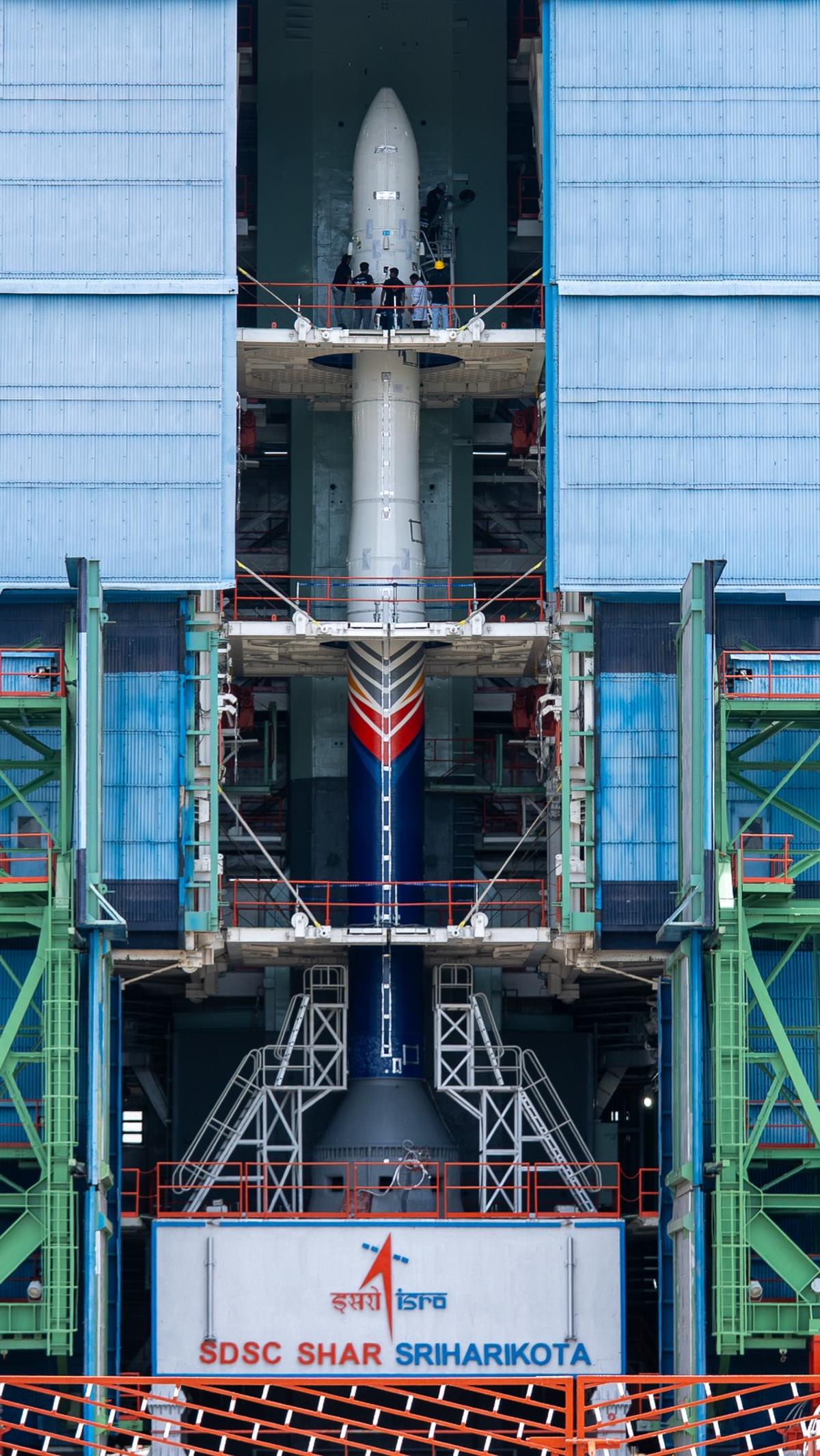
Vikram-1 is India's first privately developed orbital launch vehicle, designed and developed by Skyroot Aerospace, a Hyderabad-based space startup. Named after Dr. Vikram Sarabhai, the father of the Indian space programme, the rocket represents India's growing capabilities in commercial space launch services following the opening of the space sector to private participation.
Key Features
Vikram-1 is a multi-stage orbital launch vehicle standing approximately seven storeys tall. It follows a four-stage configuration, where the first three stages are powered by solid-fuel propulsion to provide the initial thrust required for ascent.
The fourth stage employs a cluster of four Raman engines, which are hypergolic liquid engines. These engines use Monomethyl Hydrazine (MMH) as fuel and Nitrogen Tetroxide (NTO) as the oxidiser, igniting spontaneously upon contact to enable precise orbital insertion and manoeuvring.
The rocket features an all-carbon composite structure, reducing weight while improving strength. It also incorporates 3D-printed rocket engines, high-thrust solid rocket motors, advanced avionics for real-time navigation and guidance, and ultra-low-shock pneumatic stage separation systems.
Payload Capacity
Vikram-1 is specifically designed for the rapidly growing small satellite launch market.
- 350 kg payload to Low Earth Orbit (LEO)
- 260 kg payload to Sun-Synchronous Orbit (SSO)
It is capable of deploying multiple satellites in a single mission, making it suitable for commercial satellite constellations.
Major Innovations
The launch vehicle has been designed with an emphasis on simplicity, reliability and rapid deployment. It is capable of being prepared for launch within 24 hours from different launch locations, offering greater operational flexibility.
Key technological innovations include:
- All-carbon composite airframe
- Indigenous propulsion systems
- 3D-printed engines
- Hypergolic Raman upper-stage engines
- Ultra-low-shock pneumatic separation mechanism
- Advanced onboard guidance, navigation and control systems