
VB—G RAM G Act, 2025
- 12 May 2026
In News:
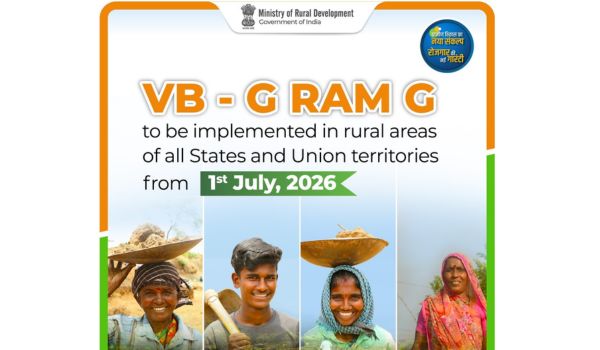
In a transformative shift for India’s rural landscape, the Central Government has notified that the Viksit Bharat—Guarantee for Rozgar and Ajeevika Mission (Gramin), or VB–G RAM G, will officially replace the Mahatma Gandhi National Rural Employment Guarantee Act (MGNREGA) starting July 1, 2026.
This legislative overhaul aims to pivot from a demand-driven "survival" model toward a productivity-linked framework aligned with the Viksit Bharat @2047 vision. By integrating wage employment with high-impact asset creation, the mission seeks to build long-term economic resilience in rural India.
The Statutory Guarantee: Expanding the Safety Net
The VB—G RAM G Act, 2025 strengthens the rights of rural workers by enhancing the legal entitlement to employment.
- 125 Days of Work: The statutory guarantee has been increased from 100 days to 125 days of unskilled manual work per financial year for every rural household.
- Legal Protections: The Act retains critical safeguards, such as the Unemployment Allowance (payable if work is not provided within 15 days of demand) and a Transport Allowance (an additional 10% of the wage rate if the worksite is beyond a 5 km radius).
- Wage Security: Wages are strictly mandated to be paid weekly (or within a maximum of 14 days) directly via Direct Benefit Transfer (DBT).
Thematic Focus: Productive Asset Creation
Unlike its predecessor, which often faced criticism for creating "ephemeral" or temporary assets, VB–G RAM G restricts projects to four strategic "Thematic Work Domains" to ensure the creation of durable infrastructure:
- Water Security: Prioritizing groundwater recharge and irrigation.
- Core Rural Infrastructure: Roads, markets, and connectivity.
- Livelihood Infrastructure: Facilities that directly support income generation (e.g., storage, processing units).
- Extreme Weather Mitigation: Specifically designed works to build climate resilience against floods and droughts.
A New Financial & Planning Architecture
The mission introduces a revised funding and planning mechanism to foster a more disciplined "Centrally Sponsored" partnership:
- Fund Sharing Ratio:
- 90:10 for North-Eastern and Himalayan States.
- 60:40 for other States and UTs with legislatures.
- 100% Central funding for UTs without legislatures.
- Agricultural Season Pause: To prevent labor shortages during critical farming periods, States must notify a 60-day pause annually during peak sowing and harvesting seasons.
- The Viksit Gram Panchayat Plan (VGPP): Every project must originate from a participatory, evidence-based plan integrated with the PM Gati Shakti National Master Plan. This ensures that local development aligns with national logistics and infrastructure priorities.
Technological Integration & Monitoring
The Act leverages "Next-Gen" technology to enhance transparency and curb leakages:
- Attendance & Transactions: Mandatory Face Authentication for worker attendance and biometric authentication for all financial transactions.
- Geospatial Tracking: Real-time monitoring of work sites using geospatial technology and GPS-linked data.
- Viksit Bharat National Rural Infrastructure Stack: A unified digital repository that tracks all assets created under the mission for better maintenance and accountability.