
United Nations Security Council (UNSC)
- 09 Jun 2026
In News:
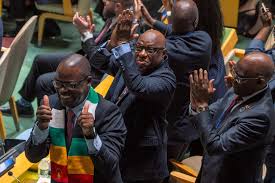
The United Nations General Assembly (UNGA) recently elected five countries as non-permanent members of the United Nations Security Council (UNSC) for a two-year term beginning on 1 January 2027. The newly elected members are Austria, Portugal, Trinidad and Tobago, Zimbabwe, and Kyrgyzstan.
- The election is particularly significant for Kyrgyzstan, which will serve on the Security Council for the first time since becoming a member of the United Nations in 1992. These countries will join Bahrain, Colombia, the Democratic Republic of Congo, Latvia, and Liberia, which were elected earlier and will continue serving through 2027.
United Nations Security Council (UNSC)
- The United Nations Security Council was established in 1945 under the United Nations Charter and is one of the six principal organs of the United Nations.
- It bears the primary responsibility for maintaining international peace and security.
- Unlike other UN organs, the Security Council possesses unique authority because its decisions are legally binding on all UN member states under the UN Charter.
Composition of the UNSC
The Security Council consists of 15 members:
- Permanent Members (P5): The five permanent members possess the power of veto: China, France, Russia, United Kingdom, and United States
- Non-Permanent Members: The remaining 10 seats are filled through elections conducted by the UN General Assembly for two-year terms.Regional distribution of non-permanent seats is as follows:
- 5 seats: African and Asia-Pacific States
- 1 seat: Eastern European States
- 2 seats: Latin American and Caribbean States
- 2 seats: Western European and Other States
Election Process
Non-permanent members are elected annually by the UN General Assembly through a secret ballot.
Key features include:
- Candidates require a two-thirds majority of members present and voting.
- The requirement applies even when a candidate is unopposed.
- Five non-permanent seats are renewed every year, ensuring continuity in the Council's functioning.
Importance of the Security Council
The UNSC performs several critical functions:
- Maintenance of international peace and security.
- Investigation of disputes and conflicts.
- Imposition of sanctions.
- Authorization of peacekeeping operations.
- Approval of military action when necessary.
- Recommendation of the UN Secretary-General to the General Assembly.
Its resolutions are binding on all member states, making it the most powerful organ within the UN system.