
UN Sustainable Development Report 2026
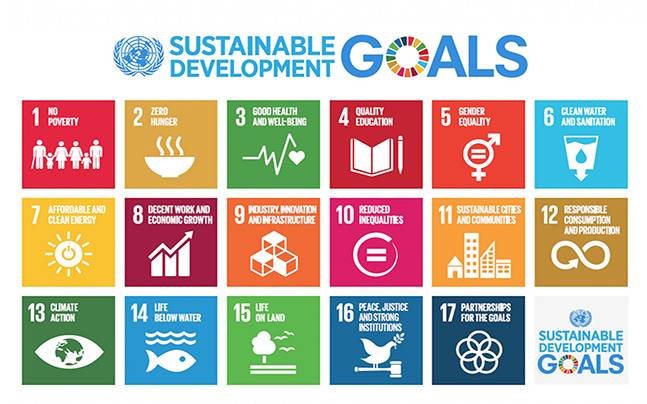
- 03 Jul 2026
In News:
India ranked 94th out of 167 countries in the 2026 Sustainable Development Goals (SDG) Index, achieving its highest-ever position with a score of 68.3/100, according to the Sustainable Development Report (SDR) 2026 released by the UN Sustainable Development Solutions Network (SDSN) during the Hamburg Sustainability Conference 2026.
About the Sustainable Development Report (SDR)
- The Sustainable Development Report (SDR) is an annual global assessment published by the United Nations Sustainable Development Solutions Network (SDSN).
- It evaluates countries' progress towards achieving the 17 Sustainable Development Goals (SDGs) adopted under the 2030 Agenda for Sustainable Development.
- The report uses the SDG Index to measure national performance based on a wide range of social, economic, environmental, and governance indicators.
Key Global Findings
- The report highlights that none of the 17 Sustainable Development Goals are currently on track to be achieved globally by 2030. Only 16.5% of SDG targets are progressing as required, while nearly half show only marginal progress and several have regressed since 2015.
- The Nordic countries continue to dominate the rankings, with Finland securing the first position, followed by Sweden and Denmark. At the other end of the index, South Sudan, the Central African Republic, and Chad occupy the lowest ranks due to prolonged conflict, political instability, and weak institutions.
- Globally, the greatest challenges remain in Zero Hunger (SDG 2), Sustainable Cities (SDG 11), Life Below Water (SDG 14), Life on Land (SDG 15), and Peace, Justice and Strong Institutions (SDG 16).
India's Performance
- India has emerged as one of the fastest-improving major economies, climbing 18 positions since the adoption of the SDGs in 2015—from 112th to 94th. However, it continues to rank behind several South Asian neighbours, including Bhutan, Nepal, Maldives, and Sri Lanka.
- The report projects that only 33.3% of India's SDG targets are likely to be achieved by 2030, while progress on many indicators remains slow.
- The most significant challenge continues to be SDG 2 (Zero Hunger). India continues to record high levels of child wasting (19%), child stunting (29.3%), and undernourishment (12%), indicating persistent nutritional concerns.
- The report also identifies major challenges in Good Health and Well-being (SDG 3), Gender Equality (SDG 5), Sustainable Cities (SDG 11), Life Below Water (SDG 14), Life on Land (SDG 15), and Peace, Justice and Strong Institutions (SDG 16).
- On the environmental front, India has shown deterioration in Responsible Consumption and Production (SDG 12) and Climate Action (SDG 13), largely due to increasing carbon emissions from fossil fuel use and cement production.
- Despite these challenges, the report acknowledges India's notable achievements in expanding electricity access (SDG 7) and improving mobile broadband and internet connectivity (SDG 9), reflecting significant progress in infrastructure and digital inclusion.
Sustainable Development Goals (SDGs)
The Sustainable Development Goals (SDGs) comprise 17 global goals and 169 targets, adopted by all 193 United Nations Member States in 2015 under the 2030 Agenda for Sustainable Development. The goals seek to eradicate poverty, reduce inequality, protect the environment, and promote inclusive and sustainable development through the guiding principle of "Leave No One Behind."
The SDGs evolved from earlier international initiatives, including the Brundtland Commission Report (1987), the Millennium Development Goals (2000), the Johannesburg Declaration (2002), and the Rio 20 Conference (2012).
India's Institutional Framework for SDG Implementation
India has established a comprehensive institutional mechanism for monitoring SDG progress.
- NITI Aayog serves as the nodal agency for SDG implementation and publishes the SDG India Index, encouraging cooperative and competitive federalism among States and Union Territories.
- The Ministry of Statistics and Programme Implementation (MoSPI) monitors progress through the National Indicator Framework (NIF) comprising 277 indicators.
- The Ministry of Panchayati Raj promotes localisation of SDGs through the Local Indicator Framework (LIF) and the Panchayat Advancement Index (PAI), which evaluates over 2.5 lakh Gram Panchayats across nine thematic areas.