
SASCI Scheme for Tourism Development
- 01 Dec 2024
In News:
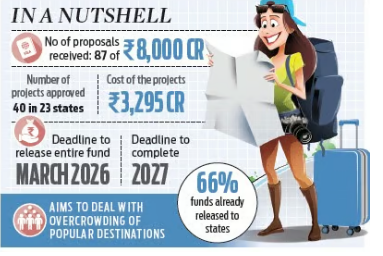
Centre clears scheme for development of 40 tourist destinations across 23 States at a cost of ?3,295 crore.
Key Details:
- Focus Areas: The scheme encourages the development of lesser-known destinations such as Bateshwar (Uttar Pradesh), Ponda (Goa), Gandikota (Andhra Pradesh), and Porbandar (Gujarat) to reduce overcrowding at popular sites.
- Implementation Timeline: Projects must be completed within two years, with funding released in stages until March 2026.
- Key Features:
- Long-term interest-free loans for 50 years.
- States responsible for project execution and maintenance, often through public-private partnerships (PPP).
- The Ministry of Tourism will monitor progress, and 66% of the funds have already been released.
- Emphasis on sustainability and boosting local economies by creating jobs through tourism.
- States must provide land at no cost and ensure proper infrastructure like safety, connectivity, and utilities.
Selection Criteria for Projects:
- Consultation Process: Detailed regional consultations led to the selection of 40 projects from 87 proposals received by the Ministry of Tourism. West Bengal was the only state not submitting proposals.
- Evaluation Criteria: Projects were evaluated based on:
- Connectivity, tourism potential, and ecosystem.
- Financial viability and sustainability.
- Impact on local economy and job creation.
- Funding Pattern:
- A maximum of ?100 crore for each project, with higher funding considered for exceptional projects.
- Total funding capped at ?250 crore per state, allocated on a first-come, first-served basis.
Importance of the Scheme:
- Economic Growth & Employment: Projects are designed to stimulate local economies, create employment, and promote sustainable tourism.
- Global Branding: The scheme aims to brand and market tourist destinations on a global scale.
- Tourism Infrastructure Growth: It aims to improve the entire tourism value chain, including transportation, accommodation, activities, and services.
Tourism Sector Overview:
- Current Status:
- India ranks 39th among 119 countries in the Travel and Tourism Development Index (TTDI) 2024.
- Foreign Tourist Arrivals (FTAs) increased by 47.9% in 2023, with 9.52 million tourists.
- Tourism contributed 5% to India’s GDP in 2022-23 and created 76.17 million direct and indirect jobs.
- India earned ?2.3 lakh crore in foreign exchange in 2023 through tourism.
- Projected revenue from tourism to exceed $59 billion by 2028.
- Initiatives for Promotion:
- Swadesh Darshan Scheme: To develop theme-based circuits.
- Dekho Apna Desh Initiative (2020): Promotes domestic tourism.
- PRASHAD & HRIDAY Schemes: Focus on pilgrimage and heritage city development.
MGNREGA Job Card Deletions Issue:
- Context: A significant surge in deletions of job cards under MGNREGA (Mahatma Gandhi National Rural Employment Guarantee Act) raised concerns over transparency and workers’ rights.
- Reasons for Deletion:
- Permanent migration, duplicate cards, forged documents, and refusal to work.
- Aadhaar-based payment system (ABPS) implementation led to deletions for non-linked cards.
- Implications:
- Violation of workers’ legal right to employment, especially when deletions were made without due process.
- The "Not willing to work" designation undermines livelihood opportunities, especially in high unemployment rural areas.
- Recommendations for Reform:
- Strengthening verification processes and ensuring deletions follow due procedure.
- Empowering Gram Sabhas to review and approve deletions.
- Regular audits and better grievance redressal mechanisms.
Other Government Initiatives in Tourism:
- National Mission on Pilgrimage Rejuvenation and Spiritual, Heritage Augmentation Drive (PRASHAD): For holistic and sustainable development of pilgrimage tourism.
- Incredible India & E-Visa Initiatives: To attract more foreign tourists.
- Regional Connectivity Scheme (UDAN): Enhances air connectivity to remote tourist destinations.
- National Heritage City Development and Augmentation Yojana (HRIDAY): Preserves and rejuvenates heritage sites.