
SpudCell: A Milestone in Synthetic Biology
- 08 Jul 2026
In News:
Researchers in the United States have developed SpudCell, a laboratory-made synthetic cell constructed entirely from non-living chemical components. The artificial cell can grow, replicate its DNA, divide and undergo Darwinian evolution, representing a major breakthrough in synthetic biology.
What is SpudCell?
SpudCell is a synthetic (artificial) cell created entirely from non-living chemicals, unlike conventional biotechnology, which modifies existing living organisms.
The artificial cell mimics several essential characteristics of life, including growth, DNA replication, cell division and natural selection. However, it is not a fully living organism, as it depends on externally supplied nutrients and molecular machinery to survive.
Key Features
SpudCell has been designed to imitate fundamental biological processes through engineered chemical systems.
- Constructed from a liposome (artificial lipid membrane) that functions as the cell membrane.
- Contains a cell-free protein synthesis system (PURE system) capable of producing proteins from a synthetic DNA genome.
- Uses a minimal artificial genome of approximately 90,000 base pairs.
- Produces the alpha-hemolysin protein, which forms molecular pores enabling nutrient uptake through fusion with smaller lipid vesicles.
- Replicates its DNA using specialised copying enzymes.
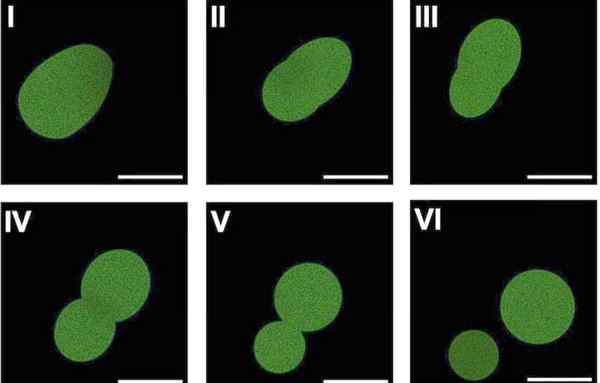
- Divides into daughter cells through physical pressure and mechanical stress, rather than using a natural cytoskeleton.
- Demonstrates Darwinian evolution, where genetically advantageous variants reproduce more efficiently and outcompete others.
How Does SpudCell Function?
The artificial cell follows a simplified life cycle:
- Growth: Absorbs nutrients through membrane pores formed by alpha-hemolysin proteins.
- Protein Synthesis: The PURE system translates genetic information into functional proteins.
- DNA Replication: The synthetic genome is accurately copied before division.
- Cell Division: Mechanical forces generated by protein crowding split the enlarged cell into two daughter cells.
- Evolution: Beneficial genetic mutations improve nutrient uptake, allowing faster reproduction and natural selection.
Why is SpudCell Not Considered Fully Alive?
Although SpudCell exhibits several life-like properties, it lacks complete biological autonomy.
It still depends on:
- External supply of nutrients.
- Externally provided ribosomes and molecular machinery.
- Laboratory-controlled conditions for survival.
Unlike natural cells, it cannot independently maintain metabolism or reproduce indefinitely.
Significance
SpudCell represents a landmark achievement in synthetic biology, demonstrating that fundamental characteristics of life can be recreated from entirely non-living components.
Its potential applications include:
- Development of programmable drug delivery systems.
- Precision medicine and targeted therapeutics.
- Sustainable industrial biomanufacturing.
- Environmental remediation using engineered artificial cells.
- Better understanding of the origin and evolution of life.
- Advancing synthetic biology and bioengineering research.