
Sickle Cell Disease (SCD) & National Sickle Cell Anaemia Elimination Mission (NSCEM)
- 24 Jun 2026
In News:
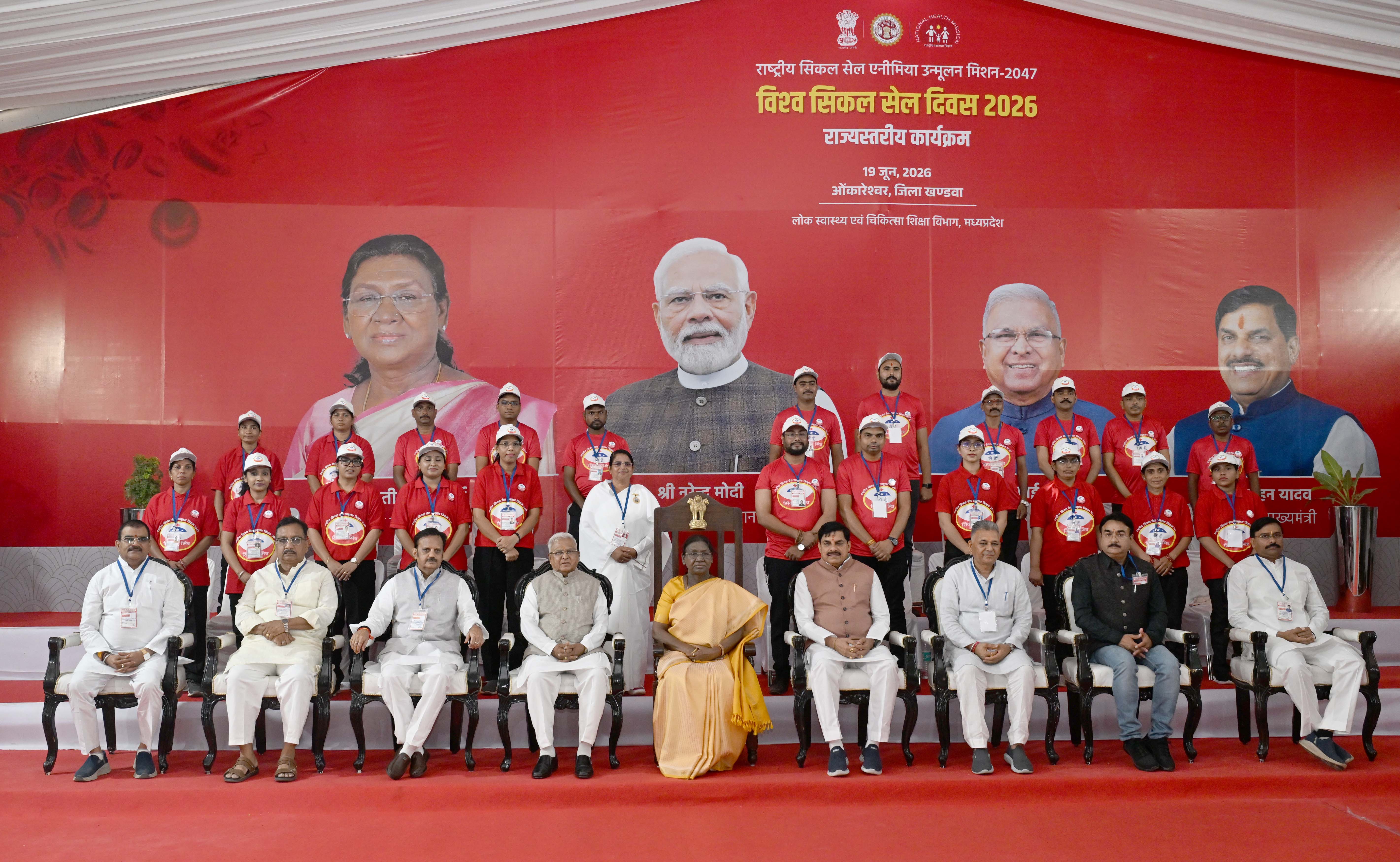
On International Sickle Cell Day (19 June) 2026, the President of India reaffirmed the country's commitment to eliminate Sickle Cell Disease (SCD) by 2047 under the National Sickle Cell Anaemia Elimination Mission (NSCEM).
International Sickle Cell Day
- International Sickle Cell Day is observed annually on 19 June to raise awareness about Sickle Cell Disease (SCD) and promote early diagnosis, treatment, prevention, and equitable healthcare access.
- The United Nations General Assembly (UNGA) designated 19 June as International Sickle Cell Day through a resolution adopted on 22 December 2008, recognizing SCD as a major global public health challenge and one of the world's most significant inherited genetic disorders.
- Theme (2026):"Closing the Survival Gap: Equity in Sickle Cell Disease."
What is Sickle Cell Disease (SCD)?
Sickle Cell Disease (SCD) is a hereditary genetic blood disorder caused by a mutation in the HBB (beta-globin) gene, resulting in the production of abnormal haemoglobin (Haemoglobin S). Instead of their normal biconcave shape, red blood cells become rigid, sticky, and sickle (crescent)-shaped, impairing blood flow and oxygen delivery.
The disease follows an autosomal recessive inheritance pattern, meaning an individual develops SCD only after inheriting two defective genes (one from each parent). Individuals carrying only one mutated gene possess the Sickle Cell Trait and are generally asymptomatic but can transmit the gene to their offspring.
Health Impact
Abnormally shaped red blood cells obstruct small blood vessels, leading to vaso-occlusive crises, severe pain episodes, chronic anaemia, organ damage, recurrent infections due to splenic dysfunction, and reduced life expectancy. Symptoms generally begin at 5–6 months of age as fetal haemoglobin declines.
Treatment
Management focuses on reducing complications through:
- Hydroxyurea therapy (increases fetal haemoglobin production).
- Pain management and adequate hydration.
- Blood transfusions for severe complications.
- Vaccination and antibiotics to prevent infections.
National Sickle Cell Anaemia Elimination Mission (NSCEM)
Launched in 2023, the National Sickle Cell Anaemia Elimination Mission aims to eliminate Sickle Cell Disease as a public health problem in India by 2047, with a special focus on tribal populations, where disease prevalence is highest.
The Mission is implemented jointly by the Ministry of Health & Family Welfare and the Ministry of Tribal Affairs under the National Health Mission (NHM) across 17 high-focus States.
Key Features
- Mission period: 2023–2026 (screening phase).
- Screening target: Approximately 7 crore individuals aged 0–40 years.
- Focus areas include:
- Universal screening and early diagnosis.
- Genetic counselling.
- Timely treatment and follow-up.
- Public awareness and prevention.
- Strengthening healthcare infrastructure.