
Samriddh Gram
- 12 Jul 2026
In News:
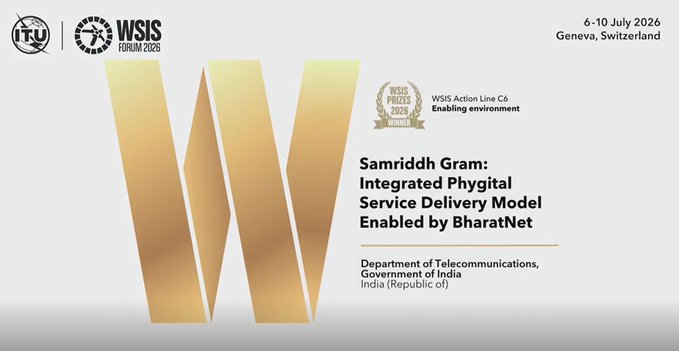
The Department of Telecommunications (DoT) has won the World Summit on the Information Society (WSIS) Prizes 2026 under Action Line C6 – Enabling Environment for its flagship Samriddh Gram initiative, recognising India's efforts in promoting inclusive rural digital transformation.
What is Samriddh Gram?
Samriddh Gram is a flagship rural digital transformation initiative of the Department of Telecommunications (DoT) built on the BharatNet network. It adopts a "phygital" (physical digital) service delivery model that combines robust digital infrastructure with on-ground service centres to improve access to essential public and commercial services in rural areas.
The initiative seeks to transform villages into digitally empowered communities by integrating connectivity, technology and assisted service delivery.
Objectives
The primary objective of Samriddh Gram is to bridge the rural digital divide by providing seamless access to education, healthcare, agriculture, financial services, e-governance and entrepreneurship opportunities through a unified digital ecosystem.
The initiative also supports the broader goals of Digital India, inclusive growth and last-mile service delivery.
Key Features
At the core of the programme are Samriddhi Kendras, which function as village-level one-stop service centres delivering integrated phygital services. These centres combine reliable telecom connectivity, digital platforms and assisted physical support to ensure that citizens can easily access government and private services.
The initiative provides a comprehensive range of services across multiple sectors:
- Education & Skill Development: Smart classrooms, AR/VR-enabled learning and digital skill training aligned with government programmes.
- Agriculture: IoT-based soil testing, drone-assisted farming and smart irrigation solutions.
- Healthcare: Telemedicine, Health ATMs and emergency healthcare support.
- e-Governance: Assisted access to government services, documentation and grievance redressal.
- E-Commerce: Integration with the Open Network for Digital Commerce (ONDC) and digital marketplaces to promote rural entrepreneurship.
- Financial Inclusion: Digital banking services and digital payment facilities.
The digital backbone of the programme is provided through BharatNetFibre-to-the-Home (FTTH) connectivity, supported by Village Area Networks (VANs) and public Wi-Fi hotspots.
Samriddh Gram Phygital Services Pilot Project
- 01 Nov 2025
In News:
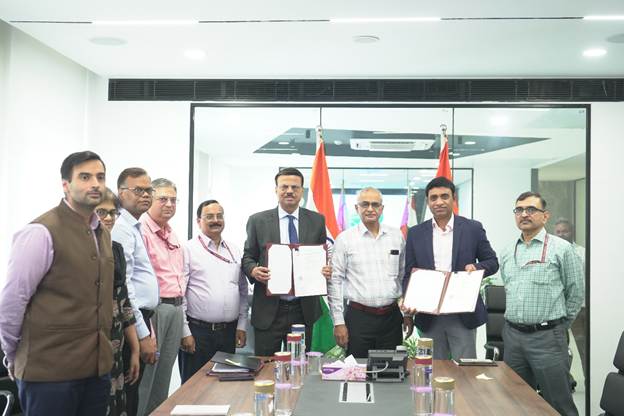
The Samriddh Gram Phygital Services Pilot Project, launched by the Department of Telecommunications (DoT) through the Telecom Centres of Excellence (TCoE), is a rural digital empowerment initiative aimed at bridging the digital divide by integrating physical infrastructure with digital service delivery (“phygital model”). It leverages BharatNet — India’s flagship rural broadband programme — to ensure seamless access to essential citizen-centric services.
Pilot Locations & Implementation
The pilot is being implemented in three villages, each hosting a Samriddhi Kendra:
- Ari & Umri (Madhya Pradesh) – Partner: Digital Empowerment Foundation
- Narakoduru (Andhra Pradesh) – Partner: Corpus Enterprises Pvt. Ltd.
- Chaurawala (Uttar Pradesh) – Partner: I-Novate Infotech Pvt. Ltd.
These Kendras act as integrated digital service hubs, providing both physical support and digital-enabled services.
Objectives:
- To create a replicable and scalable rural digital service model.
- To deliver last-mile digital access through BharatNet-powered connectivity.
- To enhance education, agriculture, health, governance, and financial inclusion in rural areas.
- To enable digital entrepreneurship and strengthen participation in the digital economy.
Key Features & Services
1. Education & Skilling
- Smart classrooms, digital content
- AR/VR-based learning
- Skill development aligned with national skilling schemes
2. Agriculture
- IoT-based soil testing
- Drone-enabled services (monitoring, spraying)
- Smart irrigation solutions
3. Healthcare
- Teleconsultations
- Health ATMs for diagnostics
- Basic emergency care support
4. e-Governance
- Assisted access to government services
- Document facilitation
- Grievance redress mechanisms
5. E-Commerce & Entrepreneurship
- Integration with ONDC
- Digital marketplace access for local products
- Support for rural microenterprises
6. Financial Inclusion
- Digital banking services
- Payment systems & UPI-assisted transactions
7. Connectivity Backbone
- BharatNet FTTH connectivity
- Village Area Network (VAN)
- Public Wi-Fi hotspots
Significance
- Strengthens Digital India at the grassroots.
- Demonstrates a phygital last-mile service delivery model.
- Enhances socio-economic outcomes in rural areas by integrating technology with governance and service delivery.
- Designed as a sustainable and scalable model for nationwide expansion.