
Pradhan Mantri SurakshitMatritva Abhiyaan (PMSMA)
- 14 Jun 2026
In News:
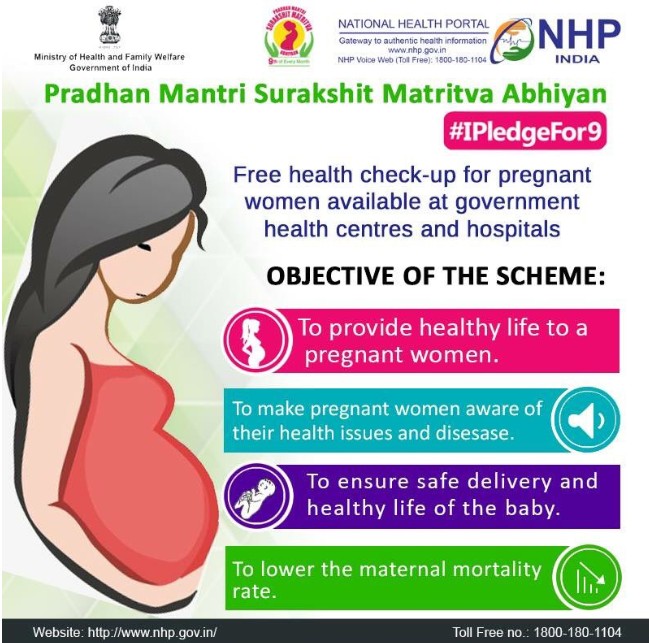
The Government of India recently marked 10 years of the Pradhan Mantri SurakshitMatritva Abhiyaan (PMSMA) under the theme “10 Years of PMSMA – A Decade of Care.” Launched on 9 June 2016, PMSMA is a flagship maternal healthcare initiative aimed at ensuring safe pregnancy, reducing maternal and neonatal mortality, and improving access to quality antenatal care.
About PMSMA
PMSMA provides free, comprehensive and specialist-led antenatal care (ANC) services to pregnant women, particularly during the second and third trimesters, at designated government health facilities on the 9th day of every month.
The programme focuses on:
- Early identification of high-risk pregnancies.
- Timely referral and intervention.
- Improved maternal and newborn health outcomes.
- Universal access to quality antenatal services.
Extended PMSMA
To strengthen maternal healthcare further, the government launched Extended PMSMA (E-PMSMA) in January 2022.
Under this initiative:
- High-Risk Pregnancies (HRPs) are identified and line-listed.
- Pregnant women are individually tracked up to 45 days after delivery.
- SMS-based monitoring and follow-up mechanisms are used.
- ASHA workers provide additional support and counselling.
Major Achievements
Over the last decade, PMSMA has emerged as one of the world's largest targeted antenatal care programmes:
- More than 7.5 crore antenatal check-ups conducted.
- Nearly 1.2 crore high-risk pregnancies identified.
- Improved early risk detection and referral systems.
Maternal and Child Health Outcomes
India has witnessed substantial improvements in maternal and child health indicators:
Maternal Mortality
- Maternal Mortality Ratio (MMR) declined from 130 per lakh live births (2014–16) to 87 per lakh live births (2022–24).
- India has achieved an 86% decline in maternal mortality since 1990, significantly higher than the global average decline of 48%.
Child Health
- Under-Five Mortality Rate declined by 79% since 1990.
- Neonatal mortality declined by 70% during the same period.
NFHS Indicators
According to recent National Family Health Survey (NFHS) data:
- Institutional deliveries: 90.6%
- Antenatal care coverage: 95.9%
- Women receiving at least four ANC visits: 65.2%
- First-trimester ANC registration: 76.2%
These improvements reflect stronger maternal healthcare systems and greater utilization of institutional health services.