
NASA’s MAVEN Mission Ends
- 10 Jun 2026
In News:
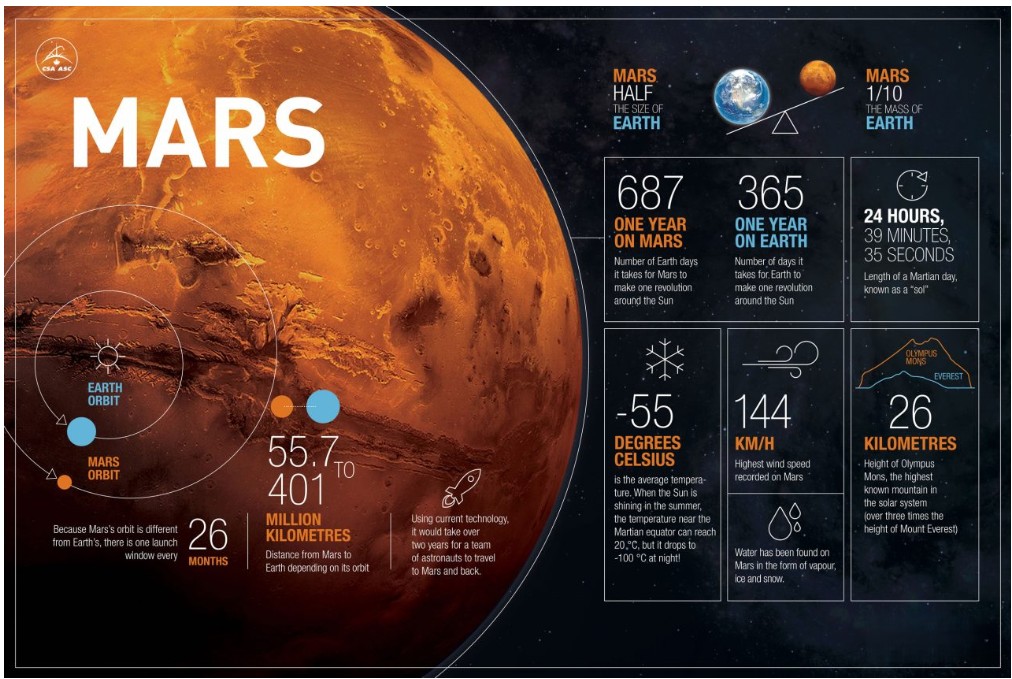
NASA’s Mars Atmosphere and Volatile Evolution (MAVEN) mission, the first spacecraft dedicated exclusively to studying the Martian atmosphere, has officially concluded after more than 11 years in orbit around Mars. Launched in 2013 and entering Martian orbit in 2014, MAVEN far exceeded its planned one-year mission life and became one of the most successful Mars exploration missions.
Why was MAVEN important?
MAVEN was designed to investigate how Mars lost much of its atmosphere and water over billions of years, helping scientists understand how the planet transformed from a potentially habitable world into the cold, dry planet.
Key Contributions
Understanding Atmospheric Loss
- Demonstrated that solar wind and solar storms continuously strip atmospheric particles from Mars.
- Established a direct link between solar activity and atmospheric escape.
- Provided crucial evidence explaining the long-term thinning of the Martian atmosphere.
Discovery of New Auroras
- Detected previously unknown types of Martian auroras, including proton auroras.
- Improved understanding of interactions between the Sun and planetary atmospheres.
Evidence of Atmospheric Sputtering
- Measured the escape of atmospheric gases such as argon.
- Confirmed atmospheric sputtering as a major mechanism responsible for atmospheric erosion.
Dust Storm and Water Loss Studies
During the global dust storm of 2018, MAVEN observed that dust-driven heating lifted water vapour to higher altitudes, where it was broken down by solar radiation and lost to space. This explained periodic spikes in water loss from Mars.
Additional Scientific Contributions
- Studied Mars’ ionosphere and magnetosphere.
- Observed the interstellar comet 3I/ATLAS using ultraviolet and multi-wavelength instruments.
- Served as an important communication relay for Mars rover missions.
End of the Mission
NASA lost contact with MAVEN in December 2025 after the spacecraft experienced an anomaly and entered an unrecoverable state. The mission was officially declared concluded in 2026.