
Matcha Tea
- 07 Jul 2026
In News:
An Assam tea estate has sold India's first commercially produced matcha tea, marking a significant diversification of the Indian tea industry beyond conventional black and green teas. The initiative reflects the growing demand for premium specialty teas in domestic and international markets and opens new avenues for value addition in the tea sector.
What is Matcha Tea?
Matcha is a finely ground green tea powder prepared from specially cultivated shade-grown leaves of Camellia sinensis, the same plant species used to produce black, green, oolong and white teas. Unlike conventional green tea, where the leaves are infused in hot water and discarded, matcha is whisked into water and consumed entirely, resulting in higher intake of nutrients and bioactive compounds.
The practice of consuming powdered tea originated in China during the Song Dynasty and was later introduced to Japan by Zen Buddhist monks, where it evolved into an integral part of the Japanese tea ceremony. Today, Japan remains the world's leading producer of high-quality matcha.
How is Matcha Produced?
The distinctive quality of matcha lies in its unique cultivation and processing method.
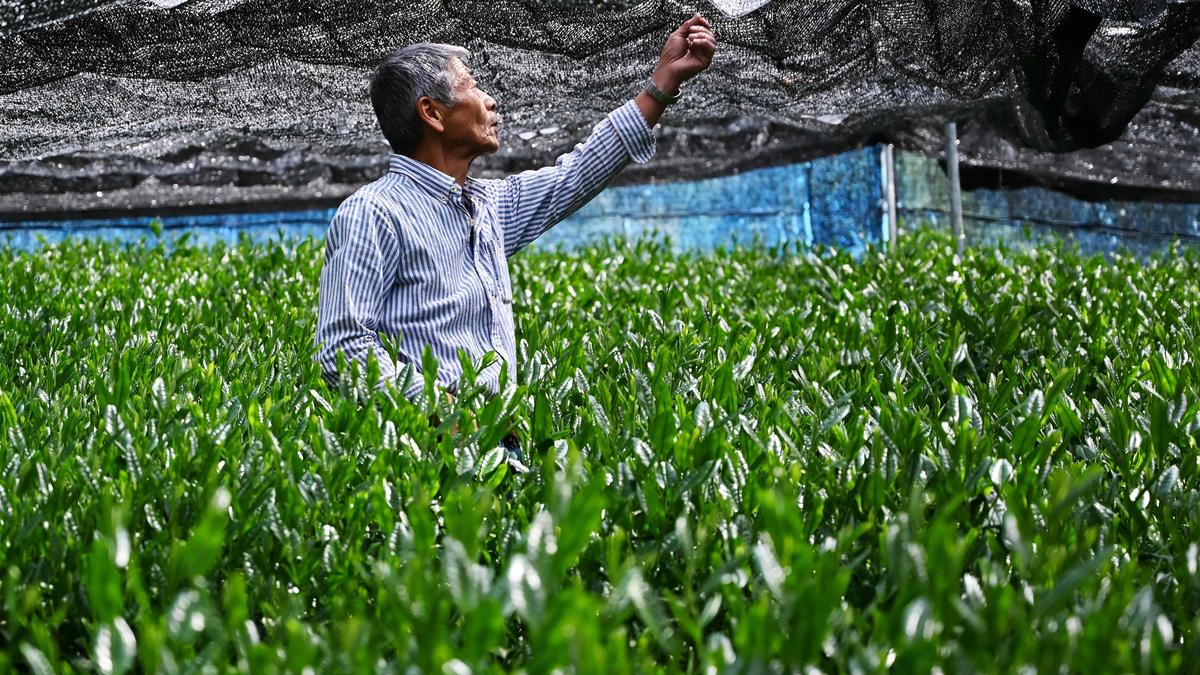
- Tea plants are shade-grown for about 3–4 weeks before harvest, with nearly 90% of sunlight blocked.
- Reduced sunlight increases the concentration of chlorophyll and L-theanine (an amino acid), giving the leaves their vibrant green colour and characteristic umami flavour.
- Only the young, tender leaves are harvested.
- The leaves are steamed immediately to prevent oxidation, preserving their green colour.
- After drying and removing stems and veins, the processed leaves are known as tencha.
- The tencha is then slowly stone-ground into an ultra-fine green powder called matcha.
Why is Matcha Different from Regular Green Tea?
Unlike ordinary green tea, which is prepared by steeping leaves in hot water, matcha is consumed as the whole leaf in powdered form. As a result, it provides higher concentrations of:
- Antioxidants (especially catechins such as EGCG)
- Chlorophyll
- L-theanine
- Natural caffeine
- Vitamins and minerals
This combination has made matcha popular as a functional beverage in the global health and wellness market.