
Logistics Port Performance Index
- 31 May 2026
In News:
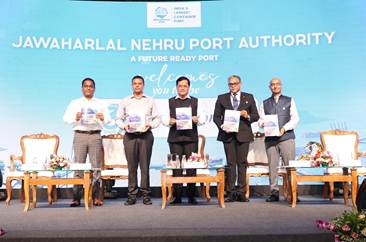
The Ministry of Ports, Shipping and Waterways (MoPSW) has launched the Logistics Port Performance Index (LPPI) for FY 2024–25 along with four major digital initiatives aimed at improving governance, operational efficiency and ease of doing business in India's maritime sector. These initiatives are expected to support India's ambition of becoming a globally competitive maritime and logistics hub under the Maritime India Vision 2030 and Maritime Amrit Kaal Vision 2047.
What is the Logistics Port Performance Index (LPPI)?
The Logistics Port Performance Index (LPPI) is a national benchmarking framework developed under the Sagar Aankalan initiative to assess, compare and improve the operational efficiency of Indian ports. It introduces a standardized performance assessment mechanism that enables ports to benchmark themselves against national best practices while encouraging continuous operational improvement.
Unlike conventional ranking systems, the LPPI evaluates not only the present performance of ports but also their year-on-year progress, thereby promoting sustained efficiency gains rather than one-time achievements. The framework supports evidence-based policymaking and facilitates healthy competition among ports.
Objectives
- Establish a uniform national benchmark for port performance.
- Improve cargo handling efficiency and reduce logistics costs.
- Promote transparency, accountability and data-driven governance.
- Strengthen India's competitiveness in global maritime trade.
- Support integrated multimodal logistics under the PM Gati Shakti National Master Plan.
- Contribute to the goals of Maritime India Vision 2030 and Maritime Amrit Kaal Vision 2047.
Assessment Parameters
The LPPI evaluates ports across three cargo segments:
- Dry Bulk Cargo
- Liquid Bulk Cargo
- Container Cargo
Performance is measured using key operational indicators such as:
- Cargo handled
- Vessel Turnaround Time (VTT)
- Berth Idle Time
- Pre-Berthing Waiting Time (PBWT)
- Container Dwell Time
- Ship Berth Day Output
A distinctive feature of the index is that it gives equal weightage (50:50) to:
- Absolute operational performance.
- Improvement over the previous year.
This approach incentivises both efficiency and continuous reform.
Top Performing Ports (FY 2024–25)
- Dry Bulk Cargo (>5 MillionTonnes):Paradip Port Authority
- Liquid Bulk Cargo:Sikka Port and Terminals
- Container Cargo (>0.5 Million TEUs):Mundra Port
- Second among Major Container Ports:Jawaharlal Nehru Port Authority (JNPA)
Major Digital Initiatives Launched
To complement the LPPI, the Directorate General of Shipping introduced four digital platforms to improve service delivery and transparency across the maritime ecosystem.
1. 24×7 Grievance Redressal Module (e-Navik Platform)
- Enables round-the-clock grievance registration and monitoring for seafarers.
- Enhances transparency and accountability in grievance resolution.
2. Ship Registration Module (e-Samudra Platform)
- Digitises the ship registration process.
- Reduces paperwork and processing time while improving ease of doing business.
3. Medical Practitioner Module
- Creates a digital registry of authorised medical practitioners conducting medical examinations of seafarers.
- Improves standardisation and regulatory compliance.
4. Unified Ship Recycling Credit Note Module
- Integrated portal supporting the Ship Recycling Credit Scheme.
- Ship owners recycling vessels at Hong Kong Convention-compliant Indian ship recycling yards receive a credit note equal to 40% of the vessel's scrap value, which can be redeemed against new shipbuilding projects in India.
- The initiative forms part of the Government's ?70,000-crore Maritime Development Package (2025) to promote domestic shipbuilding and green ship recycling.
Significance for India
- Improves port productivity and operational efficiency.
- Reduces logistics costs and vessel turnaround time.
- Encourages digital governance in the maritime sector.
- Supports sustainable ship recycling and indigenous shipbuilding.
- Enhances India's integration with global supply chains.
- Strengthens India's position as a leading maritime and logistics nation under the Blue Economy framework.