
India–Southeast Asia (I-2SEA) Submarine Cable System
- 07 Jul 2026
In News:
A consortium comprising Microsoft, Singtel, Tata Communications and Lightstorm has signed agreements to develop the India–Southeast Asia (I-2SEA) Submarine Cable System, a major digital infrastructure project connecting India, Malaysia and Singapore. Expected to be operational by Q4 2029, it seeks to meet the growing demand for Artificial Intelligence (AI), cloud computing and hyperscaler connectivity across the India–Southeast Asia corridor.
What is the I-2SEA Submarine Cable System?
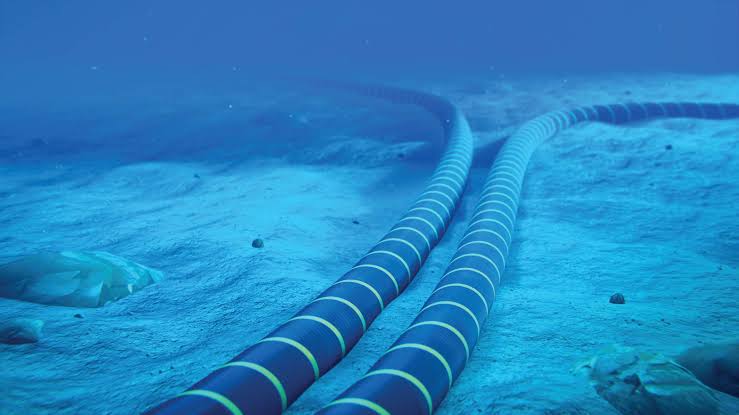
The I-2SEA is an approximately 3,600-km submarine fibre-optic cable system that will connect India's east coast with Southeast Asia through a carrier-neutral landing infrastructure. It is designed to provide high-capacity, low-latency and resilient digital connectivity for AI, cloud services and enterprise data traffic.
Submarine cables are undersea fibre-optic cables that transmit data using light signals and carry nearly 99% of global international internet and telecommunications traffic, making them the backbone of the global digital economy.
Key Features
- Connects India, Malaysia and Singapore, strengthening regional digital connectivity.
- Dual landing stations in India at Machilipatnam (Andhra Pradesh) and South Chennai (Tamil Nadu).
- Machilipatnam offers the shortest subsea route to Hyderabad, enabling faster connectivity to India's growing AI and data centre ecosystem.
- Provides onward connectivity to Mumbai and over 80 data centres through Lightstorm's terrestrial fibre network.
- Features carrier-neutral landing infrastructure, allowing multiple telecom operators and service providers to use the network.
- Uses interoperable cable architecture, ensuring seamless integration with various international networks.
- Incorporates deep cable burial to protect against damage from anchors, fishing activities and natural hazards.
- Integrated with Lightstorm's SmartNet AI Fabric and Polarin platform for intelligent network management and real-time monitoring.
Purpose
The project has been designed to address the rapid growth in international data traffic driven by AI and cloud computing. It will support:
- Hyperscalers and cloud service providers.
- GPU infrastructure for AI model training and inference.
- High-performance computing workloads.
- Enterprises requiring high-capacity, low-latency digital connectivity.