
High-Level Committee on Demographic Change
- 27 May 2026
In News:
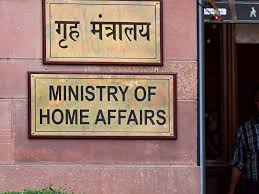
The Union Ministry of Home Affairs (MHA) has constituted a High-Level Committee to examine demographic changes arising from illegal immigration and other abnormal factors. The committee has been tasked with conducting a scientific assessment of demographic shifts and recommending policy measures to address their implications for national security, governance, resource allocation, and socio-cultural stability.
Background
Concerns regarding demographic changes linked to illegal migration have been particularly pronounced in border states such as Assam, West Bengal, Meghalaya, Tripura, and parts of Jharkhand. The issue has long featured in debates relating to border management, indigenous rights, internal security, and electoral integrity.
The committee comes at a time when India is preparing for the 2027 Census, making updated demographic assessment increasingly important.
Composition and Mandate
The committee is chaired by Justice Prakash Prabhakar Navlekar, former Supreme Court judge and former Lokayukta of Madhya Pradesh. It also includes the Census Commissioner and other experts.
The panel has been directed to submit its report within one year (by May 2027), with provision for a six-month extension if required.
Its key responsibilities include:
- Conducting a data-driven assessment of demographic changes linked to illegal immigration and abnormal migration patterns.
- Studying demographic variations across religious and social groups in regions showing unusual population trends.
- Recommending mechanisms for Centre–State coordination on demographic management.
- Suggesting institutional frameworks for identification, detention, and deportation of undocumented migrants.
- Strengthening border management, identity verification systems, and migration-monitoring mechanisms.
Why is the Study Important?
Internal Security and Sovereignty
Illegal migration across porous borders has long been viewed as a security concern. In Sarbananda Sonowal v. Union of India, the Supreme Court observed that large-scale illegal migration into Assam amounted to "external aggression" and invoked Article 355 of the Constitution.
Migration corridors are also vulnerable to exploitation by networks involved in:
- Human trafficking
- Arms smuggling
- Cross-border crime
- Potential infiltration by extremist elements
Protection of Indigenous Communities
Several tribal and indigenous regions, particularly in the Northeast and parts of Jharkhand, have expressed concerns regarding demographic pressures on land ownership, cultural identity, and political representation.
Protective mechanisms such as the Santhal Pargana Tenancy Act, 1876, and constitutional safeguards under the Fifth and Sixth Schedules seek to protect tribal interests. A demographic assessment may help evaluate the effectiveness of these protections.
Socio-Economic Pressures
Population growth beyond natural demographic trends can place pressure on: housing, healthcare, education, employment opportunities, and public infrastructure. Such pressures can contribute to social tensions and competition over limited resources.
Electoral Integrity
Concerns have also been raised regarding the alleged acquisition of identity documents by undocumented migrants. Accurate demographic data is considered essential for maintaining the integrity of electoral rolls and democratic processes.
Constitutional and Legal Framework
- Article 355: Article 355 imposes a duty on the Union to protect States against:External aggression and Internal disturbance. This provision is frequently cited in discussions concerning illegal immigration and border security.
- Citizenship Act, 1955: The Act provides the legal framework for acquisition and termination of Indian citizenship. Section 6A was inserted following the Assam Accord to address citizenship issues specific to Assam.
- Foreigners Act, 1946: The Act empowers the government to identify, regulate, detain, and deport foreigners. It places the burden of proof on the individual to establish Indian citizenship.
- Fifth and Sixth Schedules: These constitutional provisions safeguard tribal autonomy, land rights, and cultural identity in designated tribal regions.
Important Judicial Developments
- Sarbananda Sonowal v. Union of India (2005): The Supreme Court held that unchecked illegal migration into Assam constituted a threat to national security and invoked Article 355.
- Assam SanmilitaMahasangha v. Union of India (2014): The Court directed a time-bound update of the National Register of Citizens (NRC) in Assam to identify undocumented migrants.
Key Committee and Commission Reports
- Lt. Gen. S.K. Sinha Report (1998): Highlighted the security implications of demographic changes in border regions and their impact on national integration.
- Upamanyu Hazarika Commission (2015): Warned about demographic shifts affecting indigenous populations in Assam.
- Madhukar Gupta Committee (2016): Recommended the Comprehensive Integrated Border Management System (CIBMS), emphasizing technology-driven border surveillance through sensors, thermal imagers, and smart monitoring systems.
India's Broader Demographic Context
Declining Fertility
According to recent demographic estimates:
- India's Total Fertility Rate (TFR) has fallen below replacement level.
- NFHS-5 estimates place TFR at approximately 2.0.
- SRS data indicate a further decline to around 1.9.
This suggests long-term population stabilization.
Regional Demographic Divide
A significant North-South demographic divide is emerging:
- Southern states such as Kerala and Tamil Nadu have very low fertility rates and aging populations.
- Northern states such as Bihar and Uttar Pradesh continue to have relatively higher fertility rates and younger populations.
Demographic Dividend Window
India currently enjoys a demographic advantage with a median age of around 28 years. However, this window is expected to narrow as the elderly population grows substantially by 2050.