
Greater One-Horned Rhinoceros
- 13 Jul 2026
In News:
The Central Government has approved a landmark conservation initiative to establish a DNA-based indexing system for the Greater One-Horned Rhinoceros (Indian Rhinoceros). The initiative aims to strengthen wildlife conservation by creating a genetic database to combat poaching, enable scientific monitoring, and improve long-term management of rhino populations.
What is DNA-Based Indexing?
DNA-based indexing involves creating a genetic profile of individual rhinos using DNA samples. This genetic database helps authorities:
- Identify individual rhinos with precision.
- Trace the origin of seized rhino horns and wildlife products.
- Strengthen anti-poaching investigations and support prosecution.
- Monitor genetic diversity, breeding patterns, and population health.
- Assist in scientific conservation planning and habitat management.
About the Greater One-Horned Rhinoceros
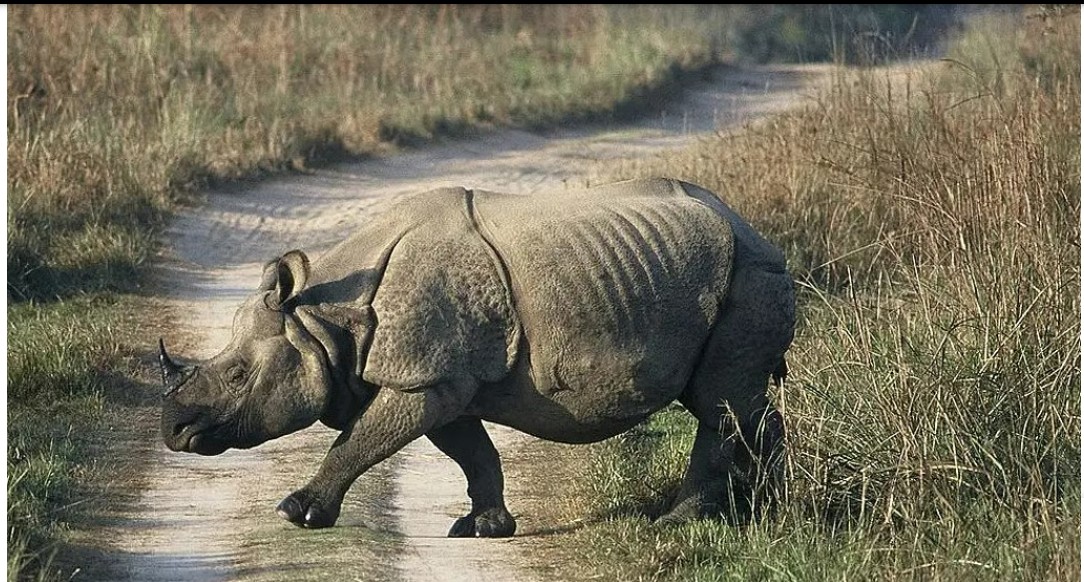
- The Greater One-Horned Rhinoceros (Rhinoceros unicornis), also known as the Indian Rhinoceros, is the largest of the three Asian rhinoceros species and is one of India's flagship conservation success stories.
- It inhabits semi-aquatic ecosystems, including grasslands, swamps, riverine forests, floodplains, and areas near mineral licks.
- Historically, the species ranged across the Indus, Ganga, and Brahmaputra river floodplains, but its distribution is now restricted mainly to India and Nepal, particularly in the foothills of the Himalayas.
- Kaziranga National Park (Assam) supports the largest population of the Greater One-Horned Rhinoceros in the world.
Key Features
- The species is distinguished by its single black horn and grey-brown skin with prominent folds, giving it an armour-plated appearance.
- It is generally solitary, except for females accompanied by calves, while adult males maintain loosely defended territories.
- Being herbivorous, it feeds on grasses, leaves, fruits, branches, aquatic vegetation, and occasionally cultivated crops.
Threats
Despite significant recovery in population, the Greater One-Horned Rhinoceros continues to face several threats:
- Poaching for its horn remains the biggest threat.
- Habitat loss and fragmentation.
- Human–wildlife conflict.
- Floods and invasive species in protected habitats.
Conservation Status
- IUCN Red List: Vulnerable
- CITES: Appendix I
- Wildlife (Protection) Act, 1972: Schedule I