
Beaufort Castle
- 04 Jun 2026
In News:
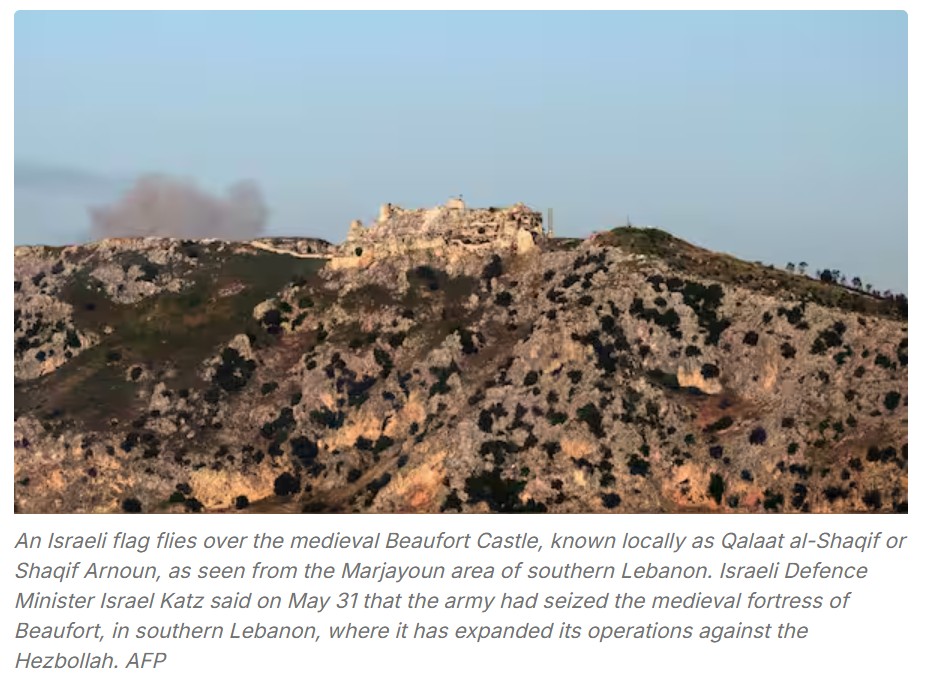
Amid the ongoing tensions in West Asia, Israel's recent capture of Beaufort Castle and the surrounding strategic ridge in southern Lebanon has once again brought attention to one of the region's most historically and militarily significant fortresses. Perched atop a rocky hill overlooking southern Lebanon, Beaufort Castle has for centuries served as a symbol of military power, territorial control, and strategic dominance.
About Beaufort Castle
- Beaufort Castle, known locally as Qalaat al-Shaqif ("Castle of the High Rock"), is a medieval fortress located near the city of Nabatieh in southern Lebanon.
- Situated only about 14.5 km from the Israeli border, the castle occupies a commanding hilltop position that offers extensive views of the surrounding landscape.
- Constructed by the Crusaders during the 12th century, the fortress subsequently passed through the hands of various rulers, including Muslim dynasties, the Mamluks, and the Ottomans. Today, it remains one of the best-preserved examples of medieval military architecture in the Near East.
- Architecturally, the castle consists of a high castle and a low castle, reflecting its defensive role during the medieval era. Its massive stone fortifications, elevated position, and commanding visibility made it an ideal military stronghold capable of monitoring troop movements and protecting surrounding territories.
Strategic Importance
The strategic value of Beaufort Castle stems primarily from its geography. The fortress overlooks:
- Large parts of southern Lebanon,
- The fertile Litani River Valley,
- Key transportation routes in the region,
- Parts of northern Israel.
This commanding vantage point allows military forces to monitor movement across a wide area, making the site highly valuable for surveillance, defence, and military operations. Control over the castle provides tactical advantages in any conflict involving southern Lebanon and northern Israel.
Its location near the Israeli border also places it at the centre of the long-standing security dynamics between Israel, Lebanon, and armed groups operating in the region.
Ayni Air Base
- 02 Nov 2025
In News:
India has formally concluded its operations at the Ayni Air Base (Gissar Military Aerodrome) in Tajikistan, ending a two-decade presence that began in 2002. The withdrawal followed the expiry of a bilateral agreement in 2022, after which Tajikistan chose not to renew the lease. Indian personnel and equipment were pulled out by early 2023.
About Ayni Air Base
- Location: Near Dushanbe, Tajikistan.
- Status: India’s first overseas military facility.
- Origins: A Soviet-era base that fell into disrepair after the USSR’s collapse.
- Indian Involvement:
- India began modernising it in the early 2000s under a strategic arrangement with Tajikistan.
- Approx. USD 100 million invested in runway extension, hangars, refuelling systems, and repair facilities.
- Runway extended to 3,200 metres to support fighter aircraft operations.
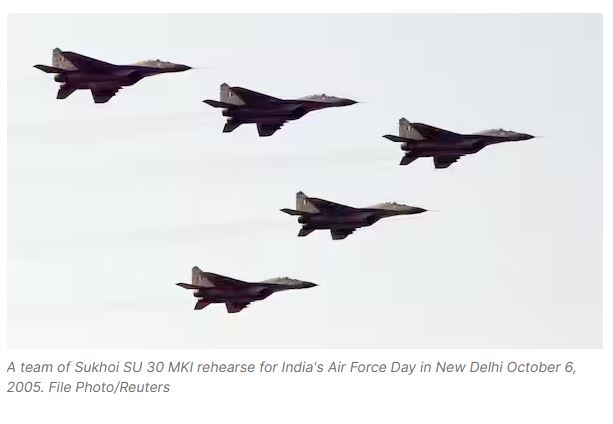
- Included temporary deployment of Su-30MKI jets and helicopters.
- At times, ~200 Indian Army and IAF personnel were stationed at the site.
Withdrawal: Why Now?
- The bilateral agreement for joint operation expired in 2022 and was not renewed.
- Tajikistan reportedly faced pressure from Russia and China to avoid hosting non-regional military forces.
- After India's withdrawal, Russian forces have taken over operational control.
- The base’s strategic value reduced after the Taliban takeover in Afghanistan (2021), which changed the regional security landscape.
Strategic Significance for India
1. Afghanistan & Anti-Taliban Engagement
- Initially helped India support the Northern Alliance against the Taliban.
- Geographic proximity enabled humanitarian and logistical access to Afghanistan.
- Used during August 2021 evacuations of Indian nationals following the Taliban’s return to power.
2. Leverage Against Pakistan
- Ayni lies ~20 km from the Wakhan Corridor, which borders Pakistan-occupied Kashmir (PoK).
- Provided theoretical capability to monitor or target strategic locations such as Peshawar, giving India an indirect pressure point.
3. Presence in Central Asia
- Offered India a rare strategic foothold in a region traditionally influenced by Russia and increasingly by China.
- Served as a platform to expand defence, diplomatic, and economic engagement in Central Asia.
Consequences of India’s Exit
- Reduced Indian military reach in Central Asia.
- Greater Russian and Chinese influence over Tajik defence infrastructure.
- Limits India’s ability to operate in the region at a time of shifting geopolitics around Afghanistan and Eurasia.