
Economic Capital Framework (ECF)
- 23 May 2024
Why is it in the News?
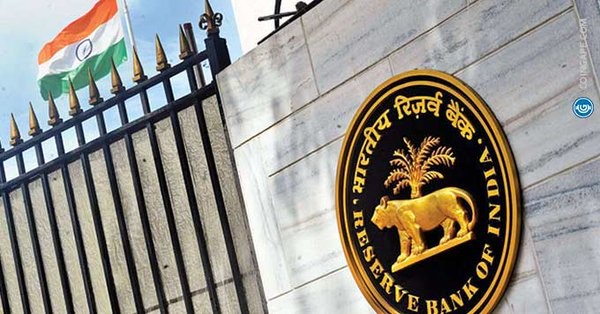
The Central Board of the Reserve Bank of India (RBI) has approved a record surplus transfer of Rs 2.11 lakh crore to the Central government for the fiscal year 2023-24, determined based on the Economic Capital Framework (ECF).
What is the Economic Capital Framework (ECF)?
- The Economic Capital Framework (ECF) is an objective, rule-based, transparent methodology for determining the appropriate level of risk provisions (fund allocation to capital reserve) that is to be made under Section 47 of the Reserve Bank of India Act.
- The Reserve Bank of India (RBI) developed an Economic Capital Framework (ECF) for determining the allocation of funds to its capital reserves so that any risk contingency can be met as well as to transfer the profit of the RBI to the government.
- There are two clear objectives for the ECF.
- First, the RBI as a macroeconomic institution has the responsibility to fight any disorder especially a crisis in the financial system. Here, to meet such a crisis, the RBI should have adequate funds attached under the capital reserve.
- Second, is transferring the remaining part of the net income to the government.
- The process of adding funds to the capital reserve is a yearly one where the RBI allots money out of its net income to the capital reserve.
- How much funds shall be added to the capital reserve each year depends upon the risky situation in the financial system and the economy.
- The process of allocation of funds is technically called as provisioning (risk provisioning etc.,) to the reserves.
- After allotting money to the capital reserve, the remaining net income of the RBI is transferred to the government as profit.
- Since the government is the shareholder of the RBI, the latter’s income (means profit) should be transferred to the Government (Section 47 of the RBI Act).
- Previously, there were several attempts to frame an ECF for the RBI. However, under the changed circumstances, the RBI central board constituted a new committee (under Bimal Jalan) to design an ECF in 2018.
What is a Bimal Jalan Committee?
- The Reserve Bank of India (RBI) in November 2018 had constituted a six-member committee, chaired by former governor Dr Bimal Jalan, to review the current economic capital framework (ECF), after the Ministry of Finance asked the central bank to follow global practices.
What did the Bimal Jalan Committee Recommend?
- According to the Committee, a better distinction between the two components of RBI's economic capital, realised equity and revaluation balances, was needed.
- The realised equity can be used as a buffer in meeting losses, whereas the revaluation balances will be used only during market risks as they are unrealised valuation gains and cannot be distributed.
- The Committee has recommended the adoption of Expected Shortfall (ES) under stressed conditions for measuring the RBI’s market risk and asked to adopt a target of ES 99.5 per cent confidence level.
- It also asked to maintain a Contingent Risk Buffer (CRB) within 6.5 per cent and 5.5 per cent of RBI's balance sheet.
- The Jalan Committee recommended a surplus distribution policy that follows the realised equity maintained by the RBI.
- The panel also suggested that the RBI’s ECF should be reviewed every five years.
- In August 2019, the Central Board of the RBI, chaired by Governor Shaktikanta Das, finalised the RBI’s accounts for 2018-19 using the revised framework to determine risk provisioning and surplus transfer. According to the reports, the RBI had over Rs 9 trillion of surplus capital with it.