
Bharat Climate Observation Network
- 21 Jun 2026
In News:
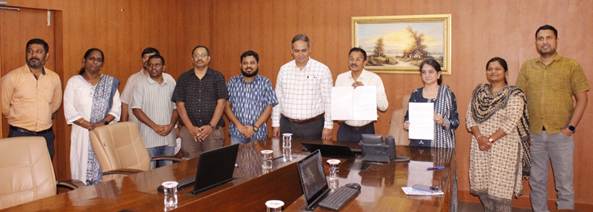
The Indian Institute of Tropical Meteorology (IITM), Pune and the Aryabhatta Research Institute of Observational Sciences (ARIES), Nainital have signed a long-term Memorandum of Understanding (MoU) to establish a climate observation station in the Himalayan region under the Bharat Climate Observation Network (BCON).
What is the Bharat Climate Observation Network (BCON)?
The Bharat Climate Observation Network (BCON) is a national climate observation initiativeconceptualised and implemented by the Indian Institute of Tropical Meteorology (IITM) under the Ministry of Earth Sciences (MoES). It aims to establish a high-precision, long-term climate monitoring network across India to generate reliable observational data for climate research, modelling, and policymaking.
The proposed Himalayan observation station will strengthen climate monitoring in one of the world's most climate-sensitive regions and improve understanding of mountain ecosystems and regional climate variability.
Key Functions
BCON is designed to create a comprehensive observational framework by monitoring multiple components of the Earth's climate system. It will:
- Monitor meteorological parameters such as temperature, rainfall, humidity, wind, and pressure.
- Measure climate-active trace gases, including greenhouse gases (GHGs) and Short-Lived Climate Forcers (SLCFs).
- Observe atmospheric chemistry and soil moisture, enabling a better understanding of climate processes.
- Develop a national climate database for detecting long-term climate trends and supporting evidence-based policymaking.
Significance
The high-quality datasets generated through BCON will serve as an important scientific resource for climate change research, enabling more accurate assessment of India's changing climate.
The network will also provide critical observational data for the validation and benchmarking of Earth System Models (ESMs), including India's first indigenous Earth System Model (IITM-ESM). Improved model validation will enhance simulations of the Indian climate, strengthen future climate projections, and support disaster risk reduction, climate adaptation, and sustainable development planning.
The establishment of observation stations in ecologically sensitive regions such as the Himalayas is particularly significant, as these regions are highly vulnerable to climate change and influence India's monsoon, river systems, and water security.