
BGP Hijacking
- 22 Jun 2026
In News:
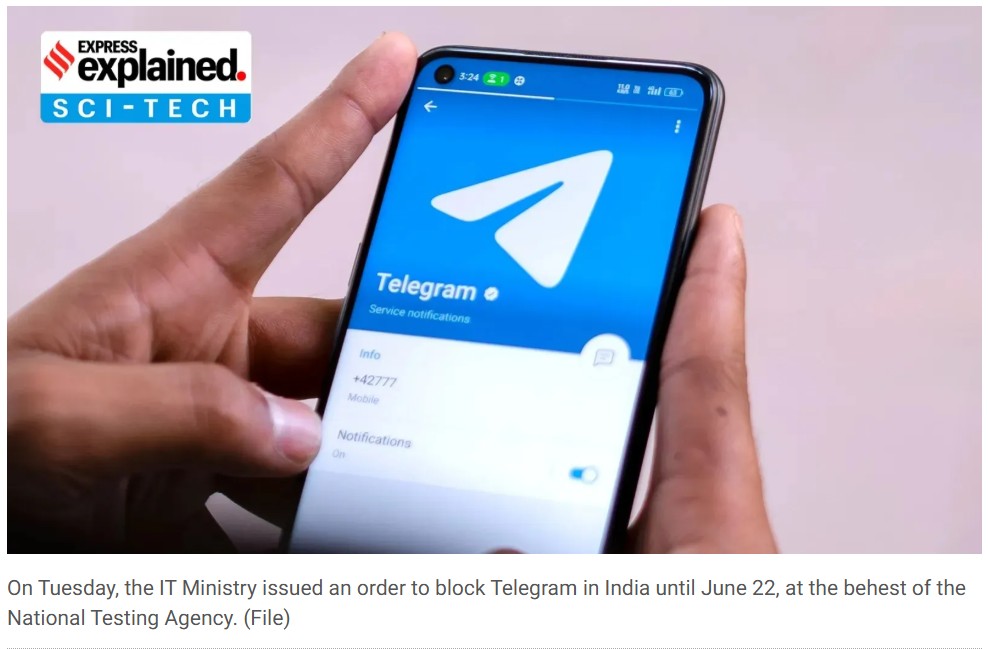
Following the temporary blocking of Telegram in India, the platform's founder Pavel Durov alleged that its global accessibility was being affected through Border Gateway Protocol (BGP) hijacking, bringing renewed attention to one of the Internet's most significant routing vulnerabilities.
What is BGP Hijacking?
Border Gateway Protocol (BGP) Hijacking is a cyber incident in which Internet traffic is maliciously or accidentally redirected by falsely advertising ownership of IP address ranges. It exploits weaknesses in the Border Gateway Protocol (BGP), the protocol responsible for routing data between large networks across the Internet.
The Internet consists of thousands of independent networks called Autonomous Systems (AS), operated by Internet Service Providers (ISPs), telecom companies, cloud providers, and large organizations. These Autonomous Systems exchange routing information through BGP, allowing data to travel efficiently across the global Internet.
How Does BGP Hijacking Work?
BGP operates largely on a system of mutual trust, where Autonomous Systems accept routing announcements made by other networks.
During a BGP hijack, a rogue or misconfigured Autonomous System falsely announces that it has the best route to a particular IP address range. Since BGP generally prefers more specific IP prefixes or shorter routing paths, other networks may begin forwarding traffic through the rogue network instead of the legitimate destination.
As a result, Internet traffic intended for a genuine service is diverted, leading to disruption or unauthorized interception.
Key Features
BGP hijacking exploits several characteristics of Internet routing:
- Route Preference: BGP prioritizes more specific prefixes and shorter paths, making false advertisements highly effective.
- Traffic Blackholing: Diverted traffic may simply be discarded, resulting in denial of service and making websites or applications inaccessible.
- Man-in-the-Middle (MitM) Attacks: Instead of dropping traffic, attackers may intercept, monitor, or manipulate data before forwarding it to its intended destination.
- Rapid Global Propagation: Since Autonomous Systems continuously exchange routing information, a false routing announcement can spread globally within minutes, affecting users across multiple countries.
Implications
BGP hijacking poses a significant threat to the stability and security of the global Internet. It can cause widespread service disruptions, interrupt access to major websites and digital platforms, and create opportunities for cyber espionage and data theft. If intercepted traffic is not encrypted, attackers may obtain sensitive information such as login credentials and confidential communications. Such incidents also have implications for national cybersecurity, critical infrastructure protection, financial systems, and digital sovereignty.