
Supreme Court Invokes Article 142 to Quash POCSO Conviction
- 16 Jun 2026
In News:
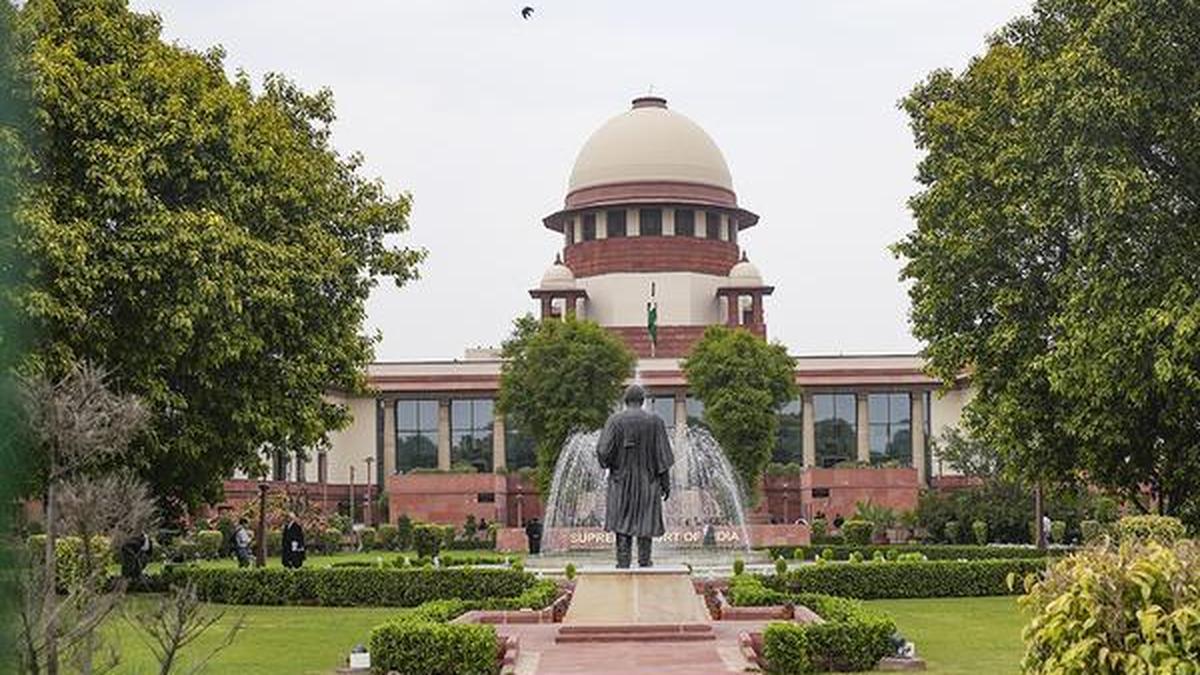
The Supreme Court invoked its extraordinary powers under Article 142 of the Constitution to set aside the conviction of a man under the Protection of Children from Sexual Offences (POCSO) Act, 2012, noting that the victim had subsequently attained majority, married him, and the continuation of the conviction would not serve the ends of justice.
The Court clarified that the decision was based on the peculiar facts of the case and should not be treated as a precedent for similar cases.
Article 142 of the Constitution
- Article 142 empowers the Supreme Court to pass any decree or order necessary for doing "complete justice" in any matter pending before it. Such orders are binding throughout India and are enforceable in the same manner as decrees of a civil court.
- While Article 142 grants wide discretionary powers, the Court has consistently held that these powers cannot ordinarily override substantive statutory provisions and must be exercised sparingly and in exceptional circumstances to ensure justice.
Protection of Children from Sexual Offences (POCSO) Act, 2012
The POCSO Act, 2012 is a comprehensive legislation enacted to protect children below 18 years from sexual assault, sexual harassment, and pornography, while ensuring child-friendly procedures for reporting, investigation, and trial. The Act was enacted following India's obligations under the UN Convention on the Rights of the Child (UNCRC), ratified in 1992.
Key Features of the POCSO Act
- Gender-neutral legislation: Protects both boys and girls from sexual offences.
- Child-friendly justice system: Provides special procedures for recording statements, investigation, evidence, and trial to minimise trauma.
- POCSO Rules, 2020: Strengthen implementation through institutional safeguards, reporting mechanisms, and victim support services.
- Confidentiality of identity:Section 23 prohibits disclosure of any information that may reveal the identity of the child victim, including by the media.
- Mandatory reporting:Sections 19–22 make it mandatory for any person having knowledge or reasonable suspicion of an offence to report it to the authorities.
- Stringent punishments: Prescribes graded penalties depending on the gravity of the offence. The Protection of Children from Sexual Offences (Amendment) Act, 2019 introduced harsher punishments, including the death penalty for certain aggravated penetrative sexual assaults.
Significance of the Judgment
The judgment highlights the Supreme Court's constitutional responsibility to balance strict statutory mandates with the broader objective of doing complete justice in exceptional cases. At the same time, the Court reaffirmed that POCSO is a welfare legislation enacted to protect children and that the exercise of powers under Article 142 cannot dilute the legislative intent or undermine child protection. By emphasizing that the ruling is confined to the unique facts of the case, the Court sought to preserve the deterrent purpose and integrity of the POCSO framework.
Article 142
- 28 May 2026
In News:
In a landmark judgment in In Re: Phalodi Accident vs National Highways Authority of India & Others (2025), the Supreme Court of India invoked its extraordinary powers under Article 142 of the Constitution to declare the Right to Safe Travel on National Highways as an integral component of the Right to Life under Article 21. Taking suo motu cognisance of two fatal road accidents in November 2025 that claimed 34 lives, the Court held that the maintenance of safe and motorable roads is not merely an administrative responsibility but a constitutional obligation of the State. The ruling marks a significant expansion of the jurisprudence surrounding Article 21 and reinforces the judiciary's role in ensuring “complete justice.”
Article 142: The Constitutional Instrument of Complete Justice
Article 142(1) empowers the Supreme Court to pass any decree or order necessary for doing “complete justice” in any matter before it. Often described as the Constitution's “safety valve,” this provision enables the Court to bridge legislative or procedural gaps when existing laws fail to provide an adequate remedy.
Unlike powers derived from ordinary statutes, Article 142 is an inherent constitutional authority vested exclusively in the apex court. In Delhi Judicial Service Association vs State of Gujarat (1991), the Supreme Court clarified that statutory limitations cannot curtail its powers under Article 142. Similarly, in Canara Bank vs Debasis Das (2003), the Court emphasized that substantive justice and principles of natural justice must prevail where rigid legal procedures prove inadequate.
The Court has also distinguished its powers from those of High Courts. In Anil Kumar Jain vs Maya Jain (2009), it held that the powers of High Courts under Article 226 are not co-extensive with the extraordinary residuary jurisdiction conferred upon the Supreme Court under Article 142. While High Courts operate within defined constitutional and statutory limits, Article 142 allows the Supreme Court to address emerging challenges and evolving societal needs where legal frameworks remain insufficient.
Highway Safety as a Constitutional Mandate
The judgment draws attention to India's alarming road safety crisis. Although National Highways constitute only about 2% of the country's road network, they account for nearly 30% of all road fatalities. Recognising this disproportionate burden, the Court elevated road safety from a policy objective to a justiciable constitutional right under Article 21.
The ruling is expected to strengthen governmental efforts to achieve the target of reducing road accident deaths by 50% by 2030 through the 4Es framework—Education, Engineering, Enforcement, and Emergency Medical Services. It also reinforces the accountability of road-owning agencies, particularly in ensuring timely maintenance, hazard removal, and adherence to safety standards.
Debate on Judicial Activism and Overreach
The expansive use of Article 142 has long generated debate. Critics argue that frequent judicial intervention risks undermining the doctrine of separation of powers by allowing courts to enter domains reserved for the legislature and executive. They contend that broad judicial directives may transform the Court into a de facto law-making body.
Supporters, however, view Article 142 as an essential tool of judicial activism that enables the Constitution to respond to rapidly changing social realities. They argue that when legislative or executive action is inadequate to protect fundamental rights, the judiciary must intervene as the guardian of constitutional values.
Acknowledging these concerns, the Supreme Court itself has repeatedly emphasized restraint. In Hitesh Bhatnagar vs Deepa Bhatnagar (2011), it held that Article 142 should be exercised with extraordinary care and caution due to its exceptional nature.