
Anthropological Survey of India (AnSI)
- 25 Jun 2026
In News:
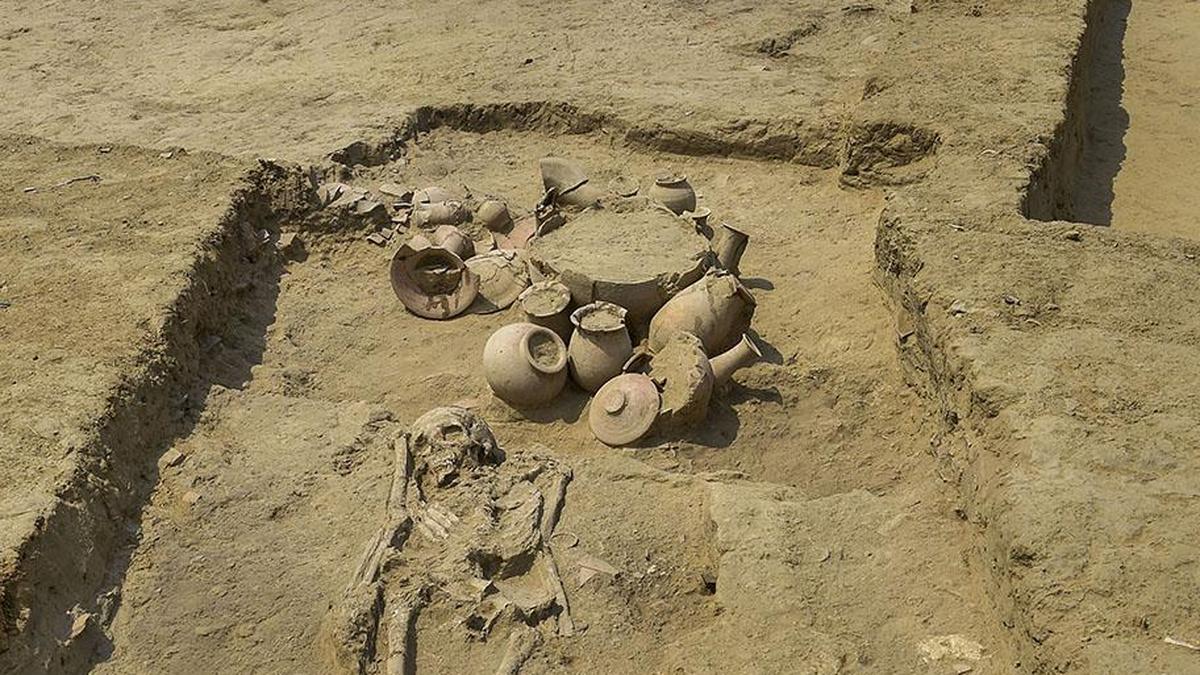
The Archaeological Survey of India (ASI) has recently handed over human skeletal remains excavated from the Harappan site of Rakhigarhi in Haryana to the Anthropological Survey of India (AnSI) for detailed anthropological, bio-archaeological, and scientific research. The study is expected to provide valuable insights into the ancestry, health, lifestyle, and population history of the Indus Valley Civilization.
About the Anthropological Survey of India (AnSI)
The Anthropological Survey of India (AnSI) is the premier government-funded institution dedicated to anthropological research in India. It is the only Central Government research organisation exclusively engaged in anthropological studies under the Ministry of Culture.
Established in 1945 under the leadership of Dr. S.C. Roy, a pioneering Indian anthropologist, AnSI was initially tasked with documenting and studying India's tribal and caste communities. Over the decades, its mandate has expanded considerably to encompass the biological, cultural, linguistic, and social diversity of the entire Indian population.
Headquarters: Kolkata, West Bengal.
Objectives
AnSI works towards understanding India's diverse human populations through scientific research and documentation. Its major objectives include:
- Conducting biological and cultural anthropological research on India's tribes and other communities.
- Examining, preserving, and analysing ancient and modern human skeletal remains.
- Documenting and conserving India's tribal arts, crafts, and cultural heritage.
- Providing training in anthropology and publishing research findings for academic and policy use.
Major Areas of Research
Over the years, AnSI has evolved into a multidisciplinary research institution. While its early work focused mainly on the ethnographic study of tribal societies—their social organisation, kinship systems, religious beliefs, and economic life—it now undertakes research across a much wider spectrum.
Its areas of study include biological anthropology, cultural anthropology, social anthropology, medical anthropology, linguistic anthropology, human genetics, archaeology, tribal studies, and bio-archaeology. It also studies rural and urban populations, marginalised communities, and the Indian diaspora to understand the country's evolving social landscape.
Organisational Structure
To facilitate region-specific research, AnSI operates through its headquarters in Kolkata and several regional centres located across the country, including Delhi, Lucknow, Shillong, and Pune.
The organisation brings together experts from multiple disciplines such as anthropology, archaeology, sociology, linguistics, and human biology, enabling comprehensive research on India's cultural and biological diversity.
Publications
AnSI disseminates its research through several scholarly publications, including:
- Journal of the Anthropological Survey of India
- Occasional Papers
- Monographs and technical research reports